


AI and ai-powered property management: dynamic pricing, revenue and booking optimisation
AI is reshaping how hosts and vacation rental managers price listings. Dynamic pricing AI analyzes demand signals, competitor rates, local events and historical bookings to suggest optimal rates in real-time. Also, ai-powered systems let you set cadence for availability, apply rate rules and enforce minimums so you keep control of revenue and occupancy. PriceLabs, Wheelhouse and Beyond Pricing are common vendors that many teams trust for dynamic rules.
Key facts support the move. Dynamic pricing tools can lift revenue 10–40% depending on market and sophistication, and many larger operators report 20–30% efficiency gains when using AI in pricing (Rental Scale-Up). In addition, two-thirds of larger property management firms now use AI tools for core tasks, underscoring broad adoption (stayfi).
Practical guidance matters. First, set hard minimum and maximum rates and mark event dates in your calendar. Second, monitor real-time price changes and error rates. Third, create rollback triggers for price anomalies. For example, schedule a human review if suggested price drops more than 30% in one hour. Also, maintain a watchlist for high-value listings to prevent aggressive undercutting. When to override automated prices? Override when local knowledge or an upcoming private event changes demand, when a guest requests a bespoke rate, or when a competitor misreports inventory.
Short checklist of KPIs to track:
- RevPAR and ADR for each property and across the portfolio.
- Occupancy rate trends by week and month.
- Price elasticity signals after promotions.
- Cancellation rates tied to pricing changes.
Sample pricing rule example: For a beachfront rental during peak season, set a minimum ADR equal to 20% above off-season average, allow AI to increase rates up to 50% above baseline for high-demand weekends, and lock rates within 72 hours of arrival. This rule keeps revenue safe while letting the ai agent respond to last-minute spikes.
Finally, integrate pricing with your property management system and channel manager. An ai system that feeds pricing into your PMS and OTA channels reduces mismatches and increases real-time accuracy. For more on linking AI to operations and email flows, see how teams automate inboxes at virtualworkforce.ai (automate-logistics-emails-with-google-workspace-and-virtualworkforce-ai).
Automate guest communication: guest message, ai messaging and guest messaging automation across Airbnb, Booking.com and VRBO
Hosts and short-term rental operators can automate guest communication to speed responses and lift guest satisfaction. AI messaging tools handle booking confirmations, pre-arrival information, check‑in instructions and review prompts. They connect with platforms like Airbnb, booking.com and VRBO so messages stay consistent across channels. Guest messaging automation reduces manual replies and improves response time to minutes, which lifts guest satisfaction and direct booking potential (Guesty).
Tools to consider include Hospitable, Aeve AI and HostBuddy. Hostbuddy is an ai messaging that many hosts use for templated replies and escalation rules. Also, messaging platforms integrate via channel managers so you keep a single thread per reservation. For teams focused on inbox triage, virtualworkforce.ai shows how email automation can cut handling time and create traceable workflows that attach context to each conversation (how-to-improve-logistics-customer-service-with-ai).
Practical templates speed setup. Use short, personal check‑in messages and simple escalation rules. For example:
- Pre-arrival: “Hi [Name], we look forward to hosting you. Check-in is at 3PM. If you need early access, reply and we’ll check availability.”
- Check-in: “Welcome! Your code is [code]. Text this number if you need help.”
- Mid-stay: “Hope you’re enjoying your stay. Anything you need, reply and we’ll handle it swiftly.”
- Issue escalation: auto-forward to human if message contains ‘broken’ or ’emergency’ or if sentiment flags negative.
- Check-out: “Thanks for staying. Please leave a review; here’s a quick checkout checklist.”
When to escalate to human staff? Escalate on complex guest inquiries, maintenance requests, or when a guest asks for a refund. Conversational AI can triage intent, but human judgment should handle sensitive cases. Use automated tags and shared inboxes to route messages, and keep audit logs for every escalation. Also, centralised messaging boosts brand consistency and helps convert guests to direct booking channels over time. For teams that manage many reservations, integrating messaging automation with workflows is essential to streamline operations and protect guest satisfaction.

Drowning in emails? Here’s your way out
Save hours every day as AI Agents label and draft emails directly in Outlook or Gmail, giving your team more time to focus on high-value work.
Workflow and integration: property management, workflow, property management software and Guesty/Hostaway integration for rental management
Build end-to-end automation pipelines so tasks flow from reservation to checkout. A clear workflow connects reservations, messaging, pricing, housekeeping and maintenance. Use property management software, a channel manager, and AI agents to synchronize rates and messages. Guesty and Hostaway are common systems for medium and large portfolios. Linking them reduces double-booking risk and keeps guest messages consistent.
Key facts: integrated PMS + channel manager + AI agent reduces errors and speeds real-time updates. An AI system that writes back to the PMS helps you keep accurate availability and record guest interactions. If you need an example of email automation tied to operations, virtualworkforce.ai automates the full email lifecycle for ops teams so decisions flow into PMS records and vendor notices (virtual-assistant-logistics).
Decisions you must make:
- Single-platform vs best-of-breed. Single-platform is simpler. Best-of-breed offers flexibility.
- API access. Ensure your PMS, channel manager and vendors support webhooks and REST APIs.
- Testing sandboxes. Validate integrations in a staging environment before pushing live.
Implementation advice: map each touchpoint, designate owners, and log expected SLA times. Use API keys with scoped permissions and rotate them regularly. When building webhooks, handle retries and idempotency. Add fallbacks: a human inbox for failed automations, a queue for unresolved messages, and audit logs for every change. Monitor error rates and set alerts when sync mismatches exceed a threshold.
Operational note: map failure points and add fallbacks. For example, if a rate sync fails, the system should maintain last-known-good prices and notify a manager. Likewise, if the messaging automation flags unhandled inquiries, route them to a human pool. This hybrid approach keeps automation productive while retaining accountability. Finally, track KPIs like sync failures per month, average time to resolve webhook errors, and the percentage of reservations with complete guest data. These metrics help you iterate and refine the automation pipeline for rental management.
Short-term rental operations: automate guest communication, maintenance and workflows for rental properties and short-term rental operators
Operational automations reduce turnaround time and increase usable nights for each property. Automate guest communication, smart-lock provisioning, cleaning schedules and maintenance tickets. For short-term rental operators, these automations lower manual overhead and keep service levels high. AI handles routine emails and task creation so teams focus on exceptions.
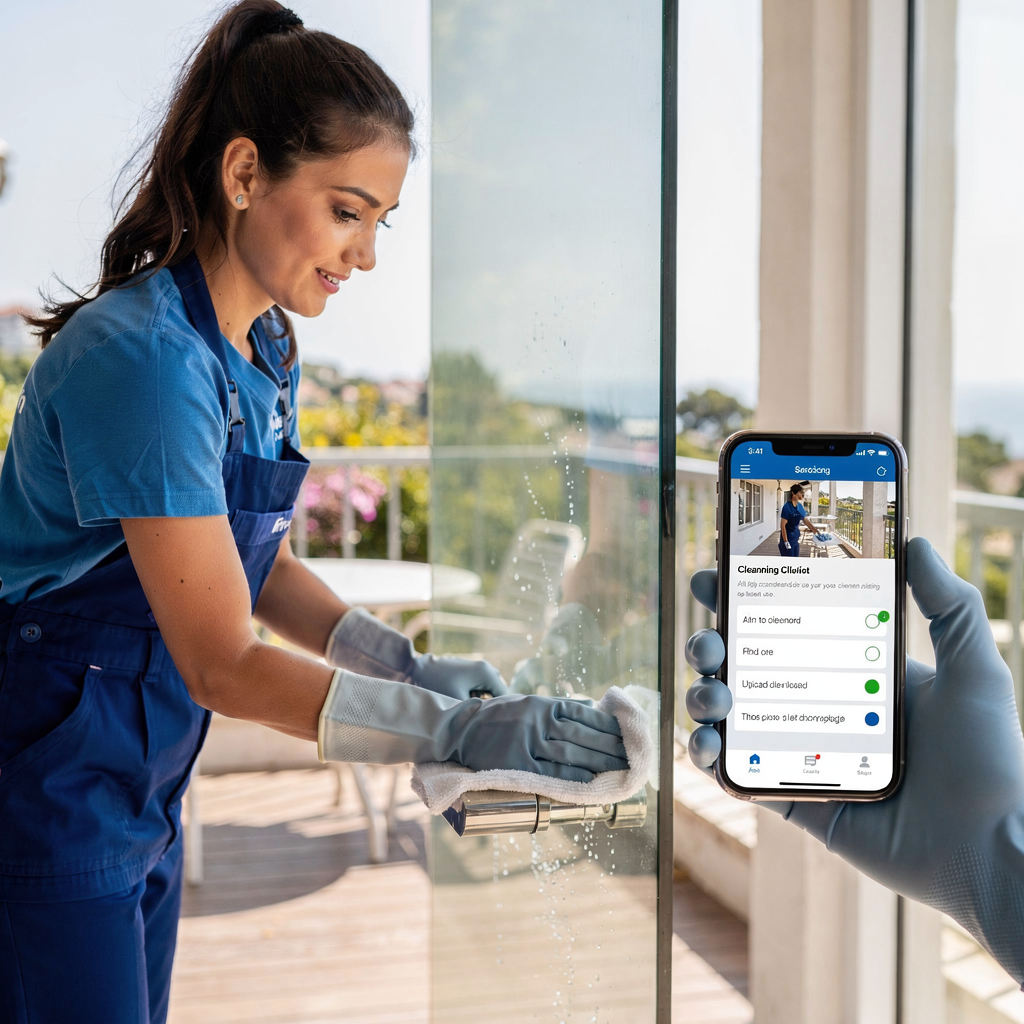
Facts to note: automating maintenance requests and cleaning workflows reduces turnaround times and raises occupancy. Triggered automations can notify vendors, attach photos and set SLA windows. For example, after checkout, the system can send a cleaning task to your vendor with checkout photos, priority level and a 6-hour SLA for same-day turnovers.
How to set rules:
- Trigger vendor notifications after checkout with attached entry photos.
- Define SLA windows and escalation paths—e.g., 4 hours for standard clean, 2 hours for high-priority.
- Include automated verification steps: cleaner marks complete and uploads photos before payment release.
Example workflow (compact): booking confirmed → pre-arrival message → smart‑lock code generated → post‑checkout cleaning task created → automated review request sent. This sequence can be run by your PMS and channel manager with AI tagging for exceptions. Also, use voice ai or a conversational ai platform for phone-based guest requests when needed. That hybrid model keeps guest interactions smooth while reducing manual load.
Practical tips: test vendor integrations with a pilot set of rental properties and document edge cases. Track cleaning completion times, maintenance reopen rates and number of nights lost to deep cleaning. For remote property portfolios, automation becomes the most sustainable way to scale. If your ops team handles many emails tied to vendors and invoices, tools like virtualworkforce.ai show how email-based operations can be automated end-to-end (automated-logistics-correspondence).
Drowning in emails? Here’s your way out
Save hours every day as AI Agents label and draft emails directly in Outlook or Gmail, giving your team more time to focus on high-value work.
Scaling for management companies and rental managers: management with ai, property management companies, vacation rental property managers and rental managers using ai-powered tools
Scaling from one property to many requires clear role definitions and reliable automation. Management with AI helps vacation rental property managers and rental managers run larger portfolios without linear staff growth. By 2025 many larger property management companies (50+ units) had adopted AI for pricing and messaging, and centralisation helped increase direct booking share (stayfi).
Practical guidance for scaling:
- Define roles: who monitors the AI agent, who approves price overrides, and who handles escalations.
- Train staff to supervise AI and interpret model outputs. Provide playbooks for common scenarios.
- Implement revenue attribution and reporting so you credit the right channel for direct booking lift.
Risk controls are critical. Add audit trails for every automated action, require human sign-off for high-value decisions, and monitor model drift. Keep a human-in-the-loop for sensitive tasks like refunds or guest complaints. Also, set up periodic reviews of AI performance and KPIs. For example, compare revenue lift from ai-powered pricing to manual adjustments monthly, and check guest satisfaction trends.
Operational scaling also depends on management systems and vacation rental software. Choose systems that expose APIs and support batch operations. If you use Guesty or Hostaway, ensure your integrations can handle multiple properties and vendor pools. Use staged rollouts and measure impact before enabling automation across your entire portfolio.
Finally, communication matters. Train staff on new workflows, maintain clear escalation paths, and document responsibilities. This approach lets teams scale while protecting service levels and hospitality standards. For teams that want to automate the email lifecycle across operations, consider a solution that creates structured data from emails and routes actions automatically to the right owner (how-to-scale-logistics-operations-with-ai-agents).
Trust, compliance and the future of the rental industry: hospitality, direct booking, ai automation and the vacation rental business
Trust and compliance underpin sustainable automation. Follow data protection rules like GDPR, respect OTA messaging restrictions, and be transparent when replies come from an AI. Guest privacy is non‑negotiable. Also, label automated messages where required and avoid collecting excess personal data.
Policy and reputation: automation affects reviews, guest trust and hospitality. Keep a human touch in high-impact moments: arrivals, complaints and refunds. Use ai automation to handle routine tasks, and reserve human staff for matters that shape guest experience. McKinsey warns that agentic AI could enable hyper-personalized experiences at scale, so prepare governance now (McKinsey).
Future outlook: expect agentic AI that suggests upselling opportunities, dynamic packages and tailored offers based on guest preferences. Use these features to grow direct booking channels and upselling revenue. However, add guardrails for pricing and privacy, and monitor guest responses to personalization.
Quick action list for legal and risk:
- Run legal checks for data flows and third-party processing.
- Update insurance terms if AI changes operational risk profiles.
- Build continuous monitoring and scenario planning for AI failures.
Concrete risks to manage include false positives in automation, OTA policy violations, and unintended data exposure. Test automation thoroughly, log decisions and enable rapid rollback. Keep human oversight for high-risk decisions and maintain transparency with guests about automated messages. For operational teams overwhelmed by email volume, virtualworkforce.ai demonstrates how to reduce handling time and keep traceability in automated replies, which helps meet compliance and hospitality standards (virtualworkforce-ai-vs-traditional-outsourcing-logistics).
FAQ
How do AI agents set dynamic pricing for vacation rental listings?
AI agents analyze market data, competitor rates, seasonality and local events to recommend prices. They run continuously and adjust suggested rates in real-time, while you set minimums and maximums to protect revenue.
Can I automate guest communication across Airbnb, Booking.com and VRBO?
Yes. Messaging automation integrates with channel managers to keep messages consistent across platforms like Airbnb, booking.com and VRBO. You can automate confirmations, check‑in instructions and review requests while escalating complex cases to staff.
What is the best way to integrate AI with my PMS?
Choose tools that offer APIs and webhooks. Test integrations in a sandbox, map workflows end to end, and add fallbacks for failed syncs. Use audit logs to trace actions and handle exceptions quickly.
How do I handle maintenance and cleaning with automation?
Trigger vendor notifications after checkout and attach photos for context. Set SLA windows and escalation rules so high‑priority tasks move to the top of vendor queues. Automations should mark tasks complete and collect verification before closing jobs.
How can small hosts scale like larger management companies?
Start with automating messaging and pricing, then add workflow automations for cleaning and maintenance. Define clear roles and train staff to monitor AI outputs. Scale through best‑of‑breed integrations or a single platform with API access.
What compliance risks should I watch for when using AI?
Monitor GDPR and local privacy rules, label automated replies when needed, and avoid storing unnecessary guest data. Also, ensure OTA messaging policies are followed to prevent penalties.
When should a human intervene in AI-managed workflows?
Intervene on refunds, safety incidents, high-dollar disputes and complex maintenance issues. Also, review pricing or messaging that deviates significantly from historical norms.
Will AI automation impact guest satisfaction?
Properly configured AI usually improves response time and clarity, which raises guest satisfaction. Keep a human touch at pivotal moments to preserve hospitality and protect your reputation.
How do I measure ROI from AI tools in rental management?
Track RevPAR, ADR, occupancy, response time and task completion rates. Compare revenue and cost metrics before and after automation to measure impact.
Can AI help increase direct bookings for my vacation rental business?
Yes. AI can personalize offers, speed responses and power direct booking engines to reduce OTA dependence. Centralized messaging and tailored incentives often help convert more direct bookings.
Ready to revolutionize your workplace?
Achieve more with your existing team with Virtual Workforce.