


AI for short-term rental and vacation rental hosts: why automate guest message and booking communication
AI for short-term rental hosts covers a wide set of tools. First, it includes automated replies, rules engines and NLP chatbots that read and respond to guest texts. Next, it powers dynamic pricing and auto-scheduling. In practice, AI reduces manual tasks for a short-term rental or vacation rental business. For example, industry case studies show platforms with similar tools can gain up to ~30% efficiency in booking and customer-service tasks (source). Also, academic work documents how AI is “restructuring the labour, identity, and power dynamics of hosting” on peer-to-peer platforms like Airbnb (source). Therefore, automation matters for any AIRBNB HOST who wants better response rates and improved review scores.
Quickly, why automate messages? First, guests expect fast replies. Second, every delayed answer risks a lost booking or a lower review. Third, automating routine MESSAGE sequences frees time for guest-facing tasks. Hosts can focus on the PROPERTY rather than the inbox. For example, a single hosted reply template for CHECK-IN instructions and Wi‑Fi details can stop repetitive typing. In addition, a clear sequence of pre-arrival messages can reduce no-shows and gap nights between stays.
Also, technology choice matters. You can integrate AI with a PMS to fetch listing INFORMATION and booking status. Or, you can run standalone chatbots that answer FAQs. If you choose to use AI TECHNOLOGY, plan for oversight. Create escalation paths that send complex queries to a human host. In short, automating guest communication increases responsiveness. Consequently, it protects review scores and converts more POTENTIAL GUESTS into confirmed BOOKINGS. Finally, hosts who automate see measurable TIME SAVED and clearer ownership of routine work.
How AI-powered chatbots put property managers and hosts on autopilot for message and faqs
AI-powered chatbots act as a first responder for guest MESSAGE traffic. First, they handle 24/7 replies to common FAQS like check-in, Wi‑Fi and house rules. Second, they use templates and contextual cues from the LISTING INFORMATION to keep tone consistent. For property managers and individual hosts, that consistency matters. It builds trust and reduces repetitive work. For example, research shows that chatbots in hospitality reduce live-agent load and improve availability (source). Thus, a CHATBOT for Airbnb HOSTS can answer guest QUESTIONS immediately and escalate only when needed.
Also, chatbots support autopilot operations. They reply to routine GUEST INQUIRIES, confirm instant BOOKINGS and provide CHECK-IN steps. In addition, they can surface dynamic PRICING suggestions or upsells with minimal input. Property MANAGERS who deploy chatbots report fewer missed messages and a more consistent brand voice. However, set clear escalation rules. For example, route urgent guest requests or safety queries to a human property manager for AIRBNB properties. That protects trust.
Next, include audit trails. Audit trails record MESSAGE history and AI RESPONSES so property owners can review decisions. This matters for accountability and for handling disputes. Also, a bot can attach booking details and photos when it escalates a complex issue. As a result, your team resolves issues faster. Finally, if you manage MULTIPLE PROPERTIES, a single conversational platform helps centralize conversation history. Use chatbots and chatGPT-style LLMS carefully, with regular reviews. For hosts who prefer tested vendors, explore options such as prohostai and integrations that plug into management systems and the INBOX. This step makes scaling easier and puts many tasks on AUTOPILOT.

Drowning in emails? Here’s your way out
Save hours every day as AI Agents label and draft emails directly in Outlook or Gmail, giving your team more time to focus on high-value work.
Integrate AI to reduce the time and streamline workflow for communication with guests and property management teams
Integration is the point where AI saves real time. First, sync AI with your PMS and channel manager so it sees booking context. Second, connect the unified INBOX to your management systems so the AI reads reservation dates, guest notes and cleaning schedules. If you INTEGRATE correctly, the AI can suggest a CHECK‑IN window or flag overlap on cleaning tasks. For example, linking to a PMS helps automated messages reference the correct BOOKING dates. That reduces errors and improves the guest experience. Also, platforms that combine AI and machine learning with ERP-like grounding show faster, more accurate replies in operations.
Moreover, define the WORKFLOW before you turn AI on. Map where the AI should act: initial INQUIRY reply, booking confirmation, pre-arrival, check-in, and post-checkout surveys. Next, choose integration points. You might use a calendar sync, a channel manager, or a direct PMS connection. If you are running a short-term rental business with multiple units, integrate early. A tight integration reduces manual triage and creates a single source of truth for listing and reservation data.
In practice, measure results. Track the percent of MESSAGES handled automatically, average response SLA, time saved per booking and conversion uplift on enquiries. For teams looking to scale operations without hiring, examine vendor options and ask for a free trial to test real outcomes (lær hvordan team skalerer med AI‑agenter). Also, teams like virtualworkforce.ai automate full message lifecycles in operations and show large reductions in handling time, which is useful inspiration for property MANAGEMENT workflows (eksempel på integrasjon). Finally, pilot on one property. Then iterate. That approach reduces risk and gives rapid, valuable insights.
Automate guest message sequences to prevent gap nights and speed up booking responses
Message sequences convert enquiries into bookings. First, set an automatic reply to every INQUIRY. A fast reply increases the chance a potential guest will book. For example, instant booking confirmations and pre-arrival instructions reassure guests and cut decision time. Second, add upsells and upselling in the flow. Offer early check-in, late CHECK‑OUT or paid parking. Third, include short CTAs and booking links so potential guests can act in one click.
Also, templates keep replies short and clear. Use a template per common topic: CHECK‑IN, Wi‑Fi, house rules, local recommendations, and cancellation policy. Keep templates localized for language and regional details. In addition, add contextual fields that populate BOOKING dates, guest names and arrival times. That personalization lifts conversion and helps prevent GAP NIGHTS.
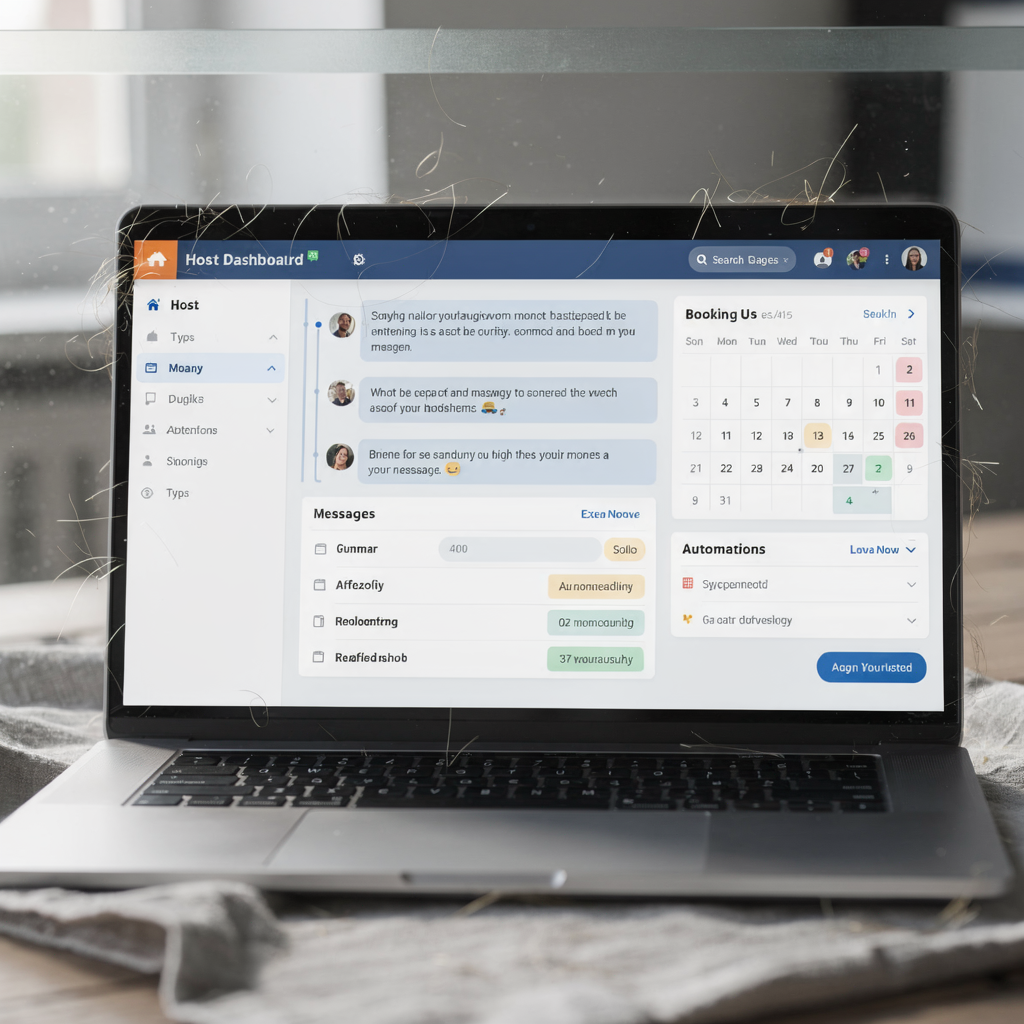
For STR and STR hosts scaling to MULTIPLE PROPERTIES, automate sequences per property type. For example, a beach cottage gets a different arrival checklist than an urban apartment. Similarly, a sequence for long stays includes monthly cleaning cadence. Use an AI‑powered guest message scheduler to trigger messages relative to booking dates. Also, track open rates and replies. If an AUTOMATED message does not resolve a query, escalate to a human via the inbox and assign it in your DASHBOARD.
Finally, test templates and measure KPIs. Run A/B tests on subject lines and CTAs. Track how automating communication affects time to BOOKING and the frequency of gap nights. Vendors and tools can include dynamic pricing to pair with guest-facing upsells. For example, integrating dynamic pricing with a message that offers a limited-time discount can close more BOOKINGS. If you want to simplify your rollout, consider a FREE TRIAL to test sequences at scale and refine your approach before full deployment.
Drowning in emails? Here’s your way out
Save hours every day as AI Agents label and draft emails directly in Outlook or Gmail, giving your team more time to focus on high-value work.
Measurable impact: time saved, booking uplift and trust gains from AI-powered guest automation on Airbnb
Measuring impact starts with clear KPIs. First, monitor time saved per week and percent of messages auto-resolved. Second, measure increase in BOOKINGS and change in average response SLA. Third, track guest satisfaction metrics like review scores and NPS. Research links customer trust to timely host behavior. One paper defines trust as “a guest’s belief that the other party … will behave appropriately and in a benevolent manner,” and shows AI can support consistent behaviour (source). Thus, faster AI RESPONSES often translate into higher guest TRUST.
Additionally, platforms use AI at scale to influence bookings. For instance, Airbnb’s chat and group travel features have supported over 1.7 million group travel bookings, indicating how AI tools shape user behaviour (source). Also, studies in hospitality show that a positive AI interaction improves customer engagement and loyalty (source). Therefore, automating the routine parts of guest interaction lets humans focus on high-value guest experience tasks.
Quantify time saved. Operations vendors often report large reductions in handling time when they automate email or chat. For example, teams that automate inbox workflows can reduce handling time substantially. Track the change in replies to guest messages and the number of manual escalations. Also, monitor error rates from automated messaging. If the AI returns incorrect facts, pull the sequence and correct the template. Finally, maintain a human review loop. Use machine learning models and LLMS for draft replies, but keep a human in the loop to ensure accuracy and preserve the guest relationship.
Test, rollout and pricing: how hosts and multi-property teams can use ai with a free trial and scale safely
Start with a pilot. First, select a subset of listings and run an automation pilot for a few weeks. Second, compare KPIs against a control group. Third, refine templates and escalation rules. This phased approach reduces risk and lets you gather feedback from actual guest inquiries and booking flows. For teams managing multiple properties, schedule the pilot across property types. That helps you identify differences in guest QUESTIONS and GUEST REQUESTS.
Next, plan your rollout. If the pilot meets thresholds for TIME SAVED and guest satisfaction, expand to more units. Train property managers and cleaning teams on the new inbox and DASHBOARD. Also, build a small governance team to handle edge cases and policy compliance, especially for GDPR and EU data rules. For pricing, evaluate cost versus hours saved. Many vendors offer a FREE TRIAL. Use the trial to measure true lift in conversion and response SLA before committing to a subscription.
When choosing vendors, check for key features. Look for deep data grounding, thread-aware memory, audit logs and easy customization options. Also, prefer solutions that can INTEGRATE with your PMS and channel manager. If your operations mirror logistics workflows, virtualworkforce.ai shows how agents can automate full message lifecycles and lower handling time; that operational model translates well to property MANAGEMENT and hospitality teams (les om å forbedre kundeservice med AI). Finally, create a checklist: templates, escalation paths, KPI dashboard, data portability, and guest privacy review. Iterate regularly and keep humans in the loop to preserve quality as you scale.
FAQ
What is an AI assistant for Airbnb and how does it differ from a chatbot?
An AI assistant for Airbnb is a broader system that combines chat, rules, data integration and escalation. A chatbot often focuses on conversational replies only. The assistant can also pull booking data from a PMS and create structured follow-ups, while a chatbot may only answer FAQs.
Can AI really automate replies to guest messages without losing personalization?
Yes. When configured correctly, AI uses templates and contextual fields to insert guest names and booking dates. In addition, you should review and refine templates so automation feels personal and accurate.
Will automating messages reduce my booking conversions?
No, rapid and clear replies usually increase conversion. Quick automated INQUIRY replies and targeted upsells can convert POTENTIAL GUESTS who might otherwise book elsewhere. Track conversion rates to confirm.
Do I need to connect my PMS to use AI messaging?
Connecting a PMS is highly recommended. Integration supplies contextual listing INFORMATION and BOOKING data so the AI can craft correct replies. It also reduces manual lookups and speeds resolution.
How do I maintain trust with guests when using AI messaging?
Maintain transparency and set escalation rules so complex or safety-related queries go to a human. Also, keep audit trails of AI RESPONSES and let guests request human contact at any time.
Can AI handle dynamic pricing and upsells in messages?
Yes, AI can surface dynamic pricing suggestions and include upsells in automated sequences. Pair pricing engines with message templates to present offers at the right time.
Is there a risk of errors from AI responses?
There is some risk if templates pull incorrect data or if the integration fails. Therefore, monitor errors, keep humans reviewing edge cases, and run a pilot before full rollout.
What should a pilot include for multi-property teams?
Run a short free trial on a sample of listings, measure time saved, percent of messages auto-resolved and guest satisfaction. Then refine templates and escalation rules before scaling to MULTIPLE PROPERTIES.
Which integrations are essential for property management automation?
Essential integrations include PMS, channel manager, calendar sync and your inbox. Also, link cleaning and maintenance systems so messages reflect operational reality and reduce conflicting instructions.
Can small hosts benefit from AI, or is it only for large property managers?
Both benefit. Small hosts save time on repetitive messages, while property managers scale consistency across listings. Even solo hosts can use virtual assistants and AI chatbots to simplify workflows and improve guest experience.
Ready to revolutionize your workplace?
Achieve more with your existing team with Virtual Workforce.