


AI assistant: automate admin and make hiring faster
AI assistants automate repetitive admin tasks so recruiting teams can make hiring faster and better. First, an AI assistant parses CVs, extracts candidate information and ranks resumes. Then it syncs calendars, handles interview scheduling and updates ATS records. This saves time for recruiters and lets them focus on judgement. Also, automation and AI reduce time-to-hire; for example, 55% of companies increased investment in recruitment automation in 2026, which shows where budgets flow 55% of companies increased investment in recruitment automation in 2026. Next, agency recruiters report major gains: over 93% say AI produces positive outcomes, so recruiters see faster candidate throughput and fewer scheduling errors over 93% reporting a positive impact.
To implement this in a few quick actions, connect the AI assistant to calendars and ATS, set rules for scheduling windows and notice periods, and enable two-way calendar sync. For example, enable real-time calendar checks and let the assistant propose interview windows. Also, connect to your CRM so outreach history and candidate notes stay auditable. These connections create a full loop from sourcing to hire. In addition, assistants automate email follow-ups and reminders, which reduces ghosting and improves response rates. Our team at virtualworkforce.ai built agents that automate high-volume email workflows, and this same approach helps recruiting by routing messages, drafting replies and creating structured candidate data. See how AI agents speed operations and reduce manual triage in logistics as a model for hiring teams how to scale logistics operations with AI agents.
Use simple rules at first. For example, ask the assistant to only schedule within certain hours. Second, require human confirmation before making offers. Third, log every automated action for compliance and review so auditors and hiring managers can trace decisions. Also, apply the tool powered by artificial intelligence to extract structured candidate details from resumes and cover letters in seconds. Finally, remember that an AI assistant should augment human work, and not replace recruiter judgement. For firms that want to save time while keeping control, pilot one role and measure before scaling. This gives measurable wins and avoids rushed rollouts. Overall, AI helps the team move faster, keep quality and deliver a better hiring experience for candidates and hiring teams alike.

Recruiting assistant and recruiter workflow: streamline the recruitment process and schedule interviews
The recruiting assistant sits inside the recruiter workflow to triage applicants and pre-screen them with minimal manual work. First, it ingests resumes and job descriptions, then it applies screening rules that you define. Next, it flags top candidates and proposes interview slots. This streamlines the recruiting process and helps the recruiter keep the process moving without extra admin. Also, the assistant can send candidate reminders and collect interview feedback automatically. In practice, recruiting teams who integrate AI see faster interview-to-offer cycles, and they report fewer scheduling conflicts. For a concrete example, agencies report high satisfaction with these tools over 93% reporting a positive impact.
Follow a short checklist to get started. First, define screening criteria and map each step from sourcing → screen → interview → offer. Second, create interview-scheduling templates with standard notice periods. Third, enable candidate reminders and follow-ups. Also, train interviewers on how to use suggested interview questions and scorecards so interviewer calibration improves. This approach helps hiring managers and recruiters and hiring managers see pipeline health in a glance. Use an integration with your ATS so candidate status, notes and scheduling actions remain auditable. For best practice, link your recruiting software to the ATS and CRM so every interaction appears in one timeline. If you want to learn how data grounding and routing reduce manual triage in heavy email flows, read about end-to-end automation for operational teams virtual assistant logistics.
Remember to set boundaries. For example, the AI recruiting assistant isn’t the final decision-maker. People still make hiring decisions. Also, keep a human review step before offers go out. This reduces bias and increases fairness. For candidate-facing templates, include clear scheduling links and next-step instructions. Also, use interview scheduling rules that respect time zones and interviewer workload. Then monitor interviewer feedback, candidate experience scores and interview-to-offer metrics. Finally, keep a log of automated actions to meet compliance and audit needs. By following these straightforward steps you will streamline hiring and reduce the manual load that slows recruiters down.
Drowning in emails?
Here’s your way out
Save hours every day as AI Agents label and draft emails directly in Outlook or Gmail, giving your team more time to focus on high-value work.
AI recruiting assistant for sourcing and ATS integration: source, ats and CRM for better candidate experience
AI recruiting tools surface matched talent from internal pools, job boards and past CRM records so you don’t have to start every search from scratch. First, use AI sourcing tools to mine your resume database and job boards and to surface top candidates. Also, the assistant can search LinkedIn profiles and other public sources to expand reach. Next, connect the assistant to your ATS so candidate status moves forward automatically. This tight integration ensures candidate information and notes remain consistent. In addition, syncing with the CRM keeps outreach history in one place. When these systems talk to each other, candidates get faster replies and a clearer journey.
Personalisation matters. AI can draft personalised outreach that references past roles, skills and mutual contacts. This improves response rates and reduces ghosting. Also, automate nurturing sequences for passive candidates so relationships grow without daily manual effort. Measure the impact using candidate experience and time metrics. For instance, track response time, candidate experience scores and source-to-hire ratios. Use analytics dashboards to compare channels and show where top candidates come from. Talent leaders plan wider AI use; for example, 84% of talent leaders plan to use AI in their recruitment strategies next year 84% plan to use AI in recruitment strategies. This means sourcing and ATS integration will only grow in importance.
Make the CRM and ATS the single source of truth. Also, configure audit logs so every automated outreach, change of status and resume parse is traceable. This helps with compliance and with candidate disputes. Use scorecards to show why a candidate moved forward and to keep hiring managers aligned. Finally, test candidate messages and scheduling links to ensure a smooth hiring experience. If you want ideas for scaling communications and keeping replies consistent, see how automating operational email can reduce manual triage and improve response speed automated logistics correspondence. That pattern translates well to recruiting: automate routine touches, keep humans in the loop, and deliver a great candidate experience.
Analytics and reports using AI: hire, hiring managers and better hiring outcomes
Use AI to automate regular analytics reports and to surface insights that help hiring managers act faster. For example, set up dashboards that track time-to-hire, interview-to-offer, quality-of-hire, source-to-hire and candidate experience. Also, let AI flag pipeline bottlenecks and recommend next steps. This reduces guesswork and helps hiring managers prioritise roles that need attention. Dashboards should show interviewer calibration, open interview slots and recommended candidates to move forward. In short, AI turns raw data into recommended actions.
Decide KPIs before you deploy. Korn Ferry reports many talent leaders plan to use AI in their strategies, so set clear measures for success such as reduced time-to-hire and improved quality-of-hire 84% plan to use AI. Also, create reports using AI that run daily or weekly so teams see trends and react quickly. Use automated alerts when days pass without interviews or when candidate responses lag. These prompts keep the hiring process moving.
For hiring managers, show only what matters. Use concise pipeline summaries and recommended next actions. Also, include notes from interviews and automated interview feedback so decisions rest on evidence. AI-powered hiring can surface patterns such as which sources yield higher quality candidates. Then allocate budget and sourcing effort accordingly. Finally, archive reports for audit and compliance. These records support responsible AI practices and make it easier to explain decisions during reviews. When you implement AI, combine analytics with clear governance so the data helps teams make better hiring decisions and secure better hiring outcomes overall.
Drowning in emails?
Here’s your way out
Save hours every day as AI Agents label and draft emails directly in Outlook or Gmail, giving your team more time to focus on high-value work.
Responsible ai recruitment: best practices, ai act and faqs about ai
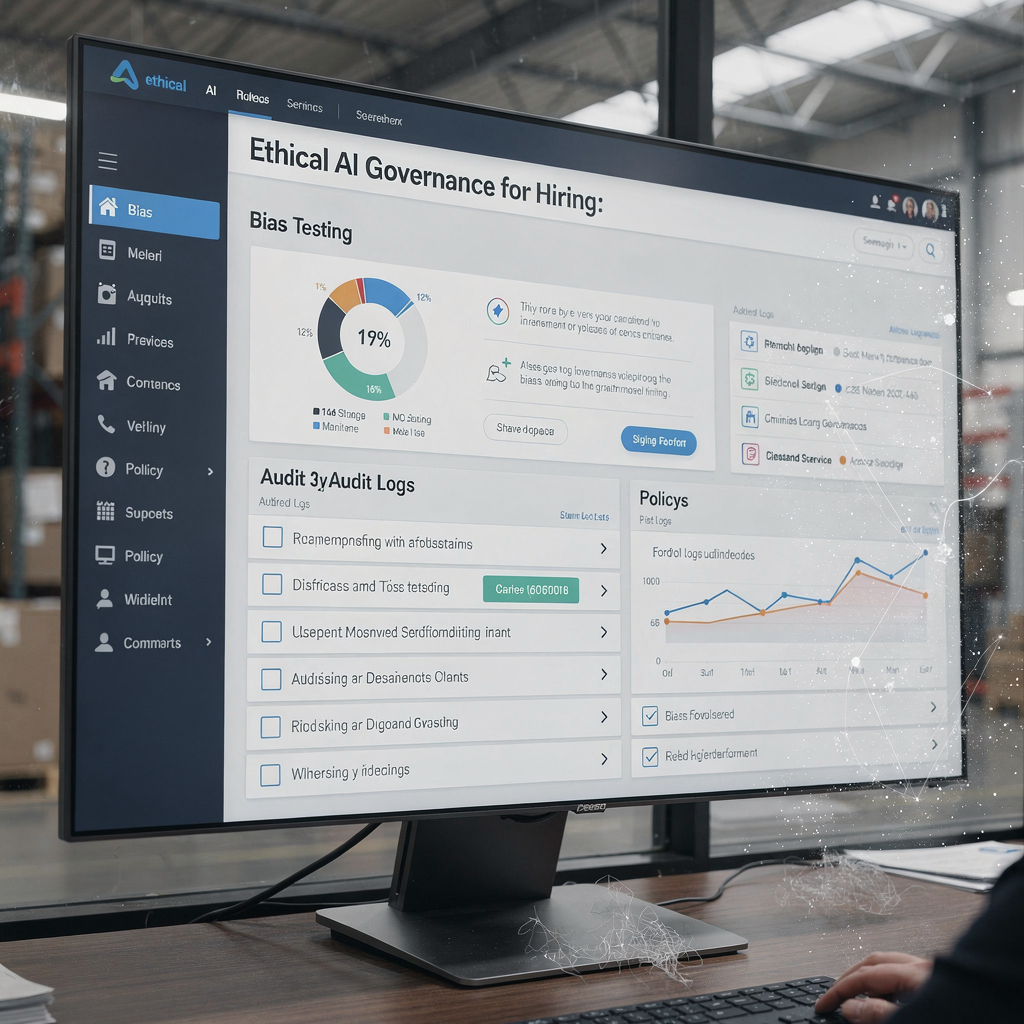
Responsible AI starts with governance. Many companies adopt AI hiring tools without ongoing evaluation. As one study warned, “Most companies adopt AI hiring tools without evaluating them deeply and continually throughout development and use” Most companies adopt AI hiring tools without evaluating them deeply and continually. Therefore require regular bias testing and model audits. First, prefer skills-based models and exclude sensitive attributes from training. Second, document data sources, validation steps and governance decisions so you can demonstrate compliance with emerging rules such as the AI Act in the EU. Also, keep records of model inputs and decisions for HR and legal review. This helps with audits and candidate appeals.
Run pilot audits before full rollout. Also, train users so recruiters and hiring managers know when to override suggestions. Provide clear appeal routes for candidates. For transparency, publish a short summary of how the assistant works and what data it uses. This supports candidate trust and reduces confusion. In addition, appoint a cross-functional team that includes legal, HR, data and product to oversee the rollout.
Finally, follow practical best practices. Use fairness metrics and shadow mode testing. Also, keep data privacy top of mind and store only necessary data. Monitor outcomes throughout the hiring process and iterate. For quick guidance, create an internal FAQ covering what the AI can and cannot do. This aligns teams and reduces misuse. Responsible AI recruitment both protects candidates and improves hiring quality. If you need a model for operable control and traceability, look at how virtualworkforce.ai builds thread-aware agents with full control and governance for heavy email workflows virtualworkforce.ai ROI and governance model.
Using an ai recruiting assistant: assistant helps recruiters and hiring managers automate sourcing, schedule interviews and make hiring decisions
Using an ai recruiting assistant starts with a clear pilot. First, pick one role and let the assistant handle sourcing, initial outreach and interview scheduling. Then measure results for time, quality and candidate experience. Also, have hiring managers review shortlisted candidates and the assistant’s rationale. This keeps accountability clear. For day-to-day uses, the ai hiring assistant drafts job adverts, suggests interview questions and ranks shortlisted candidates. Next, it automates interview scheduling and sends reminders so candidates get timely updates.
Human + AI works best. AI-powered suggestions should augment, not replace, recruiter judgement. People still make hiring decisions. Also, train interviewers on how to read AI scores and how to provide interview feedback. The assistant can capture interview feedback in structured form so analytics can spot trends. In addition, integrate the assistant with your ATS so candidate status, notes and resume attachments sit in one place. This reduces error and keeps candidate information fresh. If you want to streamline communications and ensure accurate replies to candidate emails, study how AI agents automate operational email lifecycles and route messages with full context automate emails with Google Workspace and virtualworkforce.ai.
Quick start tips: pilot the assistant on one team, measure time-to-hire and candidate feedback, iterate and scale when metrics improve. Also, limit automation at first to tasks like interview scheduling and candidate reminders. Then expand to sourcing and outreach as confidence grows. The assistant built for daily use should help with parsing resumes and suggesting interviewers based on past interactions. Also, make sure the system excludes sensitive fields and stays compliant with data privacy. Ultimately, the right assistant helps you get quality candidates faster while preserving fairness and control. This is how modern recruitment moves forward: blend AI capabilities with clear human oversight to deliver better hiring outcomes and a stronger employer brand.
FAQ
How does an AI assistant speed up hiring?
An AI assistant automates repetitive admin like CV parsing, interview scheduling and calendar sync so recruiters and hiring managers can focus on decisions. It also surfaces top candidates from internal pools and job boards, which reduces time spent on fresh searches and helps you hire faster.
Can AI tools reduce bias in recruitment?
AI can reduce manual inconsistencies, but it can also perpetuate bias if models and data remain unchecked. Run regular bias tests, shadow mode audits and document model validation to ensure responsible AI and better hiring outcomes.
What should I connect to my AI assistant first?
Start by integrating the assistant with your ATS and calendar systems so scheduling and status updates become automatic. Then add CRM and outreach templates to keep candidate information coherent and auditable across the recruitment process.
Will AI replace recruiters?
No. AI helps by automating admin and suggesting matches, but recruiters still make final hiring decisions and manage relationships. AI is a tool that reduces manual work and improves interviewer effectiveness while helping recruiters focus on higher-value tasks.
How do I measure success when I implement AI?
Track metrics such as time-to-hire, interview-to-offer, quality-of-hire, source-to-hire and candidate experience. Use reports using AI to automate these dashboards and set KPIs before rollout so you can compare results objectively.
Is candidate data safe with AI systems?
Data privacy depends on how you configure the system and store records. Keep data minimised, log model inputs and decisions, and follow compliance rules such as the AI Act where applicable to protect candidate information.
How do I improve candidate response rates?
Use personalised outreach and clear scheduling links, and automate reminders to reduce ghosting. Also, measure response time and candidate experience so you can iterate on message templates and timing.
What are common quick wins for using an AI recruiting assistant?
Quick wins include automating interview scheduling, parsing resumes to extract candidate information, drafting job descriptions and sending personalised follow-ups. Pilot one role and measure improvements in time and quality before scaling.
How should hiring managers use AI dashboards?
Show hiring managers concise pipeline health, interviewer calibration and recommended next steps so they can act quickly. Dashboards should highlight bottlenecks and suggested actions to keep the hiring process moving.
Where can I read more about AI that automates operational communication?
For examples of thread-aware agents and end-to-end email automation that translate well to recruiting, see virtualworkforce.ai resources on automating logistics correspondence and scaling operations with AI agents. These pages show how deep data grounding and routing reduce manual triage and improve response speed.
Drowning in emails?
Here’s your way out
Save hours every day as AI Agents label and draft emails directly in Outlook or Gmail, giving your team more time to focus on high-value work.