


ai in property management: how an ai assistant and ai agent streamline tenant, lease and maintenance workflow
AI in property management handles routine work so staff can focus on higher value tasks. First, it reads and classifies tenant enquiries. Then, it triages messages and either answers or routes them. For example, a virtual assistant can answer common questions, book viewings and hand off complex issues. This reduces manual triage and improves response times.
Day-to-day tasks covered include extracting lease clauses, creating a work order for a maintenance request, and logging a maintenance scheduling event. AI can perform document parsing to pull key dates from lease agreements. Next, it can notify contractors and update the property management system. As a result, teams reduce repetitive work and save time.
Key fact: AI handles a large share of incoming tenant messages, with some implementations covering up to 60–80% of routine tenant enquiries. For maintenance, predictive models cut downtime and speed repairs. In tenant screening, tools reduce processing time by roughly 50% source.
Process diagram (text): enquiry → AI triage → automated answer or route to staff → action logged.
Example: a virtual leasing assistant fields viewing requests. It confirms availability, creates calendar invites, sends reminders, and captures lead details. Then, it escalates any negotiation or complex tenancy question to a human. This way, property managers spend less time on scheduling and more time on leasing strategy.
Practical next step: test an AI chatbot on your front desk to handle FAQs and booking. Also, map where enquiries get stuck today to pick the best pilot. If email is the main bottleneck, consider end-to-end email automation like the solutions at virtualworkforce.ai that reduce handling time and improve traceability end-to-end email automation.

property management ai use cases: automate tenant screening, lease management and maintenance with ai-powered property management tools
This chapter lists practical use cases for property management AI and the measurable outcomes you can expect. First, tenant screening speeds up with automated document checks and credit verification. Second, lease management uses lease extraction to auto-populate systems and flag upcoming renewals. Third, maintenance uses predictive alerts and automated scheduling. Finally, energy optimisation in smart buildings reduces consumption by 20–40% using advanced controls and learning models source.
Use cases and outcomes:
• Tenant screening: reduces screening time by ~50% and improves candidate quality source.
• Lease management: automatic extraction of key dates from lease agreements cuts processing work by about half. This also creates a reliable audit trail for compliance.
• Maintenance and predictive repairs: predictive maintenance reduces downtime and speeds repairs. AI senses patterns in sensor data and triggers a work order before failure occurs.
• Rent collection and reminders: automated rent reminders and payment routing reduce late payments and lower arrears. These systems can link to accounting and payment rails to reconcile rent payments.
• Valuation and investment decisions: AI models have improved valuation accuracy from roughly 70% to 95%, which supports pricing and buy/sell choices study.
Case study summary: a management company used lease data extraction to automate onboarding. The result was a 50% cut in admin time and faster move-ins. That freed staff to handle higher-value tenant support and leasing strategy.
Compliance note: automated systems must preserve an audit trail and meet data protection rules. For teams that want to automate email workflows tied to operations, the company virtualworkforce.ai shows how automation can push structured data back into systems and retain context for audits related example.
Next step: select one use case and run an 8–12 week pilot to measure time saved and cost avoided.
Drowning in emails?
Here’s your way out
Save hours every day as AI Agents label and draft emails directly in Outlook or Gmail, giving your team more time to focus on high-value work.
property manager and property management business impact: operational efficiency, cost reduction and provide valuable insights
AI delivers clear business value for property managers and for property management companies that operate at scale. First, automation covers a big share of routine tasks. Reports show automation can handle about 60% of routine property management tasks. Second, operational cost reductions can reach up to 30% through staff efficiency and smarter energy use research.
Operational benefits include faster response, fewer errors, and measurable savings. AI digests data from property performance dashboards and suggests pricing or capital improvements. It also surfaces trends across portfolios so a management company can make informed decisions quickly.
Example ROI snapshot for a mid-sized management business: automate tenant screening, lease extraction and rent collection. Outcome: labour hours drop, vacancy time reduces, and arrears fall. The same company sees faster turnaround on maintenance and a steadier cash flow. For ops teams that deal with high email volumes, automating the email lifecycle reduces handling time from about 4.5 minutes to 1.5 minutes per message, increasing throughput and consistency ROI example.
Checklist for evaluating ROI and KPIs:
• Baseline time-to-respond and set a target reduction.
• Track resolution time for maintenance requests and work orders.
• Monitor arrears rate and rent payments to measure financial impact.
• Measure vacancy days and tenant satisfaction scores.
• Record staff hours saved and redeploy them to retention or leasing tasks.
Call to action: map your top three operational costs. Then choose one process to automate and set KPIs for an 8–12 week pilot. This shows whether the AI platform improves operational efficiency and provides valuable insights.
property management software and automated property workflows: ai chatbots, virtual assistant and property management ai agent templates to simplify operations
Integrating AI into property management software lets teams automate common workflows. Many platforms now include prebuilt modules for chat, lease parsing and maintenance routing. Vendors range from SaaS property management platforms to specialist AI tools for operations.
Typical integration points: CRM, maintenance platforms, accounting and tenant portals. For example, an AI-powered assistant can read incoming emails, create a work order, and update the ledger. This keeps data aligned across existing systems and reduces manual rekeying.
Here is a reusable AI agent template you can adapt:
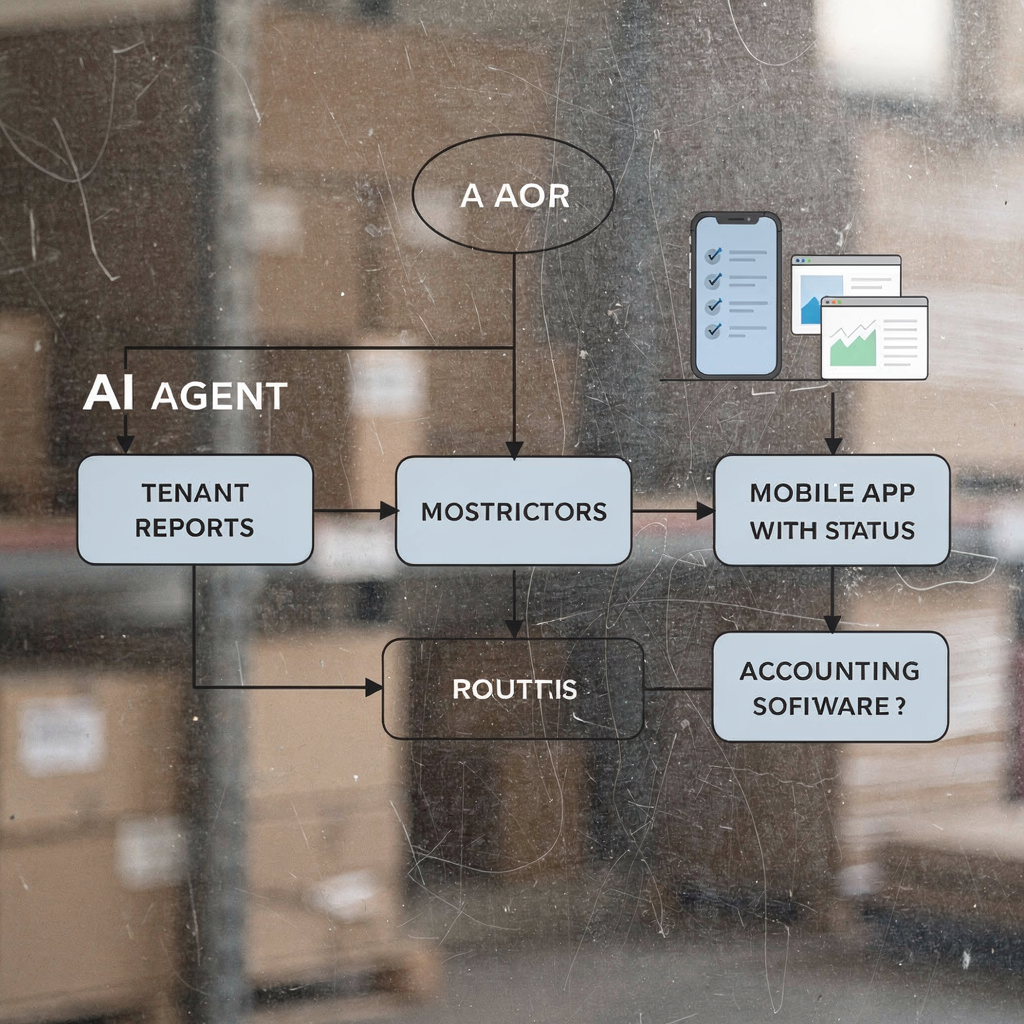
1. Receive tenant message or email. 2. Classify intent (repair, payment, inquiry). 3. If repair, collect location and urgency. 4. Create a work order and schedule maintenance. 5. Notify tenant of ETA and update the status. 6. If payment, send a rent reminder and link the payment. 7. Escalate to human when needed and attach full context.
That template shows how to automate many touchpoints. It works for both residential and small commercial portfolios. The template also helps with compliance by logging every decision and action.
Example flow: tenant reports a leak → the AI agent asks clarifying questions → it schedules a contractor and creates a work order → the tenant receives updates. This flow reduces on-site risk and speeds repairs.
When you add a chatbot to the front desk, it can answer FAQs and book viewings. Keep in mind that chatbots must hand over to humans for negotiation or sensitive issues. Also plan integration with your property management system to sync leases and payments. For teams that rely on email workflows, explore how virtualworkforce.ai automates the full email lifecycle and connects to ERP or SharePoint to keep context learn more.
Next step: deploy one template for maintenance and measure time to resolution and tenant satisfaction.
Drowning in emails?
Here’s your way out
Save hours every day as AI Agents label and draft emails directly in Outlook or Gmail, giving your team more time to focus on high-value work.
automation and use ai: lease automation, tenant screening, automate rent collection and ai solutions to simplify compliance
Use AI to automate the lease lifecycle from lead to move-out. First, parse potential tenants’ documents and score affordability. Next, auto-generate lease documents and push them to an e-sign system. Then, set reminders for renewals and obligations. This reduces manual paperwork and errors.
Tenant screening accuracy and speed improve with automated checks and identity validation. Screening tools cut process time by roughly 50% and flag high-risk applications earlier statistic. For rent collection, automated reminders and payment links reduce late payments and lower arrears. Systems that reconcile rent payments into accounting reduce disputes and save staff time.
Safeguards are essential. Always include human review points for outcomes that affect tenancy decisions. Also conduct bias mitigation to avoid unfair outcomes in tenant selection. Transparency matters: tell applicants when an automated decision affects them and provide appeal routes. Data privacy is critical; follow data protection laws and keep tenant data secure.
Example workflow: lead captured → AI screens potential tenants → approved applicant receives pre-filled lease → tenant signs electronically → first rent payment processed → reminders sent automatically. This streamlines onboarding and reduces vacancy days.
Training matters. Train your AI on high-quality, unbiased data and maintain oversight. Also audit decisions regularly for fairness. For legal compliance, store an audit trail of all automated steps and communications.
Next step: pick one process such as rent collection or lease creation. Then run a pilot with human review gates. That approach proves the process, reduces risk, and helps the team adopt the system.
frequently asked questions
What tasks should I automate first?
Start with high-volume, low-risk tasks such as answering FAQs, scheduling viewings and rent reminders. These provide quick wins, reduce load, and show measurable time saved.
How do we keep tenant data private?
Use strong access controls, encryption and regular audits. Also ensure vendors comply with local data protection laws and keep an audit trail for all automated actions.
When should a human be involved?
Involve humans for screening appeals, lease negotiations, deposit disputes and any decision with legal or reputational risk. Always create clear escalation rules so AI routes complex cases promptly.
Which KPIs show success?
Common KPIs include time-to-respond, resolution time for maintenance requests, arrears rate and vacancy days. Also track staff hours saved and tenant satisfaction scores.
How do we reduce bias in tenant screening?
Regularly audit screening models and test them against fairness metrics. Also review data sources and add human oversight for borderline cases to avoid discriminatory outcomes.
How long does a pilot take?
Run an 8–12 week pilot to measure effects on response times, costs and tenant satisfaction. That timeframe usually provides enough data to make a confident decision.
What is the typical cost saving?
Studies show operational cost reductions up to 30% from automation and smarter asset management research. Your results will vary by portfolio and processes automated.
How do I choose a vendor?
Look for vendors that integrate with existing systems, provide clear audit logs, and can explain model decisions. For email-heavy operations, consider providers that automate the full email lifecycle and ground replies in your operational data example.
Can AI improve tenant satisfaction?
Yes. Faster responses and predictable maintenance scheduling improve tenant satisfaction. Automated rent reminders also reduce friction and encourage on-time payments.
What are the next steps to start a pilot?
Select one use case, define KPIs, choose a compliant vendor, and run an 8–12 week pilot with human review gates. Finally, measure results and expand successful automations.
Drowning in emails?
Here’s your way out
Save hours every day as AI Agents label and draft emails directly in Outlook or Gmail, giving your team more time to focus on high-value work.