


property management: why ai email assistant for property and email assistant for property management matter
Email assistant for property management is becoming central to modern estate teams. First, property management faces high volumes of tenant messages, repetitive lease notices and maintenance coordination. Therefore managers need tools that reduce manual load and speed response. An AI email assistant for property can triage inbound mail, draft replies, create tasks and route issues for repair. This reduces time on admin and frees staff to focus on relationship work and complex cases.
Property management handles dozens of routine threads every day. For example, over 75% of property management professionals now adopt digital tools to improve workflow and tenant communication (75+ Property Management Statistics: Digital Revolution). Also, a survey of nearly 1,000 practitioners found technology adoption, including email automation, reduced response times by around 20–30% Voice of the Property Manager 2024. These figures show clear operational benefits when teams employ automation and focused virtual assistant support.
For instance, RiTA illustrates how an assistant that integrates with CRM data can nurture leads and followup proactively (RiTA – AI Prospecting Assistant for Agents). In practice, a property manager sees fewer missed tenant requests, faster maintenance scheduling and more consistent lease responses. Moreover, using an AI agent cuts repetitive email work while keeping context across long conversations. virtualworkforce.ai applies this approach for operations teams by automating full email lifecycles, grounding replies in ERP and other management systems to reduce errors and preserve audit trails.

Finally, an ai assistant for property management helps scale teams without hiring full staff. By automating followup, appointment booking, and basic tenant screening, teams lower operational costs and improve tenant satisfaction. If you manage multifamily or mixed portfolios, consider piloting an AI email assistant to measure gains in speed, vacancy reduction and lease conversions.
assistant for property management and property management virtual assistant: core tasks and boundaries
An assistant for property management can cover many routine tasks. First, it handles tenant enquiries and appointment scheduling. Second, it sends lease reminders and lease renewal prompts. Third, it manages maintenance triage and creates a work order when required. Fourth, it supports move-in and early tenant screening messages. These functions let property managers focus on high-value interactions and owner relationships.
However, a property management virtual assistant should not replace human judgment on complex matters. For instance, dispute resolution, legal notices and sensitive tenant screening decisions need a human review. Set clear escalation rules so the assistant flags high-priority or ambiguous cases to an operations team member. Use a simple flow: auto-respond for routine queries, triage for maintenance and escalate if the message contains legal language or urgent safety concerns.
Include templates and approvals to avoid errors. For example, pre-approved email templates for rent reminders, lease renewal offers and repair confirmations reduce liability and maintain tone. Also, add compliance checks for tenant data storage, and apply access controls and audit trails so security depends on vendor practices and internal governance.
Here is a short task list that an assistant can perform: auto-label incoming mail, schedule viewings, send renewal notices, confirm vendor appointments, log tenant requests, and update CRM records. Pair this with an escalation flowchart: auto-resolve, route to vendor, notify property manager, escalate to legal. For templates, keep variable fields for tenant name, lease dates, and unit numbers. Use email templates that pull data from property management software like AppFolio or Buildium to ensure accuracy. Also, integrate the assistant with those systems so it can create tickets and log work automatically.
Finally, define boundaries in the role description and training materials. This prevents role creep and clarifies which property management roles remain human. A virtual assistant should operate within set rules and allow property managers to focus on strategy and tenant satisfaction. If you need examples of how an assistant to manage logistics-like email works, check our resource on virtual assistant logistics for parallels virtuel assistent logistik.
Drowning in emails?
Here’s your way out
Save hours every day as AI Agents label and draft emails directly in Outlook or Gmail, giving your team more time to focus on high-value work.
tenant communication, maintenance request and lease automation: using ai to streamline operations and workflow
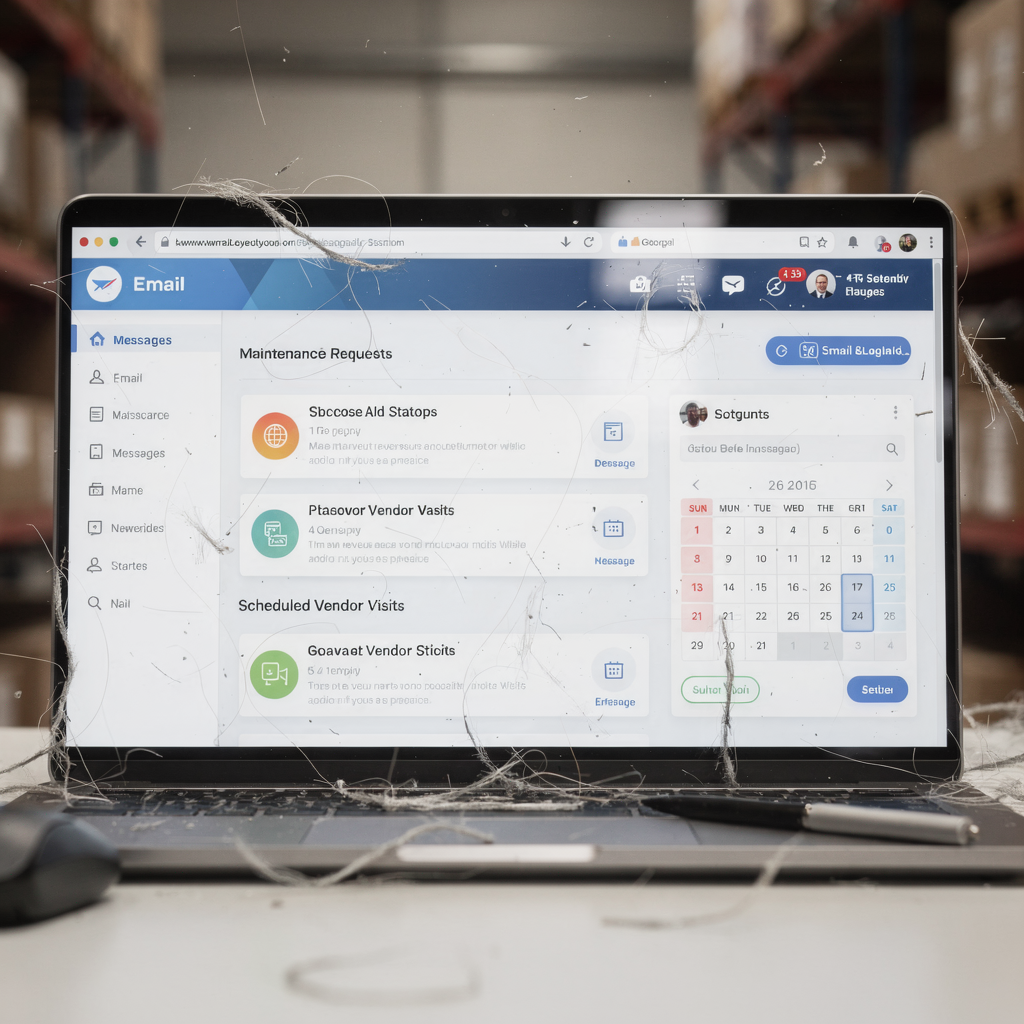
AI improves tenant communication by turning messages into structured tasks. First, when a tenant submits a maintenance request, the assistant reads intent, classifies urgency and creates a matching work order. Next, it schedules vendor visits and sends tenant updates through the full email lifecycle. This reduces missed requests, speeds repair times and increases tenant satisfaction. Industry benchmarks show email open rates around 25–30% and CTRs near 3–5%, which AI can improve through personalised timing and content (Email marketing stats).
A typical workflow looks like this: tenant reports a leak; assistant triages the report; assistant checks the vendor calendar; assistant books a slot; assistant confirms with tenant and owner; assistant creates a ticket and follows up until completion. This flow keeps everyone informed and maintains consistent records in property management systems. The assistant can also create folders with photographic evidence and vendor invoices to speed accounting reconciliation.
Implementation steps are simple. First, map your current processes. Second, connect CRM and property management software, for example a system like AppFolio or Buildium, so the assistant can pull lease details and contact lists. Third, test email templates and escalation rules. Fourth, monitor KPIs such as response time, time to resolve maintenance coordination and tenant satisfaction scores. virtualworkforce.ai shows teams typically reduce handling time per email from about 4.5 minutes to 1.5 minutes, freeing staff for more strategic work.
Below are short sample email sequences you can adapt. Lease renewal sequence: initial notice 60 days before lease end, friendly reminder at 30 days, personalised offer at 14 days, and final reminder at 7 days. Repair update sequence: acknowledgement at receipt, technician scheduled with ETA, follow-up after service, and closure confirmation. Use templates that include dates, next steps and contact details. Also, include a clear opt-out for automated messages to maintain consent.
Finally, measure outcomes. Compare baseline metrics before and after pilot: average time to close tenant requests, number of followup messages, and tenant satisfaction. Run an A/B test on email timing and subject lines to lift open and click rates. Over time, you will reduce manual work, improve communication and lower operational costs across the portfolio.
ai agent and ai agent for property management: automate the inbox, scale property teams and reduce operational costs
An AI agent manages repetitive threads and scales teams efficiently. Use multiple agents in parallel: an inquiry triage agent, a follow-up agent, and a renewal agent. Each agent has a focused rule set. The triage agent reads intent and labels emails. The follow-up agent sequences reminder messages. The renewal agent sends personalised lease renewal offers and records responses. This multi-agent approach lets property teams scale without hiring more staff.
KPIs matter. Track reduction in response time and staff hours saved. For instance, many teams report 20–30% faster replies with email automation, and measurable reductions in vacancy periods when renewal messaging improves lease conversions Voice of the Property Manager 2024. Time reclaimed from routine email lets property managers make strategic decisions, handle tenant escalations, and focus on relationship work.
Technical integration is straightforward. Connect the AI agent with the inbox and property management platforms. Define SLA rules so the agent escalates urgent requests to humans. Ensure fallback routes when confidence is low. virtualworkforce.ai emphasises no-code setup and business-controlled tone rules, which reduces the need for complex prompt engineering and improves traceability.
Here is a short demo flow: the inbox receives a tenant complaint; the triage AI agent labels it as maintenance and urgency medium; the agent checks unit lease and warranty details in management systems; the agent books a vendor and notifies tenant; after service, the follow-up agent sends a satisfaction check. Set success metrics: average response time, percentage of emails resolved without human touch, reduction in staff hours and vacancy improvement. For resource on scaling with AI agents without heavy hiring, see our guide on how to scale logistics operations with AI agents sådan skalerer du logistikoperationer med AI-agenter.
Finally, remember governance. Log all agent actions, keep audit trails and review edge cases weekly. This keeps liability low and ensures tenant support meets compliance standards. Use an initial pilot on one portfolio to validate impact before wider rollout.
Drowning in emails?
Here’s your way out
Save hours every day as AI Agents label and draft emails directly in Outlook or Gmail, giving your team more time to focus on high-value work.
property management software, portfolio and operational costs: measuring ROI with ai-powered and ai-powered email tools
Measuring ROI requires baseline metrics and clear dashboards. First, set baseline metrics for time on admin, vacancy days, response time and lease conversion rates. Next, run a pilot on one portfolio and compare results. Use a control group to measure differences in vacancy reduction and maintenance resolution times. Typical benefits include faster lease conversions, fewer missed tenant requests and reduced operational costs per unit.
Integration checklist is critical. Connect the AI assistant to property management software like AppFolio and to accounting and vendor portals. Ensure the assistant can write back actions to the CRM and create invoices where required. Confirm management systems and data mapping before go-live. Also, use dashboards that show emails handled, average time to close tenant requests and cost savings per month.
Cost versus benefit looks like this: calculate staff hours reclaimed multiplied by hourly rates, add savings from reduced vacancies and fewer late fees, and subtract platform costs. Many teams see payback within months when they automate routine tenant communication and maintenance scheduling. For example, a reduction in average handling time from 4.5 to 1.5 minutes per email scales across hundreds of messages daily and quickly offsets subscription costs for AI tools.
Suggested dashboards include monthly counts of emails automated, percentage of tenant requests auto-resolved, average time to schedule maintenance and lease renewal conversion rate. Review cadence should be monthly for KPIs and weekly for exception reports. Also, include financial tabs for vacancy impact and owner statements so property management companies can see direct income effects.
Finally, run A/B tests on email templates and send times. Use email templates that reference lease dates and owner preferences to increase click-through and acceptance. For technical resources on automating email drafting and improving customer service through AI, consult our logistics email drafting resources for methods that translate to property workflows logistik e-mail udarbejdelse med AI.
frequently asked questions for property manager: adoption, compliance, ai tools and best practice to streamline property teams and property management work
This section answers common queries and offers a buyer’s checklist for property management companies. First, how do I protect tenant data? Use access controls and audit trails and choose vendors where security depends on vendor practices. Second, how accurate is the assistant? Test templates and have clear escalation for low-confidence messages. Third, what about liability? Keep humans in the loop for legal notices and sensitive cases.
Buyer’s checklist: features, integrations, support and pricing model. Prioritise AI that integrates with property management platforms and accounting tools, supports email templates, and provides governance. Also, check that the vendor supports remote talent workflows and offers clear onboarding plans. For planning a pilot, scope a single portfolio and measure time on admin, tenant satisfaction and operational costs.
Short adoption steps: map daily operations, choose pilot properties, connect systems, configure tone and templates, train staff and monitor results. Include governance: weekly reviews, escalation rules and security audits. Recommended ai tools should offer thread-aware memory, deep data grounding and a no-code rules engine. For guidance on scaling operations without hiring, see our resource on how to scale logistics operations without hiring sådan opskalerer du logistikoperationer uden at ansætte personale.
Finally, a pilot plan template: define goals, pick KPIs, identify ownership, set pilot length and conduct a post-pilot review. Use monthly dashboards to track ROI and adjust rules. This ensures property managers to focus on tenant relationships while the assistant handles repetitive email and routine tenant requests. If you need examples of operations with AI agents in other sectors, our case studies offer transferable lessons AI ROI case studies.
FAQ
What is an email assistant for property management?
An email assistant for property management is software that automates routine email tasks for property teams. It triages tenant messages, drafts replies and routes requests to vendors or property managers.
How does an AI email assistant for property improve response times?
AI assistants label and prioritise messages instantly, which cuts triage time and speeds replies. Surveys show technology adoption can improve response times by around 20–30% Voice of the Property Manager 2024.
Can a property management virtual assistant handle maintenance request scheduling?
Yes. A virtual assistant can triage a maintenance request, check vendor availability and schedule appointments. It also keeps the tenant informed through automated updates.
Are these tools compliant with data protection rules?
Compliance depends on vendor features and configuration. Use access controls and audit trails and confirm the vendor’s security practices before storing tenant data.
Will automation replace property managers?
No. Automation reduces repetitive email and admin, letting property managers focus on strategy, tenant satisfaction and complex cases. Humans still handle disputes and legal matters.
How do I measure ROI for AI-powered email tools?
Set baseline metrics such as time on admin, vacancy days and lease conversion rates. Run a pilot and compare monthly dashboards to measure savings and payback timelines.
Which property management platforms work with AI agents?
Many AI assistants integrate with common platforms like AppFolio and Buildium, and with accounting and CRM systems. Verify APIs and integration support during vendor selection.
What should a pilot include?
Start with one portfolio and define KPIs, such as reduced response time and tenant satisfaction. Configure templates, set escalation rules and review results after the pilot period.
How do AI agents handle sensitive tenant queries?
AI agents flag or escalate sensitive or ambiguous queries to human staff. Establish clear rules so the assistant never auto-responds to legal or safety-critical messages.
Where can I learn more about practical implementation?
Review case studies and integration guides, and consult vendor resources for step-by-step deployment. For transferable methods, our guides on email drafting and scaling without hiring provide practical frameworks email drafting and scaling without hiring.
Drowning in emails?
Here’s your way out
Save hours every day as AI Agents label and draft emails directly in Outlook or Gmail, giving your team more time to focus on high-value work.