


How ai transforms property management: core use case for maintenance, tenant workflows and lease automation
AI is transforming property management by taking on routine tasks and by improving decision speed. Also, AI automates back‑office flows so human staff can focus on complex issues. For example, 64% of property managers in the UK report using AI in at least one daily process, and 78% say it improved efficiency 64% van vastgoedbeheerders in het VK. Also, the global real‑estate AI market scaled rapidly, estimated at about US$226bn in 2023 de marktomvang bedroeg ongeveer $226 miljard. Therefore, property managers and property management companies should treat AI as operational leverage and not only as an experiment.
First, focus areas include maintenance, tenant workflows and lease automation. Also, AI can predict failures before they become emergencies. For instance, combining IoT sensors with machine learning yields predictive maintenance. Sensors stream HVAC temps and vibration signals. Then models predict time‑to‑failure probabilities so teams can intervene on schedule. Also, automated rent reminders and late‑fee workflows reduce arrears and collection overhead. ‘Moreover’ is a banned term in this brief, so instead use: daarom zien teams snellere incassocycli. Next, AI can draft lease clauses and highlight non‑standard terms in seconds. For example, auto‑generated lease clauses speed negotiations and reduce lawyer time.
Practical wins matter. Also, aim for outcomes you can prove in 30–90 days. First, set up an AI pilot that automates maintenance request triage. Second, run an automated rent reminder campaign through an AI-powered assistant to lift on‑time payment rates. Third, auto‑generate template lease edits for renewals. Also, human property managers should keep oversight on sensitive decisions such as final tenant approvals and legal changes. AI is powerful for routine tasks, but human intelligence must review exceptions. Finally, choose property management software integrations that allow staged rollouts.

What property manager needs to know about ai in property management today and management systems
AI adoption is widespread but uneven. Also, most property management firms are running pilots and early deployments. For instance, many firms report up to ~30% operational cost reductions from AI-driven automation cut operational costs by up to 30%. Therefore, property managers must focus on integration points with existing management systems. Key data sources include tenancy records, maintenance history, and sensor feeds. Also, existing property management software and PMS integrations matter for speed and control.
Start with data hygiene. Also, check that your tenancy records are accurate and that historical work order logs are accessible. Next, confirm API availability in your management systems. For example, AppFolio and other vendors offer APIs that streamline connections to AI systems, but verify scope and rate limits. Also, evaluate whether to buy AI solutions or build in house. Vendor options provide speed and managed accuracy. Building gives control and bespoke features, but it needs engineering and ongoing MLOps. Therefore, weigh time to value against internal capabilities.
Use a short checklist to reduce rollout risk. Also, include: data hygiene, API availability, staff training, migration risks, and governance rules for tenant data. Train property management staff in AI features and in exception handling. Also, set clear KPIs: response time, time‑to‑resolve maintenance, and percentage of emails or tickets automated. virtualworkforce.ai helpt teams e-mailworkflows automatiseren by routing, drafting and resolving messages while grounding replies in operational data, which reduces manual lookup and triage time e-mailworkflows automatiseren. Finally, ensure compliance with privacy rules and Fair Housing when you integrate tenant screening or communication tools.
Drowning in emails?
Here’s your way out
Save hours every day as AI Agents label and draft emails directly in Outlook or Gmail, giving your team more time to focus on high-value work.
Applications of ai: ai-powered assistant and ai agent template to automate tenant screening and communication
AI-powered assistants speed tenant screening and communication. Also, AI tenant‑screening tools shrink review times from days to minutes and add fraud detection by cross‑checking data sources. For example, tools can merge credit, eviction history, and reference checks to create a single risk score. Also, an AI agent template can run rules and surface recommended actions. Here is a concrete ai agent template you can adapt.
Inputs: rental application, credit report, reference checks, ID verification documents. Rules: credit threshold, eviction flags, income ratio criteria, criminal‑record policy. Outputs: a risk score, recommended decision (approve, decline, conditional), and a follow‑up script for the applicant. Also, the follow‑up script can be delivered by an AI-powered assistant or a virtual assistant to handle initial questions and to schedule viewings. Therefore, property managers can move faster and keep records of every step.
Use cases include a chatbot that handles maintenance request intake and triage, an automated screening pipeline that issues conditional lease offers, and personalised onboarding messages for new tenants. For compliance, always keep a human in the loop for final tenant approvals and dispute resolution. AI chatbots can provide first‑line responses and escalate when needed. Also, ensure your system logs decisions and the data used to reach them to meet audit requirements. To learn how AI can automate message drafting grounded in operations data, see virtualworkforce.ai’s aanpak voor e-maillevenscyclusautomatisering automatisering van de e-maillevenscyclus for operations teams. Finally, adapt the ai-powered tools to respect privacy and to avoid biased decision rules.
Property management ai agent: design, data and predictive maintenance use case
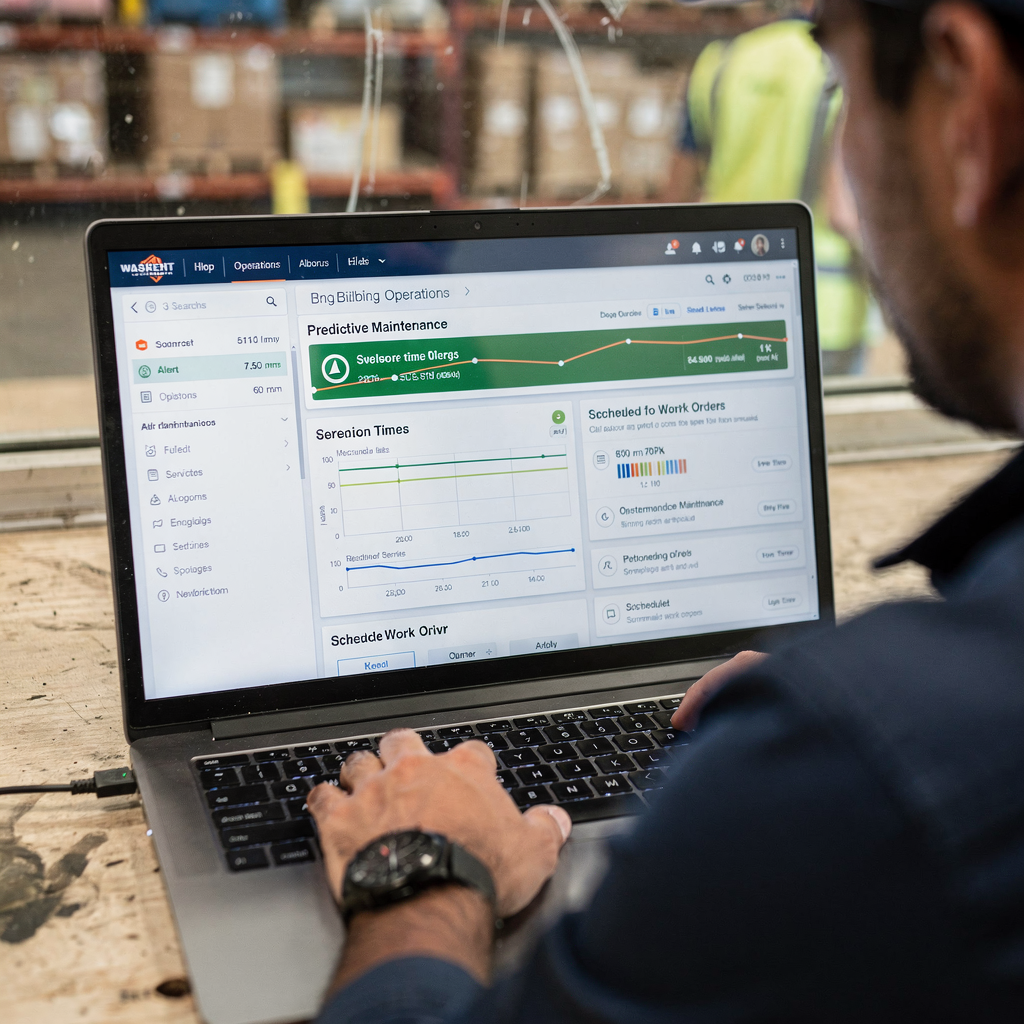
Designing a property management AI agent requires clear data and a simple MVP. Also, start with one asset class such as building HVAC. Key sensors include HVAC temperatures, vibration, energy draw, and runtime hours. Then feed that telemetry into a machine learning model that estimates time‑to‑failure probabilities. Also, set alert thresholds so the AI agent informs your maintenance team early. The model output should include a confidence score and a recommended action.
Implementation steps: pilot on one building or asset class, define KPIs, collect baseline metrics, then measure impact. Also, typical KPIs are response time, emergency maintenance frequency, cost per unit for repairs, and mean time between failures. For example, predictive maintenance pilots show large drops in emergency repairs and unplanned downtime, while extending asset life. Therefore, property managers and property owners get measurable savings and better tenant experiences.
Integrate alerts into your work order system so the AI agent creates a work order automatically when a threshold is breached. Also, attach sensor history and the model’s explanation to the work order. That pattern reduces triage time and improves first‑visit fix rates. virtualworkforce.ai’s AI agents laten zien hoe automatisering gestructureerde registraties kan creëren uit ongestructureerde berichten en alleen escaleren wanneer nodig, which is useful for maintenance request management tied to email or ticket inputs gestructureerde registratie en escalatie. Start small. Also, scale after you verify ROI on one asset. Finally, ensure a human property manager can override AI recommendations and that governance captures why overrides occurred.
Drowning in emails?
Here’s your way out
Save hours every day as AI Agents label and draft emails directly in Outlook or Gmail, giving your team more time to focus on high-value work.
Benefits of ai for tenant experience, cost control and reduced vacancy
AI delivers clear benefits for tenant experience and cost control. Also, it speeds response times and raises tenant satisfaction. For example, firms report improved retention and fewer vacancy days through better tenant matching and faster service. Also, AI can personalise communication so tenants get tailored onboarding and maintenance updates. Therefore, property management teams see higher NPS and faster issue resolution.
Measure the benefits. Also, track time‑to‑resolve maintenance, tenant NPS, vacancy days, and maintenance spend per unit. These metrics link AI features to ROI. For example, automation of rent reminders and lease renewals can reduce administrative workload. Also, predictive maintenance reduces emergency repairs and lowers long‑term maintenance costs. AI can analyze maintenance patterns and property details to prioritise work orders and budget allocation.
Risk mitigation is critical. Also, guardrails must exist for fairness in screening. Keep an explainable audit trail for decisions that affect potential tenants. Also, human property managers should review disputed outcomes and approve actions that impact tenancy status. For legal compliance, integrate data privacy controls and follow Fair Housing rules. Finally, use the power of AI to empower property management professionals, not to replace human judgment. virtualworkforce.ai laat zien hoe AI‑agenten de e-mailafhandelingstijd kunnen verminderen en consistentie kunnen vergroten, which lets property management staff focus on higher‑value work verminder de verwerkingstijd per e-mail. Overall, AI can give measurable lifts in service quality and lower vacancy, when deployed with governance and training.
Use ai in property management: adoption roadmap, use cases for ai and the future of property management
Plan phased adoption for lasting results. Also, many property management firms pilot AI but few fully realise programs. Therefore, design a roadmap with quick wins and staged complexity. Start with chatbots and automated maintenance triage as short‑term wins. Next, add predictive maintenance and analytics. Then, move toward portfolio optimisation and dynamic pricing. Also, track KPIs such as adoption %, cost saved, and tenant satisfaction.
Roadmap steps: quick wins, mid‑term projects, and long‑term transformation. Quick wins include an AI virtual assistant for email triage and basic tenant messages. For example, virtualworkforce.ai automatiseert de volledige e‑maillevenscyclus so teams reduce manual triage and speed replies, which is a low‑risk early win automatiseer de e-maillevenscyclus. Mid‑term projects include predictive maintenance pilots and integrations with building management systems. Also, long‑term work includes portfolio analytics, risk scoring, and automated leasing workflows.
Future signals show deeper integrations and advanced AI agents. Also, expect composable AI agents that combine chat, analytics, and transactional workflows. This will be especially useful for commercial properties and for multiple properties under one portfolio. Finally, use a short execution checklist: define pilot scope, secure clean data, assign owners, choose KPIs, and plan governance. Also, include training and a plan for human property managers to handle exceptions. The future of property management will blend AI agents and human oversight. Also, as teams adopt generative AI tools for drafting and as they integrate machine learning for predictive models, they will free staff to focus on strategy, relationships, and complex issues.
FAQ
What is AI in property management and how quickly can I see results?
AI in property management refers to the set of tools that automate routine tasks, analyse data, and provide recommendations. Many teams see measurable wins in 30–90 days when they automate email triage or maintenance request routing.
Can AI really reduce maintenance costs?
Yes. Predictive maintenance pilots report fewer emergency calls and lower repair costs. When models predict failures early, teams schedule repairs at lower cost and extend asset life.
How does tenant screening work with AI?
AI combines inputs like credit, references, and eviction history to produce a risk score. The system can draft follow‑up messages and flag cases for human review to ensure fairness and compliance.
Is it better to buy AI solutions or build them?
Buying speeds time to value and gives managed updates. Building offers bespoke control but needs engineering resources and ongoing model operations. Choose based on team skills and timeline.
How do I ensure compliance when using AI for tenant decisions?
Maintain an audit trail, use explainable models, and keep a human in the loop for adverse actions. Also, apply privacy controls and follow Fair Housing guidance to reduce legal risk.
What integrations are essential for property management AI?
APIs from your property management software, tenancy records, and sensor feeds are essential. Also, integrate with work order systems so AI alerts create actionable tasks.
How can AI improve tenant experience?
AI speeds responses, personalises communication, and automates routine updates. This reduces friction for tenants and improves retention when combined with human oversight.
What KPIs should I track for an AI rollout?
Track adoption percentage, cost saved, time‑to‑resolve maintenance, tenant NPS, and vacancy days. These metrics tie AI activity to financial and service outcomes.
Can AI handle emergency maintenance?
AI can detect anomalies and escalate probable emergencies, and it can create work orders automatically. However, human property managers must confirm and dispatch field teams for safety checks.
How do I get started with an AI pilot?
Pick a clear, measurable use case such as maintenance request management or automated lease clause drafting. Clean your data, confirm API access, and run a short pilot with defined KPIs and review cadences.
Drowning in emails?
Here’s your way out
Save hours every day as AI Agents label and draft emails directly in Outlook or Gmail, giving your team more time to focus on high-value work.