


AI leasing assistant: how AI and an AI agent for property management streamline lease workflows in multifamily property management
AI leasing assistant tools change how teams respond to renters. They use natural language processing, predictive models and automation to manage inbound leasing queries. This reduces response time, lowers lead loss and helps property management teams convert more prospects into signed lease agreements. For example, operators report measurable conversion lifts and faster lead response when AI answers initial questions and books viewings on demand. See the LUMINA AI leasing agent case study for real-world impact here.
The core job of an AI leasing assistant is simple. First, it captures a prospect’s message. Then, it classifies intent, pulls pricing and availability from the property management system, and offers viewing options. Finally, it can pre-fill application fields and pass documents for human review. This workflow cuts manual steps, so leasing teams can focus on higher-value work. Tracking KPIs becomes easier. Teams measure first response time, lead-to-tour rate and tour-to-application rate to prove ROI.
AI agents can handle routine messages 24/7, which reduces missed prospects. Also, AI helps enforce consistent language and compliance across replies. In a 2025 survey, many firms reported real efficiency gains while recognising scaling challenges; roughly 90% cited difficulties scaling ai agents effectively here. Property managers should treat AI as an operational asset and not a side project. For guidance on scaling operations without heavy hiring, teams can read a practical walkthrough on how to scale operations without hiring here.
When you introduce an assistant for property management, set clear handoff rules and success metrics. Also, build audit trails so a property manager can review any automated decision. This protects tenant data and supports compliance. Overall, AI reduces repetitive tasks, speeds up the leasing process and helps property management achieve measurable improvements in lease velocity and tenant experience.
Virtual leasing agent and ai leasing agent: automate tour scheduling, qualify prospects and support leasing teams at property management companies
A virtual leasing agent focuses on appointment logic and qualification. It integrates calendar feeds, sends reminders and applies qualification logic to screen leads. This reduces manual followup and frees human leasing agents to do what they do best: host tours and close deals. For busy portfolios, automating tour scheduling and confirmation messages lifts conversion and reduces no-shows.
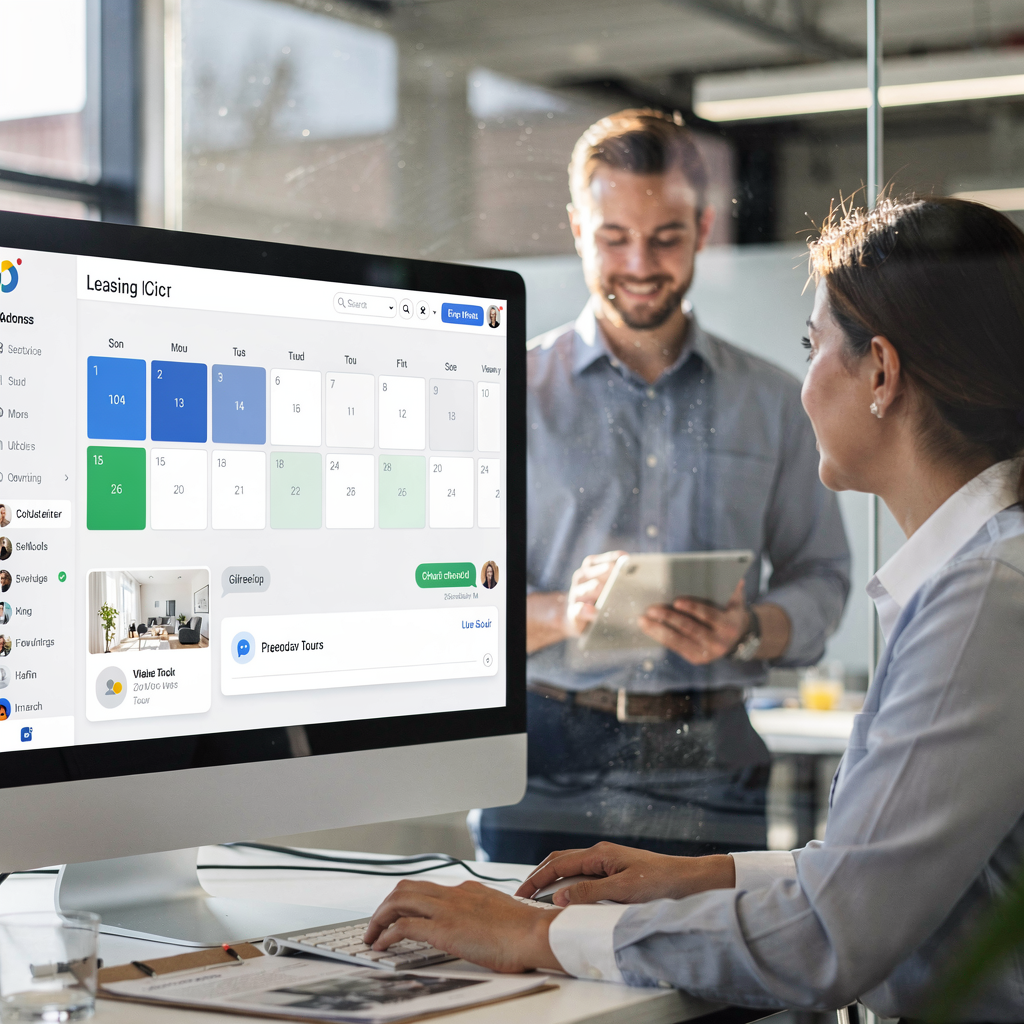
Set qualification rules up front. For example, require certain income thresholds, move-in dates or pet policies to filter prospects. The virtual leasing agent then prompts the prospect, requests documentation and can route a qualified lead to a human. This hybrid model prevents false positives while keeping the prospect journey swift. In trials, AI scheduling logic reduced manual followup and improved lead-to-tour rates.
Integration matters. The virtual agent must sync with property management software and calendars, and it must respect existing rules. Teams should map handoffs where the ai agent alerts leasing staff when a complex issue arises. Also, include a reminder sequence so a prospect receives timely prompts before a tour. If you use virtual assistant features that connect to email, they can draft confirmations grounded in your operational data and send them automatically. Virtual agents can handle routine administrative messages so that property managers can focus on resident relations and property performance.
When you deploy at scale, test the qualification logic and review edge cases. Track followup rates and false negatives. Ensure the ai agent preserves context across messages and hands off a complete lead history to the human leasing agent. The goal is to automate repetitive tasks, shorten the leasing process and support leasing teams across communities efficiently.
Drowning in emails?
Here’s your way out
Save hours every day as AI Agents label and draft emails directly in Outlook or Gmail, giving your team more time to focus on high-value work.
AI-powered leasing and chatbots: convert prospects to qualified leads and redefine the leasing agent and leasing specialist role
AI-powered leasing blends chatbots with advanced conversational AI to convert initial interest into qualified leads. Chatbots handle common FAQs, rent and availability queries, and tour scheduling. Then, more advanced AI steps in to qualify prospects and surface pricing options. Operators often find that chatbots capture leads outside business hours, and that human teams close higher-value deals. As Rently noted, “AI leasing agents are not just chatbots; they are becoming trusted partners that enhance every stage of the leasing journey, from search to signing” here.
Chatbots work best when they form part of a wider AI strategy. For example, a chatbot might answer simple questions while an ai agent extracts documents and flags income verification issues. This layered approach reduces workload and improves response time. Teams should design conversational scripts that move prospects toward a viewing and an application. Then, a leasing specialist steps in for negotiation and closing. This keeps human judgement where it matters most.
Property managers to focus on high-touch tasks, not repetitive replies. Using AI shifts day-to-day work: leasing specialists become conversion specialists. They handle tours, resident onboarding and relationship work. The assistant that handles routine emails and messages allows staff to create a stronger resident experience. For teams that handle heavy email volumes, tools that automate the full email lifecycle demonstrate big time savings and consistency. Learn how email automation can improve operations with a practical guide on how to scale operations with AI agents here.
AI also supports pricing and demand signals. Advanced ai models analyse seasonality and market data to suggest rent adjustments. This reduces manual pricing guesswork and improves revenue per unit. For multifamily property management, that means fewer vacant days and smarter lease offers. In short, ai-powered leasing tools and chatbots convert prospects into qualified leads while redefining the role of the human leasing agent and leasing specialist.
Property manager tools: use AI software to detect lease discrepancies, reconcile rent roll and improve real estate operations with AI
Property managers face a common problem: lease and rent roll discrepancies cause revenue leakage. AI software can extract lease terms, compare records and flag inconsistencies quickly. This reduces audit time and surfaces errors that a manual review might miss. Creti’s analysis highlights this operational gap and the value AI brings in reconciling records here.
Document extraction tools use OCR plus contextual models to read leases and populate structured fields. Then, reconciliation rules compare those fields to the rent roll in your property management system. If a mismatch appears, the ai agent for property management creates a ticket and attaches the relevant clauses. Property management teams then review only exceptions. This workflow streamlines accounting and reduces billing disputes with tenants.
Operational checks must include human review and an audit trail. AI flags need clear severity levels and remediation steps. Also, integrate alerts into maintenance management and accounting workflows so teams act fast. For example, when a lease shows a rent concession that the rent roll lacks, systems alert the property manager and route the case to the correct owner. That way errors get fixed quickly and compliance stays intact.
Tools that automate reconciliation deliver measurable savings. Some operators report 20–30% gains in leasing efficiency and reduced back-office errors when they pair ai software with strong process design here. To choose the right ai tool, prioritise systems with strong APIs, clear audit logs and the ability to push corrected data back into management systems. This keeps the source of truth current and supports better property performance across portfolios.
Drowning in emails?
Here’s your way out
Save hours every day as AI Agents label and draft emails directly in Outlook or Gmail, giving your team more time to focus on high-value work.
Build AI agents and choose the best AI: integrating AI solutions, AppFolio and AI property management tools for seamless automation
Decide whether to buy or build by assessing data quality, integrations and team capacity. Many scaling failures trace back to poor data and weak connections to property management software. If your stack includes AppFolio or another platform, prioritise vendors who offer proven connectors and clear data governance. Choose solutions that can read leases, update rent rolls and escalate to a human agent when needed.
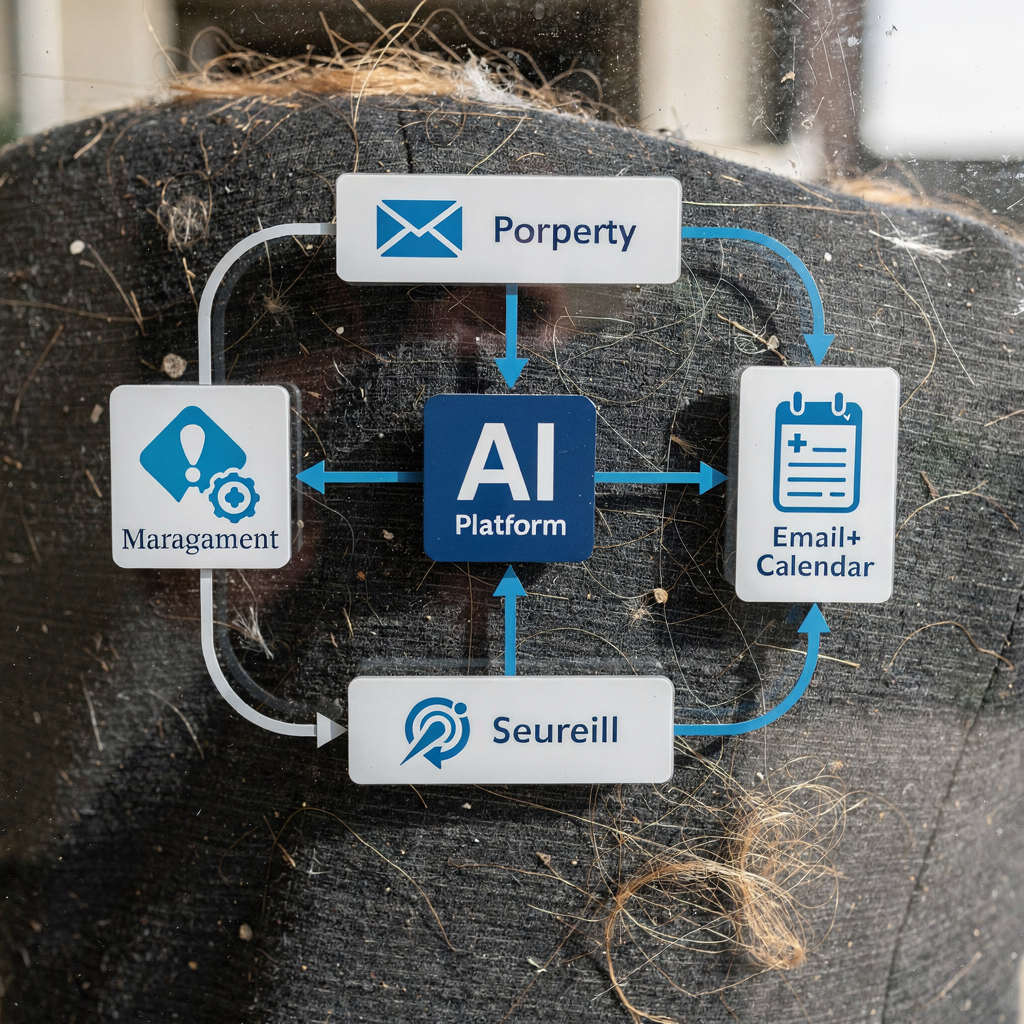
Use a checklist during vendor selection. First, confirm API access to the property management system and management systems. Next, verify document extraction accuracy and audit trails. Then, test escalation flows and fallback to a human leasing agent. Also, require security controls and data residency options. For teams that rely on email, consider platforms that automate the full email lifecycle and ground replies in ERP and property data; virtualworkforce.ai explains how email automation improves consistency and speed here.
When building ai agents, start small and iterate. Pilot a single community or a single use case such as tour scheduling or rent‑roll reconciliation. Then, measure KPIs, refine models and expand. Build-in human checkpoints so complex issues never go fully autonomous. Also, include a fallback plan for inbound leasing calls if digital channels fail. Choose a vendor or internal team that supports continuous learning and model updates. For property management in 2026, the right mix of advanced ai, tight integrations and governance will determine success. Look for vendors who can seamlessly connect data and demonstrate clear ROI for one property before scaling across leasing and operations.
Transform your leasing operations by 2026: a roadmap to implement an AI leasing assistant solution, scale automation and FAQs for property management companies
Transform your leasing operations with a staged rollout. Start with quick wins, then build towards comprehensive ai leasing assistant solutions. Phase one should automate inbound triage and schedule tours. Phase two should introduce lease extraction and rent‑roll reconciliation. Phase three should test autonomous leasing workflows with strict human oversight. Track metrics like faster response times, lead-to-tour conversions and reduced manual handling to validate impact.
Train your people. Offer hands‑on workshops for leasing teams so they understand how ai agents can handle routine tasks and how to manage escalations. Also, define governance: set data refresh cadences, monitoring dashboards and escalation paths for a human agent. For teams overwhelmed by repetitive emails, a platform that automates the full email lifecycle can cut handling time dramatically and improve consistency; read about virtualworkforce.ai’s approach to automating operational email here.
Security and privacy must be non‑negotiable. Ensure your chosen ai platform encrypts data and offers clear audit logs. Also, address tenant consent and access controls in your rollout plan. Expect implementation timelines of three to nine months depending on integrations and data quality. Many firms see measurable gains within the first six months if they pilot correctly and maintain governance. For common questions on vendor selection and timelines, include a short FAQ and a decision checklist when you brief stakeholders.
Finally, keep improvement continuous. Use live metrics to retrain models and update business rules. That approach helps you scale automation across portfolios. By 2026, organisations that treat AI as an operational partner will see improved leasing velocity and stronger property performance. If you want a simple playbook for pilots and rollouts, use the roadmap above and plan for clear checkpoints, staff training and a focus on qualified leads and tenant experience.
FAQ
What is an AI leasing assistant?
An AI leasing assistant is software that uses AI to manage leasing conversations, schedule viewings and process basic application steps. It automates repetitive tasks so human teams can focus on tours and resident relations.
Will AI replace the leasing agent?
No. AI handles routine tasks and inbound queries, while a human leasing agent focuses on showings, negotiations and resident care. AI augments staff and speeds up the leasing process rather than removing human judgement.
How does AI detect lease and rent roll discrepancies?
AI software extracts lease clauses using OCR and contextual models and compares them to the rent roll in the property management system. It then flags mismatches and routes them for human review, which accelerates audits and reduces revenue leakage.
What are quick wins when implementing AI for leasing?
Start by automating lead triage and tour scheduling, then add document extraction and reconciliation. These use cases deliver faster response times and immediate reductions in manual followup.
How long does it take to deploy an AI solution?
Deployment ranges from three to nine months depending on integrations, data quality and governance. Piloting one community can shorten the timeline and validate ROI before wider rollout.
How does AI protect tenant data?
Choose vendors with encryption, access controls and audit logs. Also, set clear data residency and consent policies to comply with privacy regulations and to protect tenant records.
What results can property management companies expect?
Many operators report 20–30% gains in leasing efficiency and faster lead response when they integrate AI into workflows. Specific outcomes depend on use cases and data integration quality source.
How do I choose the best AI for my portfolio?
Prioritise vendors with strong API integrations to AppFolio or your property management software, proven document extraction accuracy and clear audit trails. Test on one property first and measure KPIs before scaling.
Can AI handle inbound leasing calls?
AI can assist call routing and provide instant replies to common queries, but complex negotiations still need a human agent. Plan for hybrid flows where AI handles routine parts and escalates exceptions.
Where can I learn more about automating operational emails for property teams?
Resources on email automation explain how to reduce manual triage and improve consistency. For a practical example, see how virtualworkforce.ai automates operational email to speed replies and reduce handling time here.
Drowning in emails?
Here’s your way out
Save hours every day as AI Agents label and draft emails directly in Outlook or Gmail, giving your team more time to focus on high-value work.