


Why ai and artificial intelligence matter for commercial real estate, the real estate market, cre and real estate investors
AI matters to commercial real estate teams because it changes how investment teams find, value, and manage assets. First, AI scales data processing. Next, AI accelerates pattern detection across market feeds, rent rolls, footfall and comps. A quick fact shows how fast adoption rose: by 2024 about 92% of occupiers and 88% of investors had started or planned AI pilots. That statistic signals urgency. Investment teams should act now to capture efficiencies and reduce decision latency.
There is a difference between narrow ML models and broader AI systems. Narrow models focus on single tasks such as price forecasting or anomaly detection. Broader systems integrate NLP, computer vision and rules engines to create multi-step workflows. Those broader AI systems can read leases, analyze satellite imagery, and draft an acquisition memo in sequence. They therefore cover more of the investment lifecycle and reduce handoffs.
Impact areas include market forecasting, tenant analytics, operating cost reduction, ESG monitoring and transaction speed. For example, valuation models can run frequent mark-to-market updates. Tenant analytics help predict churn and underwrite new leases. ESG monitoring ingests utility data and flags compliance exceptions. Transaction speed benefits when due diligence is partially automated and reports are generated in real-time.
The business case is clear. AI improves accuracy, lowers operating costs and compresses timelines. However, firms must balance tooling with governance. Investment teams that adopt AI alongside strong data practices can gain a competitive edge. To learn how AI automates operational email workflows and the full email lifecycle for ops, see a practical example of email automation in logistics at our page on email lifecycle automation virtual-assistant-logistics. Overall, this chapter sets the scale and the reason why commercial real estate and real estate investment teams should prioritize AI now.
ai tool, ai tools for real estate and ai platform — platforms and tools, tool for real estate and top real estate agents for cre that are ai-powered
Platforms and tools for CRE divide into clear categories. Valuation engines provide frequent valuations and comps. Document and lease abstraction services extract clauses and populate structured fields. Deal-sourcing scouts ingest listings, match pipeline criteria, and rank opportunities. Building operations optimisation uses IoT and analytics to reduce OPEX and improve tenant comfort. Tenant-facing chatbots support requests and automate renewals. When selecting an ai tool, match features to data inputs, latency needs, and explainability requirements.
Examples range from enterprise offerings at large brokerages to specialist tools. Enterprise offerings from JLL and CBRE integrate with asset management systems. Specialist platforms such as VTS and Reonomy focus on leasing and discovery. Tools like V7 Go target vision and document workflows for teams that need automated extraction. Choose an ai platform that exposes APIs and maintains provenance for audit. That matters when compliance or an investor asks for a valuation model audit trail.
Quick comparison factors include input data needs, latency, explainability, and integration points with PMS, ERP and CRM. Prefer systems that map back to source documents. Also, factor vendor type: proptech firms, LLM integrators, and IoT+analytics providers each bring different strengths. For lease-heavy operations, choose a tool for real estate that abstracts lease terms and reduces manual work.
Practical note: pick platforms that expose APIs and provenance for audit. For teams managing operational inboxes, consider how an AI-powered assistant can draft and route replies while grounding responses in ERP and TMS data; see our page on ERP email automation for logistics for a related pattern erp-email-automation-logistics. Also, read how to scale operations without hiring to understand change management when introducing new tools how-to-scale-logistics-operations-without-hiring. In short, balance feature fit, explainability and integration before procurement.

Drowning in emails?
Here’s your way out
Save hours every day as AI Agents label and draft emails directly in Outlook or Gmail, giving your team more time to focus on high-value work.
How ai agent, agentic and agentic ai (with generative ai) change workflow and create agents for cre
Definitions matter. An AI agent is an autonomous or semi-autonomous actor that performs tasks on behalf of people. Agentic refers to systems capable of chaining steps over time. Agentic AI combines multi-step autonomy with integrations into data and tools. Autonomous AI agents can act across sources, run rule checks, and then elevate for human review. When combined with generative AI, these agents can draft reports, simulate scenarios, and generate synthetic data for stress tests.
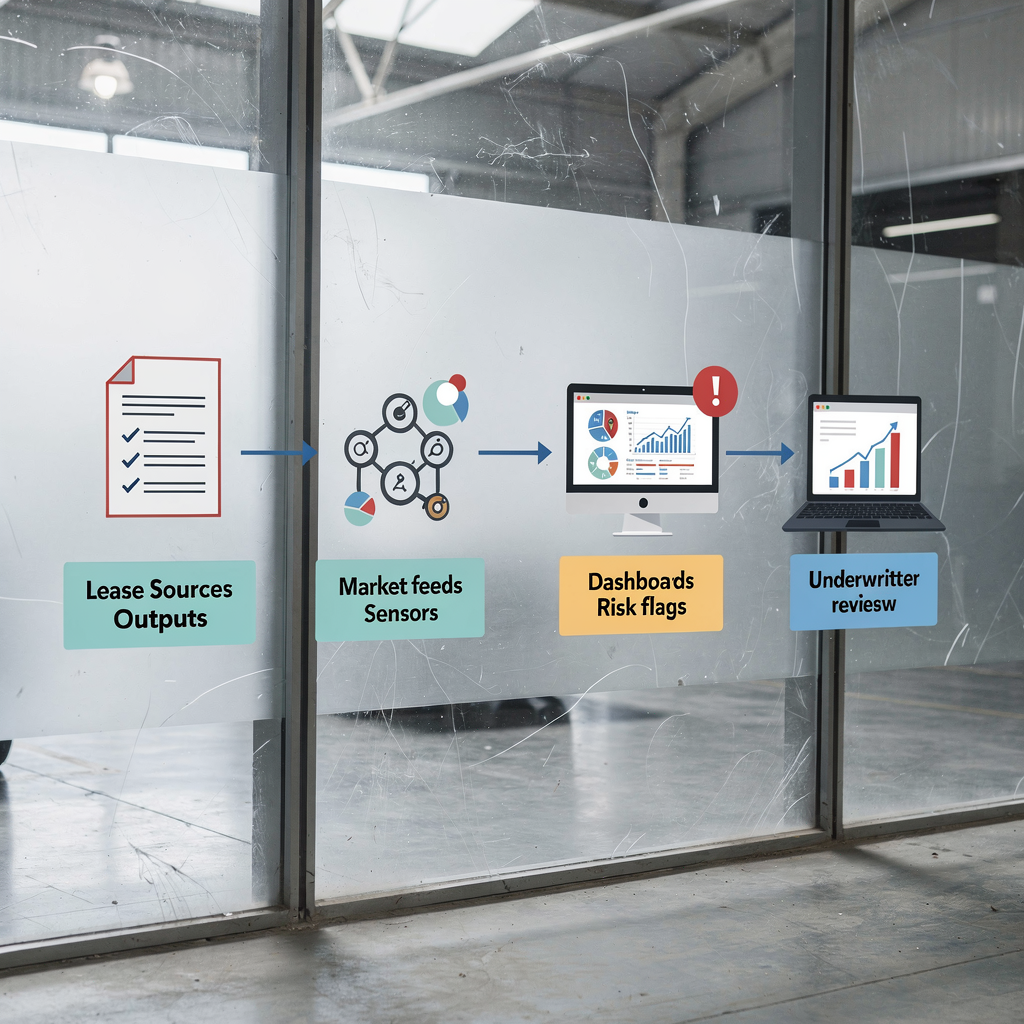
Generative AI plays a clear role. It automates report drafts, creates alternative underwriting scenarios, and fills templates for investor memos. For example, an agentic workflow can source deals from feeds, run automated due diligence, flag title or lease risks, and then draft LOI text for review. That workflow reduces repetitive tasks and speeds the pipeline while preserving human oversight where it matters.
Agentic systems require strong guardrails. Human-in-the-loop approvals must be enforced for high-risk steps. Clear audit trails and provenance are essential. A McKinsey report states that “AI-assisted forecasts have altered how investment professionals think about risk and opportunity in real estate markets,” and it highlights the need to change processes to capture benefits McKinsey.
Practical deployment steps include mapping the desired workflow, defining approvals, and isolating high-value tasks to automate. Also, run narrow pilots that prove the agent can integrate with AMS and ERP, and then scale. Remember that agentic systems and autonomous agents are powerful when paired with explicit business rules. Finally, include monitoring to detect drift in predictions and keep humans in charge of final investment decisions.
use case: ai applications for valuation, analytics, due diligence, automation, portfolio management and real estate investment
Valuation is a high-value use case. Advanced valuation models combine comps, rent rolls, macro indicators and footfall data to deliver frequent estimates for mark-to-market and deal sourcing. A robust valuation model uses multiple inputs, backtests against realized sales, and reports confidence intervals. This helps teams underwrite with clearer assumptions and respond to market moves in real-time.
Due diligence and automation reduce manual hours. Lease abstraction is among the highest-impact AI applications in operations. Automated extraction turns lease clauses into structured fields for compliance checks, tenant credit scoring, and rent roll reconciliation. Time-to-decision drops when teams can access summarized lease terms and AI document highlights. Auditability improves when the system links each extracted clause back to the source file.
Analytics and portfolio use cases include predictive vacancy, cap‑rate compression scenarios, and tenant credit scoring. Portfolio management benefits from automated rebalancing suggestions and scenario planning. AI-driven analytics can suggest where to allocate capital based on expected returns and downside risk. For CRE portfolios that include many asset types, these tools help prioritize dispositions or capital expenditures.
Measurables must be tracked. Track time to decision, error rate in abstracts, predictive accuracy versus actual sales, and OPEX savings. For example, firms that implement automation for document review often report large reductions in review hours. A literature review of AI in real estate finance argues that adoption requires technological and organizational change to deliver those gains academic review. Use this chapter to map concrete ROI metrics and to prioritize the first set of ai applications to trial.
Drowning in emails?
Here’s your way out
Save hours every day as AI Agents label and draft emails directly in Outlook or Gmail, giving your team more time to focus on high-value work.
implementing ai, ai use and workflow changes for the real estate business, ai in real estate and ai in cre — best ai practices
Governance is the foundation. Build a data catalogue, record lineage, and set model validation standards. Maintain compliance with audit logs and human oversight for material steps. Firms must document the decision criteria and preserve source links for any AI output. This practice produces traceability and supports investor queries about assumptions in investment analysis.
Talent and change management matter. Hire data engineers and modelers, and pair them with asset teams. Run pilots that are narrow in scope and have clear KPIs. Scale only when ROI is proven. For teams looking to free operations from repetitive email work, our solution automates the email lifecycle and reduces handling time while keeping full control of tone and escalation; see how our email automation integrates with operational systems in our case pages on automated logistics correspondence automated logistics correspondence and logistics email drafting logistics-email-drafting-ai.
Data priorities include unifying leasing, financial and ESG feeds. Invest in mapping and quality before building expensive models. Procurement should prefer modular ai tools with SLAs and explainability features. Also, set a retraining cadence to avoid model drift. Finally, start with business processes that have high volume and clear rules so that automation yields measurable savings quickly.
ai-powered platforms and tools for real estate investors: selecting the best ai, platforms and tools while monitoring the real estate market
Selection starts with a checklist. Look for proven accuracy, integration capability, security, explainability, and vendor stability. Validate a vendor’s claims with backtests and references. Ask for a worked example that maps the tool to your investment criteria and pipeline. Prefer tools that provide API access and clearly documented provenance.
Risks include model drift, poor data, regulatory scrutiny, cyber risk and over‑automation that hides assumptions. To mitigate these, require explainability features and enforce human approvals on material outcomes. Keep monitoring in place so prediction quality can be measured against realized results. Also, plan for incremental rollout rather than full replacement of existing processes.
Future trends point to more agentic sequencing of deals, richer generative-scenario planning, and tighter CRE–IoT–AI loops for operational optimisation. Firms that combine sensors, building systems and analytics will see improved OPEX and tenant satisfaction. For sensitivity around customer communications and email workflows, teams can apply conversational AI and ai assistant patterns to keep messages accurate and traceable. A 2025 field guide documents the rapid adoption of new tools and the need to align them with process change V7 Go field guide.
Closing recommendation: run focused pilots against defined KPIs, document lessons, and build a three-year roadmap that combines platforms, people and governance. Firms must set a clear approval matrix, invest in data foundations, and align procurement with reuse and explainability. Those steps will help turn powerful AI into measurable investment returns and a competitive edge.
FAQ
What is an AI agent and how does it differ from other AI tools?
An AI agent is an autonomous or semi-autonomous actor that performs tasks across data and tools. It differs from single-purpose AI tools because it can sequence steps, integrate with systems, and escalate for human review when needed.
How do AI agents improve valuation accuracy?
AI agents combine comps, rent rolls, macro indicators and external data to produce frequent valuations. They also provide confidence bands and backtests so analysts can compare predictions to actual outcomes.
Can AI automate lease abstraction and due diligence?
Yes. AI document extraction can pull clauses, dates and obligations from lease files and populate structured fields. That reduces manual hours and lowers the error rate in abstracts.
What governance is required when implementing AI in real estate?
Governance should include a data catalogue, lineage tracking, model validation and audit logs. Human oversight and approvals are essential for material investment decisions and regulatory compliance.
How should firms choose between an ai platform and a specialist ai tool?
Choose based on integration needs, explainability requirements, and the data you have. Platforms are better for broad integrations; specialist tools often deliver faster ROI for a single use case.
What is agentic AI and why does it matter for deal workflows?
Agentic AI refers to systems that can perform chained, multi-step actions across tools and data. It matters because it can sequence deal sourcing, basic due diligence, and draft LOIs, which speeds the pipeline.
How can AI help with portfolio management?
AI helps by predicting vacancy, modeling cap‑rate shifts, and suggesting allocation changes across assets. Those insights help portfolio managers underwrite and prioritize capital deployment.
What are common risks when deploying AI in the real estate sector?
Common risks include model drift, low-quality data, cyber threats and lack of explainability. Firms must monitor performance and enforce human checks to mitigate these risks.
How long does it take to see ROI from AI pilots?
Time to ROI depends on the use case. High-volume, rule-based tasks such as lease abstraction or email automation often show savings within months once data mapping and integrations are in place.
Where can I find examples of operational AI applied to email and workflows?
Our operational pages describe end-to-end email automation and practical integrations with ERP and TMS systems. For examples, see the pages on automated logistics correspondence and ERP email automation for logistics which explain how AI automates the full email lifecycle while preserving control and auditability automated logistics correspondence, erp-email-automation-logistics.
Drowning in emails?
Here’s your way out
Save hours every day as AI Agents label and draft emails directly in Outlook or Gmail, giving your team more time to focus on high-value work.