


ai agent, healthcare, ai agents in healthcare — how AI agents transform medical supply e‑commerce
An AI agent ingests orders, inventory data, supplier status and external signals to reduce stockouts and speed fulfilment. These intelligent processes run continuously. As a result, teams see fewer cancelled procedures and faster patient care decisions. Studies report inventory cost reductions up to ~30% and order-fulfilment improvements around 25% when platforms use AI-driven supply chain tools; the analysis behind these figures is available here AI Agents Speed Data-to-Discovery in Med Research | Bluebash. In addition, platforms that layer AI agents with real-time tracking report stockout drops near 40% and big reductions in delivery delays The future of pharmaceuticals: Artificial intelligence in drug …. For healthcare teams, these numbers matter. They directly affect clinicians and patient care. When supplies arrive on time, clinical decisions proceed without avoidable waiting. In contrast, a shortage of consumables forces rescheduling and extra administrative burden.
AI agents in healthcare act autonomously for many procurement tasks. They forecast demand using historical usage and current scheduling. They reconcile PO exceptions and notify purchasing teams. They also maintain communications with suppliers and carriers so that the e‑commerce flow stays intact. For operations teams that handle hundreds of invoices and emails daily, AI agents can also automate the full lifecycle of email-based procurement. Our platform, virtualworkforce.ai, automates operational email, which reduces handling time and cuts errors that cause delays. For logistics-specific email automation, teams often start by connecting ERP and shipping systems; see practical approaches in this logistics assistant guide virtual assistant for logistics.
Why prioritize AI now? Healthcare systems face tighter margins and higher demand. At the same time, regulatory scrutiny around medical devices and temperature-sensitive shipments rises. Intelligent ai agents give procurement teams a way to react faster. They blend predictive models with rule-based safety checks. They also support healthcare professionals by freeing them from repetitive administrative work. The outcome is improved patient satisfaction and smoother healthcare delivery.
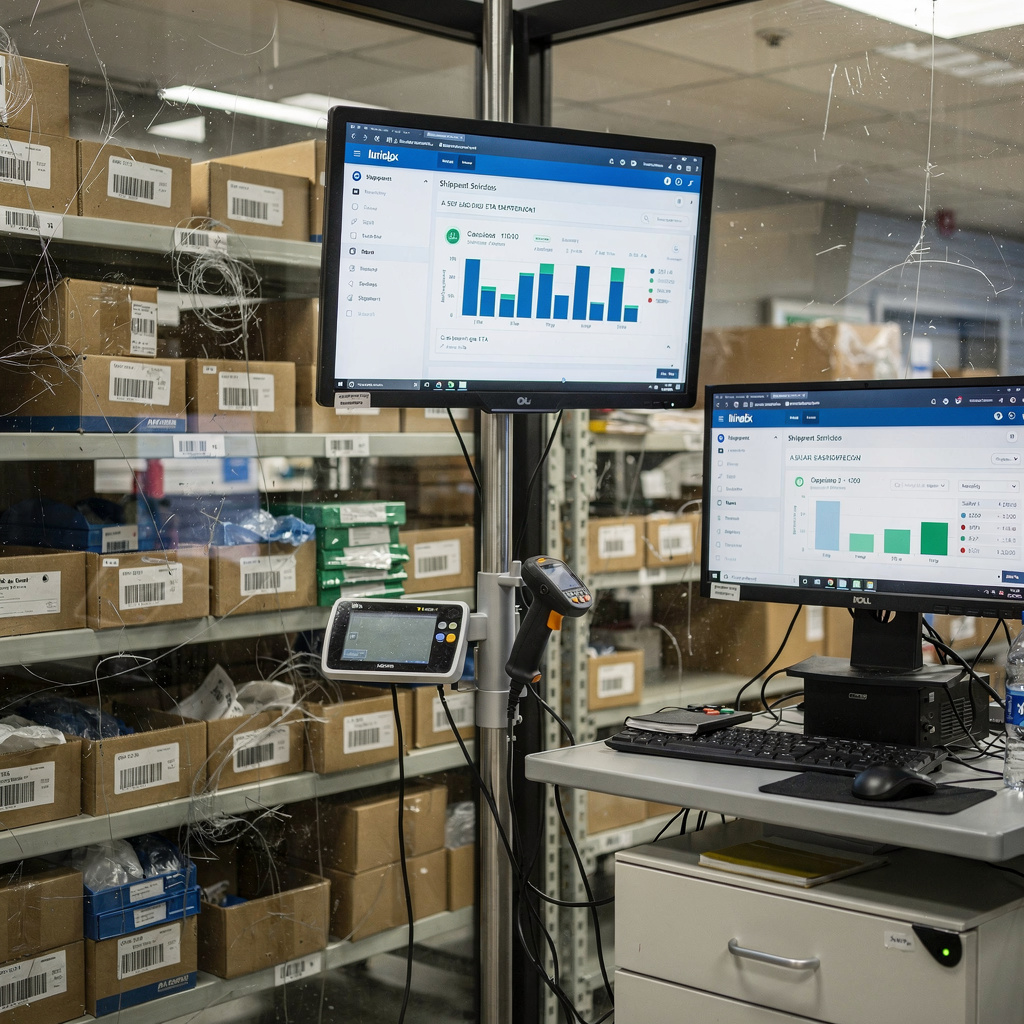
ai agents work and key features of ai: what intelligent ai agents and ai-powered systems do for the supply chain
AI agents work by combining data ingestion, predictive modeling and automated actions. First, they pull inputs from ERP, e‑commerce platforms, IoT sensors and WMS feeds. Next, the systems run predictive analytics and machine learning models to forecast demand and detect anomalous usage patterns. Then they trigger procurement events or route alerts to buyers. This continuous loop shortens lead times and reduces manual steps. The architecture often shows three layers: AI models, an agent orchestration layer and integrations to suppliers and logistics partners. That structure lets teams scale without reworking every connection.
Key features of AI include real-time analytics, predictive models, rule engines and conversational interfaces. A typical AI agent uses natural language processing to parse emails and orders. It then creates structured tasks or drafts replies. Those tasks may pass through an approval workflow that a procurement manager configures. When speed matters, the agent can auto-place replenishment orders for low-risk consumables and escalate critical items to a clinician or supply lead. You can read about how similar automation handles freight email drafting in this resource on logistics email drafting logistics email drafting AI.
Intelligent ai agents provide actionable insights while keeping human oversight in the loop. They surface an actionable alert about an impending shortage and show the drivers behind that signal. For example, an agent might flag unexpected consumption of PPE after a surge in procedures. The agent then suggests transfer options from other sites and a recommended supplier order. Those suggestions rely on ai algorithms that balance cost, SLA and urgency. Clinicians and procurement leads appreciate that the suggestions remain explainable. The system logs the decision rationale so reviewers can audit and learn from prior events. These capabilities support clinical decision support and improve hospital operations by reducing manual touches and decreasing PO cycle time.
Drowning in emails?
Here’s your way out
Save hours every day as AI Agents label and draft emails directly in Outlook or Gmail, giving your team more time to focus on high-value work.
examples of ai agents, use case and medical equipment scenarios for healthcare providers
Examples of AI agents appear across procurement, inventory and asset tracking. One common use case is predictive restocking for consumables such as PPE and dressings. An AI agent learns historical usage and adjusts reorder points ahead of scheduled clinics or seasonal surges. Another use case covers asset tracking for medical equipment. Agents combine IoT beacons and WMS feeds to locate devices and to warn when a device’s battery or maintenance window approaches. This prevents equipment downtime and ensures critical equipment is always operational.
Startups and vendors now deliver agentic AI solutions that negotiate with suppliers and automate urgent buys. For example, an agent can auto-negotiate price for a rush cardiac catheter and then submit the best offer within preset governance rules. Hospital teams that trial these ai solutions report lower lead times and fewer manual negotiations. A 2025 industry survey found companies using AI agents experienced a 35% decrease in delivery delays and a 40% reduction in stockouts Impact of Artificial Intelligence (AI) Technology in Healthcare Sector. Those figures show how ai-driven procurement affects clinical care and throughput.
Practical deployments often pair AI agents with device telemetry for medical devices and cold-chain monitoring. For temperature‑sensitive items, AI agents track real-time data from sensors and trigger quarantine or reroute actions when thresholds approach. That capability protects both patients and compliance with healthcare regulations. Another example is automated supplier onboarding for specialty medical equipment. The agent gathers documentation, validates certificates and flags missing items. This reduces time to qualification and lowers operational costs. For teams that need template-driven correspondence, automated logistics correspondence tools can help; see this overview of automated logistics emails automated logistics correspondence.
automation, automate and workflow: embedding healthcare automation into procurement and operations
Begin by choosing what to automate first. High-volume consumables deserve priority. Automate routine reorder points for gloves and syringes. Likewise, configure agents to automate invoice reconciliation and to route exceptions. These steps reduce manual touches and speed approvals. Next, build simple rules for low-risk purchases so the agent can auto-approve them. For clinical-critical items, set staged human intervention. This balances speed with patient safety.
A well-designed workflow separates routine tasks from clinical decisions. Agents can triage incoming emails and tag them by intent using natural language processing. They then place tasks into the correct workflow queue. That approach helps teams work alongside healthcare professionals without overwhelming clinicians. It also reduces the time staff spend on administrative tasks. Virtualworkforce.ai’s email automation shows how this works in practice by labeling intent, routing, drafting replies and pushing structured data back into ERP and WMS systems ERP email automation for logistics. These capabilities shorten response times from minutes to under two minutes per message in many deployments.
Key operational KPIs include fill rate, lead time, PO cycle time and manual touches per order. Track these KPIs during a pilot and again after scaling. If a pilot does not improve PO cycle time, refine the agent’s decision thresholds. If manual touches per order remain high, increase the agent’s access to grounding data so it can act without human lookups. Effective governance matters, however. Define approval thresholds and keep a human in the loop for purchases that pose clinical risk. That practice ensures compliance with healthcare regulations and maintains clinician trust. Over time, intelligent automation reduces operational costs and improves operational efficiency while keeping audit trails clear.

Drowning in emails?
Here’s your way out
Save hours every day as AI Agents label and draft emails directly in Outlook or Gmail, giving your team more time to focus on high-value work.
tracking and management, healthcare supply, preventive measures to optimise patient care
Tracking and management in healthcare require continuous visibility. AI agents provide that view by monitoring stock levels, equipment location and cold-chain status in real-time. Agents analyze usage patterns and flag deviations quickly. For example, an agent may predict a depletion that could impact a scheduled surgery. It then reserves stock or reroutes a shipment so that the clinician has tools on time. These preventive actions reduce cancelled appointments and improve clinical throughput.
Preventive measures include agent alerts for predicted depletion and automatic holding of critical stock. The agent can also suggest transfers from other healthcare facilities when a local shortage appears. This networked approach reduces the probability of a shortage becoming a crisis. In addition, agents can monitor expiration dates and rotate inventory accordingly. That reduces waste and protects patient safety. Tracking also extends to billing reconciliation. When agents match deliveries against POs and invoices, they streamline billing and reduce disputes. In short, agents improve both clinical and financial outcomes.
The link to patient care is direct. When clinicians find supplies in the right location at the right time, they spend more time on direct patient care. Patient satisfaction increases because procedures run smoothly. Further, predictive analytics helps avoid emergency restocks that often cost more and have lower reliability. AI agents to manage these events reduce manual interruptions for healthcare staff. They also produce actionable insights that procurement teams use to refine safety stock levels and reorder policies. Over time, these changes optimize resource allocation and support preventive healthcare by ensuring critical medical items remain available when clinicians need them most.
implement ai agents, ai platform, ai in healthcare and transform healthcare operations — steps, risks and governance
Start with a clear implementation roadmap. Pilot on a high-impact product family. Validate models and integrations next. Then scale across sites and monitor continuously. This phased approach reduces disruption to hospital operations and builds stakeholder trust. Involve procurement, clinical and IT teams early. Define success metrics such as stockout reduction, PO cycle reduction and time saved per order. Measure ROI and adjust the rollout plan based on results.
Risks include data privacy issues, integration with legacy systems and regulatory compliance. You must enforce GDPR and HIPAA controls where patient data touch procurement records. Use explainable ai and logging to satisfy auditors and clinicians. For critical medical items, require human approval and clear audit trails. Select vendors that support modular integration and that document ai algorithms clearly. Look for an ai platform that integrates with ERP and WMS, and that supports thread-aware email memory for long procurement dialogues. Our experience shows that deep grounding in operational systems shortcuts many failure modes; see how email automation reduces manual triage in operations how to scale logistics operations with AI agents.
Governance should include clinical review, procurement oversight and IT controls. Define SLAs with suppliers and build escalation paths for exceptions. Train healthcare staff on when to trust the agent and when to override it. Maintain human oversight for clinical decision support and for scenarios that affect patient safety. Finally, vendor selection matters. Choose partners with proven integrations to logistics and with experience in healthcare delivery. Confirm they report on operational costs and operational efficiency. That way, you gain measurable improvements while limiting compliance risk. When done right, AI agents for healthcare transform workflows and free clinical teams to focus on clinical care.
FAQ
What is an AI agent in the context of medical supply e-commerce?
An AI agent is an autonomous software component that ingests orders, inventory and supplier data to take actions such as forecasting and ordering. It can also parse emails and automate routing, which reduces manual work for procurement teams.
How do AI agents improve patient care?
AI agents reduce shortages and speed fulfilment, which lowers the chance of cancelled procedures and delays. They also free clinicians from administrative tasks so those professionals can focus more on direct patient care.
Are AI agents safe to use for clinical‑critical purchases?
Yes, when you enforce governance and staged approvals. For clinical‑critical items, agents should suggest actions while clinicians or procurement leads retain final approval to ensure safety and compliance.
What steps should a hospital take to implement AI agents?
Begin with a pilot on a high-impact product family, validate models and integrations, then scale across sites. Include IT, procurement and clinical stakeholders during every phase to ensure acceptance and compliance.
Do AI agents require access to patient data?
Not necessarily. Most procurement agents work with inventory, scheduling and supplier data. If agents access patient data, you must ensure compliance with GDPR and HIPAA and restrict access to only necessary fields.
Can AI agents integrate with legacy ERPs and WMS systems?
Yes, many platforms provide connectors and APIs to integrate with legacy systems. Choose a modular ai platform that supports common ERP and WMS integrations to minimize custom engineering.
How do AI agents handle temperature‑sensitive medical supplies?
Agents monitor real-time data from IoT sensors and enforce temperature thresholds. They trigger quarantines or reroutes if conditions deviate, protecting product integrity and compliance with healthcare regulations.
What ROI can healthcare organizations expect from AI agents?
Studies show inventory cost reductions up to 30% and order‑fulfilment improvements near 25%. In many pilots, teams also see large drops in stockouts and delivery delays, which together lower operational costs and improve throughput source.
How do AI agents interact with healthcare professionals?
Agents work alongside healthcare professionals by automating routine tasks and surfacing actionable insights. They draft communications, route approvals and log decisions so clinicians retain control over clinical care and critical choices.
Where can I learn more about automating procurement emails and logistics workflows?
For examples of automated email workflows that support logistics and procurement, review resources on implementing virtual assistants for logistics and ERP email automation. These pages explain how to link operational data sources and automate routine correspondence virtual assistant for logistics, ERP email automation for logistics and automated logistics correspondence.
Drowning in emails?
Here’s your way out
Save hours every day as AI Agents label and draft emails directly in Outlook or Gmail, giving your team more time to focus on high-value work.