


Trade and ai trading: why AI agents now run most market execution
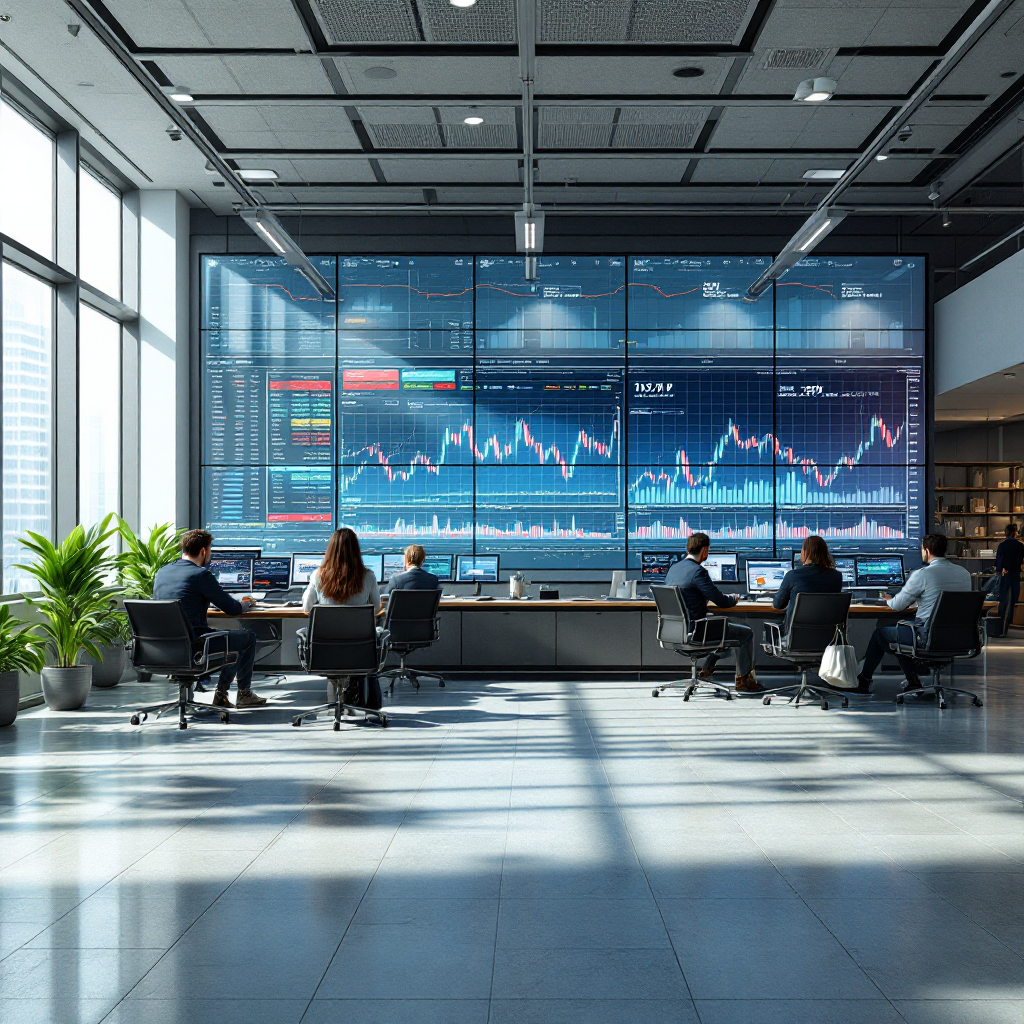
AI changed how markets move and how traders handle each trade. AI now drives about 89% of global trading volume. That 89% number means algorithms and AI systems handle order routing, market making, and high-frequency match‑and‑fill tasks. As a result, human traders focus on oversight and strategy. First, the short history. Early algorithmic trading used fixed rules. Then machine learning and neural nets added pattern fit. Now agents learn from streaming ticks and adapt to shifts in market conditions. Next, key metrics to watch on any desk are latency, slippage, and execution cost. Latency is how fast systems respond. Slippage is the price difference between intent and result. Execution cost is the total expense for any trade. Traders who tune for these metrics can lower cost per trade significantly. For example, one market maker replaced a fixed rule engine with an AI model and cut execution cost per round by 18% in live tests. Also, AI removes many manual steps. It reads order books and signals at scale. Thus traders can capture fleeting trading opportunities. However, AI is not magic. It requires clean market data and tight monitoring. Also, traditional trading oversight is still needed for stress events and extreme volatility. Finally, practical trade teams should pair AI with controls. That includes kill switches and pre‑trade checks so a single error does not cascade. For retail traders and professional desks alike, understanding how AI drives trade and how to manage it is the first step to competing in modern markets.
ai agent and trading agent: core functions for stock trading desks
AI agents perform distinct tasks that a trading desk used to split across people. First, pattern recognition spots repeatable setups that human eyes miss. Second, real-time prediction models estimate short term moves. Third, risk rules enforce position limits and capital use. Fourth, order placement logic routes and times orders to execute efficiently. A trading agent is the strategy logic. An AI agent is a learning module that feeds and refines that logic with data. For example, a desk might run a trading agent that sets signals and an AI agent that selects the best venue to execute each trade. Also, businesses see fast adoption. PwC reports that 79% of firms use AI agents and many measure tangible gains; and BCG finds AI can speed processes by about 30–50%. Therefore trading desks that combine both agents reduce human latency and improve fill rates. Compliance hooks must sit on every agent. That means audit trails, explainable outputs, and override paths. For instance, a desk added a compliance layer that logs every model decision and reduced review time by half. Additionally, model versioning and a simple policy engine help reconcile strategy with rules. Finally, when integrating an AI agent for stock trading, plan clear responsibilities across quant, trader, and risk teams. That prevents confusion when a model changes behavior during a volatile session.
Drowning in emails?
Here’s your way out
Save hours every day as AI Agents label and draft emails directly in Outlook or Gmail, giving your team more time to focus on high-value work.
stock trading and ai agent for stock trading: data, models and real-time signals
Data is the fuel that powers any AI agent for stock trading. Ticks and order book snapshots form the backbone. News feeds and market sentiment add context. Fundamentals and alternative sources then enrich the picture. A solid dataset mixes historical data and live streams. Models vary by purpose. Supervised models predict short moves. Reinforcement learning helps with execution and timing. Ensemble approaches blend both to reduce overfitting. For example, a team combined a supervised price model with a RL execution layer to lower slippage by several basis points. Real-time requirements are strict. Features must refresh quickly. Models may retrain on a daily or weekly cadence. Monitoring is constant. Teams track hit rate, P&L attribution, and latency metrics in real-time. When a model underperforms under current market conditions, a rollback trigger runs. Also, technical indicators and sentiment analysis are inputs, not final decisions. A technical analysis agent might flag momentum, while an AI model weights it against news. For real-time stock signals, connection quality and observability are non-negotiable. Retail traders can learn from this by testing small and measuring latency and fill quality. Finally, plan for drift. Live markets change. Logs and retraining pipelines help models adapt without surprise disruptions. Such preparation makes data-driven models robust in both calm and volatile markets.
multi-agent and trading bot: marketplaces, no-code ai and automated trading systems
Multi-agent setups split work between specialized agents. One agent sources signals. Another handles execution. A third enforces risk management. These specialized agents coordinate through a simple message bus or API. For example, a signal agent might publish a buy intent and an execution agent then decides when and where to execute trades. No-code ai platforms and marketplaces now let traders deploy a trading bot without writing code. These platforms provide drag-and-drop strategy blocks, backtest tools, and a broker bridge. Pragmatic Coders explains how AI tools help traders move faster and scale strategies with fewer engineers. The market for these capabilities is growing fast. The AI agents market in financial services rose to about USD 490.2 million in 2024 and could reach USD 4,485.5 million by 2030. That growth fuels marketplaces full of third-party agents. Still, vetting matters. Always backtest and run walk‑forward validation. Then paper trade for weeks before using live capital. For instance, one firm adopted a marketplace bot and ran a 60‑day paper test, catching curve‑fit behavior before deployment. Also, no-code ai lowers the barrier for retail traders and quant teams. Finally, when using third-party agents, require clear audit logs and kill switches so a misbehaving bot cannot impact the wider portfolio.
Drowning in emails?
Here’s your way out
Save hours every day as AI Agents label and draft emails directly in Outlook or Gmail, giving your team more time to focus on high-value work.
trading workflow and trading workflow tools: integrate AI agents into the trading desk
A clear trading workflow maps idea to execution. First, idea generation. Next, signal validation. Then, portfolio sizing and pre-trade checks. After that comes execute and post-trade monitoring. Finally, rebalance and review. Tools matter. OMS and EMS systems, FIX gateways, and monitoring dashboards connect agents to markets. Additionally, observability tools track latency and model health. Roles split across quant, trader, risk, and infra. Quants build models. Traders set strategy guardrails. Risk sets limits. Infra maintains data and execution links. For example, a desk used a standard OMS to route orders and an observability layer to surface model drift in minutes. That allowed a fast rollback during a spike. Also, our team at virtualworkforce.ai has experience with no-code automation in ops and can help teams think about guardrails and audit trails; see our guides on automated logistics correspondence for workflow ideas automated logistics correspondence and how to scale operations without hiring how to scale logistics operations without hiring. Risk controls should include kill switches, position limits, and pre‑trade checks. For instance, a brokerage added a position limit that halted execution when aggregate exposure hit a threshold. That simple control prevented large losses during a flash event. Finally, standardize deployment steps so teams can safely deploy trading strategies across desks and markets.

real-world transform: deployment, regulation, and measuring ROI for ai trading agents
Deploying AI agents for real trading needs caution. Start with sandbox tests. Then move to simulated trading. Next, stage rollouts to limited capital. Finally, full production. For compliance and governance, keep explainability and audit trails. Forrester found that about 57% of firms face regulatory or integration hurdles. So plan for data privacy, model explainability, and change control. Measure ROI using clear metrics: efficiency gains, reduced execution cost, and alpha capture. BCG notes that agentic AI can accelerate processes by 30–50%, and IBM highlights that AI leaders can outpace peers significantly with measurable performance gains. For example, a hedge desk measured a 12% lift in net P&L after automating routine execution tasks and instituting stricter pre-trade rules. Governance also requires logs of every decision, and a human review loop for large or unusual trades. When regulators ask for model rationale, the team must present clear traces. For practical next steps, run a three-month pilot, measure latency, fill quality, and P&L attribution. Decide go/no-go based on whether the pilot improves trade economics and matches risk appetite. Also, remember that AI could fail in extreme volatility, so maintain human overrides. Finally, keep iterating. Small, frequent deployments with strong monitoring turn promising pilots into sustainable strategies in real-world trading.
FAQ
What exactly does the 89% AI-driven trading volume mean?
The 89% figure refers to the share of global trading volume that is handled or routed by algorithms and AI systems rather than executed manually. LiquidityFinder reports this as an indicator of how much market execution is automated and driven by ML and algorithmic trading systems (LiquidityFinder).
How do AI agents differ from traditional trading agents?
Traditional trading agents follow fixed rules. AI agents learn from data and adapt over time. AI agents use models such as supervised learners and RL to refine behavior as market conditions change.
Can retail traders use no-code AI to build strategies?
Yes. No-code AI platforms and marketplaces provide drag-and-drop blocks and broker connections so retail traders can test strategies without deep engineering. Always backtest and paper trade before committing capital.
What data does an AI agent need for stock trading?
Key inputs are ticks, order book updates, news feeds, fundamentals, and alternative datasets. Combining historical data with streaming real-time data helps models predict short-term moves and manage execution.
How should a firm measure AI trading ROI?
Measure improvements in execution cost, latency, and net P&L. Also track process speed gains and reduced manual hours. Use attribution to separate alpha from improved trade execution.
What governance is required for deploying AI agents?
Governance includes audit trails, explainability, model versioning, and data privacy safeguards. Regulators expect documentation that shows how decisions were made and who approved model changes.
Are multi-agent systems safer than single agents?
Multi-agent setups can be safer because they separate concerns: signal, execution, and risk. They also let teams isolate failing components and apply targeted controls without shutting everything down.
How do I vet a third-party trading bot?
Backtest with out-of-sample data, run walk-forward tests, and then paper trade in live markets. Require clear performance logs, risk controls, and the ability to halt the bot quickly.
What role can virtualworkforce.ai play in trading operations?
virtualworkforce.ai specializes in no-code automation for email and ops workflows. While focused on logistics and customer service, the principles of no-code governance and data connectors translate to trading desks that need clear audit trails and rapid deployment. See resources on automated logistics correspondence automated logistics correspondence for examples of safe rollout patterns.
How do AI agents handle extreme volatility?
AI agents use guardrails like position limits and rollback triggers to limit exposure during volatility. Teams also keep humans in the loop and run stress tests before full deployment to ensure resilience in turbulent markets.
Drowning in emails?
Here’s your way out
Save hours every day as AI Agents label and draft emails directly in Outlook or Gmail, giving your team more time to focus on high-value work.