


ai agent for the manufacturer: how ai agents in manufacturing and industrial ai cut downtime
An AI agent on the factory floor watches machines, and it listens to sensor streams. It spots anomalies, and it sends alerts. It also takes simple actions when rules allow. This chapter explains the role of an AI agent for the manufacturer, the core capabilities, and how these capabilities reduce downtime. First, the AI agent performs monitoring. Next, it triggers alerts. Then, it can enact simple corrective steps. In practice, predictive maintenance and quality control are the common early wins. For example, many firms report measurable uptime and throughput gains from industrial AI pilots, with published cases showing typical unplanned-downtime reductions of around 20–30% (IoT Analytics). Also, the manufacturing industry leads AI adoption. Indeed, 93% of industry leaders report some AI use in operations (Aimultiple).
What does a practical deployment require? First, connect PLC/SCADA and sensor streams. Then, add MES logs and maintenance records. Also, integrate ERP signals where relevant. Minimum data quality needs include consistent timestamps, labeled failure events, and reasonable sampling rates. As a rule, an AI agent analyzes time-series sensor anomalies, and then it correlates those anomalies with MES events to produce an actionable insight. For safety, keep a human in the loop for any automatic stop commands. Moreover, define a safety envelope for automatic changes. For smaller plants, a lightweight pilot on a single critical asset gives rapid feedback. Then, scale the AI agent to similar equipment types. virtualworkforce.ai helps operations teams by combining data sources and automating context-aware responses in email and ticket workflows, which reduces manual follow-up and speeds decision paths (email assistant example). Overall, an AI agent for the manufacturer delivers continuous monitoring, quick alerts, and safe actions that together reduce downtime and increase throughput. Finally, track baseline uptime and post-deployment gains to validate ROI.
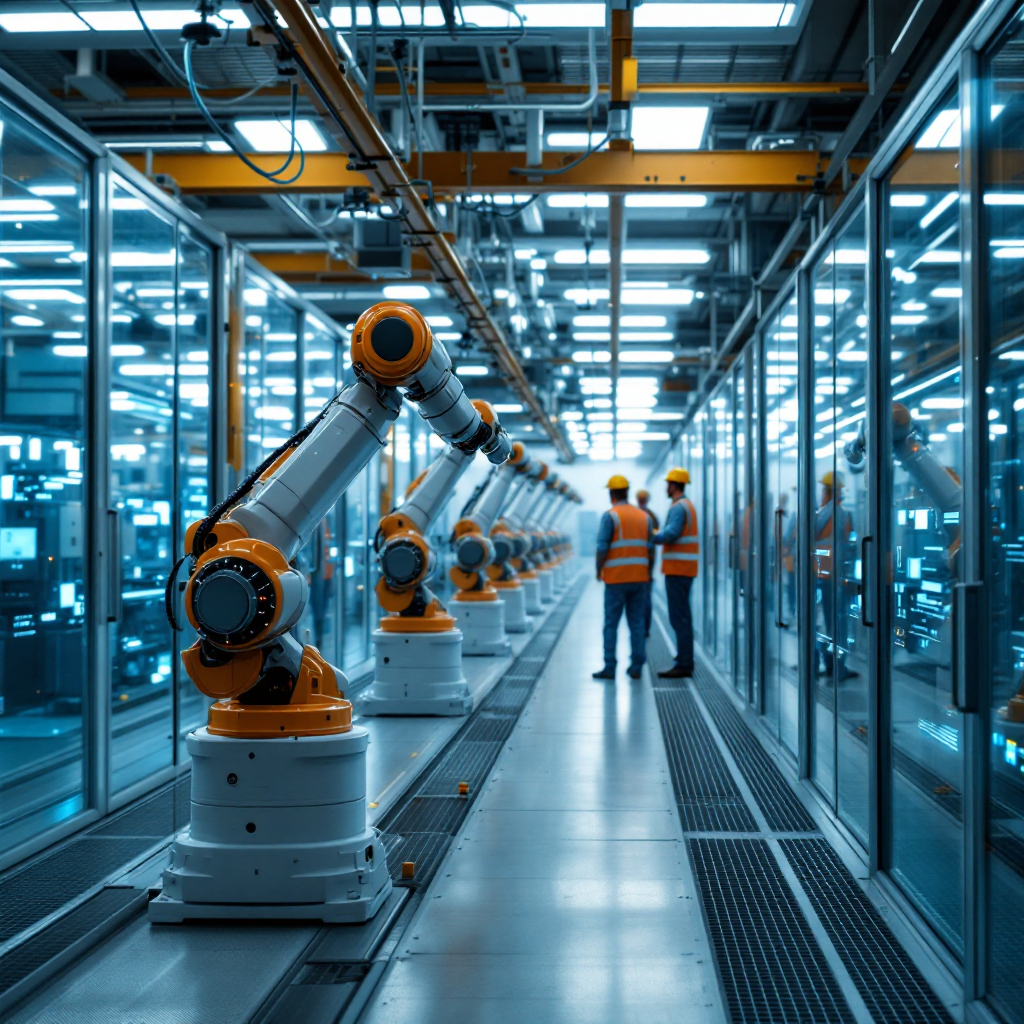
agentic and agentic ai: why ai agents for manufacturing and generative ai matter now
Traditional rule-based bots follow scripts. They react, and they rarely plan. By contrast, agentic models plan and take multi-step actions. Agentic AI combines planning, context, and action. It can coordinate across systems. For manufacturers, this shift matters. Agentic agents can orchestrate multi-step fault remediation and autonomous scheduling. They can also create standardized reports and draft SOPs using generative AI. For example, BCG notes that “Today’s AI agents have the potential to revolutionize business processes across the board” (BCG). Similarly, IBM highlights that organizations deploying agentic AI “are not just doing things better—they are doing entirely new things in a new operating model” (IBM).
Consider use cases. First, autonomous scheduling reduces planner load and can optimize production schedules across shifts. Second, multi-step fault remediation lets an agent diagnose, stage a fix, then verify results in real time. Third, generative AI can draft handover notes, maintenance reports, and troubleshooting scripts. In short, agentic approaches allow a single digital agent to span the plant floor and the supply chain. However, safety matters. Combine agentic control loops with human oversight. Also, log all decisions and create audit trails for traceability. Pilot low-risk tasks first, and then expand to more critical actions when confidence grows. virtualworkforce.ai demonstrates how no-code agents can automate repetitive email work for ops teams, allowing technicians to focus on fixes rather than paperwork (scale operations with AI agents). In sum, agentic AI and generative AI together extend the reach of AI agents for manufacturing, creating new modes of automation and orchestration that change how plants operate.
Drowning in emails?
Here’s your way out
Save hours every day as AI Agents label and draft emails directly in Outlook or Gmail, giving your team more time to focus on high-value work.
automation of the manufacturing process: improving manufacturing operations in diverse manufacturing environments
This chapter explains how to apply agents across a manufacturing process. It separates the automation of discrete steps from end-to-end orchestration. First, discrete automation replaces manual tasks. Next, orchestration connects those tasks into efficient flows. Many organizations cite process orchestration as essential for scalable AI deployments. Survey responses show high agreement on orchestration as a prerequisite for broad AI value (statistical industry review). In practice, agents coordinate MES, PLC, and ERP events to reduce idle time and improve throughput. They also manage exceptions, and they route tasks to humans when needed.
Edge versus cloud matters. Use edge inference where latency and availability are critical. Conversely, centralize heavy training and long-term analytics in the cloud. For legacy equipment, adopt protocol adapters and data gateways. This approach allows modern agents to integrate with older manufacturing systems. When choosing architecture, weigh latency, bandwidth, and data governance. KPI examples include OEE, MTBF, MTTR, cycle time, and defect rate. Track these KPIs continuously. For small pilots, shadow mode provides safe evaluation without acting on the line. Then, move to incremental closures where agents take limited actions. Agents can also optimize scheduling and materials flow across the supply chain when integrated with logistics data. For context-aware communications and exception handling, teams can use AI-driven email automation to keep suppliers and carriers aligned (email automation for logistics). Overall, automation at both step and orchestration levels improves consistency, reduces manual handoffs, and helps manufacturers scale repeatable processes across varied manufacturing environments.

how ai agents work and deliver insight: measurable benefits of ai agents in ai in manufacturing
AI agents ingest data, and they produce decisions that deliver measurable insight. The core mechanics include data ingestion, feature engineering, model inference, decision policies, and action execution. First, the agent pulls sensor streams, MES logs, and maintenance tickets. Then, it transforms raw signals into features. Next, the model scores the features and recommends actions. Finally, the agent executes or suggests those actions. This pipeline yields faster root-cause analysis and fewer line stoppages. Reported pilots often show improved yield and shorter repair times. However, only a minority of firms report full enterprise EBIT gains today; a 2025 McKinsey survey found that 39% of companies report positive EBIT impact from AI at the enterprise level (McKinsey). Therefore, there remains room to scale benefits.
Typical architecture includes a data lake, a feature store, model serving, and an orchestration layer. Toolsets commonly include MLOps platforms, analytics engines, and vector databases for contextual retrieval. For trustworthy insight, ensure data lineage and monitoring. Also, define clear KPIs tied to business outcomes. Agents can analyze streaming data to flag abnormalities, and then human operators can validate and accept the corrective action. Moreover, agents can provide explanations for decisions, improving operator trust. Note that benefit realisation depends on data quality, change management, and disciplined KPI tracking. Tools such as targeted pilot dashboards help teams see gains quickly. virtualworkforce.ai applies similar principles to operations emails by grounding replies in ERP and WMS data, which creates consistent, auditable communications that speed resolution and capture operational context (ROI example). In short, AI agents work by fusing data, applying models, and executing controlled actions to produce operational insight and real-world impact.
Drowning in emails?
Here’s your way out
Save hours every day as AI Agents label and draft emails directly in Outlook or Gmail, giving your team more time to focus on high-value work.
building an agent for manufacturing: revolutionizing manufacturing and reshaping manufacturing work
Start small. First, pick a constrained pilot problem such as spindle vibration or a repeatable quality defect. Next, define clear success metrics like reduced MTTR or fewer line stops. Then, instrument sensors, logs, and work orders. Run A/B or shadow trials. Validate predictions. After that, define a safety envelope for any automatic actuation. Include human-in-the-loop gates for high-risk actions. This staged approach helps reduce risk and build confidence. As you scale, the agent for manufacturing expands from single-asset control to plant-level orchestration. The agent also alters front-line roles. It can free staff from repetitive tracking tasks, and then it allows them to focus on optimisation and exception handling. Thus, upskilling becomes essential. Operators must learn to review AI suggestions, interpret model outputs, and manage escalations.
Governance matters. Implement explainability, audit logs, and operator override mechanisms to meet safety and compliance. Include role-based access and redaction for sensitive manufacturing data. Also, document model updates and maintain a change log. For pilots that touch communications, consider no-code solutions to reduce friction. For example, ops teams can use no-code email agents to draft context-aware replies that reference ERP and WMS data, which speeds everyday work without coding heavy integrations (freight-forwarder communication). Finally, measure both efficiency and safety outcomes. Agents can increase productivity, and they can reshape manufacturing work by shifting human effort from routine tasks to higher-value analysis and planning. This change supports a modern manufacturing workforce and helps enable manufacturers to adopt broader industrial AI practices.
deployment, risks and KPIs for ai agents in manufacturing: scaling industrial ai and ai agents in manufacturing
Scaling from pilot to enterprise requires careful planning. First, invest in orchestration and MLOps early. Then, formalize CI/CD for models and data. Also, align stakeholders on KPIs and ROI. Common risks include poor data quality, model drift, cyber-security threats, and weak change management. Moreover, pilots that are not tied to business processes often fail to deliver ROI. To mitigate these risks, establish robust data integration patterns, continuous monitoring for drift, and hardened access controls for industrial operations.
Key KPIs include downtime reduction, defect rate, OEE, cost per unit, time to detect and resolve faults, and eventual EBIT contribution. Track these KPIs continually, and then publish outcomes to plant leadership. Many manufacturers today allocate only a small share of revenue to industrial AI, which means scaling requires incremental budget increases and proven outcomes (IoT Analytics). For governance, require explainability, audit trails, and operator override. Also, run periodic safety reviews. For integration with supply chain partners, be explicit about data sharing rules and SLAs. Finally, invest in change management and training. As BCG and IBM note, agentic AI can enable new operating models; therefore, plan process changes and workforce transitions in parallel with technology rollouts (BCG) (IBM). With the right KPIs, governance, and investment, AI agents in manufacturing can scale from pilots to enterprise transformation and enable manufacturers to capture broader industrial AI value.
FAQ
What is an AI agent in manufacturing?
An AI agent is a software component that monitors equipment, analyzes data, and recommends or performs actions. It can perform tasks such as predictive maintenance, anomaly detection, and contextual communication to speed responses.
How do AI agents reduce downtime?
AI agents reduce downtime by predicting asset failures and triggering maintenance before breakdowns occur. They also speed root-cause analysis, which lowers time to repair and keeps lines running.
What data do AI agents need?
Typical data includes PLC/SCADA signals, sensor streams, MES logs, and maintenance records. Accurate timestamps, labeled events, and consistent sampling rates improve model performance and reliability.
Are AI agents safe to use on the plant floor?
Yes, when deployed with safety envelopes and human-in-the-loop controls. Governance, audit logs, and operator overrides ensure safe operation and regulatory compliance.
How does agentic AI differ from traditional AI?
Agentic AI plans and executes multi-step actions across systems, whereas traditional AI often makes single predictions or classifications. Agentic approaches combine planning, orchestration, and context to perform more complex tasks.
Can generative AI help manufacturing teams?
Yes. Generative AI drafts reports, SOPs, and handover notes, which saves time and improves consistency. It can also summarize incidents and help operators make faster, documented decisions.
What KPIs should I track when deploying AI agents?
Track downtime reduction, defect rate, OEE, MTBF, MTTR, time to detect and resolve faults, and ultimately EBIT contribution. These metrics link technical work to business outcomes.
How do I start a pilot for an AI agent?
Choose a constrained problem with clear metrics, instrument the necessary data, run shadow or A/B tests, and then add a safety envelope for any automated actions. Scale gradually after validation.
What are common risks when scaling AI agents?
Common risks include data quality issues, model drift, cyber-security exposure, and weak change management. Mitigate them with monitoring, governance, and incremental rollouts.
How can I keep operators engaged with AI agents?
Include operators in design, provide explainable outputs, and train staff to interpret recommendations. Also, use no-code integration tools so operators can shape agent behavior without heavy IT dependency.
Drowning in emails?
Here’s your way out
Save hours every day as AI Agents label and draft emails directly in Outlook or Gmail, giving your team more time to focus on high-value work.