


How ai agent tools streamline commodity trade workflow and automate forecasting
AI agents are software programs that act like trained assistants for a trading desk. They ingest market data, cleanse it, and convert it into signals. First, the agent pulls data from market data feeds, ERPs, and unstructured sources. Then, it runs models that generate probabilistic forecasts and trading signals. Next, the agent routes signals into execution systems, or it raises an alert for human oversight. This clear flow—from data ingestion → signal generation → action—defines the typical workflow and shows how ai can automate repetitive tasks while keeping traders in control.
Key functions include price forecasting, sentiment scan, execution triggers, and middle‑office reconciliation. Agents help forecast short horizons and flag exceptions for back office checks. They can also reconcile confirmation and settlement records against trade capture automatically, reducing manual copy‑paste. Firms report higher speed and fewer manual steps. One industry claim says AI now drives approximately 89% of global trading volume, though this is an industry claim rather than an independent verification; see the LiquidityFinder guide for context AI for Trading: The 2025 Complete Guide.
On a metals desk, an ai agent links feeds from exchanges, shipping manifests, and inventory systems. It weights signals, scores counterparties, and triggers execution with low latency. The agent can also publish audit logs and deterministic traces to satisfy governance. Suggested KPIs include time per trade lifecycle, percent of trades initiated by agent, forecast error (MAE), and exception rate. These KPIs help measure how well automation reduces manual steps and improves timing.
Implementation requires integration points and connectors. You need real‑time feeds, APIs to trading systems, and a model retrain pipeline. A ctrm integration or an etrm connection often forms the backbone for confirmations, settlements, and P&L. For ops teams focused on emails and confirmations, purpose‑built no‑code connectors can speed adoption; for example, virtualworkforce.ai shows how ERP email automation can reduce handling time and maintain traceability ERP email automation and logistics. This link explains how deep data fusion helps reduce errors in back office tasks and supports faster reconciliation.
Finally, balance speed and control. Deterministic inference modes, human oversight, and strong audit trails reduce operational risk. That way, ai agents deliver fast, actionable signals without sacrificing compliance or traceability.
Key use case: commodity trading price forecasting, market intelligence and filtering market noise
Price forecasting is the standout use case for metals. An ai agent fuses exchange prices, inventory statistics, shipment schedules, and news. It uses machine learning to reduce noise and to improve short‑term forecast skill. For metals traders, this translates into earlier, clearer signals for hedging or opportunistic positions. For example, agents can produce short‑term forecast bands that help commodity traders decide when to lock in physical commodity sales or to hedge exposure.
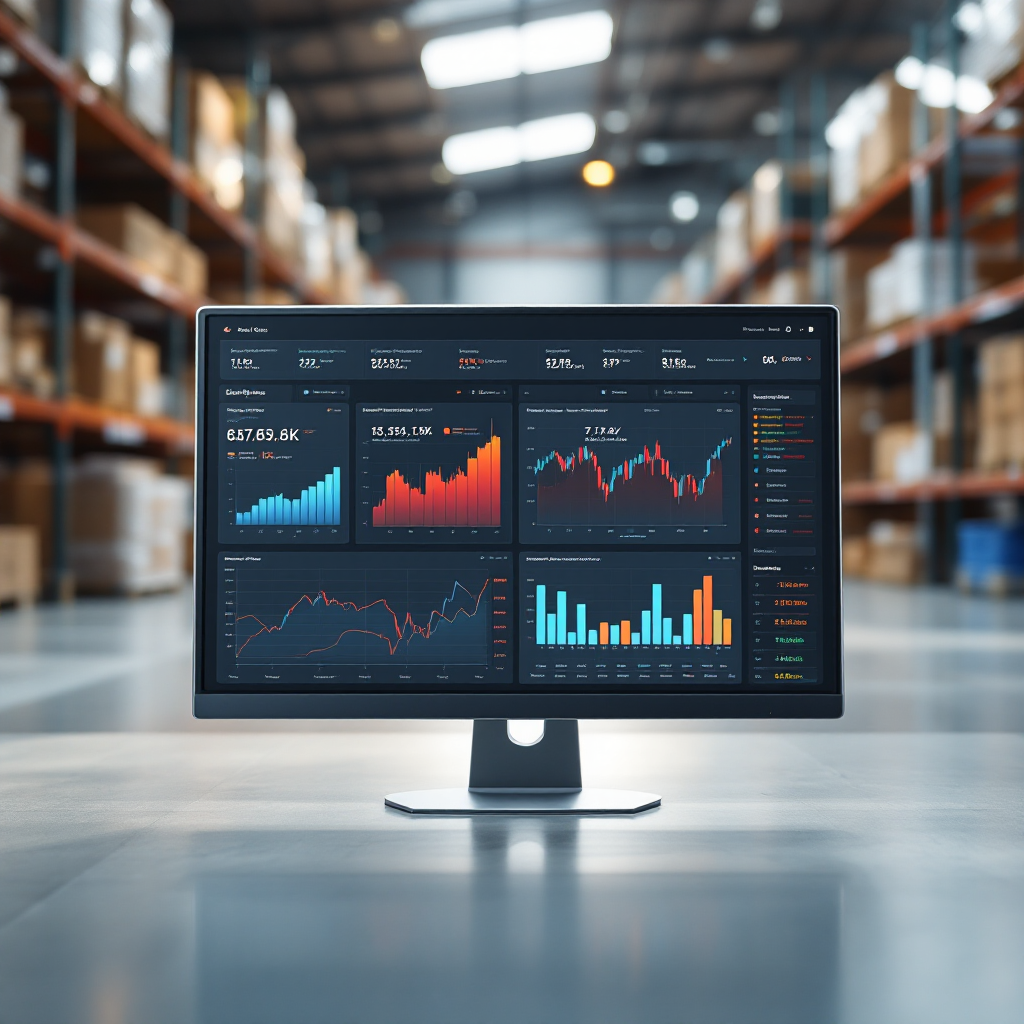
Agents reduce market noise through multi‑source fusion. They weight signals from exchange feeds, shipping ETAs, inventory reports, and news sentiment. They treat unstructured data like analyst notes and social feeds alongside structured feeds. This signal weighting reduces false positives and improves decision timing. Pilot deployments report mid‑teens accuracy lifts and lower execution latency in case studies. S&P Global notes that ai agents “adapt to new variables and simulate human‑like behavior and reasoning,” which speaks to flexibility in noisy conditions S&P Global: AI agents proliferate in logistics.
Use cases for metals include scenario simulation, news and sentiment alerts, and early warning on supply shocks. An agent can issue an alert when a shipment is delayed, when warehouse inventories hit a threshold, or when headline sentiment turns negative. KPI examples for this use case are forecast hit rate, false‑positive alert rate, and time to actionable insight. These KPIs show if the agent’s signals translate into better execution timing and lower slippage.
This use case benefits both systematic trading and discretionary desks. Systematic trading strategies get cleaner signals; discretionary traders get better market intelligence. Commodity traders can combine algorithmic trading with trader intuition to improve execution and to manage operational risk. To see practical documentation automation that supports these workflows, teams can study how virtualworkforce.ai drafts context‑aware replies and cites ERP data to reduce repetitive search time virtual assistant for logistics.
Drowning in emails?
Here’s your way out
Save hours every day as AI Agents label and draft emails directly in Outlook or Gmail, giving your team more time to focus on high-value work.
Deploying an ai platform: implement ai, link to erp and scale automation at scale in the commodities industry
Deploying an ai platform for commodity operations needs a clear architecture checklist. First, real‑time feeds and a model training pipeline must be in place. Second, an API layer should connect the ai platform to trading systems, ERPs, and execution paths. Third, low‑latency execution paths are required for rapid orders. This pipeline supports continuous retraining and model governance. For teams that need faster email handling and confirmation workflows, a no‑code approach to connectors reduces IT friction and speeds onboarding.
Architecture components include feed ingestion, feature stores, model training, and APIs to trading and ERP systems. The ai platform should deliver an intelligence platform that can publish signals into order management and automate confirmation posting. Effective deployments use a mix of off‑the‑shelf models and proprietary ai models where necessary. Decide early whether cloud or on‑prem fits your latency, data governance, and compliance needs. Cloud offers scalability, and on‑prem can reduce latency for systematic trading strategies.
Integration with erp and trade capture systems is essential to close the loop on confirmations, settlement, and P&L. Linking agents to ERP enables automatic updates to shipment status and confirmation emails, lowering back office load. virtualworkforce.ai demonstrates how deep data fusion across ERP, TMS, and email memory shortens handling time and improves traceability; operations teams can learn from that model when they implement broader ai platform links how to scale logistics operations with AI agents.
Deployment choices should reflect operational constraints. For example, trading companies with proprietary strategies often keep models in a private environment. Firms trading across multiple asset classes may choose cloud for scalability, while power trading desks sometimes prefer hybrid setups to meet regulatory needs. Operational KPIs include deployment time, model retrain cadence, percentage of processes automated, and uptime. These give clear signals about whether the ai platform is delivering promised efficiency gains and helping to improve efficiency across trading operations.
Managing compliance and security for ai in commodity trade to limit market moves and keep governance tight
Security and governance are core barriers to ai adoption in energy and commodity sectors. Research highlights that “security and governance remain primary barriers to AI adoption,” and firms must demonstrate controls to build trust CTRM Center: AI’s Role in Modernizing Energy Platforms. Key risks include model drift, the non‑deterministic outputs of some generative ai components, and data leaks across third‑party supply chains. These risks can cause unintended market moves, so governance is non‑negotiable.
Practical controls include deterministic inference modes, human‑in‑the‑loop approvals, and robust audit trails. A detailed audit and validation regime helps compliance teams track decisions. Ensure access controls are strict, and enforce change management for models. Regular validation tests and recovery plans reduce the chance of uncontrolled market moves. SupplyChainBrain warns that consistency can be a challenge due to LLM non‑deterministic outputs, which must be managed carefully in high‑stakes environments SupplyChainBrain: The Increasing Role of Agentic AI.
Specific measures include explainability for model decisions, signed logs for every trade signal, and fast rollback procedures. Regular audits should evaluate audit trail completeness, the number of governance incidents, and time to rollback. Human oversight remains critical: traders should approve large orders, and compliance must review exceptions. Implementing role‑based access and redaction of sensitive fields helps protect counterparty data and prevent leaks. An effective framework ties into existing ctrm and etrm controls, so trading and risk teams can reconcile model outputs against known exposures. This layered approach limits operational risk while allowing ai to improve speed and precision.
Drowning in emails?
Here’s your way out
Save hours every day as AI Agents label and draft emails directly in Outlook or Gmail, giving your team more time to focus on high-value work.
Measuring roi: powerful ai, automation benefits and savings across energy trading and the metals market
Quantifying ROI requires clear, measurable metrics. Start with improved capture of market moves and better hedging efficiency. Then measure reductions in operational costs and tighter execution spreads. McKinsey points out that traders are moving from managing volatility to optimising around AI-driven insights, making ROI projections more favourable if pilots show consistent gains McKinsey: How to capture the next S-curve in commodity trading.
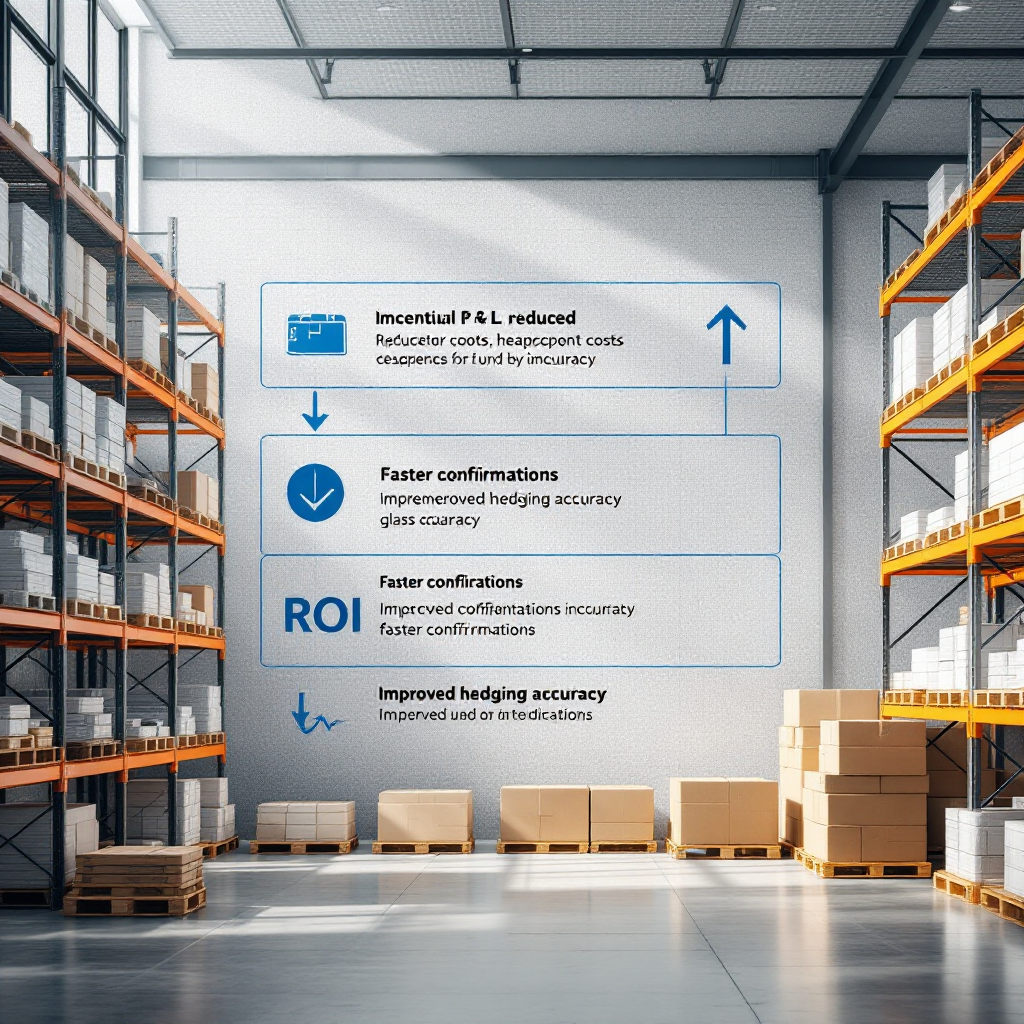
Typical benefits to track are incremental P&L from improved forecasts, cost per trade reduction, and reduction in manual headcount for routine tasks. Calculate NPV of automated strategies, payback period, and productivity per trader. Track kpis such as forecast hit rate, operational costs per trade, and percentage of trades initiated by an ai agent. These metrics tie pilot results to enterprise budgets and help justify expansion.
Run a controlled pilot to build the business case. Use a clearly defined metal, horizon, and baseline for comparison. Validate signals against historical performance and calculate slippage reductions. Also account for secondary benefits like faster confirmation cycles, fewer reconciliation errors in the back office, and improved traceability. For ops that handle high email volumes and confirmations, examples from virtualworkforce.ai show measurable time savings and improved reply quality that contribute to ROI on automation projects virtualworkforce.ai ROI for logistics.
Finally, present ROI in both quantitative and operational terms. Show incremental P&L improvement and reduction in manual errors. Include intangible upsides such as faster access to real‑time market intelligence and improved decision latency. With a disciplined metric package, trading companies can prove value and scale commodityai automation across desks.
Practical roadmap from a pilot use case to commodityai automation at scale with ai agent governance
Start with a pragmatic pilot. Step 1: select a single metal and a well‑defined time horizon. Step 2: build a baseline using historical market data and hand signals, then validate model outputs. Step 3: integrate the agent with ERP and trading systems to close the loop on confirmation and settlement. Step 4: roll out controlled automation and monitoring. Step 5: enforce governance, retraining cycles, and ongoing validation. This phased approach reduces operational risk and accelerates adoption.
Pilot checklists should include data sources, model baseline, safety gates, performance thresholds, and rollback rules. Include unstructured data sources such as news and analyst notes to test robustness. Establish safety rules for large orders and require human approval for out‑of‑pattern signals. Ensure the pilot produces an audit trail so compliance can review every decision. You should also validate that the pipeline supports retraining cadence and model versioning.
Organisational shifts are necessary. Create roles for model ops, compliance, and a trader‑AI liaison. Provide training to trading teams and to the back office so everyone understands new workflows. Introduce human oversight checkpoints and formal audit processes. For correspondence automation tied to confirmations and shipment updates, consider a no‑code assistant to reduce email friction; our product examples demonstrate how teams can scale email handling without adding headcount How to scale logistics operations without hiring.
Measure success with clear KPIs: percent of decision flow handled by commodityai agents, incidents per month, and net trading uplift. Also track time to rollback and audit completeness. As pilots prove value, expand coverage across commodity desks and asset classes while maintaining strict change management. This roadmap balances speed and precision and helps trading companies adopt ai that automates responsibly and at scale.
FAQ
What is an AI agent in metals trading?
An AI agent is a software program that ingests data, runs models, and produces trading signals or actions. It can also automate middle‑office tasks like confirmations and reconciliation while logging decisions for audit.
How do AI agents improve price forecasting?
AI agents fuse multiple data sources, including market data, shipping feeds, and news, to reduce noise and improve precision. They apply machine learning to adapt to new patterns and to provide actionable signals faster than manual methods.
Are AI agents risky for market moves?
They can be if not governed. Risk comes from model drift, non‑deterministic outputs, and data leaks. Controls like deterministic modes, human oversight, and robust audit trails mitigate those risks.
How do I measure ROI for an AI trading pilot?
Measure incremental P&L, reduction in operational costs, payback period, and productivity per trader. Also track kpis such as forecast hit rate and percent of trades initiated by the agent.
What integrations are essential for deployment?
Real‑time feeds, an API layer to trading systems and ERPs, and a model retrain pipeline are essential. Connections to ctrm/etrm platforms and confirmation systems close the trade lifecycle loop.
Can AI agents handle unstructured data?
Yes. Agents can ingest unstructured data like analyst notes and news, and then convert it into structured signals. That helps reduce market noise and improve early warnings.
How do you maintain compliance with AI agents?
Implement access controls, change management, explainability, and formal validation tests. Maintain complete audit records and a fast rollback plan to reduce operational risk.
What is the role of human oversight?
Human oversight ensures that edge cases and large trades receive extra review. It also approves out‑of‑pattern signals and helps calibrate models during retraining.
Do AI agents work for both physical commodity and systematic trading?
Yes. They support physical commodity workflows by improving shipment and confirmation handling, and they improve systematic trading by supplying cleaner signals and automating execution paths.
How can my operations team start a pilot quickly?
Begin with a single metal and a narrow horizon, connect key data sources, and validate against a baseline. Using no‑code connectors for ERP and email can speed initial deployment and reduce manual work before scaling.
Drowning in emails?
Here’s your way out
Save hours every day as AI Agents label and draft emails directly in Outlook or Gmail, giving your team more time to focus on high-value work.