


How ai assistant delivers real-time, data-driven insight for plastic trading
An AI assistant is a software agent that analyzes data, responds to queries, and automates routine tasks for traders. It ingests market feeds, trade blotters, material specifications, lab certificates, and ERP entries. Then it fuses them into dashboards, alerts, and short summaries that deliver instant, actionable insights. For a resin trading desk this changes the cadence of work. Traders stop scrolling terminals. They get notifications when a grade shifts, when a shipment is late, or when a counterparty’s credit risk rises.
AI reduces manual monitoring time and supports faster decisions. For example, leaders across supply chain and manufacturing plan broad AI rollouts, and 85% of those leaders have either adopted or plan to adopt AI technologies, which shows a clear trend toward automation and responsiveness 85% adoption and plans. An AI assistant can boost productivity by drafting routine emails, summarizing trade positions, and surfacing risk signals that require human review. It does so while referencing your systems, and so it keeps context intact.
Practical integration begins with a checklist. First, identify data sources: market feeds, ERP, TMS, WMS, quality certificates, and proprietary pricing models. Second, define business rules and escalation paths so the assistant follows governance. Third, connect a knowledge base and set redaction rules. Fourth, run pilot alerts on a subset of grades and lanes. Fifth, measure KPIs: mean time to decision, error rates, and handling time per email. A simple checklist helps teams tailor the assistant to a trading desk and improves outcomes quickly.
virtualworkforce.ai provides an approach that many ops teams use to speed email workflows and tie responses to ERP/TMS data. It reduces handling time from roughly 4.5 minutes to about 1.5 minutes per email, and it keeps audit logs for compliance. If you want to speed replies while keeping accuracy, explore how an email-focused AI assistant can streamline correspondence across orders and logistics automated logistics correspondence.
Deliverable checklist for integrating an AI assistant into a resin trading desk:
– Map data sources and decide what to cite.
– Choose an AI platform that supports role-based access and audit trails.
– Configure alerts for price moves, lead-time slips, and spec mismatches.
– Pilot on a single polymer grade and one supplier lane.
– Train users, collect feedback, and iterate weekly.
How ai models and ai-powered tools give the industry smarter visibility
Machine learning and statistical models power much of the new visibility in trading. Time-series models track historical price patterns, while hybrid models mix fundamentals and market sentiment. Deep learning models add non-linear pattern recognition and can ingest news, freight indices, and social signals. These AI models let traders detect anomalies, score supply risk, and generate probabilistic price bands for the next 30-90 days. They also support automatic hedging suggestions and smarter inventory buffers.
Evidence shows that AI models can cut polymer price‑forecast error by roughly 30%, which improves procurement timing and hedging decisions. That reduction in forecasting error comes from combining price feeds with supply indicators and logistic constraints polymers market analysis. Time-series approaches work well for stable seasonal grades. Hybrid models perform better when freight, feedstock, and regulation shift suddenly. Deep models excel at parsing noisy, multi-source datasets, but they need larger datasets and stronger validation.
Comparison of model types and selection criteria for resin markets:
– Time-series: low data needs, interpretable, fast. Use this for well-behaved grades.
– Hybrid (stat + ML): blends fundamentals with patterns, better in volatile windows.
– Deep learning: excels with text and complex inputs, but needs governance and explainability.
Selection criteria: data availability, latency needs, explainability, and governance. When you decide, validate with backtests and blind holdouts. Keep monitoring live performance and retrain on rolling windows. In practice, teams adopt a layered approach. They run a simple forecast for operational planning and a second, more complex model for risk scenarios. This gives both stable guidance and agile stress testing.
To explore how an AI assistant can draft logistics responses and cite ERP context, see a practical example where email drafting is tied to operational data, and teams reduce manual copy-paste work logistics email drafting AI. That same approach helps connect model outputs to human workflows so traders can make informed decisions fast.

Drowning in emails?
Here’s your way out
Save hours every day as AI Agents label and draft emails directly in Outlook or Gmail, giving your team more time to focus on high-value work.
Generative ai and generative approaches helping manufacturer launch products faster
Generative AI changes how manufacturers create specifications and test plans. It drafts spec sheets, suggests formulation alternatives, and writes supplier RFPs in a fraction of the time. Generative approaches can propose recycled-content recipes, propose test matrices, and create synthetic lab plans for initial trials. As a result, the product development cycle shortens and teams can launch new SKUs faster.
A typical generative workflow begins with a product brief, then the tool drafts a material selection table, including recommended grades and trade-offs. Next, it creates an RFP and pre-populates supplier questions. Then the manufacturer runs a small lab program and feeds results back into the model for refinement. This reduces iterations between formulation and first sample, so time-to-market drops.
Use cases that show practical gains include automated spec sheets, recipe alternates for recycled inputs, and synthetic test plans that prioritize experiments. These methods help manufacturers and distributors select and source faster and with fewer surprises. For instance, an AI-generated spec can include expected melt index ranges, recommended injection parameters, and likely conversion issues for a given grade.
Generative AI also improves written communication. When teams need to send technical RFPs or respond to supplier queries, a grounded assistant drafts consistent emails that cite your ERP and test history. virtualworkforce.ai specializes in no-code AI email agents that ground replies in ERP and shared documents, which helps teams reduce errors and keep context across threads virtual assistant for logistics. That approach shortens cycles, and it helps teams move from concept to first sample faster.
Note that generative tools should integrate validation steps and expert review. The tools propose drafts, and domain experts validate formulations and safety compliance. Also, track provenance and test evidence so the audit trail is clear. As an industry, we see plastics technology move toward faster iteration, with generative approaches woven into established product development practices. Finally, keep one human decision-maker in the loop for regulatory and quality sign-offs.
Building trust while reducing downtime and improving sustainability with ai
Trust in AI outputs depends on explainability, provenance, and consistent validation. Governance frameworks must include role-based access, audit logs, and clear metrics. These controls ensure that a prediction or recommendation can be traced back to a dataset, parameter set, and versioned model. They also help teams validate model behavior under stress. This transparency builds trust and speeds adoption.
AI predictive maintenance and supply‑chain forecasting reduce unplanned downtime by flagging equipment risk and supplier delays. By detecting anomalies in sensor data or delivery patterns, systems can schedule maintenance before failures occur. That lowers downtime and improves overall production. AI also supports recycled-resin sourcing and sustainability goals by identifying suppliers with verified recycled content and by measuring life-cycle indicators for grade selection.
Governance checklist to ensure trustworthy deployment:
– Establish audit logs and version control for models and datasets.
– Set acceptance tests and blind holdouts before deployment.
– Define escalation paths for high-risk recommendations.
– Monitor KPIs for uptime, accuracy, and sustainability outcomes.
Case evidence supports careful governance. Thought leaders have argued for transnational AI regulation and clearer rules for machines that must “understand” human laws, which highlights the need for consistent controls transnational regulation discussion. For plastics specifically, regional market complexity and regulation make local tailoring essential, and the OECD outlines how regional conditions affect plastics markets regional plastics outlook.
Operational KPIs to track trust and sustainability: model explainability score, downtime hours avoided, percentage of recycled resin used, and supplier verification rate. These metrics help leaders track whether AI reduces risk and supports sustainability goals. Finally, embed continuous feedback loops and periodic audits so models continue to perform as conditions evolve.
Drowning in emails?
Here’s your way out
Save hours every day as AI Agents label and draft emails directly in Outlook or Gmail, giving your team more time to focus on high-value work.
Workflow and real-time data-driven processes for smarter plastic industry operations
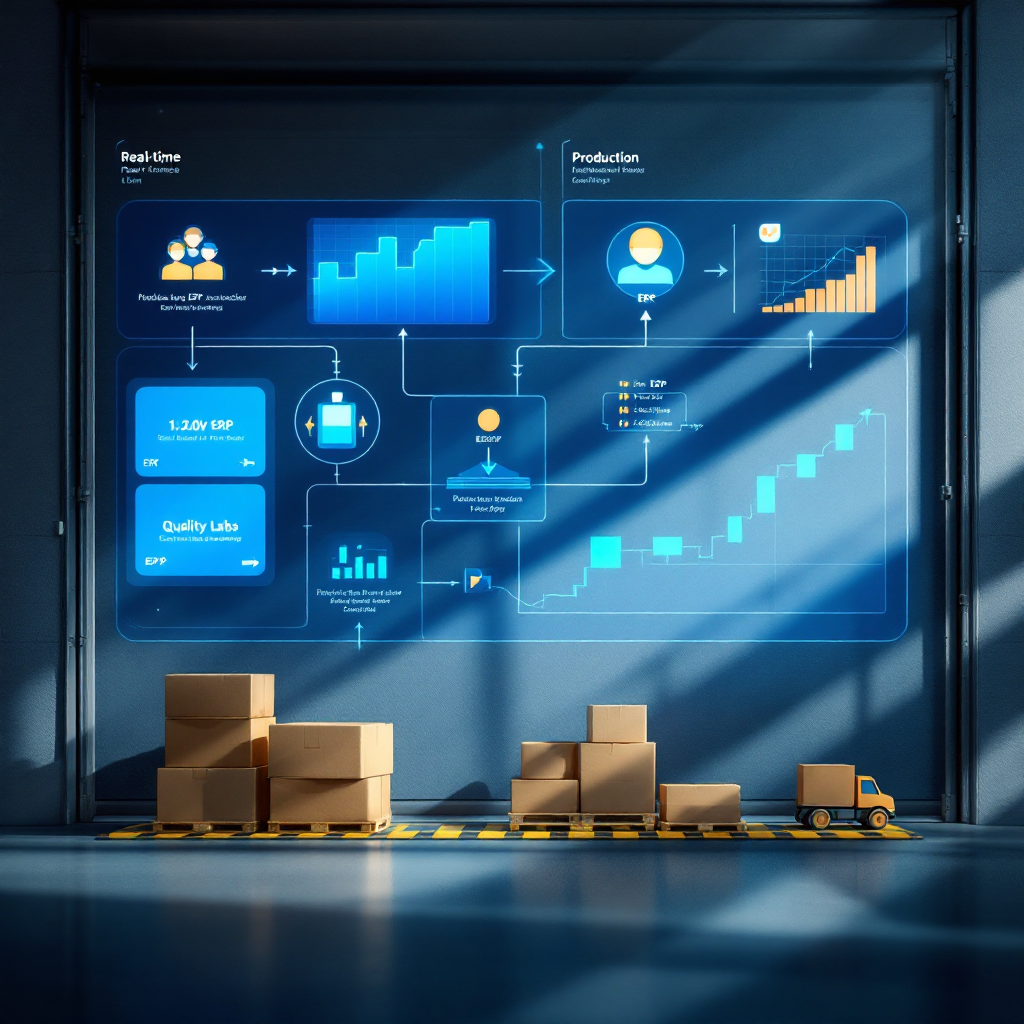
Real-time workflows connect traders, manufacturers, and logistics teams. They use signals from price feeds, shipment tracking, and quality labs to trigger actions across systems. An AI-powered platform can route exceptions to the right team, draft the required emails, and update the ERP automatically. This reduces manual handoffs and shortens response times.
Practical gains include faster approvals, fewer stockouts, and clearer visibility across grades like HDPE, LDPE, LLDPE, and PET. When a market signal hits a threshold, the workflow can automatically adjust reorder points, propose hedges, and lock in contracts. That level of coordination leads to fewer emergency buys and more predictable production planning.
Template workflow that links market signals to procurement, quality, and production planning:
– Signal ingestion: price feeds, freight indices, and quality flags.
– Decision node: automated checklists and risk scoring.
– Action: automated emails to suppliers, ERP updates, and production change requests.
– Feedback: lab results and delivery confirmations update the dataset.
These workflows hinge on robust data integration. For order and ETA emails, no-code AI agents can draft and send replies while citing ERP and shipment records. That reduces manual copy-paste across systems and keeps a thread-aware history for shared mailboxes. See an example where teams automate logistics correspondence and free up operations staff to focus on exceptions automated logistics correspondence. This approach also improves reliability and reduces the chance of mis-typed specs or missed updates.
Finally, coordinate with quality and production so that any change in material selection or supplier triggers an injection-molding parameter review. The workflow should flag potential conversion issues and propose settings for injection and drying. That keeps overall production stable and lets teams respond to market shifts without sacrificing quality.
Case studies: ai assistant insight for plastic traders and manufacturers
Case study 1 — Price‑forecast accuracy improvement. Problem: a distributor faced volatile polymer prices and frequent margin erosion. AI intervention: a hybrid forecasting suite combined time-series and fundamentals, and it fed alerts into traders’ dashboards. Result: forecasting error declined by about 30%, which allowed the team to better time procurement and reduce emergency buys. Lesson: layered models often beat single-method approaches when conditions shift quickly.
Case study 2 — Lead‑time reduction for product launches. Problem: a manufacturer took too long to source trial compounds and to finalize specs. AI intervention: a generative workflow drafted spec sheets and supplier RFPs, then prioritized suppliers based on historical lead times. Result: time-to-first-sample fell by a measurable fraction of the time, and the team launched the SKU weeks earlier. Lesson: generative tools speed drafting, while human engineers validate safety and performance.
Case study 3 — Email automation and operational efficiency. Problem: operations teams spent hours on order and ETA emails, and they duplicated effort across systems. AI intervention: a no-code AI email agent grounded in ERP and TMS drafted replies and updated order statuses. Result: handling time per email dropped from roughly 4.5 minutes to about 1.5 minutes; error rates fell and audit trails improved. Lesson: grounded email agents free specialist staff to focus on exceptions.
These examples reflect broader adoption: many supply‑chain and manufacturing leaders plan AI rollouts, and markets that adopt such systems see faster approvals and higher reliability. For further reading on how AI in operations management becomes a strategic partner, see the analysis that calls AI “an indispensable partner in interpreting complex market signals and driving strategic decisions” AI in operations management. If you want to learn how to embed an assistant that cites ERP context and drafts accurate logistics replies, read about practical email automation for freight and customs communications AI for customs documentation emails.
Final rollout tips: start small, monitor performance, keep humans in the loop, and plan governance early. As models evolve, your datasets and workflows will evolve too. Learn how AI can be built into existing processes and how teams can safely deploy next-generation tools while maintaining high-quality outputs.
FAQ
What is an AI assistant for plastic trading?
An AI assistant is a software agent that processes market data, internal records, and communications to support traders. It drafts messages, issues alerts, and provides summarized recommendations so teams can make informed decisions faster.
How do AI models improve price forecasting for polymers?
AI models combine historical price data with fundamentals, freight, and sentiment to produce probabilistic forecasts. Studies show they can reduce forecasting error by about 30% for polymer markets, which helps with procurement timing and hedging polymers market analysis.
Can generative AI help manufacturers launch products faster?
Yes. Generative AI drafts specs, recommends formulation alternatives, and prepares RFPs to shorten early-stage iterations. Manufacturers still validate technical and regulatory aspects, but generative tools cut drafting time substantially.
How do you build trust in AI outputs?
Trust comes from explainability, provenance, and governance. Implement version control, audit logs, and acceptance tests, and require human sign-off for high-risk decisions to ensure reliable results.
Will AI reduce downtime in production?
AI can predict equipment failures and forecast supplier delays, which lets teams schedule maintenance and reroute supplies proactively. This reduces unplanned downtime and supports more consistent production.
How does an AI assistant handle emails and logistics correspondence?
No-code AI agents can draft replies that cite ERP, TMS, and document history and then update systems automatically. This approach cuts handling time and reduces errors; see examples of automated logistics correspondence automated logistics correspondence.
What governance controls should I track?
Track audit logs, model versions, data provenance, explainability scores, and KPIs for uptime and sustainability. These controls help validate outputs and support audits and compliance.
How do AI workflows connect traders and production teams?
Workflows ingest market signals and route exceptions to procurement, quality, or production. They can update ERP records and propose adjustments to injection parameters to prevent conversion issues and keep production stable.
Do these AI systems support recycled content and sustainability goals?
Yes. AI can screen suppliers, validate recycled-content claims, and model life-cycle indicators to support sustainability targets. Integration with supplier certificates and lab results strengthens verification.
How do I get started with an AI assistant in my trading desk?
Begin by mapping your data sources, defining business rules, and running a pilot on a narrow set of grades or lanes. Use no-code agents for rapid rollout and ensure IT approves data connectors to keep control and compliance intact.
Drowning in emails?
Here’s your way out
Save hours every day as AI Agents label and draft emails directly in Outlook or Gmail, giving your team more time to focus on high-value work.