


AI and logistics: why AI in 3PL is now essential
Cost pressure, labour shortages and demand volatility create daily strain on third-party logistics teams. In short, traditional processes struggle to keep pace. AI moves decision-making closer to the point of action, so teams respond faster and with fewer errors.
First, adoption is already significant. Roughly 46% of third-party logistics providers now use AI tools to support operations. Next, analysts expect rapid uptake: by 2026 most firms will have some form of AI in their stack. For example, surveys show 91% of logistics firms say customers expect AI-driven services. Therefore, AI is not optional; it is a customer expectation and a competitive necessity.
Business benefits are clear. AI reduces labour costs and accelerates routine tasks. It also helps reduce costs through smarter routing, forecasting and invoice handling. For instance, AI assistants can draft replies and update systems, which cuts email handling time. At virtualworkforce.ai we focus on no-code AI email agents that link ERP, TMS and WMS data to produce context-aware replies. As a result, teams typically cut response time from about 4.5 minutes to roughly 1.5 minutes per email, which lowers back-office friction and reduces bottleneck in shared mailboxes.
Moreover, AI improves performance during peaks. During seasonal surges, AI can continue to triage exceptions and accelerate fulfilment without a proportional headcount increase. Consequently, firms maintain service quality and protect margins. In addition, AI provides measurable operational efficiency gains that feed into KPIs such as on-time delivery and throughput per shift. For readers who want to explore assistant use in order handling and customer emails, see our guide to virtual assistants for logistics for examples and setup guidance (virtual assistant for logistics).
To finish, the case for AI in 3PL is both strategic and urgent. Firms that adopt AI agents and supporting ai systems will better manage variability, detect exceptions earlier, and deliver the personalised service that customers now demand.
AI agents for logistics and ai agent solutions: automating 3PL operations
An AI agent is an autonomous or semi-autonomous software entity that executes tasks such as routing, classification and quoting. In practice, an ai agent monitors inputs, applies rules or models, then takes actions or raises an alert. For third-party logistics teams, this means fewer manual steps and faster decisions. AI agent solutions now handle complex workflows from tendering to customs queries.
Use cases in 3PL operations span several domains. First, agents automate recurring email replies and update ERP or TMS records. Second, agents manage supplier relationships by flagging performance changes. Third, agents classify freight and create quotes using historical rates and current capacity. These capabilities reduce error rates and speed response times. For example, C.H. Robinson has scaled its fleet of agents past 30 to automate parts of the shipment lifecycle (C.H. Robinson). That deployment shows how ai agents built to handle specific tasks can run thousands of small decisions each day.
Key performance indicators for agent deployments tend to focus on throughput and quality. Track task automation rate, error reduction and throughput per shift. Also measure first-contact resolution in customer messaging and time-to-update for management systems. For quoting and tendering, measure days-to-award and margin capture. A short case example helps. Before automation, a team might spend ten minutes per quote, with errors in classification. After agents, the same team processes five times the quotes with fewer misclassifications and faster carrier matching.
Additionally, 3PLs can use agent frameworks to scale without hiring. For guidance on scaling 3pl operations with AI agents, read our practical playbook (how to scale logistics operations with AI agents). That resource explains phased rollout, guardrails and role-based controls so businesses keep humans in the loop while agents accelerate routine work.
To conclude this section, ai agent adoption simplifies repetitive work and delivers measurable improvement across 3pl operations. When combined with sound data foundations and clear KPIs, agents move from pilot to production rapidly and with predictable ROI.

Drowning in emails?
Here’s your way out
Save hours every day as AI Agents label and draft emails directly in Outlook or Gmail, giving your team more time to focus on high-value work.
Warehouse optimisation: AI-powered workflows to reduce inefficiency
Warehouse teams face predictable inefficiency: picking errors, idle time, and poor space use. These issues cost time and raise labour costs per parcel. AI-powered solutions focus on dynamic slotting, robotic task allocation and demand-driven replenishment. Together, they reduce travel distance and cut picking mistakes.
Start with a simple before/after scenario. Before AI, a shift uses static slotting and manual assignments. Workers spend extra minutes per pick, inventory sits in the wrong zone and throughput stalls. After AI, a dynamic system analyzes demand forecasting and moves fast-moving SKUs to optimal slots. The system assigns picking tasks to fulfil the expected route. As a result, picking errors fall, turnaround times improve and labour costs drop.
Typical measurable gains include reduced picking errors, faster turnaround and lower labour cost per parcel. AI-powered classifiers also reduce exceptions at packing and manifest stages. In addition, predictive analytics can flag incoming surges and trigger replenishment automatically. That prevents stock outs and protects service levels. For warehouse teams, integrating AI models with WMS and TMS yields the best results. A well-designed stack uses telemetry, WMS integration and model outputs to adjust task lists and maintain visibility into warehouse throughput.
Practical KPIs to track are pick accuracy, picks per hour and idle time percentage. Also monitor replenishment lead time and space utilisation. When using ai-powered routing for pick paths and robotic allocation, systems typically show quicker first-pass accuracy and a smaller variance in daily throughput. Teams should also measure time saved on manual reporting. For offices dealing with high email volumes about stock and ETAs, no-code email agents can automate many routine replies and system updates. See our logistics email drafting AI page for concrete examples of automating correspondence and reducing manual copy-paste across ERP and WMS (logistics email drafting AI).
Finally, a staged approach works best. Pilot dynamic slotting in a single zone. Then extend rules and agent actions across the site. This method reduces risk and provides measurable wins that support broader rollout.
Data-driven supply chain visibility: advanced data and data analysis for transport and inventory
Visibility depends on timely, accurate data. Real-time tracking, exception alerts and predictive ETAs give teams the information they need to act. Advanced data and data analysis underpin these capabilities. For instance, anomaly detection finds deviant transit times; root‑cause analysis links delays to carrier issues or customs holds.
Supplier relationship management is a leading use case for agentic AI in supply chains. In a recent survey, 76% of respondents ranked supplier relationship management highly. Therefore, AI agents analyze supplier performance trends and predict disruptions before they cascade. That improves resilience and reduces the impact of supply chain disruptions.
Technically, the stack combines telemetry, TMS and WMS integration and a data lake that feeds ML models. Systems must handle both structured feeds and unstructured data such as emails and PDFs. For that reason, robust ETL and schema controls are necessary. A short checklist helps teams improve their data foundations: ensure data quality, enforce consistent timestamps, normalise SKU metadata and provide near real-time ingestion. Next, create a unified schema and use version control for datasets so models remain explainable and auditable.
Agents serve as continuous monitors. They detect deviations and raise an alert for human review. Agents can also recommend corrective actions such as rerouting, short‑term inventory transfers or carrier switches. For visibility into warehouse status and transport, agents deliver real-time alerts and dashboards that show visibility across inventory and flows. To tie these capabilities into customer communication, integrate email agents that cite ERP and WMS facts when replying to queries. That approach reduces response time and improves the quality of answers sent to customers.
Finally, leverage predictive analytics and demand forecasting to smooth procurement and replenishment. Doing so decreases buffer stock and improves working capital. Use a phased rollout that tests models on a subset of lanes and suppliers, then scale as accuracy improves.
Drowning in emails?
Here’s your way out
Save hours every day as AI Agents label and draft emails directly in Outlook or Gmail, giving your team more time to focus on high-value work.
AI agent: route planning and fleet management — ROI for third-party logistics
Fleet management benefits from continuous optimisation. Agents can handle optimized route planning, modal choice and dynamic re-routing. They evaluate traffic telemetry, delivery windows and vehicle constraints to produce efficient manifests. This reduces fuel consumption and improves on-time performance.
Commercially, calculate payback by multiplying saving per shipment by shipment volume, then subtract implementation costs. For example, if an agent saves £0.50 on fuel and time per parcel and a 3pl processes 200,000 parcels a month, the monthly saving grows quickly. Track three KPIs: route cost per km, on-time delivery percentage and CO2 per trip. These indicate both financial and sustainability improvements. For detailed ROI planning and logistics email automation linked to fleet exceptions, see our ROI guide (virtualworkforce.ai ROI for logistics).
Multi-agent fleets scale decision-making. C.H. Robinson’s multi-agent approach shows how many small agents act in parallel to optimise vast numbers of small decisions (C.H. Robinson). Consequently, companies can reduce route cost and increase load factor without constant human oversight. Also, agents support last-mile delivery by optimising final-mile sequences and dynamically assigning drivers to new stops when priorities shift.
To compute payback in practice, collect baseline data for current route cost, delay penalties and labour costs. Then run a pilot on a representative corridor. Measure fuel and time savings over four weeks and annualise the result. If a pilot returns a 7% fuel and time saving, the payback period is often measured in months because margin per shipment is tight. Also consider indirect benefits such as fewer customer claims and better carrier relations when assignments become more consistent.
Finally, include freight tendering and carrier selection in the scope of agents. Agents that combine tender history, contract rates and real-time capacity provide a full commercial optimisation layer. This reduces administrative work and improves margins across the shipment lifecycle.
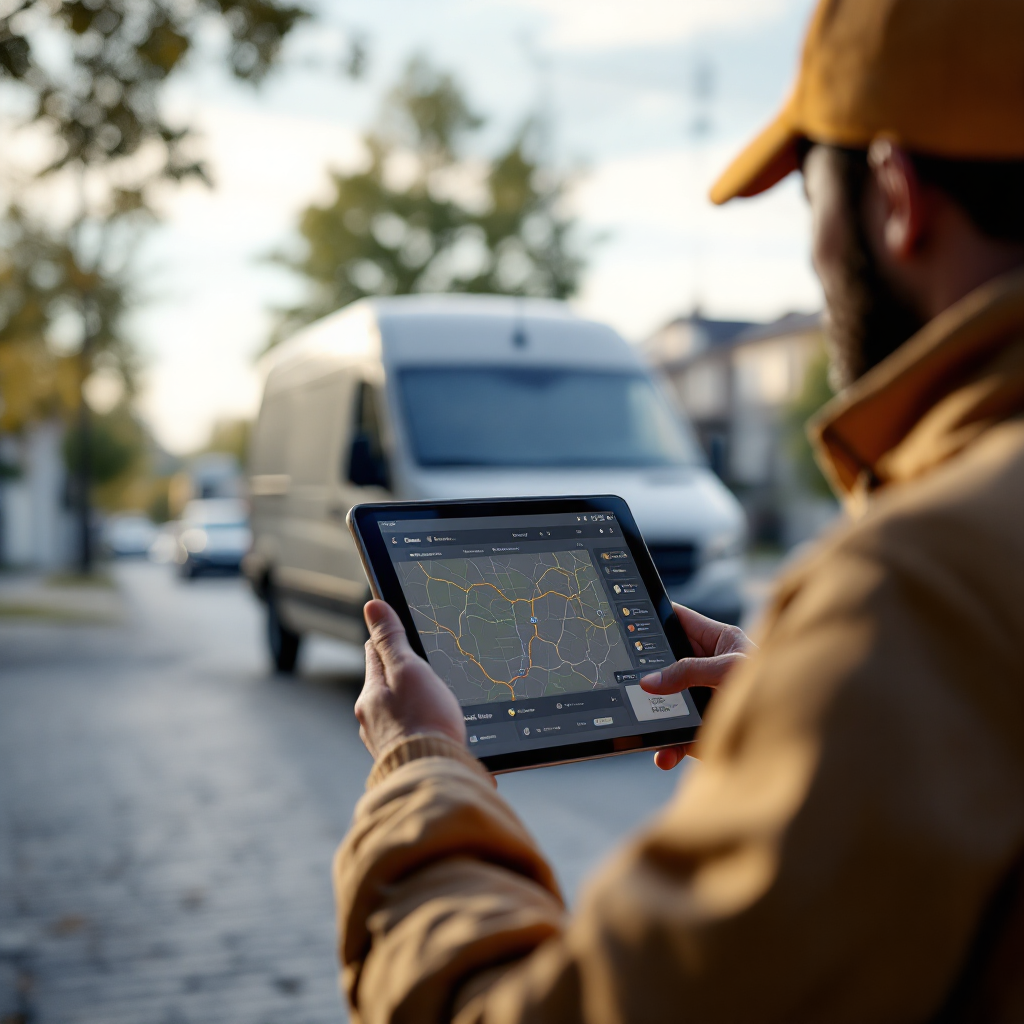
Deployment, risks and recommendations for ai in 3pl and logistics
Deploying AI requires attention to data governance and model management. Key risks include poor data quality, governance gaps, model drift and operational overreach. To mitigate these risks, use phased rollouts and human-in-the-loop control. Also, define clear KPIs and guardrails before agents act without supervision.
A practical adoption roadmap follows three stages: pilot, scale and embed. Start with low-risk, high-value processes such as email handling, invoice curiosity checks and simple routing suggestions. Next, scale to more complex areas like dynamic slotting and supplier negotiation. Finally, embed agents into mission-critical workflows and integrate with core management systems like TMS and ERP. For hands-on advice about automating correspondence with connected systems, our guide on automating logistics correspondence explains setup and guardrails (automated logistics correspondence).
Executives should run a short checklist before any build. Establish a cost baseline, log integration needs for ERP and WMS, decide vendor versus build and plan staff upskilling. Also specify data retention, audit logs and access controls. Use human reviews for exception handling and keep escalation paths clear. In addition, monitor models for drift and retrain with fresh supply chain data to maintain accuracy.
Five practical recommendations follow. First, target small, repeatable tasks for initial pilots. Second, connect to authoritative data sources such as TMS, WMS and ERP. Third, keep humans in the loop for exceptions and critical decisions. Fourth, measure impact using both service KPIs and financial KPIs. Fifth, prioritise vendor platforms that offer no-code control and clear data governance. Our platform emphasises no-code setup and deep data connectors so operations teams can configure behaviour while IT manages data connections.
To finish, AI is pragmatic optimisation rather than hype. When deployed with good data and clear governance, agents streamline supply chain processes, reduce costs and improve customer experience. Therefore, 3pl companies that carefully adopt agents will strengthen resilience and competitive logistics performance.
FAQ
What is an AI agent in the context of logistics?
An AI agent is an autonomous or semi-autonomous software component that performs specific tasks for logistics teams. It can triage email, update ERP records, suggest routes or flag supplier issues, all with minimal human input.
How widespread is ai in 3pl operations today?
Adoption is growing. For example, about 46% of third-party logistics providers already use AI in some capacity. Adoption varies by function and company scale.
Can AI reduce labour costs in warehousing?
Yes. AI-powered workflows improve pick accuracy and reduce idle time, which lowers labour costs per parcel. Also, agents that automate email and reporting free up staff for higher-value tasks.
What data do I need for supply chain visibility?
You need reliable telemetry, TMS and WMS feeds, plus clean SKU and supplier metadata. In addition, ingesting email and unstructured notes improves anomaly detection and root-cause analysis.
Are there measurable ROI examples for fleet AI?
Yes. Fleet agents reduce fuel use, improve load factor and increase on-time delivery. C.H. Robinson has scaled agent fleets to automate many small decisions, demonstrating measurable savings (C.H. Robinson).
How do I start deploying ai agent solutions?
Begin with a pilot on a contained process such as email automation or simple route suggestions. Then measure key metrics and expand to adjacent tasks. Use human review for exceptions and document escalation paths.
What governance should be in place for ai systems?
Implement data quality checks, access controls, audit logs and model registries. Also, plan for retraining cycles and monitor for model drift to ensure ongoing accuracy.
Can AI help with supplier relationship management?
Yes. Surveys show supplier relationship management is a top use for agentic AI, with many professionals noting its importance (ABI Research). Agents analyse performance trends and alert teams to emerging risks.
How do email AI assistants integrate with ERP and WMS?
No-code assistants can connect to ERP, TMS and WMS via connectors and APIs to pull authoritative facts into replies. This reduces manual copy-paste and ensures answers cite correct data, reducing errors and speeding responses.
What are the top KPIs to monitor for AI deployments?
Key metrics include automation rate, error reduction, picks per hour, route cost per km and on-time delivery percentage. Also track labour costs and customer satisfaction to capture both operational and commercial value.
Drowning in emails?
Here’s your way out
Save hours every day as AI Agents label and draft emails directly in Outlook or Gmail, giving your team more time to focus on high-value work.