


ai agent for automotive suppliers: automate quote generation and accelerate the sales funnel
AI is changing how suppliers respond to demand and how sales teams win business. Firstly, an AI agent can pull live pricing and inventory and then assemble an approved quote in minutes. For example, agentic workflows such as QuoteGen use live connectors to ERP and inventory. As a result, suppliers cut quote turnaround and reduce errors. In fact, whitepapers show AI agentic systems can halve quote turnaround times and reduce manual errors by up to 50%. Therefore, procurement and sales leaders can accelerate the sales funnel while improving accuracy.
Next, AI agents for automotive simplify approvals. An AI agent reads contract terms, checks price lists, and flags exceptions. Then it either routes the quote for review or issues the final offer. This reduces time to PO and increases throughput for busy sales teams. In practice, tracking quote cycle time, win rate, average order value and time to PO shows clear gains. Also, virtualworkforce.ai automates the full email lifecycle for ops teams and can integrate quote threads into shared inbox memory, which helps reduce triage and miscommunication. See how to automate logistics emails with Google Workspace and virtualworkforce.ai for similar operations improvements automate logistics emails with Google Workspace.
Furthermore, AI agents reduce repetitive steps in the sales funnel. For example, a conversational AI agent can answer buyer queries about availability and lead times. Likewise, a virtual agent drafts standard terms and attachments tailored to the buyer. Sales teams then spend time on complex negotiations only. Importantly, leadership engagement matters. C-suite interaction with generative AI reached 53% in recent studies, which in turn drives strategic roll‑out of AI across sales and ops 53% C-suite generative AI usage. Therefore, programmes that combine front-line AI agents with executive sponsorship scale faster.
To measure success, track measurable KPIs. First, measure quote cycle time and compare before and after AI agent deployment. Second, measure win rate and average order value. Third, measure time to PO and the number of manual handoffs. Finally, measure response time and customer satisfaction at the dealer and OEM touchpoints. These metrics show whether AI agents deliver consistent improvements to the sales funnel and whether they help automotive businesses meet buyer expectations.

ai in supply chain: optimise inventory, demand forecasting and supplier coordination
AI offers clear ways to optimise inventory and to reduce both stockouts and overstock. For starters, an AI agent analyses historical sales, lead times, shipment telemetry and market signals to predict demand. Then it recommends order quantities and safety stock levels. As a result, teams reduce holding costs and improve fill rates. Predictive forecasting agents monitor multiple tiers of suppliers and flag exceptions in real-time, which helps avoid cascading delays and urgent freight. For example, agents that combine telemetry and market feeds can spot a supplier delay and propose mitigations within minutes.
Secondly, AI agents in automotive coordinate suppliers across tiers. They send structured queries to vendors, reconcile confirmations, and escalate only when required. This reduces manual follow-up and prevents missed shipments. In parallel, supplier portals gain accuracy when AI systems extract key dates and PO numbers from emails and EDI, then push structured updates back into ERP. virtualworkforce.ai demonstrates this pattern by automating email triage, grounding replies in ERP, TMS and WMS, and creating traceable structured data for ops teams virtual assistant for logistics.
Thirdly, demand forecasting agents use leading indicators such as regional sales shifts and consumer AI search behaviour to refine plans. This helps suppliers balance production with dealer orders and aftermarket demand. In practice, tracking days of inventory, forecast accuracy, late shipments and expedited freight spend shows where agents reduce cost and risk. For example, when forecast accuracy improves, expedited freight spend falls and fill rates rise.
Moreover, AI can assess supplier risk in real-time. An AI agent reviews shipment patterns, financial signals and news feeds and then scores vendors. This supplier scoring helps procurement prioritise alternative sources before disruption occurs. To implement, suppliers should integrate data sources, define thresholds for escalation, and set governance for automated actions. Finally, measure improvements in days of inventory, on-time delivery and forecast accuracy to prove ROI.
Drowning in emails?
Here’s your way out
Save hours every day as AI Agents label and draft emails directly in Outlook or Gmail, giving your team more time to focus on high-value work.
agentic ai and advanced ai: streamline workflow, accelerate service and operations in 2025
Agentic AI and advanced AI move beyond simple automation. Instead of running fixed scripts, these intelligent systems plan, decide and act across tools. For instance, advanced AI can draft a remediation plan, request approvals and then trigger a purchase order automatically. This reduces human agents’ workload and lowers error rates. By 2025, many firms integrate generative AI into workflows to support these capabilities. That shift lets AI systems draft communications, propose fixes and even trigger logistics moves.
Importantly, agentic AI as a potential next step differs from traditional automation. Traditional automation repeats rules. Agentic AI makes context-aware decisions. For example, an AI agent can decide whether to consolidate small orders to save freight or to split them to meet urgent dealer demand. It then updates ERP and notifies relevant teams. Such agents act on data, and they also log decisions for audit and traceability.
Advanced AI improves service lead times by streamlining cross-system tasks. An AI agent can detect a delayed shipment, draft an alert for dealers, raise a purchase order for replacement parts and schedule expedited transport. In turn, this reduces human handoffs and shortens resolution time. virtualworkforce.ai’s zero-code setup shows how IT connects data sources and how ops teams configure rules, so AI agents can operate with governance and control how to scale logistics operations with AI agents.
To track impact, measure automation rate, frequency of human intervention and service lead time. Also measure error rates and time to resolution. In many pilots, advanced AI increased operational efficiency by significant margins. Hence, leaders must set clear KPIs and define the human‑agent handover points. Finally, agents to act must log intent and outcome to ensure explainability and to maintain trust across partners.
automotive retail and dealerships: improve customer experience and customer satisfaction for car owners
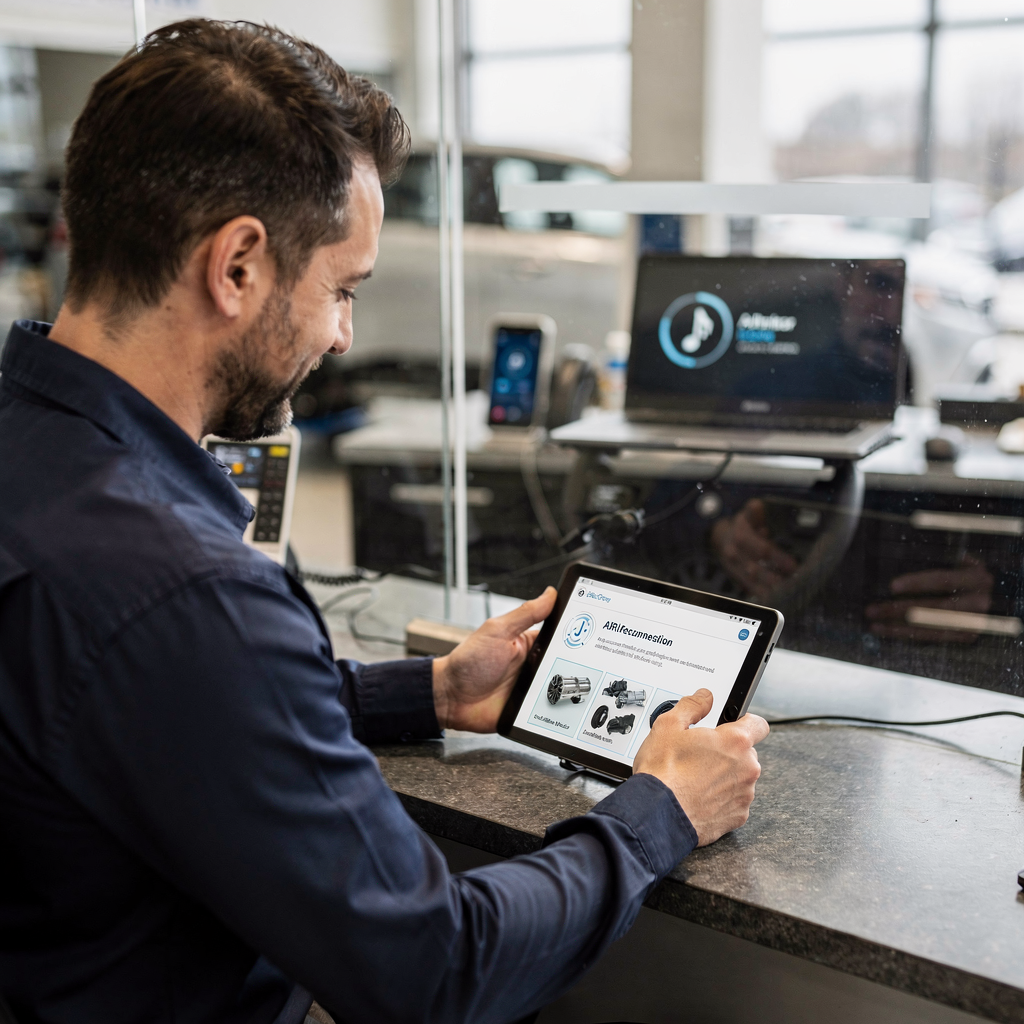
AI agents support dealerships and aftermarket suppliers to raise customer satisfaction and to increase revenue. Firstly, about a quarter of buyers used or planned to use AI tools while buying a car in 2025, which changes buyer expectations one in four car buyers using AI. Therefore, dealership-facing AI agents must deliver fast, personalised responses. For example, parts recommendation agents can suggest the right component based on VIN or service history. As a result, dealers see higher cross‑sell conversion and faster repair times.
Secondly, AI agents for car dealerships enable voice and in-car commerce experiences. In fact, in-car voice commerce could unlock around $35 billion in annual revenue, which creates new channels for parts and services in-car voice commerce $35bn estimate. Conversational AI agents can take orders, schedule service and confirm payment. This reduces friction for car owners and raises repeat service rates.
Thirdly, personalised marketing and service reminders improve the buying and ownership experience. AI agents analyse service history and mileage to recommend service appointments and to tailor offers. This improves NPS and generates additional revenue for dealers. Also, virtual agents and conversational AI agents can handle routine queries about warranties, parts availability and service slots. For complex cases, human agents get a full context bundle so responses remain fast and accurate.
To implement, dealerships should connect service scheduling to parts availability and to CRM. virtualworkforce.ai demonstrates how automating email lifecycles reduces triage time and keeps thread-aware context across long conversations, which helps resolve car issues quickly improve logistics customer service with AI. Track metrics such as NPS, repeat service rate and cross‑sell conversion to measure success. Ultimately, AI agents help dealerships turn service into a competitive advantage.
Drowning in emails?
Here’s your way out
Save hours every day as AI Agents label and draft emails directly in Outlook or Gmail, giving your team more time to focus on high-value work.
use cases of ai agents in automotive: agents in the automotive industry, benefits of ai agents and automation
Explore how AI agents provide specific, implementable use cases for suppliers, dealers and OEMs. First, automated quoting shortens sales cycles and boosts conversion. Second, predictive maintenance agents schedule parts and reduce downtime. Third, dynamic pricing agents adjust prices to market conditions and inventory. Fourth, warranty claim triage uses AI to route and classify claims for faster settlement. Fifth, supplier risk scoring lets procurement prioritise alternatives ahead of disruption.
Benefits of AI agents include faster response times, lower operational costs and improved accuracy. In pilot projects across the automotive industry, reported efficiency gains ranged from 30–50% on targeted tasks. Moreover, AI agents are transforming customer interactions and internal workflows by reducing manual lookup and by creating structured data from unstructured emails and documents. For operations teams, virtualworkforce.ai reduces handling time from roughly 4.5 minutes to about 1.5 minutes per email, which shows clear productivity gains and fewer errors.
Use cases of AI agents are broad. Examples include intelligent systems that route supplier confirmations, conversational AI agents that take parts orders, virtual agents that draft shipping notices, and AI agents that score supplier risk. Additionally, AI can power personalised marketing and tailored service reminders to improve the car buying and ownership experience. For american car owners and for international customers, these agents make interactions smoother and more reliable.
Implementation checklist
– Data sources: connect ERP, TMS, WMS, CRM and email. Without this foundation agents lack grounding.
– Integration points: identify where AI agents must write back to systems and where they only notify teams.
– Governance: set rules, escalation paths and audit trails. This ensures explainability and compliance.
– Pilot metrics: define KPIs such as automation rate, forecast accuracy, response time and NPS.
– Scaling plan: move from focused pilots to wider adoption once error rates fall and ROI is clear.
Finally, virtualworkforce.ai provides an end-to-end pattern for email-driven tasks. For logistics and supplier coordination, see automated logistics correspondence and AI for freight forwarder communication for practical guides automated logistics correspondence and AI for freight forwarder communication. These pages show how to connect AI agents to operational systems and how to measure benefits.
future of ai agents in the automotive sector: leveraging ai, ethical concerns and how to revolutionize sales and service
Over the next three years, AI agents will become standard in sales and service workflows across the automotive sector. Leaders must focus on governance and explainability when scaling. For example, over half of senior leaders now use generative AI regularly, which increases pressure to operationalise AI responsibly leadership generative AI usage. Therefore, teams should build data controls, clear accountability and human-agent handover rules before wide deployment.
Role of AI will expand from assistant tasks to decisioning. Agents will assess risk, propose remediation and even schedule service. However, suppliers must ensure decisions are auditable and that human agents can override actions when needed. This hybrid model preserves control and improves throughput. Additionally, regulation will require transparency, especially where pricing and warranty decisions affect customers.
Skills and change management matter. Automotive leaders should train staff to work with AI agents and to interpret their outputs. Also, governance frameworks should define who is accountable for automated actions. For example, virtualworkforce.ai separates IT-controlled data access from business-configured routing and tone, which helps preserve traceability and control.
Call to action: pilot with measurable KPIs. Start with a narrow use case, measure quote cycle time, forecast accuracy or response time, and then scale the proven agent. Build your data fabric, document governance and train people to manage exceptions. By doing this, agents are poised to revolutionize sales and service across the automotive industry. Discover how AI agents can help your business by running focused pilots that prove ROI, and then scale successful agents into sales and service workflows. See how AI delivers measurable improvements when tied to clear KPIs and good governance.
FAQ
What are AI agents for automotive suppliers?
AI agents are autonomous or semi‑autonomous AI programs that handle tasks such as quote generation, inventory checks and supplier coordination. They work across systems to automate repetitive work and to provide structured data for decision makers.
How do AI agents speed up the sales funnel?
AI agents automate information retrieval, create approved quotes and route exceptions for review. This reduces manual handoffs, shortens quote cycle time and improves the likelihood of converting leads into orders.
Can AI agents reduce inventory costs?
Yes. Forecasting agents use sales telemetry and market signals to recommend order quantities and safety stock. This reduces days of inventory and decreases the need for expedited freight when forecasts are more accurate.
Are AI agents safe to use for customer communications?
When governed correctly, AI agents can draft and send accurate, traceable replies grounded in ERP and CRM data. Governance and human override rules are essential to maintain quality and accountability.
What metrics should suppliers track after deploying AI agents?
Track quote cycle time, win rate, forecast accuracy, days of inventory, automation rate, response time and NPS. These KPIs show whether AI agents improve operational efficiency and customer satisfaction.
How does agentic AI differ from traditional automation?
Traditional automation follows fixed rules and scripts. Agentic AI makes context-aware decisions, proposes remediation and can trigger actions across systems. It requires strong data grounding and governance.
Can AI agents integrate with existing ERPs and email systems?
Yes. Effective AI agents connect to ERP, TMS, WMS and email. For example, virtualworkforce.ai integrates these sources to automate the full email lifecycle and to push structured data back into systems.
What are typical use cases of AI agents in the automotive industry?
Common use cases include automated quoting, predictive maintenance, dynamic pricing, warranty triage and supplier risk scoring. Each use case targets measurable operational gains.
How should organisations start with AI agents?
Begin with a focused pilot that has clear KPIs such as reduced handling time or improved forecast accuracy. Ensure data access, define escalation paths and train staff on human-agent collaboration.
What ethical and governance issues should be considered?
Address data privacy, explainability and accountability before scaling. Keep audit trails for automated decisions and ensure that human agents can review and override AI actions when necessary.
Drowning in emails?
Here’s your way out
Save hours every day as AI Agents label and draft emails directly in Outlook or Gmail, giving your team more time to focus on high-value work.