


ai agent in the container terminal: core roles at the depot
An AI agent is a software system that perceives an environment, reasons about it, and takes actions to reach measurable goals. In this chapter I describe how an AI agent works inside a container terminal and how it interacts with people and machines. The agent reads telemetry from GPS, sensors, and the TOS. Then it fuses that input with gate logs, truck ETAs, and scheduling windows. Next it recommends or executes moves to reduce dwell time and speed decisions. In practice the agent observes stacks, predicts conflicts, and issues commands to cranes, trucks, or human operators.
The core loop is simple: observe; decide; act. The loop repeats many times per hour. Each cycle uses real-time data and short-term forecasts. The agent uses models and rules to weigh trade-offs. For example, it balances a faster truck turn against a crane reposition cost. It factors in vessel windows, export priority, and equipment state. The system often improves throughput and lowers operational cost by reducing idle time and errors.
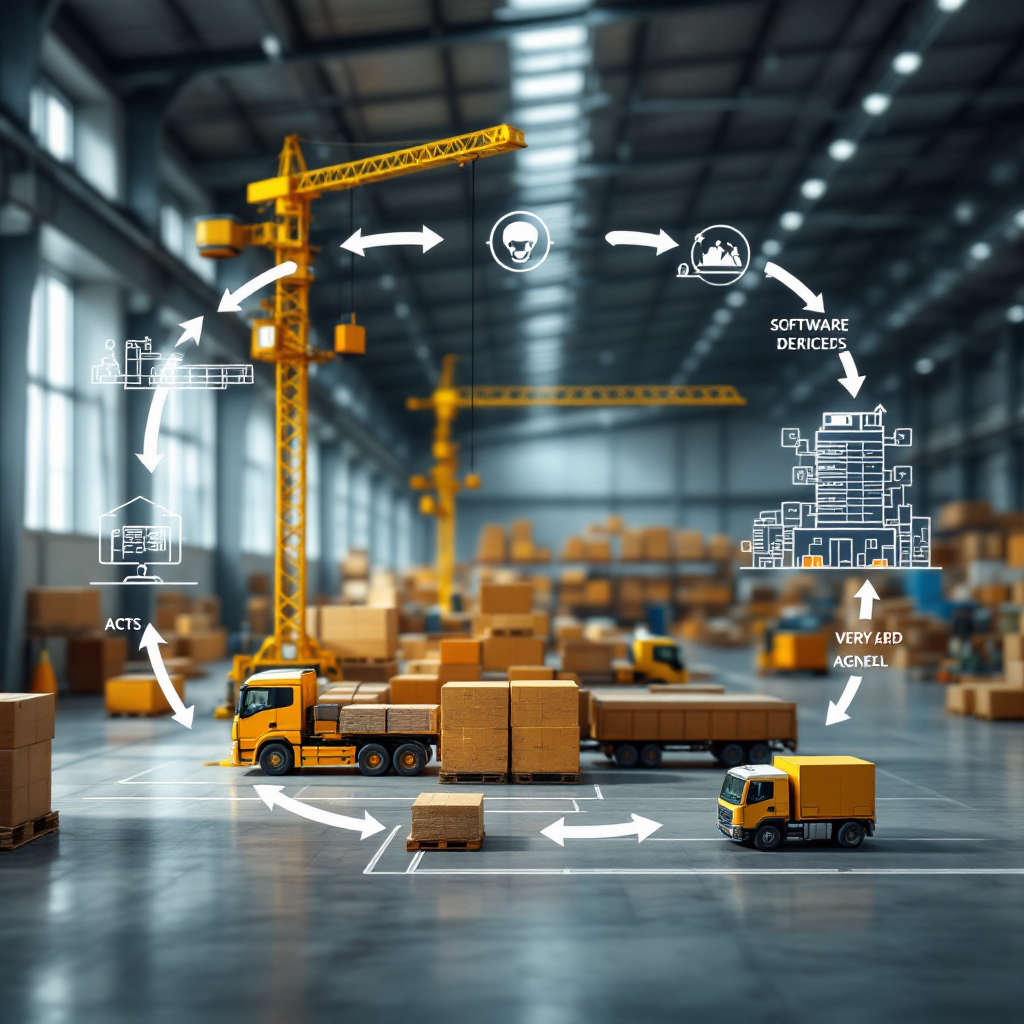
Examples of tasks the agent handles include automated slot assignment, yard routing, and gate triage. The agent integrates with the terminal operating system to reserve slots and update status. It can also update a transportation management system when trucks arrive and depart. Specialized agents manage slotting rules for refrigerated cargo and hazardous loads. In addition, an AI agent can surface exceptions for human review. That hybrid model keeps operations safe and auditable.
Agents operate on both short and medium horizons. Short horizons focus on truck turns and crane cycles. Medium horizons cover planning for the next vessel berth and load plan. The agent learns from feedback and adjusts forecasts. This learning AI approach improves with more data and varied conditions. For teams that prefer low-code integration, an ai platform can link APIs and data sources without heavy engineering.
Neuron notes: keywords for search include AI AGENT, CONTAINER, and CONTAINER TERMINAL. Keep the tone factual and clear. If you want to see how an email-centric assistant speeds replies for ops teams, read our piece on the virtual assistant for logistics that connects to ERP and TOS systems for grounded answers: virtual assistant for logistics. The agentic AI concept scales from this loop and can coordinate multiple specialized agents across the yard.
ai agents for logistics in logistics and supply chain: measurable throughput and capacity gains
This chapter shows concrete benefits for operations. AI agents for logistics drive measurable gains in throughput, capacity, and labour efficiency. For example, reported labour efficiency gains can reach up to 40% when agents automate repetitive manual tasks (Republic Polytechnic). At the same time freight classification systems reached about 75% automation for LTL workflows, with classification decisions in roughly ten seconds per shipment (TankTransport). These examples show how fast, AI-driven decisions compress cycle times and raise effective capacity.
Key metrics to monitor include TEU throughput, average dwell time, truck turn time, and equipment utilisation. An AI agent can reduce average dwell time by prioritising moves that free a berth or a yard lane. It can reduce truck turn time by pre-clearing paperwork and staging loads. In practice, agents also cut reconciliation work and billing exceptions. That lowers logistics costs and improves customer SLA attainment.
Market signals support investment. The AI in logistics market shows strong growth into 2026 as companies invest in digital twins and route optimization platforms (The Intellify). Meanwhile, 45% of shippers stopped working with freight forwarders due to inadequate technology, illustrating demand for modern systems that automate processes and integrate data (Magaya). Those trends mean a well designed AI agent can improve competitive position and capture more volume.
Use cases include faster load/unload sequencing, reduced truck turnaround, and prioritised exports to meet vessel windows. Agents analyze incoming shipment manifests and then make decisions to sequence moves and allocate cranes. When a late vessel arrival compresses time, the agent re-routes yard moves and updates terminal schedules. That dynamic re-planning limits cascading delays and mitigates supply chain disruptions. Logistics teams gain visibility, and carriers experience fewer missed slots.
For teams interested in email automation tied to operations, our logistics email drafting AI shows how data-connected automation speeds correspondence and reduces follow-ups: logistics email drafting AI. Overall, ai agents in logistics yield measurable throughput gains when operators track the right KPIs and iterate from small pilots to broader scale.
Drowning in emails?
Here’s your way out
Save hours every day as AI Agents label and draft emails directly in Outlook or Gmail, giving your team more time to focus on high-value work.
automation to streamline workflow: ai-driven agents versus traditional automation
This section contrasts automation approaches and explains why AI-driven agents often perform better under variability. Traditional automation relies on fixed rules, PLCs, and batch schedules. That approach works well in steady-state conditions. However, it is brittle when unexpected arrivals, weather, or equipment faults occur. By contrast, ai-driven agents learn from live data, re-plan continuously, and adapt without full reprogramming.
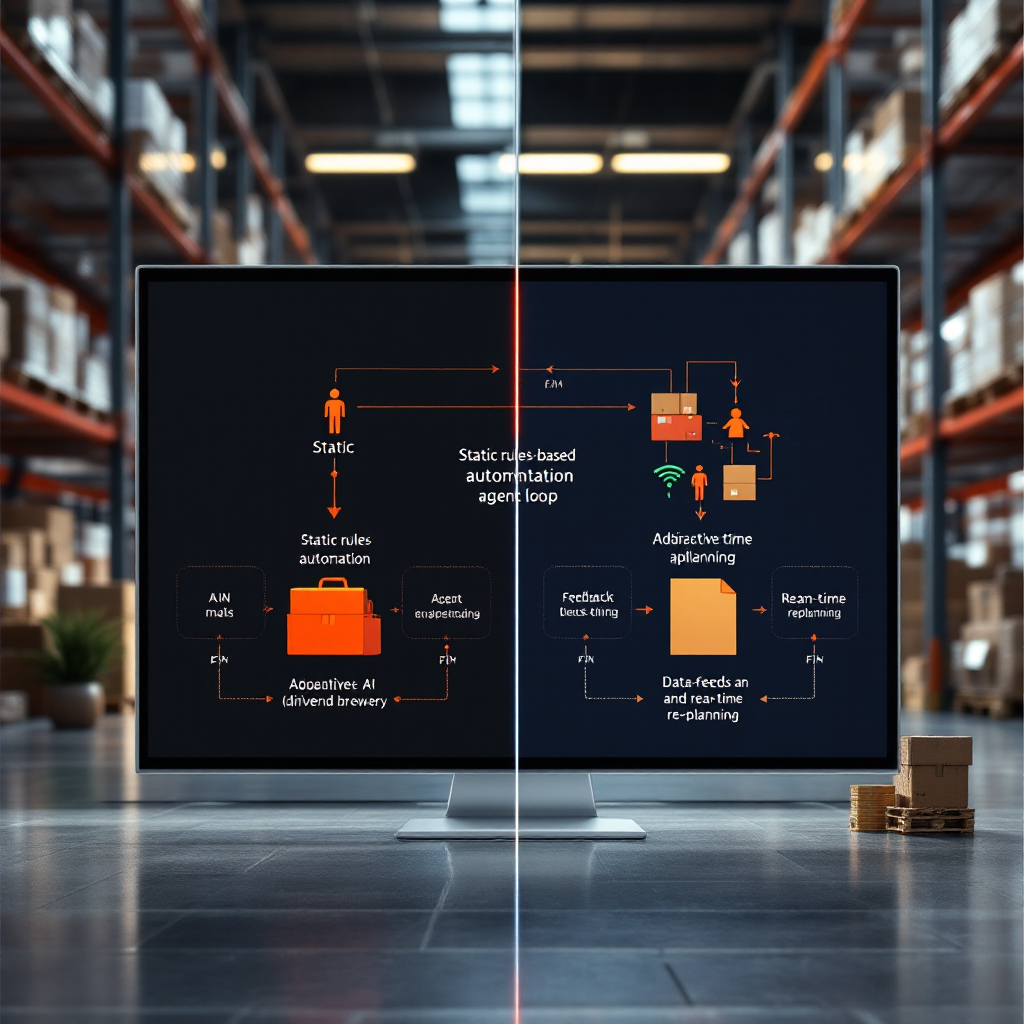
Traditional automation executes pre-defined sequences. It triggers on fixed thresholds, and it handles exceptions by halting or escalating. Meanwhile, AI agents monitor streams of real-time data and update decisions within seconds. They can perform dynamic crane reassignment, on-the-fly yard reshuffles, and prioritise moves for imminent vessel windows. A digital twin can test options before the agent executes a plan. That reduces risk and increases confidence in adaptive changes.
Agents analyze sensor feeds and TOS logs to detect patterns. Then they forecast short-term demand and reassign tasks. They integrate with warehouse management systems and transportation management systems to keep planning systems in sync. This integrated view reduces handoffs and simplifies operational governance. Where traditional automation leaves many tasks reactive, the ai-powered approach moves operations toward proactive control.
Consider two scenarios. In the first, a crane breaks and the rules system generates an exception list. Operators then manually reschedule tasks. That takes time and increases truck waits. In the second, an AI agent detects the fault from motor telemetry and dispatches a reroute plan. It reallocates cranes, reschedules drayage, and notifies supervisors. The latter reduces lost productivity and maintains throughput.
To streamline workflows teams should focus on key interfaces, APIs, and feedback loops. Agents integrate through APIs to TOS, gate, and fleet systems. They also respect existing safety rules and human-in-the-loop approvals. For more about using AI to automate correspondence and keep teams in sync, see our article on automated logistics correspondence: automated logistics correspondence. The shift from reactive to proactive operations is a stepwise process, and it begins with small, measurable pilots.
predictive maintenance and load planning: deploying ai agents to predict faults and optimise loads
Predictive capabilities unlock two benefits. First, predictive maintenance reduces unexpected downtime. Second, intelligent load planning reduces crane idle time and improves vessel schedules. Combining these capabilities lets agents coordinate maintenance windows with load plans so less productive time goes unused. The result is smoother terminal operations and higher equipment availability.
Predictive maintenance uses IoT sensors, vibration telemetry, temperature readings, and cycle counts. Machine learning models spot anomalies that precede a failure. For example, motor vibration anomaly detection flags a bearing issue days before it escalates. That forecast triggers a maintenance slot and a reroute of tasks. The load planning agent then adjusts sequences to reflect temporary capacity changes. This coordination preserves throughput and reduces costly emergency repairs.
Implementation requires sensors, historical failure records, and labelled event data to train machine learning models. Teams should define thresholds, alerting rules, and an SLA-driven maintenance workflow within the management system. Agents also integrate with the transportation management system and planning systems so that a predicted crane outage automatically leads to revised load plans. This end-to-end link keeps vessel arrivals on time and reduces demurrage risk.
Technical prerequisites include baseline IoT coverage on cranes and RTG units, accessible logs from the TOS, and a data pipeline for model updates. Model retraining needs periodic review. Operations staff must validate alerts and tune sensitivity to reduce false positives. Agents that learn with operator feedback improve over weeks and months rather than days, so start small and expand scope.
When you deploy predictive maintenance alongside load planning, the combined effect reduces labour churn and improves utilization rates. This also lowers maintenance cost because teams plan work during low-demand windows. If you want a practical example of how to scale AI agents without adding headcount, see our guide on how to scale logistics operations with AI agents: how to scale logistics operations with AI agents. In short, deploying a predictive agent changes maintenance from reactive to proactive and makes load planning more resilient.
Drowning in emails?
Here’s your way out
Save hours every day as AI Agents label and draft emails directly in Outlook or Gmail, giving your team more time to focus on high-value work.
agents integrate with legacy systems: how to implement ai at the container depot — use cases of ai agents
Implement AI agents by starting with data and APIs. Successful rollouts begin with a pilot that targets a high-impact use case. First connect telemetry, TOS logs, and gate events through secure APIs or middleware. Then build a small agent that automates a single task, such as gate processing or yard slotting. That agent should log actions and provide human override. Gradually expand scope and add more agents to the multi-agent AI systems ensemble.
Use cases of AI agents include gate processing, yard slotting, truck route assignment, predictive maintenance, and billing exceptions. Agents also assist with container tracking and manifest reconciliation. For integration, teams often use a hybrid architecture that keeps proprietary TOS functions unchanged while layering AI logic in a service tier. This approach reduces risk and preserves the current management software investments.
Key implementation steps are: audit data quality, expose APIs, build a pilot, measure KPIs, and scale in phases. Risk and mitigation measures include data validation, staff training, phased deployment, and maintaining a human-in-the-loop mode for high-risk actions. Agents integrate via secure endpoints and role-based permissions, and they include audit trails for compliance.
Operational teams should expect change management work. Training should cover new workflows, escalation paths, and decision rationales. Agents also need clear error handling so that operators trust suggestions. If you plan to implement AI for cargo and freight management tasks, consider connecting email and exception workflows to reduce manual replies. Our ERP email automation solution shows how an ai assistant can draft context-aware responses and update systems, which reduces repetitive work for logistics teams: ERP email automation for logistics.
Finally, build a concise checklist for pilots: data readiness, API endpoints, KPIs, pilot duration, operator training, and scale criteria. Agents help with gate triage and yard routing while preserving oversight. Agents also reduce the burden of routine emails by suggesting accurate replies and updating systems, which keeps focus on higher-value planning and continuous improvement.
deploying ai: cost savings, ROI and the future of logistics and logistics and supply
Deploying AI yields cost savings and measurable ROI when teams track the right metrics. Expect payback periods that depend on scope. A small pilot focused on truck turns or gate processing can pay back within months by reducing labour hours and avoiding demurrage. Cost savings come from reduced labour, fewer breakdowns, and faster turn times. When you measure ROI include reduced labour hours, maintenance cost savings, and throughput increase.
KPIs to monitor include truck turn time, average dwell time, TEU throughput, and equipment utilisation. Other relevant KPIs are billing exception rates and email handling time for operations teams. For example, our customers reduce email handling time significantly with a no-code AI assistant that connects to ERP, TOS, and WMS data, freeing staff for higher-value work and lowering logistics costs: virtualworkforce.ai ROI for logistics. These savings compound when agents coordinate tasks across the yard and fleet.
The near-term roadmap for terminals includes tighter coupling with digital twins, more autonomy at terminals, and improved planning systems that blend short-term dispatch with long-term forecasts. Autonomous AI agents will handle routine decisions while people focus on exceptions and strategy. Regulatory and workforce impacts will require thoughtful change management and reskilling programs.
Finally, set clear next steps for pilot → scale. Start with a constrained use case. Measure results for a fixed period. Iterate on thresholds and human handoffs. Then scale horizontally to more terminals and vertically into adjacent functions, such as customs correspondence and freight management. If you want to streamline operations correspondence further, explore our resource on AI for freight forwarder communication: AI for freight forwarder communication. The future of logistics and supply will include more autonomous agents that coordinate across systems, reduce disruption, and keep goods moving reliably.
FAQ
What is an AI agent in a container terminal?
An AI agent is a software system that perceives, reasons, and acts within a terminal environment. It reads sensor data and system logs, then makes or recommends operational decisions to improve throughput and reduce delays.
How do AI agents improve truck turn times?
Agents pre-stage documents, prioritise loading sequences, and route trucks to available lanes. They also update the TOS and notify drivers so handoffs happen faster and waiting time decreases.
Can AI integrate with existing TOS and WMS?
Yes. Agents integrate through secure APIs or middleware and exchange data with the terminal operating system and warehouse management systems. That preserves legacy functionality while adding adaptive capabilities.
What data do agents need to predict failures?
Agents need IoT sensor feeds such as vibration, temperature, and cycle counts, plus historical failure logs for model training. The combined data enables predictive maintenance models to identify anomalies early.
Are AI agents safe to deploy in live operations?
Yes, when deployed with human-in-the-loop controls and audit trails. Pilots should limit automated changes to low-risk moves and require operator approval for critical actions until trust grows.
How soon will I see cost savings from an AI pilot?
Savings depend on the use case. Gate automation or email automation pilots often show results within weeks. Track labour hours, dwell times, and maintenance costs to calculate ROI.
Do AI agents replace staff?
No. Agents automate repetitive tasks and free staff to focus on exceptions and higher-value decisions. Change management and reskilling help teams adopt the new workflows.
What role does machine learning play in these agents?
Machine learning powers forecasts, anomaly detection, and pattern recognition. Machine learning models support predictive maintenance and demand forecasting within agentic systems.
Can agents handle exceptions like equipment failure or bad weather?
Yes. Agents re-plan in seconds and propose alternative allocations for cranes and trucks. They can also flag high-risk exceptions for human intervention and record the rationale for decisions.
How do I start a pilot for AI at my terminal?
Start with a focused use case, connect data sources, expose APIs, and define KPIs and scale criteria. Train staff, run the pilot, measure gains, and then expand scope based on results.
Drowning in emails?
Here’s your way out
Save hours every day as AI Agents label and draft emails directly in Outlook or Gmail, giving your team more time to focus on high-value work.