


ai and generative ai: Google Cloud, gemini and cruise line booking
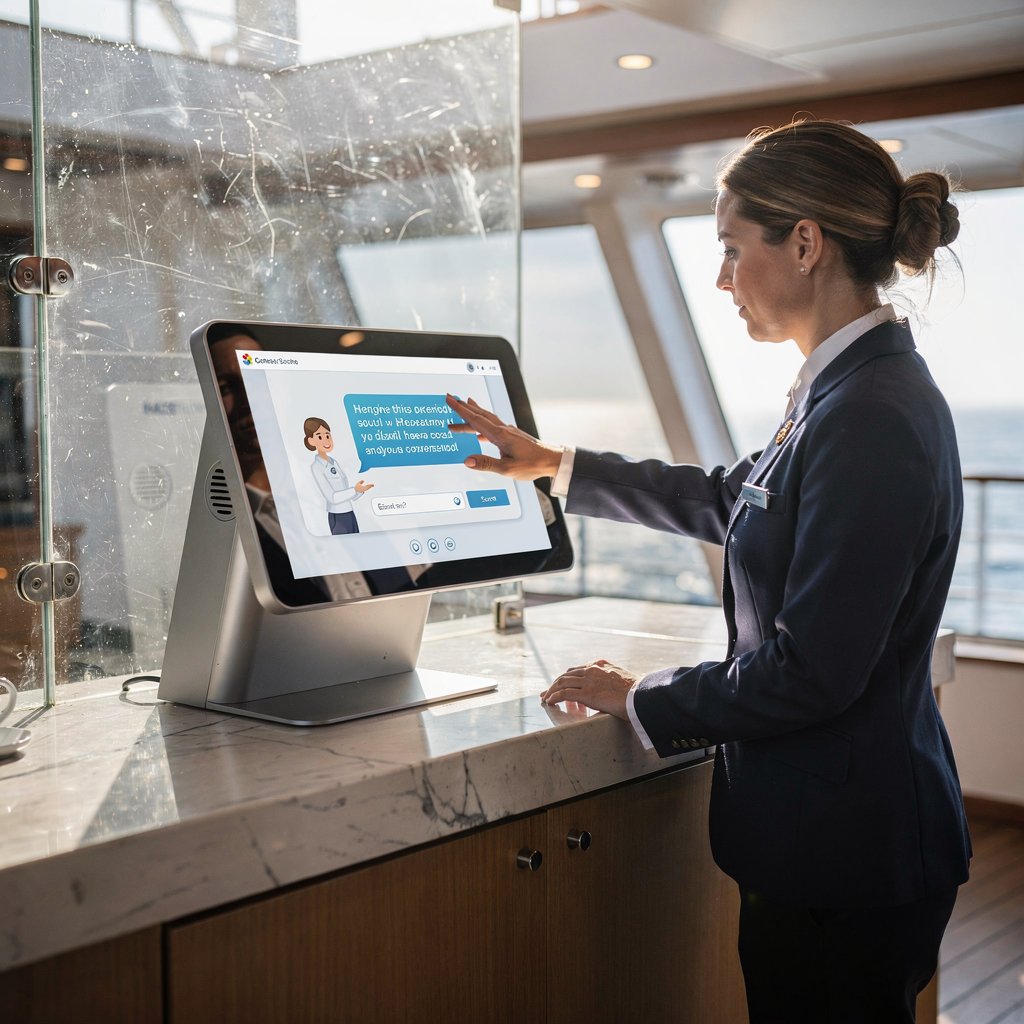
AI is changing how a traveler finds, customizes and pays for a cruise. Generative AI now writes persuasive itineraries, answers complex questions, and personalizes offers during the booking funnel. Google Cloud and gemini provide a platform for conversational assistants that act like expert travel advisors. Several operators use Google Cloud’s Gemini Enterprise to build conversational booking assistants that handle complex itineraries, upsells and special requests in real time. These assistants reduce back-and-forth and speed time-to-confirmation.
Large cruise companies have moved from experiments to pilots. They rely on GEN AI models to synthesize availability, cabin maps, and excursion capacity into a single reply. That approach cuts manual lookup and routing for agents. For example, a Gemini-backed assistant can propose a suite upgrade, confirm a shore excursion, and add a spa booking in one session. This reduces errors and raises conversion. Research shows AI systems in maritime contexts can lower downtime and improve predictive maintenance accuracy, which supports broader operational stability on ships (study).
Beyond engineering metrics, passengers value speed and clarity. AI agents deliver conversational flows and context-aware suggestions that feel personal. Cruise companies use these flows to highlight relevant DESTINATION choices and to book excursions without human delay. A field study of cruise tourism found satisfaction improves when technology reduces wait times and offers customization (research).
Technical deployment ties conversational AI to legacy booking systems and CRSs. That link is the backbone of every successful booking assistant. When you use AI to summarize policies, show real-time cabin maps and apply loyalty benefits, you reduce manual errors and increase average booking value. For teams that manage high volumes of operational emails, tools like virtualworkforce.ai illustrate how AI can automate repetitive, data-driven messages and free human agents for higher-value work. See more on how automating operations reduces handling time in logistics contexts at our guide to how to scale logistics operations with AI agents.
ai agent design: ai agent and ai agents on gemini enterprise for personalised cruiser booking
Designing an AI agent for a cruise line booking funnel starts with a simple architecture: intent detection, context memory, API connectors, and secure payment handling. Intent handling routes queries like “book a cabin” or “change itinerary.” Context keeps past choices and loyalty status in scope so the assistant can tailor offers. APIs connect to the Property Management System (PMS), Central Reservation System (CRS), CRM, and payment gateway. These links let the assistant confirm availability and complete a transaction without human handoff.
Gemini Enterprise is often favoured because it supports multimodal inputs and agentic workflows. That capability matters when the agent must read cabin images, compare deck plans, or accept voice questions during a phone call. The ai agents on gemini enterprise can maintain long conversational memory and run orchestrations that call multiple back-end services. Engineers design a supervisor layer to escalate to human agents for exceptions. This model balances speed and safety while keeping brand tone intact.
Proof points exist. Virgin Voyages’ approach to conversational assistants shows how a tightly integrated agent can recommend a shore excursion, suggest a spa treatment, or propose a dining package using passenger preferences. Virgin Voyages created personality-driven assistants to speak in brand voice while tailoring recommendations to the cruiser. That method blends automation with the human warmth guests expect. It also allows personalized marketing: the system generates offers that spotlight new itineraries and suite upgrades with sensitivity to the guest journey.
Key components of an effective AI agent include secure stateful retrieval from CRM, tokenized payment flows, and an audit trail for regulatory compliance. Human-in-the-loop controls ensure manual review for high-value transactions, and continuous learning updates intent models based on real interactions. When operators implement these elements, they create an end-to-end booking experience that can scale across ships and call centres. For operations teams focused on email-heavy workflows, adapting AI-driven routing and drafting reduces friction; see relevant automation examples in our automated logistics correspondence materials.
Drowning in emails?
Here’s your way out
Save hours every day as AI Agents label and draft emails directly in Outlook or Gmail, giving your team more time to focus on high-value work.
deploying ai and automation: deploying ai, automation and how ai agents integrate into ship and shore operations
Deploying AI across reservation, pre-cruise communications, and onboard services requires a phased plan. First, test a narrow use case such as automated booking confirmations or itinerary change handling. Next, link the assistant to the CRS and to customer profiles so the agent can tailor offers and apply loyalty benefits. Teams should implement robust data governance and logging to protect guest data and to provide auditability for payments and access changes.
Integration points include the onboard PMS, point-of-sale terminals, crew scheduling systems, and guest-facing apps. AI agents integrate with shore-based call centres and with shipboard systems to sync guest preferences. That synchronization reduces duplicate work and supports seamless check-in. When an agent updates a cabin assignment or records a dietary preference, the crew sees it immediately. This lowers manual handoffs and improves service accuracy.
Operational gains are measurable. Automating routine queries reduces workload for human agents and cuts check-in wait times. Studies in maritime AI show predictive maintenance and automation can reduce downtime by up to 20% and improve fault detection by roughly 30% (research). For guest-facing operations, AI reduces booking errors and shortens response cycles.
Practical steps: run a focused pilot; instrument metrics (conversion lift, average booking value, time-to-confirmation); expand connectors to spa, shore excursion inventory, and payment systems; and train crew and shore staff on handover flows. Human agents remain essential for complex exceptions and to maintain the cruise line’s tone. For teams wrestling with high volumes of inbound messages, applying end-to-end email automation reduces triage time and preserves context across long conversations—ideas shown in our write-up on virtual assistant logistics.
virgin voyages and royal caribbean: announced a partnership, brand to life and pilots from industry leaders
Leading cruise lines have gone public about pilots and partnerships that put generative agents into production. Virgin Voyages announced a partnership with Google Cloud to roll out generative AI agents fleet-wide. That announcement framed the effort as a move to bring brand tone and instant personalization to every guest interaction. Royal Caribbean likewise re-architected data to pilot Gemini-backed agents in sales and guest service. These pilots reflect the broader trend among leading cruise lines to combine data modernization with conversational assistants.
Cruise line pilots aim to keep the brand to life while automating routine tasks. Pilots focused on pre-cruise checklists, cabin upsells, and excursion capacity management. Carnival and other operators have run hundreds of generative AI pilots, moving a subset into production to protect brand tone while scaling automation. The industry is using pilots to test content quality, compliance, and conversion impact before a full roll-out. That conservative approach limits risk while proving value.
Virgin Voyages’ pilots show how a personality-led assistant can tailor messaging for different traveler segments. At the same time, Royal Caribbean’s data-first effort demonstrates how cleaning and centralizing guest records creates reliable inputs for AI recommendations. A clear lesson is that strong CRM and fast retrieval are preconditions for effective personalization. When those elements exist, an AI-powered booking flow can highlight relevant destinations, suggest excursion pairings, and offer targeted upgrades.
These initiatives also refine human workflows. Crew and shore staff receive AI-summarized alerts that preserve context and suggest next steps. Travel agents who sell cruise packages benefit from faster quote generation and fewer back-and-forth corrections. For IT teams, the key takeaway is to treat pilots as product experiments: measure conversion, monitor safety, and scale what truly improves the guest experience. To explore similar automation patterns in operations-heavy businesses, see our analysis on scaling operations without hiring.
Drowning in emails?
Here’s your way out
Save hours every day as AI Agents label and draft emails directly in Outlook or Gmail, giving your team more time to focus on high-value work.
generative: business impact — predictive maintenance, guest satisfaction and measurable ROI
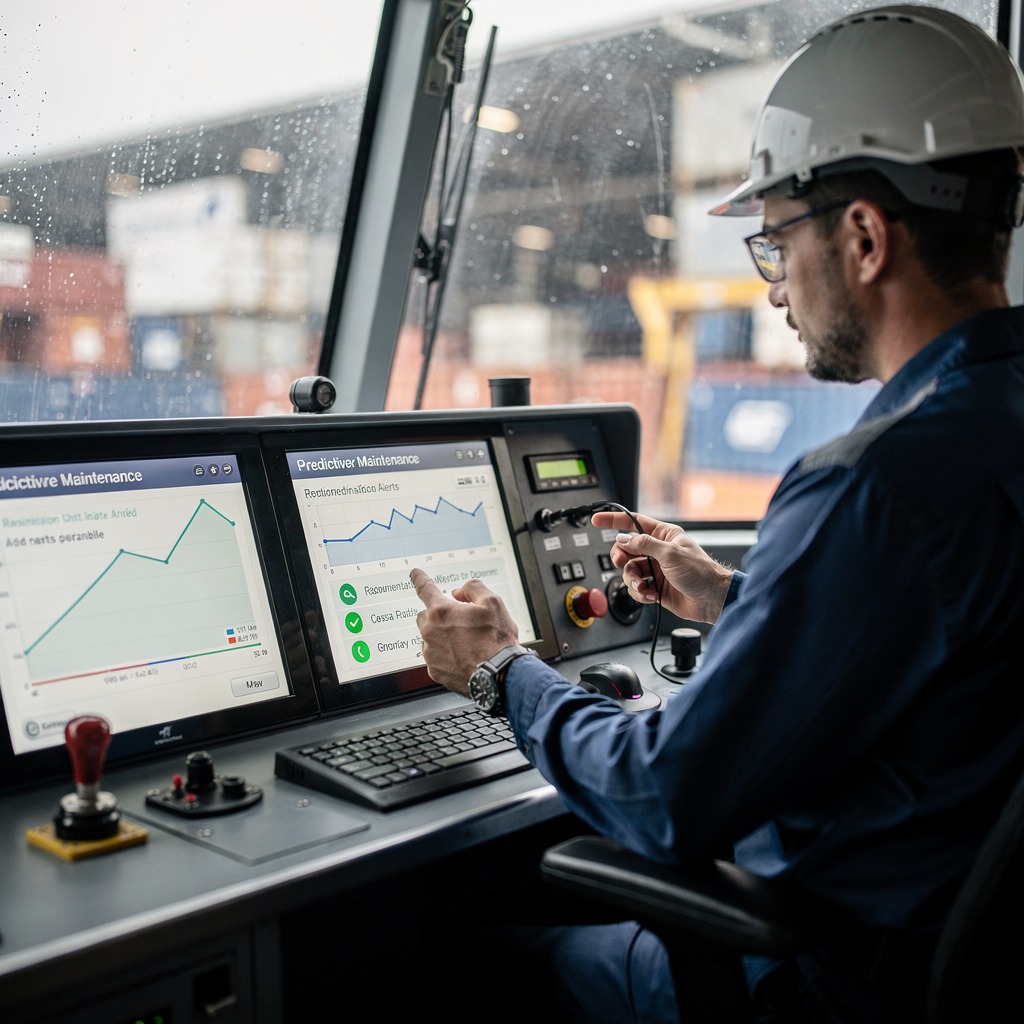
The business impact of generative systems spans maintenance, sales, and service. Predictive maintenance solutions support fewer mechanical failures and less downtime. Studies indicate that AI-driven predictive maintenance can lower downtime by about 20% and improve fault detection accuracy by roughly 30% (study). Those gains translate to more reliable itineraries and fewer disrupted guest experiences on board the cruise ship.
On the guest side, AI personalization raises satisfaction. Research suggests guest satisfaction improves by an estimated 15% when AI-enabled services reduce wait times and tailor offers (research). Measured KPIs should include conversion lift, average booking value, time-to-confirmation, onboard spend, and incident reduction. These metrics show the direct return on automation investments and guide iterative improvement.
Business teams must track the right indicators to prove that AI agents scale. A clear set of KPIs creates accountability and supports expansion. Track how many bookings close through the assistant, how often guests accept upsells, and whether response times drop. Monitor incident trends to verify safety improvements. Vendors and internal teams can then quantify new revenue from targeted offers and from fewer cancellations.
Beyond raw numbers, there is a qualitative effect. AI agents help elevate the guest journey by surfacing timely offers—like a last-minute excursion or a spa package—while keeping human staff focused on high-touch moments. That balance amplifies our human touches and preserves brand warmth. For organizations managing many supply-chain emails and operational messages, automating the lifecycle of those communications similarly improves speed and consistency. Learn how email automation improves operational ROI in our report on virtualworkforce.ai ROI.
transform booking and service: roadmap for cruise lines deploying ai agents to transform operations
To transform booking and service, cruise lines need a practical roadmap that blends tech work with operational change. Start with pilot use cases: booking confirmations, cabin upgrades, and pre-cruise messaging. Run short pilots to verify data access, response quality, and conversion impact. Use those pilots to collect labeled logs that improve the models and to demonstrate early ROI.
Next, create data governance and retrieval patterns that ensure secure stateful access to CRM and PMS records. Design human-in-the-loop rules for high-value transactions and for any event that affects safety or guest wellbeing. Train staff on new workflows so handoffs between AI and human teams are smooth. This step keeps the cruise line’s voice consistent and protects guest trust.
Scale using modular connectors to the CRS, to payment providers, and to onboard POS systems. Adopt monitoring that tracks conversion, average booking value, guest satisfaction, and incident rates. A phased roll-out across ships and call centres reduces risk and lets teams refine escalation logic. Consider agentic features for complex flows so the system can sequence tasks across many services without human orchestration.
Operationally, deploy tools that automate repetitive messages and structured retrieval. virtualworkforce.ai shows how end-to-end automation of email workflows reduces triage time and preserves context across multi-step interactions. That capability is especially helpful for pre-cruise communications and for handling group bookings. Finally, remember safety and brand: test voice and tone, validate offers, and keep humans in charge of sensitive choices. With this approach, cruise lines can transform booking and guest experience while improving operational resilience and creating measurable new revenue.
FAQ
What is an AI agent in the context of cruise booking?
An AI agent is an automated conversational system that handles guest interactions across the booking funnel. It detects intent, retrieves guest data, checks inventory, and completes transactions while escalating complex cases to human agents when needed.
How does generative AI improve cruise booking conversion?
Generative AI produces contextual, personalized offers and can combine multiple services in one interaction. That reduces friction, speeds decision-making, and increases the likelihood a guest completes a booking or accepts an upsell.
Are guest data and payments secure when using AI agents?
Yes. Proper deployments enforce data governance, tokenized payments, and access controls. Teams must audit logs and limit AI actions for sensitive transactions to maintain compliance and trust.
Can AI agents handle complex itinerary changes?
They can, when integrated with the CRS and PMS. An agent that calls multiple APIs can rearrange cruise itineraries, reassign cabins, and update shore excursion bookings while keeping the guest informed.
How do cruise lines measure the success of AI pilots?
Success is measured with KPIs like conversion lift, average booking value, time-to-confirmation, onboard spend and incident reduction. These metrics show direct business impact and guide scaling decisions.
Will AI replace human travel agents?
No. AI handles routine and data-heavy tasks while human travel agents focus on complex planning and high-touch sales. The ideal model amplifies human agents and improves throughput.
What role do companies like virtualworkforce.ai play?
virtualworkforce.ai automates operational communications and email workflows, reducing triage time and preserving context. That creates bandwidth for staff to focus on guest-facing service and strategic tasks.
How quickly can a cruise line deploy AI agents?
With a focused pilot, a cruise line can deploy a basic assistant in weeks. Full integration across ships and systems typically takes months, depending on data readiness and regulatory needs.
Do AI agents support onboard services like spa and excursions?
Yes. When connected to inventory systems, an AI agent can book a spa appointment, reserve a shore excursion, or suggest a dining package during booking or while guests are onboard.
What steps should a cruise line take first to adopt AI agents?
Begin with a narrow pilot, secure data access, define KPIs, and design human-in-the-loop rules. Validate performance on conversion and safety before scaling across the fleet.
Drowning in emails?
Here’s your way out
Save hours every day as AI Agents label and draft emails directly in Outlook or Gmail, giving your team more time to focus on high-value work.