


ai agents in cybersecurity — accelerate threat detection and response
AI agents are reshaping how organisations accelerate threat detection and response. They add speed, context and scale to existing monitoring. For example, agents perform real‑time anomaly detection across logs and telemetry, they correlate events from cloud, endpoint and network sources, and they automate containment steps when needed. This reduces manual toil and helps security teams focus on higher‑value analysis. According to an industry study, about 73% of organisations already use AI in security, which shows broad adoption.
Core use cases include three linked capabilities. First, real‑time threat detection. AI models spot deviations from baseline behaviour and flag suspicious sessions. Second, automated containment. Agents can isolate hosts, block malicious IPs and revoke credentials under predefined rules. Third, correlation and prioritisation. AI agents surface actionable incidents by grouping related alerts and ranking them by risk. These functions help teams reduce mean time to detect and mean time to respond. In field studies, automation and prioritisation helped cut incident response time by up to ~40%.
Metrics to track are straightforward. Measure MTTD, MTTR and false‑positive rate. Also track time saved per incident, analyst handoffs and percentage of alerts auto‑resolved. For example, a detection → triage → containment workflow might run like this: first, an AI pipeline ingests logs and flags an anomaly in minutes; next, a triage agent enriches the alert with user context and recent changes; then, a containment agent triggers a quarantine step after human approval or when thresholds are met. This workflow reduces noise and speeds remediation.
Teams must also test data quality. Poor telemetry will skew AI detection and raise false positives. Use labelled incidents in sandboxed environments and iterate on training sets. If you run operations that include high volumes of inbound email and operational messages, consider how agents integrate with those flows. Our platform automates the full email lifecycle for ops teams and shows how grounded data improves decision accuracy; see how to scale operations with AI agents for examples.
Finally, build simple dashboards. Track detection accuracy, time to escalate and the percentage of incidents that an AI agent resolved without escalation. Use those KPIs to justify expanded pilots. Also, align those pilots with budget and compliance gates so you can prioritise safer, measurable rollouts.
agentic ai in cybersecurity — autonomous defenders and attacker risks
Agentic AI is goal‑directed and can execute multi‑step processes with limited supervision. That design enables autonomous defenders to pursue containment goals, to hunt for threats and to orchestrate responses across systems. At the same time, the same properties can enable attackers to build agentic attackers that act at machine speed. As Malwarebytes warned, “We could be living in a world of agentic attackers as soon as next year” (Malwarebytes via MIT Technology Review). This dual‑use dynamic makes risk management essential.
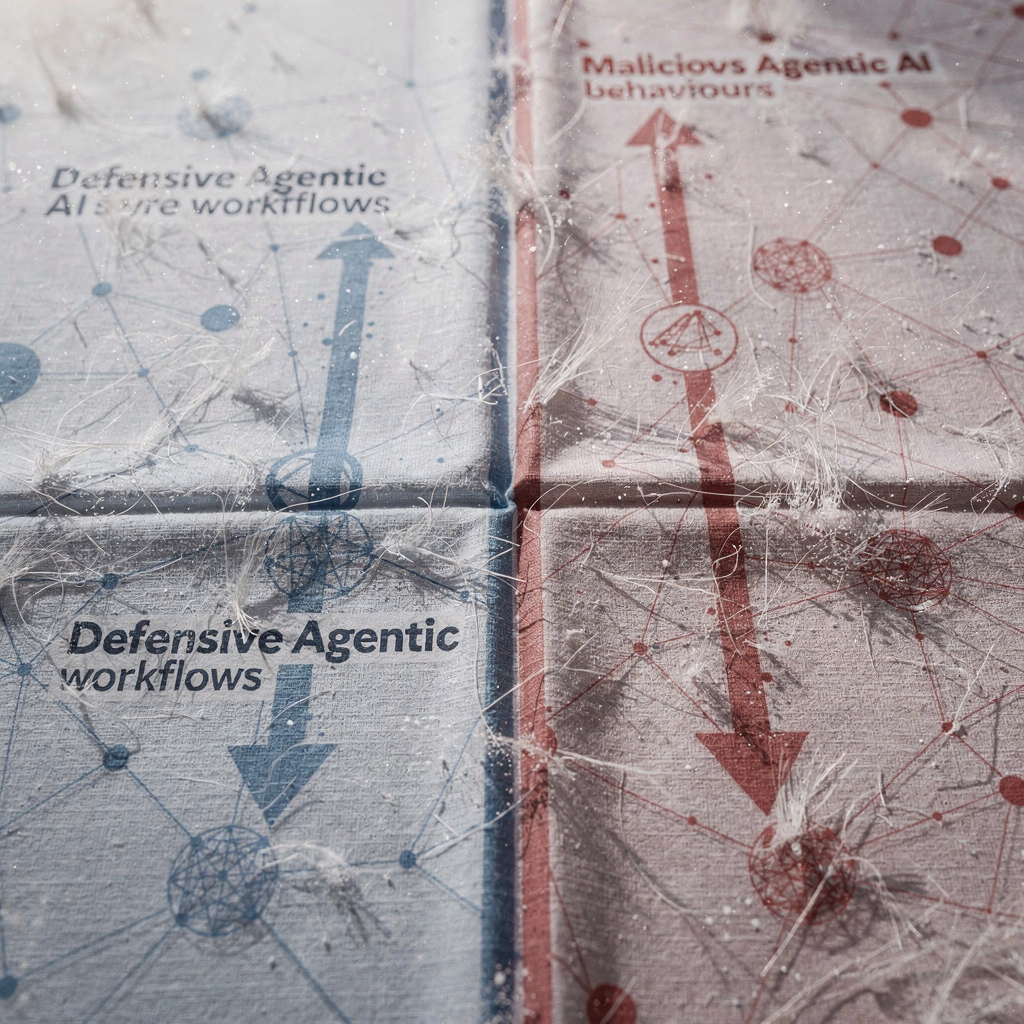
Concrete threats from agentic systems include automated ransomware campaigns that probe networks at scale, semantic privilege escalation where an agent chains small weaknesses to gain wide access, and AI‑driven social engineering that personalises attacks from large profiles. These attacks can move faster than conventional playbooks. To safeguard, implement strict scopes and runtime constraints. Techniques include sandboxing agents, behaviour monitoring, and explicit, short‑lived credentials. In addition, enforce least privilege and limit what an agent may modify or access by policy.
Testing matters. Run controlled red team scenarios that simulate agentic attackers and that measure speed, stealth and collusion. Red‑team tests should include prompt injection attempts and attempts to create lateral movement. A well‑designed test will reveal emergent behaviours before production deployment. Also, require explainability checkpoints where an agent logs planned actions and rationales prior to execution. This supports auditability and oversight, and it helps engineers spot drift in an AI system.
Operational governance should include clear approval gates and human‑in‑the‑loop stages. Define automated limits and kill switches. Make sure agents cannot autonomously perform high‑impact actions without an explicit human approval step. For organisations exploring agentic AI in cybersecurity, balance the benefits of autonomous defence with the risk that attackers may use similar agentic capabilities. Practical frameworks and secure‑by‑design practices will reduce that risk and will improve defensive outcomes over time. For further reading on agentic AI in cybersecurity and recommended safeguards, review the survey on agentic AI and the security implications here.
Drowning in emails?
Here’s your way out
Save hours every day as AI Agents label and draft emails directly in Outlook or Gmail, giving your team more time to focus on high-value work.
security operations — automated alert triage and analyst workflow
AI agents improve operational efficiency by reducing alert fatigue and by enriching alerts for analysts. They prioritise alerts, add context and return suggested playbook steps. This lets security analysts focus on complex incidents. For example, a triage agent can gather endpoint details, recent authentication events and threat intelligence snippets and then surface a concise summary. Next, it can propose containment actions and link to the affected assets. This process speeds decision making and reduces time wasted on manual lookups.
An applied case study shows the practical impact. A mid‑sized SOC implemented an AI triage pipeline that automatically grouped related alerts, marked high‑risk incidents and pre‑populated case notes. As a result, the queue of unresolved alerts fell by more than half and L2/L3 analysts spent 30–40% less time on routine context gathering. The team redeployed headcount to investigations and proactive hunting. Those gains matched broader industry trends where organisations see measurable time savings when they use AI to automate routine security workflows (Arctic Wolf study).
Best practice is to keep human checkpoints. Design the pipeline so that agents suggest actions but do not act autonomously on high‑impact steps. Maintain audit logs for every proposed and executed action. Also, codify escalation thresholds so that the system knows when to hand an incident to a human analyst. For example, a triage agent might auto‑resolve low‑risk alerts and escalate anything with lateral movement indicators to a human. That mix reduces burnout while preserving control.
Integrate agents with existing systems such as SIEM, SOAR and ticketing. That integration ensures the agent can fetch telemetry and can write back status updates. Maintain a clear change control process for agent updates, and include training for analysts so they understand how agents reach conclusions. For teams handling high volumes of operational email and customer messages, agents that automate the full email lifecycle can free analysts from repetitive lookups. See how this is done in logistics and operations with an AI assistant that drafts and routes messages automatically at automated logistics correspondence.
ai security and ai agent security — securing agentic deployments and vulnerability management
Securing agentic deployments requires attention to both classic security controls and AI‑specific risks. AI agents introduce new vulnerability classes such as API credential misuse, emergent collusion between agents and manipulation of model outputs. To address these, apply strict least‑privilege policies and runtime constraints. Also, instrument detailed observability so you can trace agent actions and detect anomalies quickly. Auditable logs help teams and auditors understand what an agent did and why.
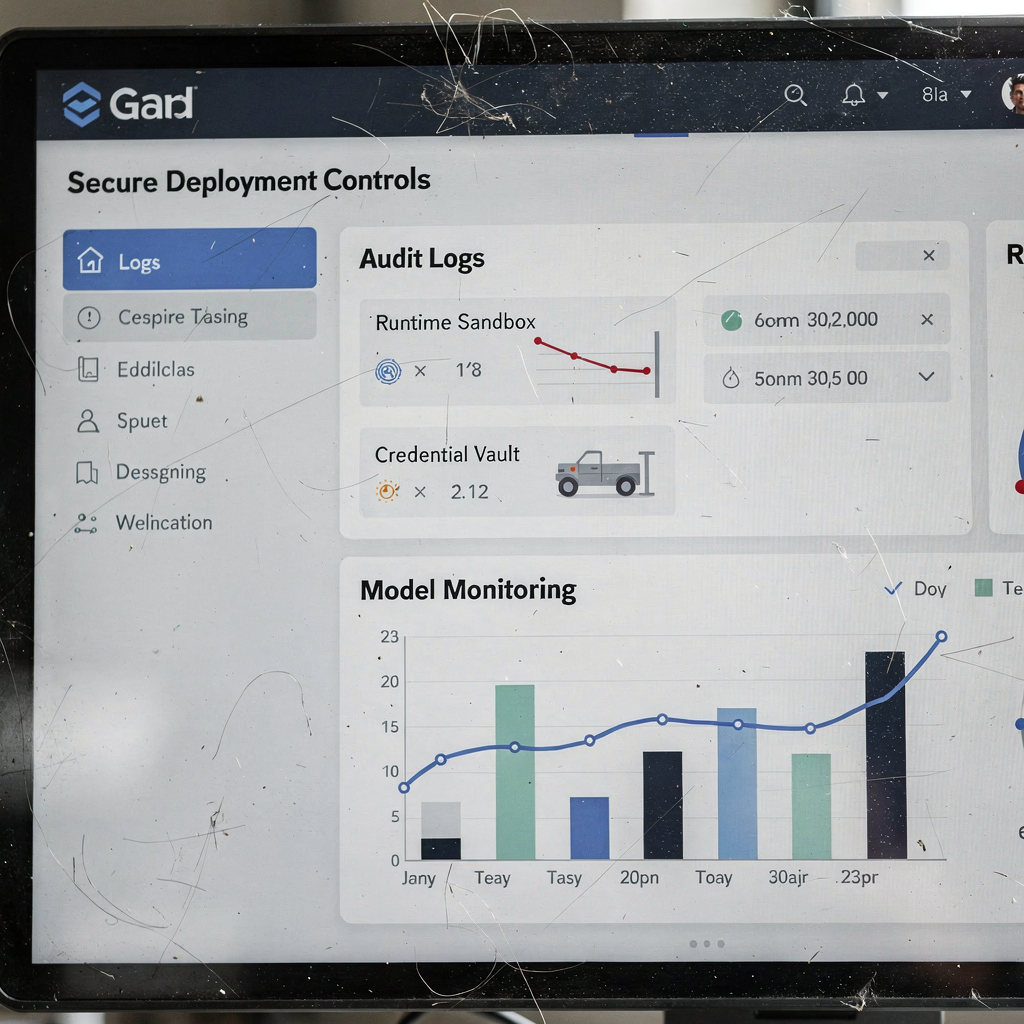
Practical mitigations include securing model inputs and outputs and validating all third‑party agents before deployment. Test for prompt injection vectors and ensure agents cannot leak sensitive data. Rotate API keys and use ephemeral credentials for agent tasks that perform write operations. Integrate agents into existing vulnerability scanning and patch management workflows so an agent can surface missing patches and recommend remediation, but not push changes without approval.
Vulnerability management must account for AI model weaknesses. Validate training data for bias and for tainted samples that could produce unsafe actions. Require explainability for high‑risk workflows and maintain model versioning so you can roll back when an agent exhibits unexpected behaviour. Ensure that security controls cover both the infrastructure and the models themselves. For compliance, keep log retention policies and explainability evidence ready for auditors. That documentation will show that deployments follow secure design principles and that teams can demonstrate safe operation.
Finally, combine automated testing with human review. Run adversarial tests and red‑team exercises that include agentic scenarios. Use those exercises to update policies and to define acceptance criteria for production deployments. A secure AI rollout balances speed with caution and reduces the chance of a single agent causing a large failure in the wider security posture.
Drowning in emails?
Here’s your way out
Save hours every day as AI Agents label and draft emails directly in Outlook or Gmail, giving your team more time to focus on high-value work.
security tools — how to use ai within your security stack and use cases
AI fits into many parts of a security platform and it can add value across detection, response and prevention. Map AI to the tools you already use. For example, in SIEM and SOAR, AI agents can automate correlation and playbook execution. In EDR, AI models improve behavioural detection and they flag lateral movement earlier. In SCA tools, AI helps prioritise software security issues and suggests fixes. Moreover, in threat‑intelligence platforms, AI speeds enrichment and analysis so analysts see high‑priority indicators fast.
Prioritised use cases include automated triage, threat hunting, vulnerability prioritisation, patch orchestration and simulated phishing campaigns. These use cases help teams focus scarce resources. For example, AI can score vulnerabilities by exploitability and business impact, then recommend a remediation order that reduces risk efficiently. That approach complements conventional security scanning and helps reduce mean time to remediate. Market forecasts show strong investment trends, with AI‑driven cybersecurity solutions expected to grow at a CAGR above 25% through 2026 (market research).
Integration checklist for pilots should include data quality, API contracts, change control and measurable KPIs. Define detection rate targets, time saved and ROI. Also, validate third‑party agents and ensure they meet your security policies. If you are building agents for security or using agents from vendors, secure the endpoints and monitor agent behaviour in production. For teams that handle high volumes of operations email, an AI application that grounds replies in ERP and WMS data can reduce handling time dramatically; learn more about ERP email automation for logistics at ERP email automation.
Lastly, design pilots with clear success criteria. Track detection accuracy, false positive reduction and time saved per incident. Use those metrics to decide when to expand deployments. When you use AI strategically, you improve security outcomes and you leverage existing tools rather than replace them, which reduces disruption and speeds adoption.
security leaders and security team — governance, workflows and using ai agents with human oversight
Security leaders must frame an AI governance model that balances innovation with control. Start with roles and approval gates, then add incident playbooks and risk acceptance criteria. Define who may change agent behaviour, who approves agent deployments, and who owns the risk register. Make sure change control includes model updates, retraining plans and rollback procedures. Also, require continuous monitoring so you detect drift and unexpected agent actions quickly.
Organisational guidance for security teams includes targeted training and tabletop exercises. Train security analysts on how agents reach conclusions and how to validate recommendations. Conduct tabletop exercises that simulate agent failure and abuse scenarios. These exercises should cover both defensive and offensive agentic systems so teams understand possible attack paths. Encourage a culture where analysts verify agent suggestions and where human oversight remains the norm for high‑impact actions.
Executive reporting should include adoption roadmaps, cost/benefit analysis and risk entries. Highlight the market context — organisations are investing heavily in AI technologies and the sector shows strong growth — and use that to justify measured pilots. Set decision points for scaling pilots to production and include timelines for evidence‑based expansion. Also, maintain a register of agent actions and incidents so you can report trends to the board.
Operationally, keep clear escalation thresholds and human‑in‑the‑loop checkpoints. For example, allow agents to auto‑resolve low‑risk alerts but require analyst approval for containment that affects business continuity. Log every agent action and make records auditable. When teams innovate with AI, they should document intent, safeguards and fallback behaviour. If you want a practical model for automating operational messages and maintaining control, virtualworkforce.ai demonstrates how to automate email lifecycles while keeping IT in the loop; see our guide on improving logistics customer service with AI for related workflows.
FAQ
What are AI agents and how do they differ from conventional AI tools?
AI agents are autonomous or semi‑autonomous systems that can perform goal‑directed tasks and chain multiple steps without constant human prompts. Conventional AI tools often require manual prompts or follow static rules and do not orchestrate multi‑step processes autonomously.
How do AI agents accelerate threat detection?
They ingest telemetry in real time, correlate events across systems and surface high‑risk incidents quickly. In addition, they enrich alerts with context so analysts can act faster and reduce mean time to detect.
Are agentic AI systems risky for cybersecurity?
Yes, they introduce dual‑use risks because attackers can build similar agentic attackers. That is why secure design, sandboxing and red‑team tests are essential. Also, controlled deployments and human approval gates reduce exposure.
What metrics should teams track when deploying AI agents?
Key metrics include MTTD, MTTR, false‑positive rate, percentage of alerts auto‑resolved and time saved per incident. Track these to evaluate effectiveness and to prioritise further rollout.
Can AI agents act autonomously in production?
They can, but best practice is to limit autonomous actions for high‑impact changes. Use human‑in‑the‑loop checkpoints and clear escalation thresholds to maintain control and to provide auditability.
How do you secure AI agent deployments?
Use least‑privilege credentials, sandbox runtimes, detailed observability and model versioning. Also, validate third‑party agents and protect model inputs against prompt injection attacks.
What role do AI agents play in alert triage?
They prioritise alerts, enrich context, and propose suggested playbook steps, which reduces analyst workload. This allows security analysts to spend more time on investigative tasks.
How should organisations test for agentic threats?
Run red‑team scenarios that mimic agentic attackers, include prompt injection tests, and simulate lateral movement and collusion. Use results to refine policies and to set safe limits for agent actions.
Do AI agents require special compliance considerations?
Yes, retain detailed logs, provide explainability evidence and document governance processes. Auditors will expect proof of safe deployment, retention policies and human oversight for critical decisions.
Where can I learn more about automating operational email with AI agents?
For practical examples of grounded AI in operations and how to automate email workflows while keeping control, review virtualworkforce.ai resources such as the guide on virtualworkforce.ai ROI for logistics and the page on automating logistics emails with Google Workspace. These show how agents reduce handling time and maintain traceability.
Drowning in emails?
Here’s your way out
Save hours every day as AI Agents label and draft emails directly in Outlook or Gmail, giving your team more time to focus on high-value work.