


ai agent is now core to distribution: what the numbers say
AI agent: software that senses, plans and acts to automate decisions. Today, this simple definition underpins big change across DISTRIBUTION. Global forecasts show adoption rising fast. For example, 85% of enterprises are expected to use AI agents by 2025 (source). At the same time, studies report that around 45% of distribution and logistics firms already use AI for warehouse automation or predictive analytics (source). These numbers point to rapid uptake.
Return on investment is a primary driver. In one market snapshot, 62% of organizations project ROI from agentic AI to exceed 100% (source). Another survey found 79% of companies have adopted AI agents and many cite clear productivity gains (source). Typical ROI improvements in distribution often fall in the 20–30% range in the first 12–18 months. Many organizations then report larger gains as they scale.
Key metrics matter. Companies measure reduced operational costs, faster delivery times, fewer errors, and improved throughput. For instance, pick accuracy and delivery accuracy often rise within months. Meanwhile, operational teams see lower cost per order. Smaller pilots report that AI agents cut manual handling time for routine emails and queries. Our product examples show teams cutting email handling time from about 4.5 minutes to 1.5 minutes, which adds up quickly for tight margins.
To be concrete: adoption estimates place roughly 70–85% of enterprises exploring or using agents by 2025. That range captures early pilots and broad rollouts. Early adopters focused on specific wins first. They used agents to forecast demand, to optimize routes, and to automate repetitive email replies.
Transitioning from pilot to scale requires governance. Data readiness, clearly defined KPIs, and user training are essential. For operators who want deeper context or product fit for logistics teams, see our virtual assistant use cases in logistics (virtual assistant for logistics). This helps teams compare performance and plan pilots.
logistics challenges AI agents solve: inventory, routes and real-time decisions
Distribution teams face common problems. Stockouts and overstocks cost margin. Slow picking slows throughput. Last-mile delays frustrate customers. Lack of end-to-end supply chain visibility limits corrective action. These issues appear across warehouse operations, carrier networks, and 3PL partnerships. AI agents address them in practical ways.
AI agents in distribution bring demand forecasting and dynamic route planning to operations. They process many signals, then forecast demand more accurately. For example, agents combine sales history, promotions, weather, and carrier schedules to forecast demand. This reduces stockouts and excess inventory. A single pilot showed a marked drop in emergency replenishment orders within weeks. That improved inventory management and lowered carrying costs.
Route planning and route optimization improve last-mile performance. Dynamic route agents recalculate routes in real-time when traffic, weather, or cancellations occur. Fleet pilots show measurable fuel savings and faster delivery windows. In one pilot, dynamic routing cut delivery times and fuel use for a regional fleet by a clear margin. These improvements reduce operational costs and improve customer satisfaction.
Shipment tracking and predictive ETAs provide end-to-end visibility. Agents use real-time data from carriers, telematics, and WMS feeds to generate predictive ETAs. That helps customer-service teams handle exceptions faster and reduce response times. As a result, contact center volumes fall and on-time delivery rates rise.
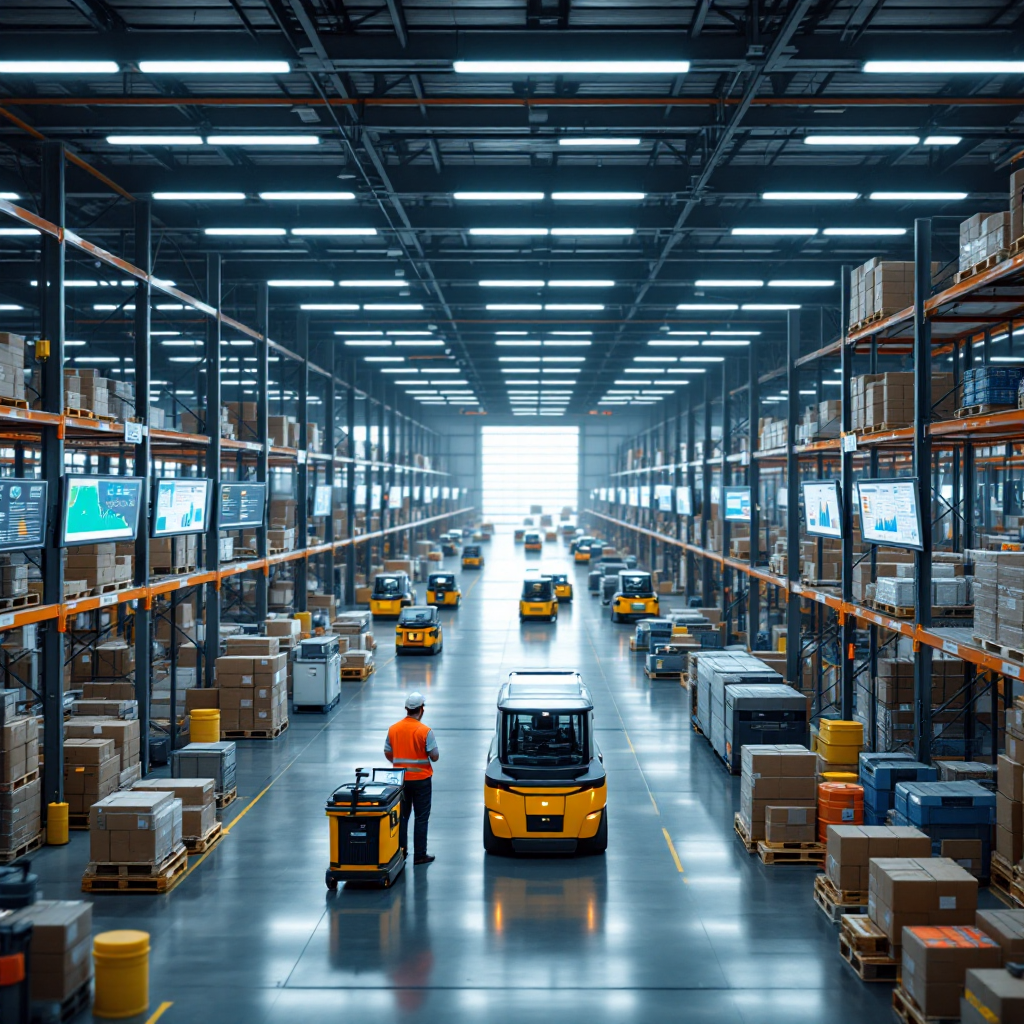
Before/after metrics look like this. Before: pick accuracy about 92%, average delivery time 48 hours, fuel use baseline 100%. After: pick accuracy 98%, average delivery time 36 hours, fuel use down 8–12%. Before: inventory turns low and overstock high. After: inventory turns increase and stockouts fall. These are representative pilot outcomes; your results vary by scale and data quality.
AI agents provide more than automation. They enable orchestration across freight, warehouse, and customer touchpoints. For teams that need automated correspondence and mail handling, consider our automated logistics correspondence tools (automated logistics correspondence). They demonstrate how agents reduce manual lookup time by grounding replies in ERP and WMS data.
Drowning in emails?
Here’s your way out
Save hours every day as AI Agents label and draft emails directly in Outlook or Gmail, giving your team more time to focus on high-value work.
automation in the warehouse: ai agents for logistics and picking systems
On the warehouse floor, AI agents handle autonomous picking, sorting, and inventory reconciliation. They read sensor streams, then act. Agents trigger replenishment when inventory levels fall below thresholds. They schedule predictive maintenance for conveyors and forklifts before failures occur. This reduces downtime and improves throughput.
Robotics and AI systems work together. Robots pick, while agents orchestrate task assignment. WMS and robots share status updates via APIs and IoT. Agents reconcile counts, then update the WMS. This reduces cycle-count time and improves accuracy. At scale, these processes lower labour cost per order and raise orders per hour.
Major carriers and large distributors show the way. Deployments that combine predictive analytics and robotics reduced bottlenecks and improved order fulfillment speed. For example, carrier-style implementations cut sorting delays and improved order throughput within months. Those projects typically report higher throughput, fewer errors, and lower labour costs per order.
Integration points matter. Agents must connect to WMS, ERP system, OMS, and edge sensors like cameras and barcode scanners. Required hardware includes scanners, cameras, RFID, and PLC sensors. Software connections include WMS APIs, ERP connectors, and robot control interfaces. Seamless integration lowers integration risk and helps agents act reliably in real-time.
Implementation choices include vendor platforms or custom builds. An ai platform can reduce time to value. Conversely, building in-house can offer tighter fit for unique workflows. Decide based on resources, IT readiness, and desired time to scale. For teams who want to automate repetitive email workflows tied to warehouse exceptions, explore our logistics email drafting AI resource (logistics email drafting AI). That shows how agents reduce manual copy-paste across systems and speed responses.
integrating ai agents across the supply chain and distributor operations
Integrating AI agents across nodes unlocks more value. Link WMS, TMS, ERP, carrier APIs, and supplier systems so agents can orchestrate actions. When systems share identifiers and data flows, agents automate cross-system tasks. They reassign stock, reroute shipments, or open tickets automatically. This improves supply chain orchestration and supply chain visibility.
Start with a clear data map. Map data flows, standardise SKU and PO identifiers, and ensure timestamp consistency. Clean, consistent data enables agents to make reliable decisions. Governance is necessary. Define who reviews agent actions and what triggers escalation to human oversight.
Practical steps: pick one high-value use case. For example, demand forecasting to replenishment. Run a small pilot, measure KPIs, then scale. Monitor inventory turns, on-time delivery, and cost per pick. Include procurement and supplier interfaces to automate purchase orders and invoice checks. Agents can also flag discrepancies for human review, preserving control while they automate routine approvals.
Implementation checklist:
– Data readiness and mapping. Ensure ERP and WMS data are accessible. Use a secure API layer.
– Pilot KPIs. Define inventory turns, delivery rate, and ROI targets.
– Change management. Train staff and document escalation paths.
– Vendor vs build decision. Evaluate ai platform vendors and internal teams for long-term maintenance.
Integrating ai agents should aim to streamline supply chain processes without adding fragile integrations. Seamless connections reduce manual handoffs and streamline supplier collaboration. For practical guidance on scaling with agents, see our guide on how to scale logistics operations without hiring (how to scale logistics operations without hiring). That resource explains steps to standardise data and scale agents across operations.
Drowning in emails?
Here’s your way out
Save hours every day as AI Agents label and draft emails directly in Outlook or Gmail, giving your team more time to focus on high-value work.
ai-driven case studies: ai agents in distribution that transform outcomes
Case study: predictive maintenance. A large distribution center used agents to predict conveyor failures. Result: downtime dropped 35% within six months and maintenance costs fell. The project combined sensor feeds and ai models to predict faults and schedule repairs.
Case study: customer bots. A mid-sized distributor deployed AI-powered chatbots to handle ETA queries and exceptions. Result: contact center volume fell 40% in three months and response times dropped. The chatbots cited live WMS and carrier data for accurate ETAs and clear replies.
Case study: route agents. A regional carrier used dynamic route planning agents for deliveries. Result: on-time delivery rose 12% and fuel use fell by 10% in the first quarter. The agents performed route optimization and rerouting, sending new manifests to drivers and updating customer ETAs in real-time.
Case study: email automation. An ops team adopted no-code email agents that ground replies in ERP and TMS data. Result: average handling time per email fell from ~4.5 minutes to ~1.5 minutes. This cut team workload and reduced errors caused by manual copy-paste across systems.
Case study: inventory optimization. A distributor applied demand forecasting agents to replenishment. Result: stockouts fell by 20% and inventory turns improved within 90 days. The agent used sales trends, promotions, and supplier lead-times to forecast demand more accurately.
These examples show how agents deliver measurable results. They demonstrate that agents transform operational tasks into automated workflows. For teams that want to quantify ROI for similar pilots, our virtualworkforce.ai ROI overview provides benchmarking for logistics teams (ROI overview).
industry-specific next steps: how agents deliver value and what to measure
Measure the right things. Key metrics include inventory turns, on-time delivery rate, cost per pick, mean time between failures, and customer satisfaction. Also track response times for customer queries and percentage of automated replies. These metrics show whether agents improve operational efficiency and accuracy.
Roadmap: pilot → scale → governance. Start with one high-impact use case. For example, automate repetitive tasks like ETAs and order confirmations. Then measure improvements and expand coverage. Establish governance to manage bias, data drift, and integration changes. Address skill gaps with targeted training and change programs.
Risk points exist. Data bias can skew forecasts. Integration complexity can delay pilots. Skill gaps can slow adoption. Regulatory requirements in certain regions add compliance work. Mitigate risks with clear KPIs, audit logs, and human oversight for edge cases. Agents should escalate unusual queries rather than fully replace humans.
Practical checklist for rollout:
– Define pilot scope and KPIs.
– Verify data quality across ERP, WMS, and TMS.
– Select an ai platform or build. Consider no-code options for faster adoption.
– Run a short pilot, measure results, then iterate.
Agents transform supply chain operations when they integrate seamlessly with management systems and carrier APIs. They reduce manual work, improve supply chain management, and reshape how teams respond to disruption. Explore how AI agents deliver value in email and correspondence for freight teams by visiting our page on automated freight communications (AI in freight logistics communication).
Start small, measure fast, prioritise ROI. That approach helps distributors adopt advanced AI without derailing operations. For teams that want to automate customs paperwork and related emails, see our customs documentation automation page (AI for customs documentation emails). It offers a practical path to reduce errors and speed cross-border processing.
FAQ
What is an AI agent in distribution?
An AI agent is software that senses data, plans actions, and acts to automate decisions across distribution tasks. It can manage inventory, suggest routing, and draft customer replies while escalating exceptions to human oversight.
How do AI agents reduce operational costs?
AI agents reduce operational costs by automating repetitive tasks and improving resource allocation. For example, they cut manual email handling time and optimize routes, which lowers labour and fuel spend.
Can agents integrate with my ERP system?
Yes. Agents typically connect to ERP systems through APIs and middleware. Integration allows agents to read orders, update inventory levels, and post invoice or procurement actions in the ERP system.
Do AI agents improve customer satisfaction?
They often do. Agents speed response times and provide accurate ETAs, which enhances customer satisfaction. In pilots, customer-service bots reduced contact volume and improved response quality.
What data do agents need to forecast demand?
Agents need historical sales, promotions, lead times, and external signals like weather or market events. Clean, unified data from ERPs, WMS, and POS systems produces better forecasts.
Are AI agents safe for supply chain orchestration?
With proper governance, yes. Use audit logs, role-based controls, and human escalation for unusual conditions. These safeguards keep automated actions transparent and auditable.
Should we buy an ai platform or build in-house?
It depends on resources and timelines. Platforms can accelerate pilots with prebuilt connectors. Building offers a custom fit but needs more engineering and maintenance. Evaluate total cost and time to value.
How quickly do agents start delivering value?
Many pilots show measurable gains in 3–6 months. Quick wins include automating email replies and optimizing route plans. Larger orchestration projects take longer to scale.
What are common risks during rollout?
Common risks include poor data quality, integration complexity, and insufficient training. Mitigate these by running a scoped pilot with clear KPIs and by keeping humans in the loop for exceptions.
Where can I learn more about deploying agents for logistics emails?
See resources on automated logistics correspondence and email drafting for practical guidance. Our pages on automated logistics correspondence and logistics email drafting AI explain how to ground replies in ERP and WMS data. For direct examples, visit the logistics email drafting AI page (logistics email drafting AI).
Drowning in emails?
Here’s your way out
Save hours every day as AI Agents label and draft emails directly in Outlook or Gmail, giving your team more time to focus on high-value work.