


ai agents defined: why ai-powered tools matter for the learning business
AI agents are autonomous or semi‑autonomous software that personalizes content, answers questions and automates tasks for learners and instructors. In plain terms, an AI agent can read a learner message, fetch the right learning resources, suggest a micro‑lesson, and even draft follow‑up communication. This reduces manual triage and helps teams focus on pedagogy. For learning business leaders, this matters because operational load and learner expectations both rise fast. For example, PwC reports that 79% of businesses use AI agents and that about two-thirds see measurable benefits such as improved retention and efficiency 79% of businesses use AI agents. That statistic shows broad adoption and practical ROI.
This chapter gives a short checklist for deciding where an agent adds value in your organisation. First, map repetitive tasks that cost staff time. Second, list decision points that need data from multiple systems. Third, identify learner pain points that demand real‑time feedback. Fourth, test whether tasks require human judgement or can be automated with rules and model outputs. Use this to prioritise pilots that will deliver measurable gains.
You should also think about integration. Many teams prefer an API‑first approach that ties agents to a learning platform and to operational systems. If your use case includes email or operations workflows, vendors such as virtualworkforce.ai illustrate how automating full message lifecycles cuts handling time by up to two thirds scale operations with AI agents. Finally, keep a short list of success metrics before you start. For example, measure time saved per task, improvement in learner engagement, and error reduction in routine replies. Doing so gives clarity and makes future investment decisions much easier.
personalized learning at scale: ai-powered learning and ai learning platform integrations
Adaptive learning systems can create personalized learning paths by analysing performance and tailoring next steps. Research shows that adaptive tutoring and data‑driven pathways raise engagement and can improve retention when tied to pedagogy Artificial intelligence in personalized learning. In practice, an ai learning platform ingests assessment data, usage logs, and content metadata. Then it recommends targeted micro‑lessons and practice items. That approach supports skill‑based progression while keeping learners motivated.
To connect an ai-powered learning platform to existing courses, tie the platform to your LMS and to assessment and analytics data. Map a single learner ID across systems. Also, use standard APIs and content tagging so the platform can dynamically assemble learning resources. When you integrate, ensure the platform can push updates back to learning management systems and to course analytics. This lets you track impact and iterate quickly.
Outcome metrics to track include time‑to‑competency, completion rates, and net promoter score. Also measure knowledge retention after one month. Where possible, combine these with qualitative feedback from instructors and learners. For organizations building training for teams, this approach helps align a learning ecosystem to business goals. If you want a practical starting point, begin with one course, connect the data feeds, and measure the change in completion and retention. Then scale.

Drowning in emails?
Here’s your way out
Save hours every day as AI Agents label and draft emails directly in Outlook or Gmail, giving your team more time to focus on high-value work.
create elearning faster: ai-based learning tools to simplify elearning development and elearning content
Content production is often the bottleneck for course development. AI can simplify course creation by generating first drafts of scripts, building question banks, and producing media assets. AI-based learning tools can automate initial structure and surface reusable learning resources for instructional designers. For example, generative AI can create image concepts, narration scripts, and redraft learning content for different reading levels. This accelerates content development and reduces time to market for new elearning courses.
Early case studies show content production time can fall substantially, but human instructional design review remains essential. Good practice is to treat AI outputs as first drafts. Set quality gates and a clear editorial workflow so subject matter experts validate pedagogical choices. Use version control and tag content so teams can track revisions and reuse assets later. That way you keep control over learning outcomes while you scale content production.
Practical use cases include automated script generation for micro‑lessons, rapid content tagging for search, and bulk generation of formative questions. You should also include automated checks for alignment with competency frameworks and training needs. This ensures that generated modules map to skill‑based outcomes and meet business goals. When you adopt these tools, define measurable KPIs such as reduction in hours per module and improvement in learner engagement. Finally, remember that static courses still serve some needs, but dynamically assembled modules often offer better personalization and real-time feedback for learners.
lms and learning platform: how ai enables workflow automation to operate seamlessly
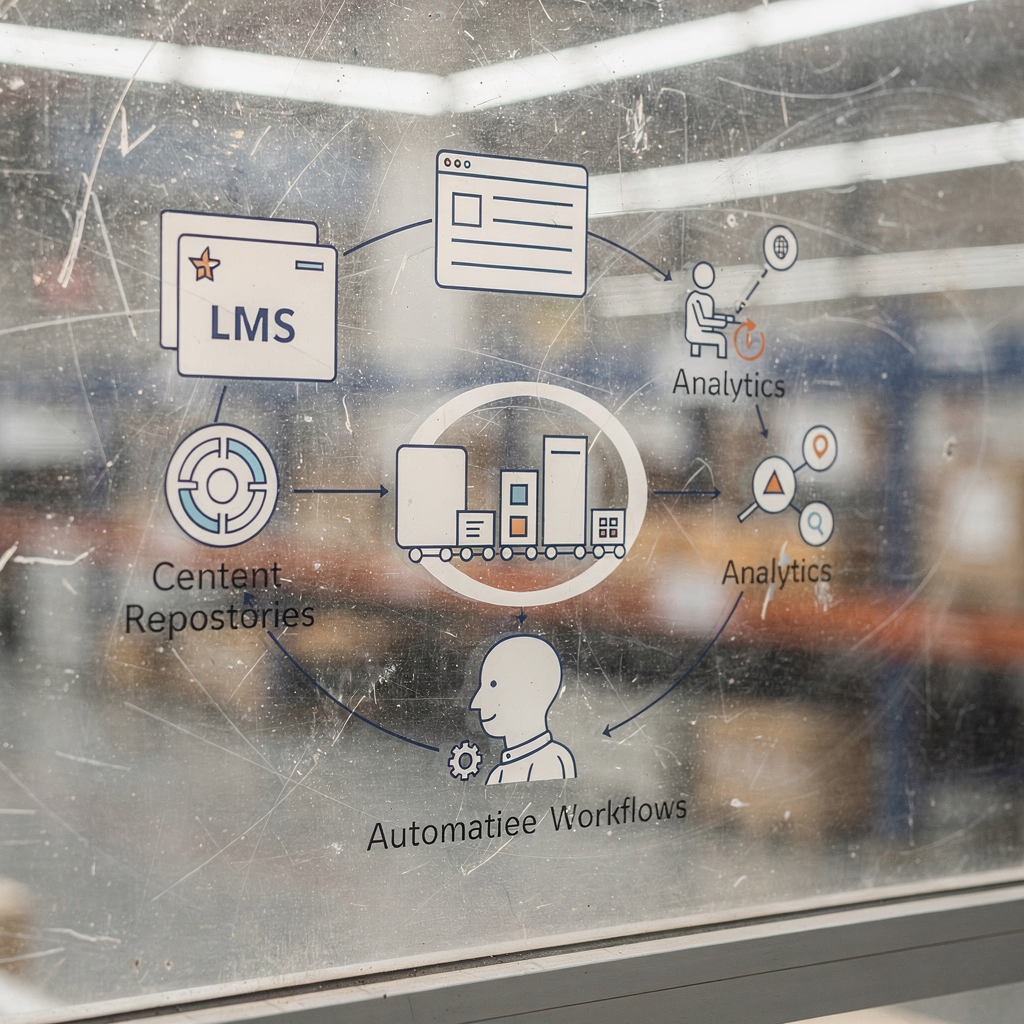
AI enables workflow automation inside learning management systems and across the broader learning platform. Typical automations include auto‑grading, scheduling, personalised nudges, and LMS chatbots that handle admin questions. These automations free instructors from repetitive tasks and ensure learners get timely support. When agents integrate with a learning platform, they can update progress, trigger remedial lessons, and record outcomes automatically. In this way, AI enables a more responsive learning ecosystem.
Integration best practice is simple. Use API‑first agents, map data flows, and maintain a single learner ID to avoid fragmentation. Keep audit logs so every action an agent takes is traceable. Also, provide instructor override options to keep staff in the loop. Where email workflows intersect with learning admin, companies like virtualworkforce.ai show how routing and drafting automation can reduce handling time and improve accuracy automated logistics correspondence. That operational experience translates well to managing learner communications.
Risk control matters too. Log all agent actions and provide clear escalation paths. Maintain role‑based permissions in learning management systems and in the agent platform. Furthermore, test automations at low scale before broad rollout. Finally, monitor system health and learner interactions so you can adjust workflows. Good governance keeps automation working for both learners and staff without adding hidden risk.
Drowning in emails?
Here’s your way out
Save hours every day as AI Agents label and draft emails directly in Outlook or Gmail, giving your team more time to focus on high-value work.
agentic ai tutors: ai-powered support to drive learning across cohorts and improve outcomes
Agentic AI goes beyond single replies. An agentic AI tutor can diagnose gaps, assign micro‑lessons, and follow up over multiple sessions. This multi‑step capability helps scale individualized coaching across cohorts. The agent acts like an assistant for each learner, tracking progress and triggering interventions when needed. For L&D teams, this means you can offer personalized learning at scale while keeping costs under control.
Balance is key. Combine 24/7 agent support with human mentorship for complex feedback and pastoral care. Agents can handle routine assessments and practice, and they can provide AI‑powered practice tasks that adapt in real time based on learner performance. Humans should remain accountable for high‑stakes assessments, career coaching, and socio‑emotional support. This hybrid approach improves learning outcomes and maintains trust.
Monitoring must include fairness checks. Track outcomes across demographics to detect bias and unequal impact. Also log which data the agent uses to recommend next steps so you can explain decisions to learners and instructors. Use staged pilots that include diverse learner groups to surface unintended effects. Over time, iterate on models and policy so the system remains transparent and equitable. This approach supports smarter learning and long‑term readiness for new learning challenges.
future-ready governance for digital learning on ai learning platform: address privacy, explainability and scaling
AI adoption introduces risks that require clear governance. Key risks include data privacy under laws such as GDPR, model bias, and opaque recommendations that undermine trust. Controls to adopt include data minimisation, consent management, and explainable outputs so instructors and learners see why a recommendation was made. As one expert puts it, AI systems should “explain which data they use to advise their findings” to build confidence explain which data they use.
Start with staged pilots. Define KPIs for learning gains, ROI, and learner engagement. Use small tests to measure impact before scaling. Also adopt clear policies for access to training content and for retention of learner data. Where possible, run audits of model behaviour and keep logs of agent decisions. This helps you detect bias and maintain accountability.
Roadmap steps are straightforward. Pilot → measure ROI and learning gains → scale with governance and continuous evaluation. Also invest in instructional design review and in training staff to work with an AI‑powered platform. Use measurable controls such as consent flags and explainable reports. Finally, consider the long‑term: as generative AI matures, integration with existing learning management systems and content pipelines will require ongoing oversight. Keep governance light but robust so you can scale while protecting learners and achieving business goals conversational agents and generative AI.
FAQ
What are AI agents in e‑learning?
AI agents are software programs that act autonomously or semi‑autonomously to support learners and instructors. They can personalise learning, answer questions, automate admin tasks, and integrate with other systems to streamline workflows.
How do AI agents improve personalized learning?
They analyse learner data and adapt content and pacing to match needs, creating personalized learning paths. This approach increases relevance and can improve retention and time‑to‑competency.
Can AI speed up elearning development?
Yes, generative AI helps with script drafting, question banks, asset concepts, and content tagging. However, instructional design review remains essential to ensure pedagogical quality.
How should I integrate an AI learning platform with my LMS?
Use API‑first tools and map a single learner ID across systems. Also, connect analytics and assessment data so the platform can update progress and trigger interventions seamlessly.
Are there measurable benefits to using AI agents?
Many organisations report gains in efficiency and learner engagement. For instance, a broad survey found that 79% of businesses use AI agents and two‑thirds noted measurable benefits AI agent adoption stats.
How do we control risks like bias and privacy?
Adopt data minimisation, consent management, and explainable outputs. Run staged pilots and monitor outcomes across demographic groups to detect bias early.
What tasks should remain human in a hybrid model?
High‑stakes assessment, nuanced coaching, and pastoral care should stay human. AI can support routine feedback and practice but humans provide judgement and empathy.
How can AI help with learner engagement?
AI enables personalised nudges, adaptive practice, and timely real‑time feedback that keeps learners on track. Data‑driven insights guide content updates and improve engagement over time.
Is it expensive to start with AI in e‑learning?
Costs vary, but you can begin with small pilots that connect to existing courses and data. Measure KPIs before scaling to ensure alignment with business goals and readiness.
Where can I learn more about operational automation that complements learning systems?
Look at examples of email and workflow automation in operations; these often translate to better learner communications. For a practical example of end‑to‑end email automation that reduces handling time and improves accuracy, see virtualworkforce.ai’s case studies on automating correspondence automated logistics correspondence.
Drowning in emails?
Here’s your way out
Save hours every day as AI Agents label and draft emails directly in Outlook or Gmail, giving your team more time to focus on high-value work.