


ai agent: how an ai agent and ai-powered tools automate elearning content and create elearning at scale
An AI agent is a software programme that plans and acts to produce and update learning materials. It can generate text, create a quiz, summarise long modules, and suggest multimedia. Also, it formats content to match your brand and accessibility rules. As a result, teams reduce production time. For example, AI-driven content updates can shorten iteration cycles by around 20–40% on average. This speed helps L&D teams launch courses faster and keep materials current.
First, define terms and outcomes. Next, feed the agent source files, assessment blueprints and learner personas. Then the agent creates microlearning, question banks and summaries. Two brief examples: CodeHelp-style personalised plans that adapt problem sets to a learner’s skill; and LearnMate patterns that produce step-by-step walkthroughs and short video scripts. These vendor patterns show how automating content creation and quality checks scales elearning across cohorts.
Implementation checklist:
Inputs: curriculum map, learning objectives, sample content and metadata. Review loop: automated draft → human review → revisions → publish. Human oversight: instructional designers approve question quality and pedagogic alignment. Also include test passes for bias and accessibility. Use analytics to monitor engagement and refine outputs.
Practical note: if you already automate email workflows with virtualworkforce.ai, you can mirror that governance pattern for content approval and traceability. For example, route review tasks and version history the same way you route operational messages to reduce review friction. Use standards and APIs so your AI agent can export SCORM or xAPI packages for an LMS. This approach helps create elearning efficiently, and it improves content production without sacrificing quality.
elearning platforms: integrate with your existing lms to deliver personalized learning and adaptive learning seamlessly
Integrating AI with existing platforms keeps systems stable while adding new capabilities. First, map data flows and identify sensitive fields. Then pick an integration pattern: a sidecar agent that sits alongside the LMS, or an embedded agent inside the platform. Sidecar agents isolate data and speed deployment. Embedded agents reduce latency and enable real-time personalisation. Use standards such as LTI, xAPI and SCORM to exchange progress and scores. Also, expose APIs so the agent can create personalised learning paths and push them into the LMS.
Predictive analytics help identify at‑risk learners and improve retention by roughly 25–30%. A practical workflow: collect assessment data, run an early-warning model, generate a recommended path, and deploy it into the LMS. For example, an agent can produce a personalised learning path, schedule targeted microlearning, and alert tutors to intervene. This flow integrates with learning management systems and keeps tutors informed so they can focus on high-value coaching.
Mini case study: a company maps assessment events to competencies, then runs an agent to create remedial modules. The agent exports SCORM packages and updates learner records. Rollout steps: privacy and GDPR checks, staged pilot with a subset of courses, feedback cycles, then full deployment. Also, ensure analytics capture retention and completion metrics.

Checklist for deployment: map data flows, choose sidecar vs embedded, confirm privacy rules, pilot with a representative cohort, and measure retention and completion. With careful planning, agents integrate without disruption and enable personalised learning at scale. If you want a comparison of automation approaches used in logistics that mirror these patterns, see a practical example of automated email workflows at https://virtualworkforce.ai/how-to-scale-logistics-operations-with-ai-agents/ which outlines staged rollout and governance in production systems.
Drowning in emails?
Here’s your way out
Save hours every day as AI Agents label and draft emails directly in Outlook or Gmail, giving your team more time to focus on high-value work.
ai-based learning: use ai-based and ai-powered learning to automate assessment, provide tutor support and refresh static courses
AI-based learning automates grading, offers on-demand tutor support, and turns static courses into adaptive pathways. Automated marking handles objective items and pattern-matches short answers. A conversational tutor answers common questions and provides real-time feedback tied to learning objectives. This reduces instructor load and increases course throughput. Studies show automated assessment and structured feedback can cut instructor time and speed completion by about 20%. As a result, institutions free tutors to work on high-impact interventions.
Components to implement: an automated marking engine for quizzes, a conversational tutor to field queries, a gap analysis component that spots weak competencies, and branching logic to convert static courses into adaptive experiences. For example, agents can revise an elearning course by replacing a long lecture with a short interactive scenario-based learning module. This modernises static content and enhances engagement.
Risks and controls: run bias checks on question pools, create a human escalation path for complex queries, log decisions for audit, and ensure question quality through spot checks. Use review panels of instructional designers to validate rubrics and outcomes. Also, keep an audit trail and preserve explainability in marking.
Checklist:
1. Determine automated marking scope. 2. Build the conversational tutor and escalation rules. 3. Validate branching outcomes with instructional designers. 4. Maintain audit logs and bias audits. 5. Monitor learner performance and iterate.
Practical reference: teams that automate operational email workflows with virtualworkforce.ai often apply the same human-in-the-loop model for content and marking. That model ensures accuracy, traceability, and seamless escalation to human tutors when needed. For more on turning manual workflows into automated ones, see https://virtualworkforce.ai/automated-logistics-correspondence/.
agentic ai in the learning ecosystem: how agentic ai and ai enables a future-ready learning platform that transforms the learning business
Agentic AI adds planning and multi-step orchestration to simple automation. These agents can map a curriculum, manage cohorts and schedule interventions. Agentic AI goes beyond single-task bots and orchestrates end-to-end learning workflows. PwC finds that about 68% of education enterprises are piloting or using agents, which shows fast ai adoption in the sector.
Strategic benefits: reduced cost-to-serve, faster time-to-market for elearning courses, and measurable uplift in learner outcomes. Agentic systems combine data, pedagogy and rules to create personalised learning journeys and to deliver cohort management at scale. They also support enterprise learning by automating routine administrative tasks and freeing teams to design richer learning experiences.
Roadmap for learning business leaders: pilot a single use case, define success metrics (retention, engagement, completion time), and expand with governance. Start with a constrained domain such as compliance training. Measure retention uplift, completion speed and learner satisfaction. Then scale the agentic AI across departments and content types.
Checklist:
1. Pick a pilot and define metrics. 2. Build a governance model with human oversight. 3. Run the pilot and collect analytics. 4. Expand with iterative improvements and vendor checks.
Agentic AI supports a resilient learning ecosystem. It helps learning teams assemble personalised learning paths and orchestrate resources. For practical examples of automation patterns that mirror agent orchestration, read how to scale operations without hiring at https://virtualworkforce.ai/how-to-scale-logistics-operations-without-hiring/ which demonstrates staged scaling and governance in practice.
Drowning in emails?
Here’s your way out
Save hours every day as AI Agents label and draft emails directly in Outlook or Gmail, giving your team more time to focus on high-value work.
multilingual and personalized learning: how to create multilingual personalised learning and streamline elearning development
Multilingual agents reduce localisation cost and speed course launches. They translate content, adapt cultural references, and preserve pedagogic intent. First, source content and create a canonical version. Then use automated translation and cultural review. Next, generate adaptive paths per locale and test with native reviewers. This workflow streamlines elearning development and keeps quality high.
Studies show create personalized learning at scale can increase assessment performance by about 15% in some STEM areas. Use quality sampling and native review to catch nuance. Also check accessibility and analytics per locale so you can compare learning outcomes across regions.
Workflow example: central content team produces a master module. An agent translates that module and proposes locale-specific examples. Native reviewers flag cultural issues. The agent then assembles personalised learning paths that adjust difficulty based on learner profile. This process both streamlines and accelerates launches into new markets.
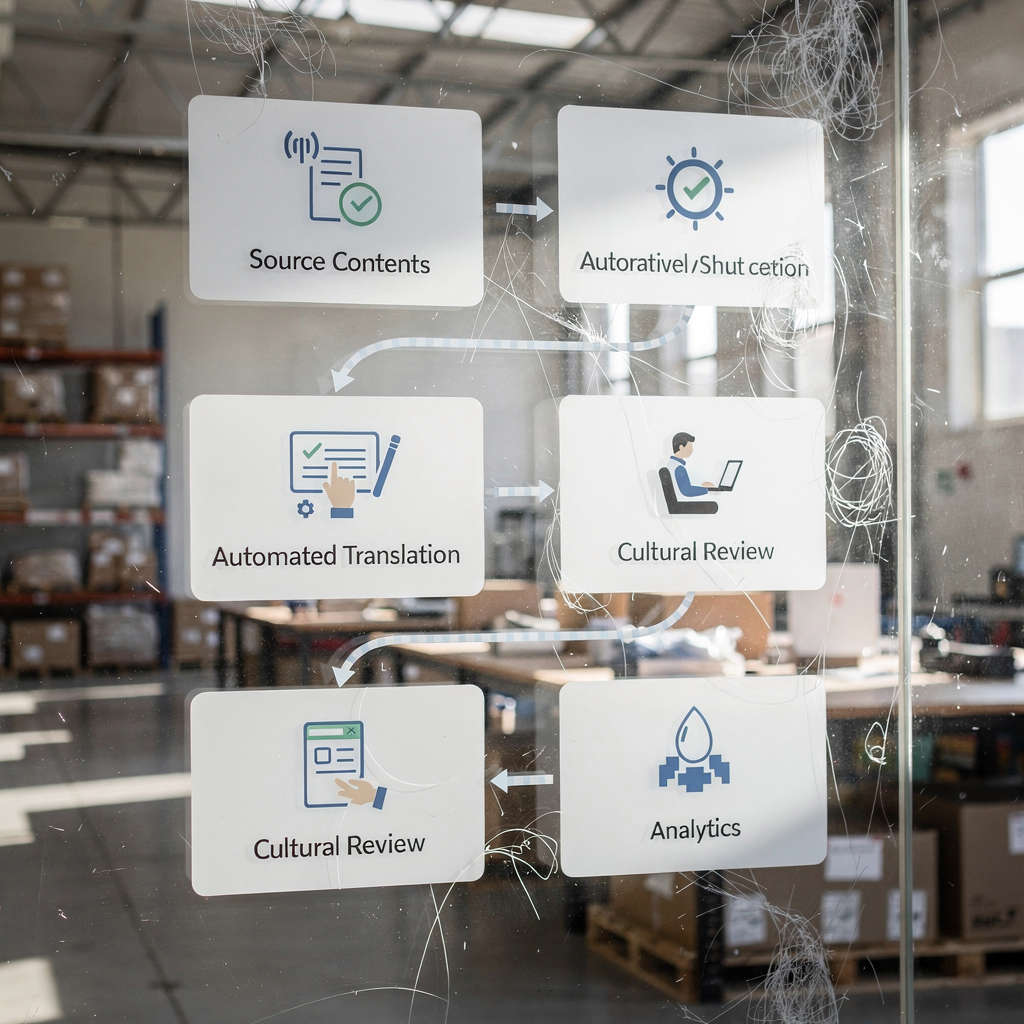
Checklist:
1. Produce canonical content. 2. Run automated translation. 3. Perform native cultural review. 4. Deploy adaptive paths and monitor analytics. 5. Iterate based on learner feedback.
For teams already automating data-grounded workflows, the same principles apply. For an example of meaningful automation in operational communications, and how governance makes scaling safe, see https://virtualworkforce.ai/virtualworkforce-ai-roi-logistics/ for comparable metrics and rollout approaches.
ai-powered: metrics, governance and next steps to integrate ai agent automation across elearning platforms and development
Measure ROI, set governance, and operationalise agents across teams. Track retention uplift (target +25–30%), completion time reduction (target ~20%), and learner performance gains (+10–15%). Also measure production time for new learning modules and time saved for l&d teams. Use analytics to surface where agents improve knowledge retention and where human input still matters.
Governance checklist: data privacy and GDPR compliance, model explainability, human-in-the-loop for final approval, bias audits, and vendor vetting. Keep clear audit logs and escalate ambiguous cases to instructional designers or tutors. Also define SLAs for content updates and review cycles so teams know expectations.
Next steps:
1. Choose a pilot use case that impacts learner engagement. 2. Pick an integration pattern and prepare privacy checks. 3. Define success metrics and baseline analytics. 4. Run a staged pilot and iterate. 5. Scale with governance, documentation and change management for l&d teams.
Practical tip: apply the same no-code governance and business-rule patterns used by virtualworkforce.ai for email lifecycle automation to content pipelines. That approach reduces friction, keeps traceability, and aligns reviewers across ops and learning teams. Finally, remember that agentic ai and ai systems should augment human expertise, not replace it. With measured pilots and governance, you build a future-ready learning platform that transforms the learning business and supports smarter learning across the organisation.
FAQ
What is an AI agent in the context of elearning?
An AI agent is an autonomous software programme that creates, updates and manages learning materials. It can generate text, create quizzes and route content for human review.
How do agents integrate with my existing lms?
Agents integrate via standards like LTI, xAPI and SCORM, or through APIs using a sidecar or embedded pattern. Start with a pilot and map data flows before a full rollout.
Can AI automate assessment without losing quality?
Yes. Automated marking handles objective items and short answers reliably when paired with human reviews and bias audits. Escalation rules ensure complex cases reach a tutor.
Will AI agents improve learner retention?
Research shows AI interventions can improve retention by around 25–30% in some deployments. Use analytics to measure retention for your courses and adjust strategies accordingly.
How do I manage multilingual support for courses?
Use a canonical source, automated translation, and native cultural review. Then deploy adaptive paths and monitor analytics per locale to ensure pedagogic quality.
What governance should we implement for AI in elearning?
Implement GDPR checks, model explainability, human-in-the-loop approval, bias audits and vendor vetting. Also keep audit logs and clear SLAs for review cycles.
How quickly can we expect content production time to improve?
Typical improvements range from 20–40% faster iteration for content updates. Results depend on scope, governance and how much human review you require.
Are agentic AI solutions suitable for enterprise learning?
Yes. Agentic AI can orchestrate curriculum mapping and cohort management, which reduces cost-to-serve and speeds time-to-market for elearning courses.
How do agents handle accessibility and instructional design?
Agents generate draft content and metadata for accessibility. Instructional designers must validate learning pathways and ensure accessibility standards are met.
Where can I find examples of automation patterns that apply to learning?
Look at operational automation case studies to learn governance and integration patterns. For example, review how automated workflows scale operations at https://virtualworkforce.ai/how-to-scale-logistics-operations-without-hiring/ and compare approaches to content pipelines.
Drowning in emails?
Here’s your way out
Save hours every day as AI Agents label and draft emails directly in Outlook or Gmail, giving your team more time to focus on high-value work.