


ai agent in the media landscape: why agents in entertainment matter
First, define an AI agent. An AI agent sits between production systems and audiences. It runs tasks autonomously or semi-autonomously, learns from data, and interfaces with creative tools, content delivery and analytics. Also, it can tag footage, summarize scenes, route email requests, or run campaign experiments. For entertainment companies, AI agents speed up work. They also improve decision quality with data-driven signals.
Next, quick facts help set the context. The entertainment industry is among the sectors most exposed to generative AI, and many firms report measurable productivity gains after agent adoption. For example, a review notes that 63% of organizations using generative AI apply it in marketing and product development, among other areas 63% using generative AI. Additionally, NBC Universal used AI to analyze emotional arcs in scripts and predict audience response, which supports editorial decisions NBC Universal script analysis. Therefore, these tools move content from idea to screen faster.
What this chapter covers is simple. It lays out market drivers, chief use cases, and key stakeholders. First, market drivers include rising streaming costs, competition for attention, and richer data sources that support personalization. Second, chief use cases are content analysis, media asset management, and marketing automation. Third, stakeholders include studios, broadcasters, streaming platforms, agencies and post houses. Also, operations teams and audience teams join the list since AI agents automate routine tasks like routing queries and tagging assets.
Finally, the value question. Agents bring faster iteration and better audience insights. For example, agents provide content recommendations and optimize timing to improve audience engagement. In practice, studios that adopt these agents report reduced time to market and lower editorial overhead. Also, media companies can discover AI agents and evaluate which models to integrate to stay competitive in the entertainment landscape.
ai agent for media and ai platform choices: ai-powered tools studios use
First, distinguish platform versus bespoke agents. An AI platform like Salesforce Media Cloud offers prebuilt media workflows, media-specific skills, and integrations so teams can scale quickly. In contrast, an in-house agent stack provides tight control and deep customization. Also, an ai agent for media can be delivered either way. Decision-makers must weigh speed against control.
Next, evidence supports platform choice. Salesforce explains that “By seamlessly integrating with Media Cloud and leveraging AI, deep media-specific agentic AI skills and actions significantly reduce time to market” Salesforce on Media Cloud. Additionally, platforms automate campaign and asset workflows so teams can deploy ai with fewer custom integrations. Therefore, platforms often cut repetitive work and let creatives focus on storytelling.
When evaluating options, examine integration, media-specific skills, latency, governance, and vendor lock-in. Also, check whether the ai platform supports LLMs and connects to your rights, metadata and editorial systems. Next, verify security standards and whether agents built for your studio can align to legal and rights requirements. Specifically, look for support for natural language tagging, metadata enrichment, and orchestration of rendering or encoding jobs.
Importantly, media teams should plan deployment paths. First, pilot with a single use case. Second, measure time saved and quality gains. Third, scale with platform features that let you configure agent behavior without prompt surgery. If your team runs significant email and ops flows, you can also assess an AI solution that automates email workflows for operations to streamline internal coordination — see a practical example of automating logistics correspondence and email drafting for context automated logistics correspondence. Also, teams can read how to scale operations with AI agents before broad rollout how to scale logistics operations with AI agents.

Drowning in emails?
Here’s your way out
Save hours every day as AI Agents label and draft emails directly in Outlook or Gmail, giving your team more time to focus on high-value work.
transform production workflows: automate and embrace automation to cut time to market
First, practical workflow wins appear fast. AI agents automate tagging and catalogue discovery. They use ML for visual and audio recognition to find B-roll, faces, logos, and key objects. Also, agents speed rights checks by matching contracts to usage. Consequently, multi-hour search tasks drop to minutes. Case studies show editorial teams recover hours per day when AI agents automate mundane work.
Next, concrete examples clarify impact. AI agents use machine learning to transcribe, timestamp and index footage for searchable clips. Also, they produce scene breakdowns from scripts so editorial teams can prioritize reshoots. For example, automated media tagging shortens search time for assets and cuts editorial labour. Furthermore, agents to streamline post-production help adjust colour grading, normalize audio, and prep deliverables to multiple platforms.
Practical checklists help teams begin. First, identify low-risk tasks to automate: metadata tagging, duplicate detection, and routine QC. Second, set measurement KPIs like time saved per asset, cost per asset, and error rate. Third, deploy agents in a sandbox and run AB tests. Also, document escalation paths for false positives so human reviewers can intervene quickly.
Importantly, automation reduces costs through automation and improves consistency. For instance, ops teams that handle content delivery and partner emails can also automate the full email lifecycle to keep distribution schedules tight. Virtualworkforce.ai automates inbound operational email, which helps teams reduce handling time and preserve context across long threads virtual assistant for logistics. Therefore, media companies can reassign staff to higher-value creative tasks while agents focus on routine tasks. Finally, this mix of AI and human oversight keeps quality high while shortening time to market.
content creation at scale: content creation with ai-driven and agentic ai — how to use ai for creative tasks
First, define two modes. AI-driven tools assist creators with ideation, editing and effects. Agentic AI runs persona-driven agents that carry out end-to-end campaigns or production tasks with autonomy. Also, AI-driven tools speed drafting and assembly. Agentic AI can orchestrate cross-platform social campaigns without constant human direction.
For example, NBCUniversal used AI agents to analyse emotional arcs in scripts. That analysis informed editorial choices and improved audience fit NBCUniversal emotional arc work. Additionally, autonomous persona-driven deployments have managed multi-platform social campaigns, showing that agents can operate at scale with consistent voice autonomous social media agents. Therefore, teams can automate content creation and distribution while keeping brand tone aligned.
Boundaries matter. Human creativity remains essential for core storytelling, casting and brand strategy. Also, teams must set quality controls, safety filters, and iteration loops. Specifically, implement review windows where editors approve agent outputs before publication. Next, use metrics like engagement, watch time and audience retention to measure value. For example, agents that personalize promos based on past viewing habits can increase watch time and reduce churn when they deliver personalized recommendations.
In practice, studios can use a mixed approach. Start with ai-driven tools to speed rough cuts and captions. Then, pilot an agentic AI to run timed marketing pushes for a show. Also, keep humans in the loop to approve creative pivots. If you want to learn how AI can help with operational email and scheduling for production teams, review a case where teams automate email drafting and customer communication to keep shoots on schedule improve logistics customer service with AI. Finally, this approach unlock new creative possibilities while preserving editorial integrity.
Drowning in emails?
Here’s your way out
Save hours every day as AI Agents label and draft emails directly in Outlook or Gmail, giving your team more time to focus on high-value work.
personalization and real-time experience: how ai agents handle audience targeting
First, describe real-time personalization. AI agents adapt recommendations, ads and posts based on live signals from viewers. Also, they react to user behavior to reweight content recommendations and playlists. As a result, platforms can show the right trailer at the right moment and increase engagement by providing relevant content.
Evidence supports real-time optimization. Agents that monitor campaigns auto-pause underperforming ads and reallocate spend, which improves ROI. For example, multi-platform social agents have shown they can increase campaign efficiency through continuous auto-optimization autonomous AI marketing study. Also, Salesforce highlights how integrated media cloud skills reduce time to market and support more responsive audience targeting Salesforce on integration.
Implementation notes matter. First, collect consent and respect privacy. Second, ensure data pipelines support low-latency signals for real-time scoring. Third, include AB testing and rollback triggers to avoid misfires. Also, verify that AI agents handle content recommendations and can deliver personalized experiences based on user segments. In practice, streaming services use these agents to recommend shows based on past viewing habits and session signals to increase watch time and audience retention.
Finally, measure impact. Use audience insights and higher engagement metrics to quantify success. Also, track churn and customer engagement to spot trends. If your team needs operational automation tied to campaign logistics, consider how assistants that automate email workflows let marketing and ops coordinate faster — see automated logistics correspondence for a practical parallel automated logistics correspondence. In short, careful data governance plus low-latency models unlock better user experience and personalized content at scale.
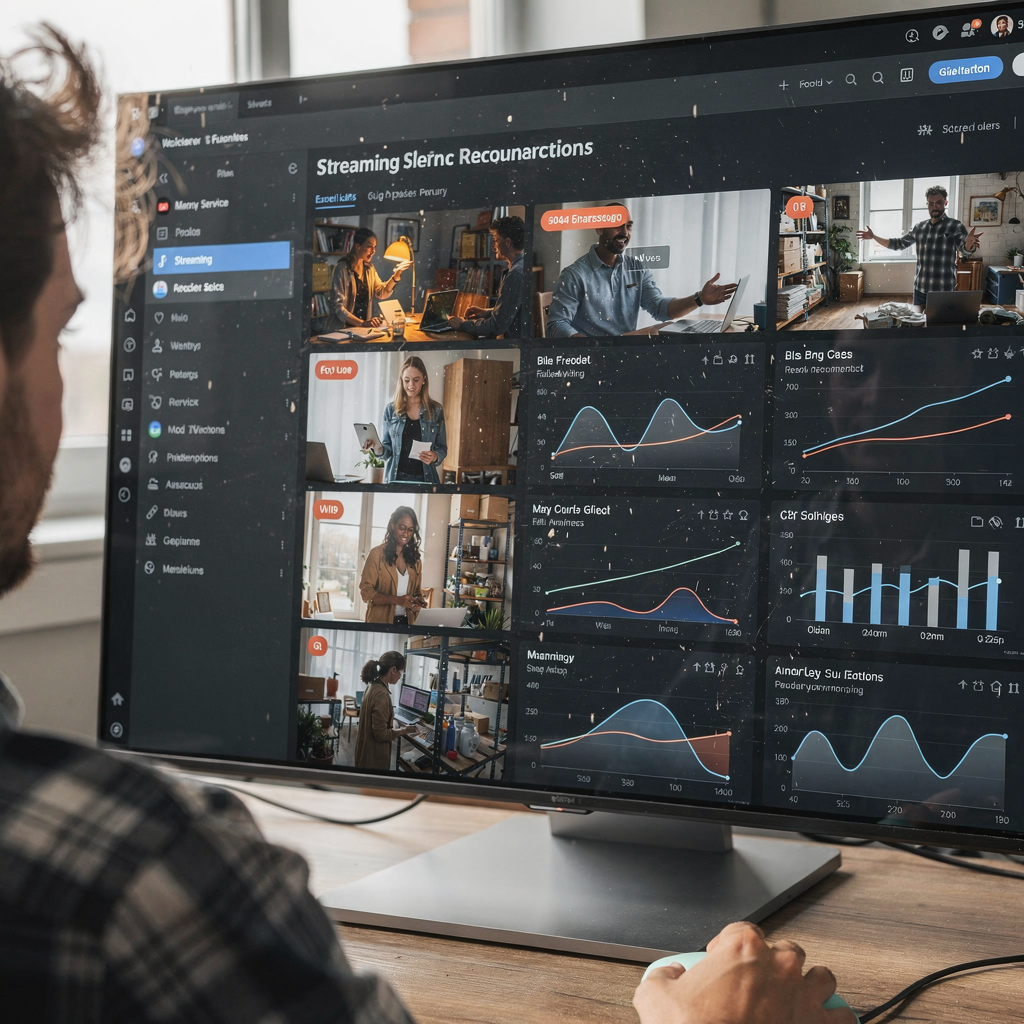
future of ai agents: risks, governance and how they will transform agents in entertainment next
First, forecast key shifts. Teams will see deeper agentic autonomy and tighter agent-platform ecosystems. Also, agents built with specialized media skills will appear. Next, expect more sophisticated AI that integrates rights, metadata and real-time signals to orchestrate distribution. Consequently, agents in media and entertainment will manage end-to-end tasks from ingest to promotion.
Risks require governance. AI agents can hallucinate, misattribute IP, or misuse personas on social channels. Also, privacy lapses can cause regulatory problems, particularly in the EU. Therefore, media leaders must enforce security standards, set escalation rules, and install audit logs. Specifically, create clear policies that align to brand safety and rights management so agents do not publish unlicensed clips or false credits.
Roadmap advice helps executives act. First, pilot with narrow use cases and measure KPIs. Second, invest in ai platforms that provide media-specific skills and support for LLMs. Third, maintain human oversight for editorial and legal decisions. Also, ensure agents automate only after tests prove safe behavior. For example, a phased approach lets teams scale successful pilots across production and marketing while preserving creative control.
Finally, long-term governance includes vendor checks and data governance. Agents that integrate with core business systems must follow access controls and data-driven rules. Also, teams should align on who owns outputs, how to credit human creators, and how to resolve disputes. In the future of AI agents, media and entertainment companies that plan pilots, measure results, and scale with strong governance will stay ahead while protecting rights, brand and audience trust.
FAQ
What is an AI agent and how does it differ from other AI tools?
An AI agent is autonomous or semi-autonomous software that executes tasks, learns from data, and interfaces with production or audience systems. It differs from single-purpose AI tools by managing workflows and making decisions across steps rather than performing one isolated function.
How can AI agents improve production workflows?
AI agents can automate tagging, transcription, scene breakdowns and rights checks, which shortens search time and reduces editorial labour. They also help schedule deliverables and route operational emails so teams spend less time on routine tasks.
Are there proven business benefits for media and entertainment companies?
Yes. Studies show productivity gains and faster time to market when firms adopt AI agents. For example, many organizations using generative AI report improvements across marketing and development generative AI use stats.
Can AI agents personalize experiences in real-time?
Yes. Agents can adapt recommendations and ads based on live user behavior to deliver personalized experiences and increase watch time. They require low-latency data pipelines and clear consent for live personalization.
What are the risks of deploying agentic AI in entertainment?
Key risks include hallucination, IP and rights errors, persona misuse, and privacy breaches. Strong governance, security standards and human oversight reduce these risks and protect brand safety.
Should studios use platforms or build in-house agents?
Platforms offer speed, media-specific skills and faster deployment, while in-house builds offer control and tailoring. Teams should evaluate integration, latency, vendor lock-in and governance needs before deciding.
How do AI agents affect creative roles?
Agents can automate routine tasks so creative staff focus on higher-value storytelling and direction. Human editors and creators still guide final choices, quality controls and nuanced creative judgment.
What data do agents need for personalization?
Agents need viewing signals, session context, metadata and consented user data to personalize content. They also require proper data governance and pipelines for real-time scoring.
Can AI agents automate operational communication in media companies?
Yes. Agents can automate the full email lifecycle for ops teams, reducing handling time and improving accuracy. For a relevant example of automated email workflows in operations, see how teams automate logistics correspondence automated logistics correspondence.
How should media leaders start with AI agents?
Start with a pilot for a specific use case, measure KPIs such as time saved and error rate, then scale with platform capabilities and human oversight. Also, consult examples of how to scale operations with AI agents to plan rollout how to scale logistics operations with AI agents.
Drowning in emails?
Here’s your way out
Save hours every day as AI Agents label and draft emails directly in Outlook or Gmail, giving your team more time to focus on high-value work.