


ai agent: what autonomous assistants do for field technicians
An AI agent acts as an autonomous assistant that runs on a device or in the cloud and surfaces diagnostics, parts lists, and step-by-step guidance to a technician in real-time. These assistants gather sensor readings and past service records, consult knowledge bases and technical manuals, and then present information and guidance in a concise way so the worker can resolve issues quickly. For operations and for service management, that means fewer lookups and clearer ownership of each service visit.
Top-performing teams already rely on broad AI use and automated workflows. For example, 78% of leading field groups report using AI while 83% report workflow automation as a core capability (Salesforce research). Those facts show AI agent capabilities matter for competitive field service teams.
Key features to expect include natural language interaction and voice interfaces, plus context-aware access to knowledge base articles and past service records. Hands-free interfaces let field workers read a diagnostic overlay in AR or hear instructions via a headset, and then take action without pausing work. An AI agent will also surface relevant information from enterprise systems so a technician does not waste time searching multiple databases.
Measure the impact with four clear KPIs: first-time fix rates, mean time to repair (MTTR), technician time on job, and customer satisfaction. Also track job completion quality and the accuracy of ai-generated diagnostics. Teams should monitor frequency of repeat visits and the rate at which the agent escalates to human expert guidance. When virtualworkforce.ai automates email workflows for operations, teams often reduce handling time per message and keep field coordinators focused on scheduling and parts, not manual triage; see our guide on how to scale logistics operations with AI agents for a similar pattern of savings (how to scale logistics operations with AI agents).
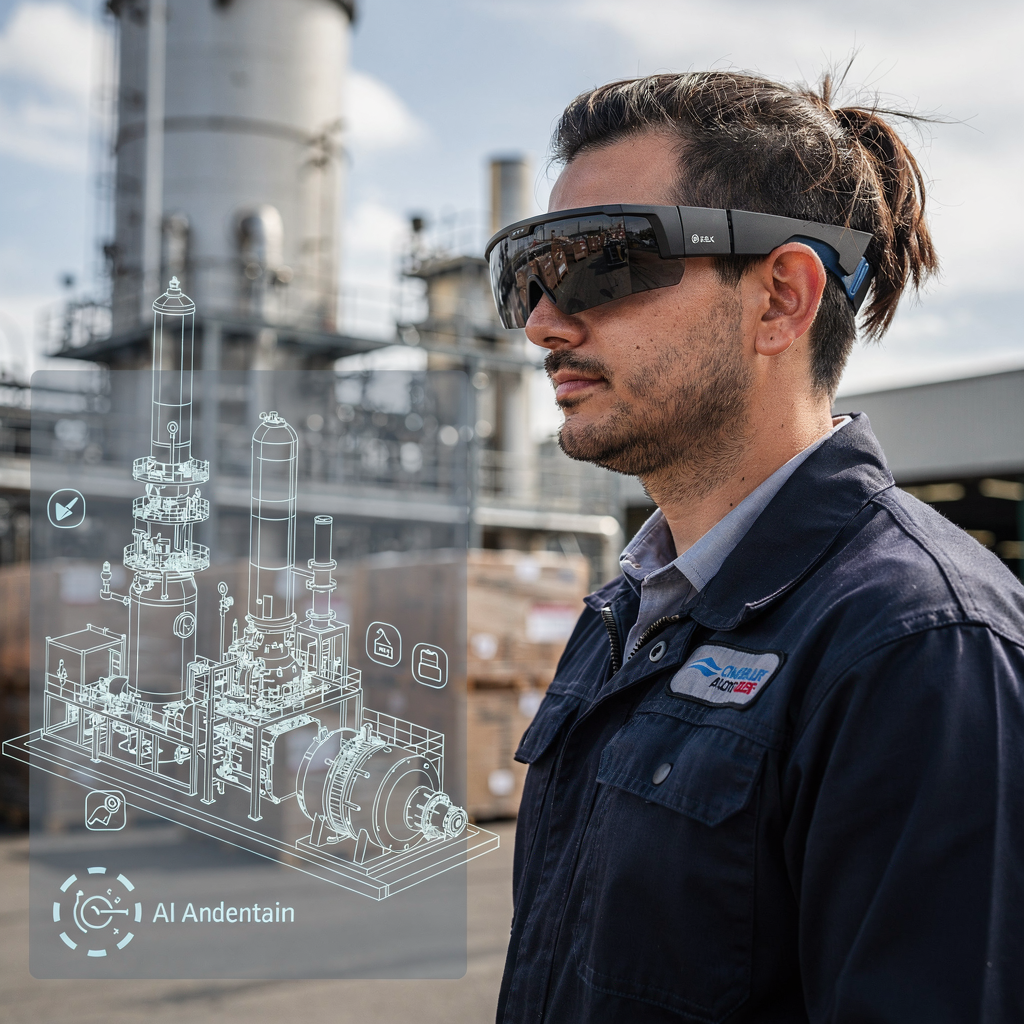
Design AI agents so they provide both conversational answers and actionable checklists. For routine tasks they automate simple confirmations and parts-on-van checks. For complex troubleshooting they guide a technician step-by-step, and if needed, transfer context and customer history to support teams. This combination improves knowledge management, speeds problem resolution, and helps new hires get productive faster.
field service: why smarter dispatch matters now
Inefficient dispatch makes everything harder. When the wrong technician is assigned, when parts are missing, or when routes ignore traffic, service teams pay in repeat visits, higher operational costs, and lower customer satisfaction. With the right mix of diagnostics and scheduling, an organization can approach 86% first-time fix rates (Aiventic), and that improvement directly reduces repeat visits and travel per job.
AI-driven diagnostics deliver measurable improvements. Trials and deployments report roughly 21% higher repair accuracy and about 39% faster repair times when technicians receive AI-guided troubleshooting and parts recommendations (Aiventic). Therefore, smarter dispatch must match skills, parts availability, and travel time at the point of assignment. That reduces idle time and avoids unnecessary reassignments.
Dispatch priorities should include a quick verification of on-site parts, skills tagging that reflects certifications, and a match of the technician’s tools to the task. Quick wins include route optimisation that reduces drive time, pre-checks that confirm parts-on-van, and skills tags so the right specialist goes first. Also, provide a checklist that pulls past service records and customer history into the dispatch ticket so the assigned technician sees customer constraints before leaving.
To accelerate outcomes, start small. Pilot dispatch changes on high-volume job types, then measure schedule adherence and travel per job. Use an integration that links enterprise systems and the FSM stack, and ensure the AI agent has access to relevant inventory and parts data. For teams that need better coordinated communications, automated correspondence flows can free up dispatchers; see our automated logistics correspondence page for examples of routing and reply automation (automated logistics correspondence). This approach helps service teams deliver faster service while lowering operational costs.
Drowning in emails?
Here’s your way out
Save hours every day as AI Agents label and draft emails directly in Outlook or Gmail, giving your team more time to focus on high-value work.
field service operations: how AI rewrites scheduling and routing
AI changes field service operations by shifting scheduling from static queues to adaptive, predictive optimisation. Instead of first-come, first-served rules, a system evaluates skills, parts, travel, and real-time conditions to prioritise assignments. That way the schedule adapts to delays, road closures, and last-minute cancellations without manual rework.
A typical operational stack starts with job intake, then a skills and parts matcher, followed by a dynamic scheduler, a technician assistant (AI agent), and a post-job learning loop. The scheduler uses constraints and historical data to minimise travel and to boost utilisation. It also captures job completion feedback so models improve over time. This integration of AI with existing enterprise systems allows smarter decisions while retaining human oversight.
Measure savings with schedule adherence, overtime, travel per job, and the number of reschedules. Those KPIs show where an AI-powered scheduler lowers operational costs and improves utilisation. In practice, streamlining the intake and routing process also reduces calls to support teams, and reduces the time coordinators spend on repetitive routing emails. For teams handling logistics messaging, automating correspondence into structured tasks is one way to reduce friction; our ERP email automation resources outline practical steps to connect email signals to scheduling systems (ERP email automation for logistics).
Risk controls matter. Monitor model drift, and log decisions for audit. Define guardrails so dispatchers can override assignments when safety or customer constraints require it. Also, design the system to flag potential issues and to escalate uncertain cases to human planners. That balance keeps AI systems operable and trustworthy while they improve schedule quality and reduce travel time.
field service ai: improving first‑time fixes, safety and technician productivity
Field service ai elevates outcomes across accuracy, safety, and morale. AI guidance raises first-time fix rates and shortens time-to-diagnosis. In construction-related deployments, real-time safety monitoring helped lower workplace incidents by 30–35% (Datagrid). Hands-free tools make that possible because a technician can view or hear expert guidance while staying focused on the task and on safety.

Salesforce research notes that 94% of respondents believe hands-free tech would improve productivity, and that hands-free plus AI agents can scale each technician’s impact (Salesforce). For teams, that means less time spent on lookup and more time on repair. It also means new hires can reach competence faster because the agent provides expert guidance at the job site.
Adopting AI requires attention to workforce change. Employees who use AI tools report higher job satisfaction, with studies showing about 24% higher satisfaction among AI users (Slack Workforce Index summary). Plan upskilling, define escalation rules, and keep human-in-the-loop control for safety-critical repairs. Track FTFR, safety incident rate, technician satisfaction, and time-to-diagnosis to quantify impact.
Field technicians benefit from context-aware prompts that draw on customer history, sensor data, and knowledge base articles. This reduces guesswork, helps predict potential equipment failure, and lets crews proactively replace worn parts. Combine those capabilities with ai-powered tools for parts ordering and you reduce delays and improve service delivery. The result is better problem resolution and improved efficiency on every visit.
Drowning in emails?
Here’s your way out
Save hours every day as AI Agents label and draft emails directly in Outlook or Gmail, giving your team more time to focus on high-value work.
streamline automation: integrating ai agents with traditional automation
Keep traditional automation for repeatable tasks, and then layer AI where context and prediction matter. Traditional automation handles invoicing, parts ordering, and routine confirmations. Meanwhile, specialized agents address diagnostics, exception handling, and conversational interactions. That mix lets businesses automate more while retaining predictability.
Start integration with a data checklist: ensure clean parts and skills taxonomies, align knowledge management artifacts, and connect enterprise systems. Use AI agents to read sensor data and to analyze equipment data in real-time, and then trigger deterministic workflows for procurement and billing. This pattern keeps deterministic steps simple and lets ai-powered solutions handle nuance.
Deployment steps include a pilot on high-volume job types, a short feedback loop for model updates, and governance that approves escalation logic. Set SLAs for agent actions and require human sign-off for safety-critical decisions. Because email still drives many exceptions, pairing AI agents with email automation reduces triage time and ensures the correct context follows every escalation; see how our virtual assistant for logistics trims handling time in high-volume inboxes (virtual assistant for logistics).
Finally, retain audit trails. Log agent decisions and support post-job review. That gives you insight into model performance and helps identify trends in failures or in repeating issues. Over time, this approach will enhance efficiency and improve compliance while you scale AI across more job types.
real-world: case studies, ROI and the future of field with ai agents in field
Real-world evidence shows clear ROI for organizations that align AI to business goals. PwC’s AI Agent Survey found 79% of companies adopting AI agents, and two-thirds of adopters report significant benefits (PwC). BCG highlights that leaders who scale learnings and set clear metrics close the “AI impact gap” and see measurable improvements in speed and precision (BCG).
Typical ROI models count fewer repeat visits, lower travel and labour savings, and faster job completion. For example, higher first-time fix rates cut repeat visits and reduce operational costs on both parts and labour. You can estimate payback by modelling reduced travel per job, improved efficiency, and avoided emergency service visits. Vendors and consultancies provide case evidence of faster repairs and lower costs after rollouts of agents and of ai-powered scheduling.
The future of field will include agentic AI that can autonomously manage many tasks end-to-end. Agents are transforming field service by coordinating checks, parts, and routing without manual handoffs, and agents are transforming field service operations by learning from outcomes. Specialized agents will handle asset management, and they will predict potential equipment failure by ingesting sensor data and identifying trends. They will also surface expert guidance from knowledge bases and from knowledge base articles to help technicians complete complex tasks.
For teams planning adoption, start with targeted pilots that connect to enterprise systems and to your asset register. Measure improved efficiency, problem resolution rates, and reductions in operational costs. As you scale, keep governance in place so humans can override decisions and so that ai-generated recommendations remain explainable. For operations heavy on messages and exceptions, automated logistics correspondence and AI for freight communication show how communication bottlenecks can be fixed while you expand AI across service delivery (AI in freight logistics communication).
FAQ
What does an AI agent do for a field technician?
An AI agent provides diagnostics, step-by-step instructions, and access to past service records. It pulls technical manuals and relevant information from enterprise systems so the technician can resolve problems faster and with fewer errors.
How does smarter dispatch reduce repeat visits?
Smarter dispatch matches skills, parts availability, and travel time before assigning a job. That reduces the chance that a technician arrives without needed parts or the right certification, which in turn lowers repeat visits.
Which KPIs should teams track first?
Start with first-time fix rates, mean time to repair, technician time on job, and customer satisfaction. Those metrics give a clear view of operational efficiency and of where agents deliver the most value.
Can AI improve safety on worksites?
Yes. Real-time monitoring and context-aware guidance can reduce accidents by alerting crews to hazards and by ensuring compliance with safety procedures. Construction pilots have reported fewer workplace incidents after deploying real-time safety monitoring.
How do AI agents work with traditional automation?
Traditional automation handles deterministic, repeatable tasks like invoicing and order confirmations. AI agents layer on top to manage exceptions, diagnosis, and conversational interactions, making the entire process more resilient and flexible.
Do AI agents replace technicians?
No. AI agents augment technicians by providing guidance and by reducing time spent on routine lookups. They help new hires reach productivity faster and let experienced technicians focus on complex problem resolution.
What data do AI agents need to be effective?
They need asset records, sensor data, parts inventories, past service records, and access to knowledge bases and technical manuals. Integration with enterprise systems ensures the agent can pull the right context at the right time.
How should companies pilot AI agent projects?
Start with high-volume or high-cost job types and measure a clear baseline. Run a short pilot, collect KPIs like FTFR and travel per job, and then scale with governance and audit trails in place.
What governance is required for AI agents?
Define guardrails for overrides, log agent decisions for audit, and set SLAs for actions the agent can take automatically. Human-in-the-loop control is essential for safety-critical jobs and for unusual exceptions.
Where can I learn more about automating communications that support dispatch?
Look at resources on automated logistics correspondence and on ERP email automation for logistics to see how message automation reduces triage and speeds job assignment. Those resources explain how to connect email signals to scheduling and to enterprise systems.
Drowning in emails?
Here’s your way out
Save hours every day as AI Agents label and draft emails directly in Outlook or Gmail, giving your team more time to focus on high-value work.