


ai in government: why federal agencies are deploying ai agents for government to improve citizen services and government efficiency
AI is shifting how public institutions serve people and manage workloads. In one notable finding, 87% of U.S. citizens said they would use AI agents for complex government processes, a clear signal that demand exists for smarter digital touchpoints. Likewise, federal agencies have more than doubled their AI use within a single year, which shows fast-moving adoption across government agencies. These facts matter because AI shortens response times, offers 24/7 availability, and can reason across siloes to reduce backlog and speed outcomes.
Practical examples already running include automated benefits checks that scan records, reply drafting for caseworkers, and internal copilots that manage task lists. For instance, many teams now use tools similar to Microsoft Copilot to reprioritize work and free staff for higher‑value decisions. When leaders treat AI agents for government as operational levers rather than experiments, they unlock real gains in government efficiency and improve service delivery.
AI agents can also interact with citizens directly and escalate when human judgement is required. That combination reduces repetitive work and improves consistency. Public trust rises when agencies disclose AI use and show clear escalation paths. As Nikki Davidson explains, “AI agents represent a new digital capability for government: autonomous, always‑on systems that can reason across internal silos and communicate effectively with citizens” (Digital Government Authority).
Leaders should align pilots to measurable KPIs: throughput, mean time to decision, and citizen satisfaction. They should also consider workforce effects and the change management needed for successful adoption. In practice, agencies that combine people, process and AI systems see faster wins than those that focus on technology alone.
use cases across the public sector: customer experience, document processing, fraud detection and end-to-end case management
Top use cases for AI in the public sector concentrate where volume is high and rules are clear. Citizen services chatbots answer routine questions and free humans for complex cases. Document OCR plus summarisation speeds permit and licence workflows. Fraud detection systems surface suspicious patterns using predictive analytics and rule engines. Traffic and logistics optimisation reduce delays and cut costs.
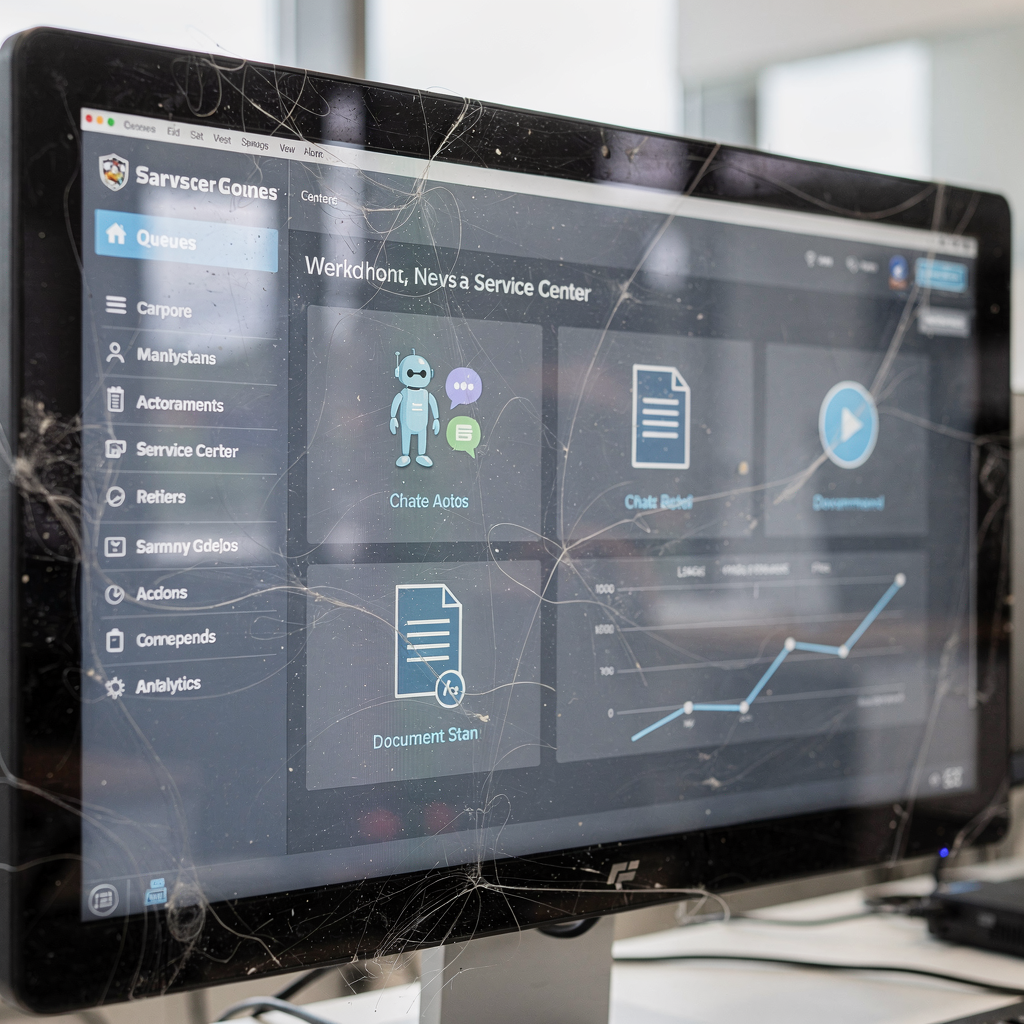
End-to-end examples show how to automate a complete case. An agent receives a query, verifies records, triggers approvals, and notifies the citizen when complete. That end-to-end flow reduces handoffs and keeps history attached to the case. Agencies that automate routine emails and correspondence report large time savings; this is why operations teams use specialist solutions like the ones at virtualworkforce.ai for automated logistics correspondence in commercial settings, and why similar patterns suit public service workflows.
When to prioritise a use case? Pick processes that repeat, have clear data inputs, and benefit from faster throughput. For example, benefits eligibility checks and licence renewals fit well. Measured gains typically include reduced processing time, fewer manual errors, and improved satisfaction scores. Public sector organisations should also test mixed human‑AI handoffs so agents route complex cases to specialists.
Finally, agencies that embrace AI can combine document intelligence with analytics to refine detection rules. That approach turns tactical pilots into sustainable modernization: a focused initiative, clear metrics, and a plan to scale. To learn how similar automation scales in constrained operations, see guidance on how to scale logistics operations with AI agents.
Drowning in emails?
Here’s your way out
Save hours every day as AI Agents label and draft emails directly in Outlook or Gmail, giving your team more time to focus on high-value work.
ai agent capabilities: generative ai and ai-powered government workflows that handle queries at scale
AI agent capabilities now include generation, summarisation, reasoning and orchestration. Generative AI can draft replies, summarise case history, and produce structured outputs from unstructured inputs. Agentic AI models can coordinate multi‑step tasks across systems and trigger downstream actions. These features let organisations handle thousands of parallel queries while routing complex matters to human specialists.
In practice, a single AI agent can intake an email, extract intent, query a records database, and draft a grounded reply. That saves time on triage and reduces repeated lookups across government systems. Teams that want to use ai should pair generative models with retrieval grounding and audit logs to limit hallucination and preserve traceability. Guardrails matter: audit trails, human oversight, and checkpoints stop incorrect or risky output.
Real‑time routing and orchestration let agents trigger approvals and notification flows. Practical tools include agent chains, retrieval‑augmented generation, and lightweight orchestration engines that map to existing APIs. Agencies can use these patterns to build scalable, repeatable government workflows that complete tasks without constant human mediation.
Security and compliance must guide design. Use role‑based access, logging, and human review for high‑risk outputs. Also, test models with representative data and measure accuracy against real cases. For operations that rely on email and messaging, consider solutions that automate the full lifecycle; for an example in commercial logistics, see the virtual assistant for logistics page on virtualworkforce.ai. Together, these capabilities show the potential of AI to handle scale while keeping humans in the loop.
deploy with ai governance and partner oversight: policies, transparency and workforce impacts for used in government projects
Good AI deployments rest on governance. Agencies should define AI policy that covers disclosure, data minimisation, auditing, and human oversight. Research finds that disclosing an agent’s identity helps rebuild trust when outcomes go wrong, so transparency is a governance best practice (study on disclosure).
Government agencies must also set security standards and secure and compliant hosting for sensitive records. Use contractual clauses with partners to keep data control in‑house and to require reporting. A supplier model works well when the government retains policy ownership and audits partner performance. Agencies should also track adoption of ai and report on measurable benefits to build public trust.
Workforce planning matters. AI can reduce mundane work, yet it can also shift burdens onto staff if roles are not redesigned. Samantha Shorey warns, “While AI tools can enhance efficiency, they must be integrated carefully to avoid overburdening public workers and compromising service quality” (Roosevelt Institute).
Implement guardrail checks, role changes, and reskilling programs. Define which outputs require human signoff and create escalation flows for unusual cases. Sector organizations should adopt clear KPIs for both efficiency and staff wellbeing. Finally, publish policies and case outcomes so citizens see how AI services operate. When agencies combine trustworthy AI practices with partner oversight, they lower risk and improve the odds of lasting modernization.
Drowning in emails?
Here’s your way out
Save hours every day as AI Agents label and draft emails directly in Outlook or Gmail, giving your team more time to focus on high-value work.
benefits of ai in government: measurable government efficiency, improved customer experience and cost reductions
The benefits of AI can be measured in throughput, cycle time, error rates, and staff time recovered. Automating routine tasks often shows payback quickly, and pilots frequently deliver rapid ROI. For example, agencies that automate document intake or email triage see fewer manual errors and faster case resolution. These shifts also improve customer experience by offering quick, consistent answers and by enabling personalised interactions outside office hours.
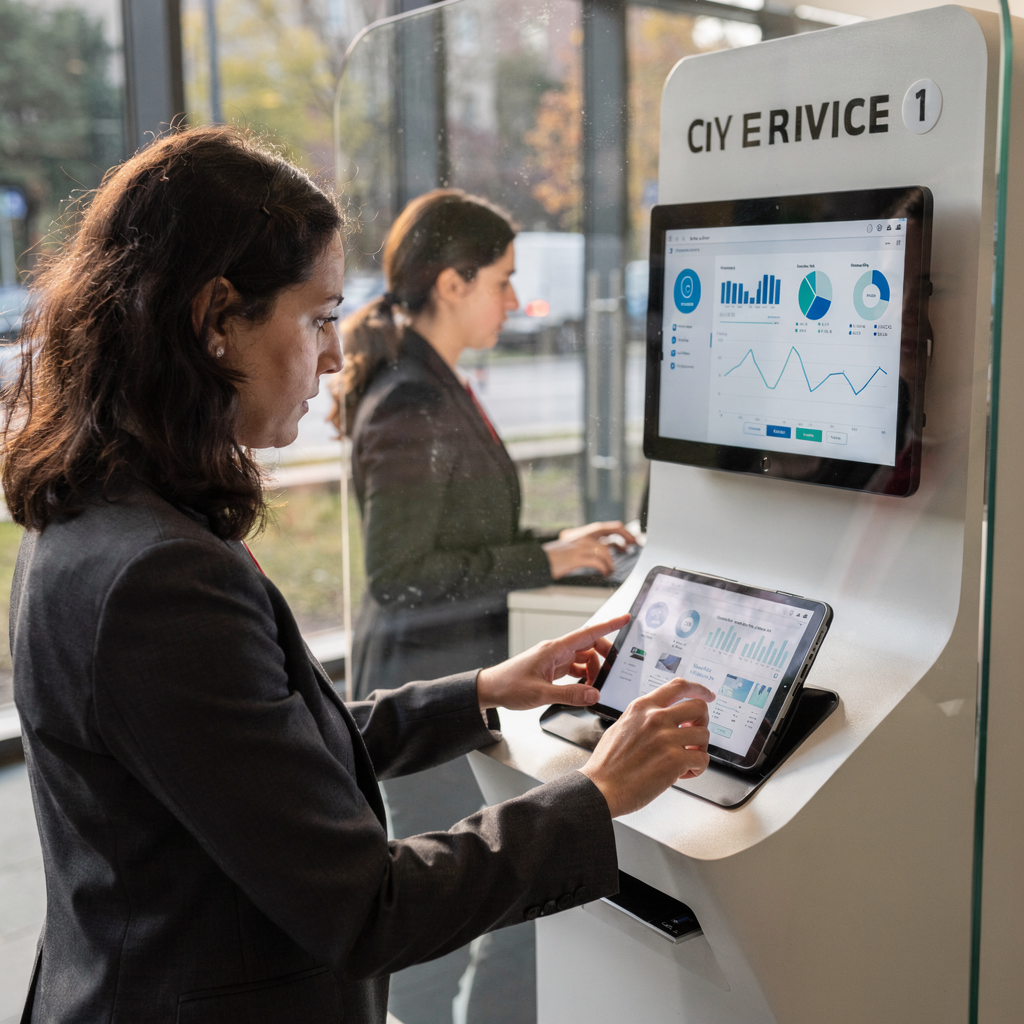
Advanced analytics and AI let teams predict demand, detect fraud, and allocate resources more efficiently. Predictive analytics guides staffing and reduces wait times. Automation and AI together free specialists to focus on complex judgments. The benefits of ai in government depend on data quality, integration into existing business processes, and strong governance.
Cost reductions come from reduced manual processing, fewer rework cycles, and lower average handling time. For operations heavy in email and document work, end-to-end automation can shrink handling time significantly; in logistics, teams reduce email handling time from minutes to near real‑time replies with AI‑driven drafting and routing. Agencies across nearly every government level can modernize services when they implement AI thoughtfully.
Still, outcomes depend on practical design. Leaders should measure output, monitor accuracy, and invest in data more efficiently so systems remain useful. When done well, AI helps improve service delivery and build capacity without proportional increases in headcount.
end-to-end roadmap to deploy government ai: pilot, onboarding, scale and making solutions scalable for long-term ai use
Start small. Select a single high‑volume, rules‑based workflow and run a time‑boxed pilot. Define KPIs such as throughput, error rate, and citizen satisfaction. Train agents on public data sets, map escalation paths, and brief frontline staff so the pilot runs with clear human oversight. This onboarding period reduces surprises and builds confidence.
Next, standardise APIs and build monitoring dashboards to make the solution scalable. Plan for elastic capacity and automate alerts so systems remain responsive under peak load. Documentation and a reuse catalogue help other teams copy success; publish process maps and lessons learned so every government group can learn how AI drives value. For practical onboarding patterns that apply to high‑volume correspondence, see guidance on automated logistics correspondence and how to scale operations without hiring for related operational lessons.
Finally, iterate with user feedback, embed AI governance, and measure long‑term impact. Create change programs that include reskilling and service redesign so staff roles shift toward oversight and exception handling. When ready to scale, adopt a phased roll‑out with clear performance gates. This approach helps agencies adopt ai responsibly, stay secure and compliant, and ensure solutions remain scalable over time. Use pilots to test guardrail settings and to produce actionable templates so other teams can adopt AI with lower risk.
FAQ
What are the most common AI use cases in government?
Common use cases include citizen services chatbots, document OCR and summarisation, fraud detection, and end-to-end case management. Agencies also use AI for traffic optimisation, records search, and automated email handling.
Are citizens ready to interact with AI agents?
Yes. A study found that 87% of U.S. citizens said they would use AI agents for complex processes, indicating broad willingness when services work reliably. Transparency and clear escalation paths increase acceptance.
How should agencies start an AI pilot?
Begin with a single high‑volume workflow, set clear KPIs, and include human oversight. Time‑box the pilot, measure outcomes, and use results to build a repeatable deployment playbook.
What governance elements are essential?
Key elements include disclosure policies, audit logs, data minimisation, security standards, and human oversight. Agencies must also track performance and publish outcomes to build public trust.
Will AI replace government employees?
AI aims to augment staff, not replace them. It automates routine tasks so employees focus on complex decisions and service quality. Proper role redesign and reskilling are essential to avoid overburdening remaining staff.
How do you prevent AI hallucinations in public services?
Combine generative models with retrieval‑grounded systems, enforce human review for high‑risk outputs, and keep detailed audit logs. Regular testing with representative cases helps reduce incorrect outputs.
Can small agencies adopt AI without large budgets?
Yes. Start with targeted pilots and use partner models that keep data control in‑house. Choose solutions that integrate with existing systems and scale incrementally.
What role do partners play in government AI projects?
Partners provide technical capability, tooling, and implementation support, while the agency retains governance, policy, and data control. Contractual rules should enforce security measures and auditability.
How do AI agents handle sensitive citizen data?
Secure and compliant hosting, role‑based access, encryption, and data minimisation must protect sensitive records. Agencies should also include human oversight for decisions that affect rights or benefits.
Where can I learn how AI has been used in operational email automation?
For practical examples of end‑to‑end email automation in operations, see case studies and product pages such as the virtual assistant for logistics at virtualworkforce.ai, which describe real workflows and ROI patterns. These resources show how automation and AI combine to reduce handling time and improve consistency.
Drowning in emails?
Here’s your way out
Save hours every day as AI Agents label and draft emails directly in Outlook or Gmail, giving your team more time to focus on high-value work.