


Why ai agents in hospitality matter for the hotel guest experience and the modern traveler
Heritage properties and modern chains both need ways to meet evolving guest expectations. For this reason many properties deploy AI agent services to personalize communication, speed responses, and enrich cultural storytelling. AI agent systems act as virtual concierges, help with personalized BOOKINGS, and provide contextual history for heritage stays. They help a TRAVELER plan an itinerary, book a room, or discover a local amenity with fewer clicks and less friction.
Adoption has accelerated across the sector. A recent survey found roughly 65% of hotels have implemented some form of AI, and many report faster service and smarter upsells. For example, chatbots and virtual assistants reduced response time by about 30% and helped lift direct BOOKINGS by about 20%. More than 70% of tourists say AI-enabled services improve their trip experience, a stat that proves AI matters for the CUSTOMER EXPERIENCE.
At the same time, hotels must protect authenticity. Integrating storytelling, guided tours, and historical context preserves cultural value. As one study points out, AI can “create a dialogue between the past and the present” when used thoughtfully in cultural settings. Hotel teams should therefore design AI agent interactions to complement staff, not replace them. Front-line hosts still provide warmth, while intelligent agents handle routine tasks and quick FAQs.
Practical advantages follow. An AI-powered concierge can handle basic QUESTIONS, confirm a HOTEL BOOKING, and send directions instantly. Guests get faster replies, staff get more time for higher-value work, and the HOTEL brand can deliver consistent service across channels. This mix of human touch and automation helps boutique HOTELS and luxury HOTEL groups meet modern guest expectations while safeguarding heritage character. The phrase “AI agents in hospitality” reflects this blend: technology supports hospitality rather than substituting it.
The hotel tech stack: apis, data layer and hotel tech that let an ai agent act in real-time
To operate reliably, an AI agent needs a clean tech stack. Start with core systems: the PROPERTY MANAGEMENT SYSTEM, a CHANNEL MANAGER, the CRS, and the booking engine. Two‑way APIs and a consistent data layer let the agent read profiles, check inventory, and update RATES in real time. A single source of truth for CUSTOMER DATA prevents double bookings and keeps pricing accurate across OTAs and direct channels. For connectivity, a HOTEL should confirm that its API contracts cover room status, customer profile fields, and payment tokens.
Implementers should include the PMS and ensure the CRITICAL endpoints are available. Use webhooks for push notifications so a digital AGENT receives events instantly. Define latency targets for critical actions so the system can show live availability and accept a HOTEL BOOKING without race conditions. Two items matter most: clean data mapping and robust apis to sync reservations, profiles, and housekeeping states.
Checklist for deployment: define API endpoints for rates, availability, and profiles; map guest IDs across systems; enable webhooks for booking and cancellation events; set latency targets for real-time updates; and run integration tests that simulate OTA and direct BOOKING flows. Also include the data layer as a searchable index for patterns in guest behavior and cross-sell triggers. This index becomes the foundation for AI models and agentic WORKFLOWS.

Technical governance matters. Authorize tech vendors and require explainability from ai systems. Maintain a log of actions the AGENT takes and store context for audit. Hospitality TECHNOLOGY teams that adopt a single source of truth and real-time connectivity will find it easier to enable AI agents. Good data hygiene and clear integration plans let hotels scale AI without surprises. For additional ideas about automating correspondence and email workflows that cross industries, see a practical guide on automated logistics correspondence, which shows how structured email data improves response speed.
Drowning in emails?
Here’s your way out
Save hours every day as AI Agents label and draft emails directly in Outlook or Gmail, giving your team more time to focus on high-value work.
Agentic design: how agentic ai and automation transform operations and automate routine tasks
Agentic design means building intelligent agents that follow multi-step AUTONOMOUS workflows with guardrails. An agentic AI can take a booking confirmation, assign a room, notify housekeeping, and update the guest profile without human intervention. These AGENTIC systems work within policy constraints and escalate when uncertainty exceeds a threshold. They use structured rules plus machine learning to route requests, resolve common issues, and maintain traceability.
Examples in practice include automated CHECK-IN workflows, request routing for in-room services, and dynamic upsell offers that trigger based on guest profile and occupancy patterns. A digital agent can process a late CHECK-IN request, update the room key, and message the guest with access instructions. These tasks are routine, repetitive, and data-dependent, so they respond well to automation. One result in early pilots is a 20–30% reduction in routine front-desk queries, freeing staff to focus on guest relations and guest satisfaction.
Agentic AI supports hotel OPERATIONS by acting as an always-on assistant. It can read a maintenance ticket, prioritize urgent items, and schedule repairs with vendors. It can also manage reactive actions, for example adjusting in-room climate controls when sensors report occupancy. The automation of these workflows cuts manual steps and reduces errors.
For hotels that face heavy email volumes or operational correspondence, virtualworkforce.ai offers an approach that automates the full email lifecycle for operations teams. That same approach applies to HOTEL teams: understand intent, gather data from ERP or PMS, and either resolve or escalate with full context. This model shows how intelligent agents and email automation combine to streamline HOTEL processes and improve response time.
Use ai to boost distribution: OTA, hotel marketing, digital marketing and best ai practices for bookings
AI helps HOTEL DISTRIBUTION by optimizing rate rules, monitoring parity, and personalizing offers for each channel. Smart rules let a HOTEL adjust dynamic pricing and promotional bundles based on demand and guest profiles. AI platforms can run programmatic ads and feed personalized creatives to audiences that previously converted at higher rates. That increases direct BOOKINGS while maintaining channel relationships with OTAs.
Practical steps include automating parity checks against OTAs, deploying AI-driven price recommendations, and using models to segment audiences for direct marketing. Use AI to evaluate which distribution channels deliver the best margin and then reallocate budget. Also choose ai solutions that expose APIs and explain recommendations, so revenue teams can audit decisions.
Marketing teams will want tools that support personalized email and targeted social campaigns. Apply personalization with care: an AI agent can suggest offers to a returning guest, or it can recommend a cultural experience to a heritage-seeking traveler. Track hotel marketing KPIs such as direct-book ratio, RevPAR, and conversion rate when testing new rules. Use programmatic channels and digital marketing to measure lift and tune models.
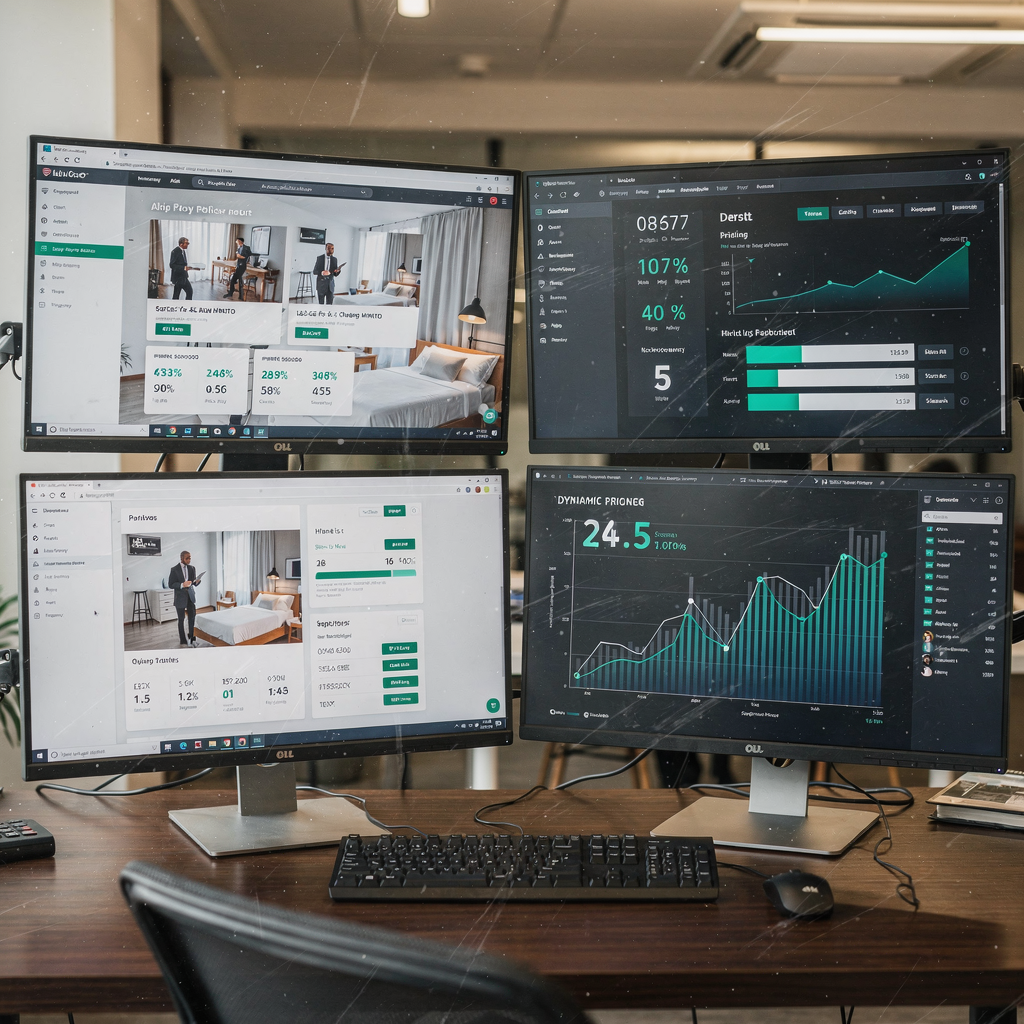
Vendors matter. Evaluate revenue-management AI tools and ai platforms for explainability, API support, and integration ease. Connect a recommended solution to your tech stack and ensure it can read and write booking data via secure endpoints. If you want to learn how to scale operational efficiency without adding headcount, review a case study on how to scale operations without hiring, which applies the same automation principles to hotel teams. For teams focused on improving customer interactions, see guidance on how to improve customer service with AI for practical playbooks that translate well to hospitality businesses.
Drowning in emails?
Here’s your way out
Save hours every day as AI Agents label and draft emails directly in Outlook or Gmail, giving your team more time to focus on high-value work.
Personalisation, guest experience and loyalty with ai solutions, ai tools and chatgpt
Personalization at scale is the most visible guest benefit. AI agent profiles combine past stays, preferences, and real-time signals to personalize in-stay suggestions. A hotelier can push a breakfast offer or an upgrade based on predictive models of guest value. This personalization deepens loyalty by delivering relevant extras rather than generic promos. For loyalty programs, AI helps predict lifetime value and tailor targeted upgrades that feel meaningful.
Conversational models—like a chatGPT-style assistant—can power multilingual, conversational support that scales. Pair a conversational assistant with structured CRM data so replies are accurate and grounded. Use voice assistants for simple tasks and chat for itinerary planning, but always give guests an option to connect with staff. Include amenity details and historic narratives for heritage stays in the content pool so guests receive authentic, context-rich answers. Track NPS and repeat rate to measure impact.
Tools vary. Use structured AI tools for pricing, CRM, and segmentation, and deploy conversational assistants for bookings and local recommendations. Hospitality AI requires training on guest data and cultural content, and it needs guardrails so suggestions align with brand tone. Track guest reviews and loyalty metrics to confirm improvements. In boutique HOTELS and luxury HOTEL properties, the right balance of human staff and AI assistant makes personalization feel bespoke rather than automated.
Finally, use guest feedback loops. AI models improve when you label outcomes and feed them back into the data pipeline. That creates a positive loop where personalization boosts satisfaction, and higher satisfaction creates richer data for future offers.
Deploying new ai: travel tech, tech stack, governance, KPIs and practical steps to adopt ai agents in hospitality
Start with a clear roadmap. Pilot one use case, such as a virtual concierge for historical content or automated housekeeping requests. Then integrate with your tech stack by connecting the PMS, booking engine, and data layer. Define success metrics up front: direct bookings uplift, response time, RevPAR, guest satisfaction, and operational cost saved. Monitor these KPIs in real time and optimize models iteratively.
Governance is essential. Protect privacy, check data residency, and require model explainability. Train staff on new workflows so adoption is smooth. For model controls, adopt a model context protocol and run regular audits. New AI must also obey legal and brand constraints; put escalation paths in place for unusual requests.
Technical steps: map data sources, prepare a single source of truth, set up secure apis, and deploy sandboxed models that can be observed. Ensure ai systems can read guest data and act without exposing sensitive fields. Use strong role-based access and clear logging for audit trails. When you use AI to automate emails or operations, you should aim to reduce handling time and increase consistency. Our company, virtualworkforce.ai, automates the full email lifecycle for ops teams and shows how structured automation can drop handling time sharply while maintaining traceability.
Quick wins include a virtual concierge with heritage content, automated housekeeping request handling, and targeted direct-book offers for returning guests. Measure uplift in direct bookings and guest satisfaction. As you scale, look for ways to let AI become an assistant, not a replacement. The future of hospitality will combine agentic automation with human judgment so hotels gain a competitive edge while preserving what makes them special.
FAQ
What is an AI agent and how does it help hotels?
An AI agent is a software system that performs tasks autonomously, often using machine learning and rules. In hotels it can handle routine inquiries, manage simple BOOKINGS, and route requests so staff can focus on high-value guest interactions.
Can AI preserve the cultural authenticity of a heritage property?
Yes. When trained on accurate historical content, AI provides contextual storytelling and guided experiences that enhance understanding without altering the property. Designers should ensure staff oversight to keep the narrative authentic.
How do I start a pilot for hotel AI agents?
Choose a single, measurable use case such as a virtual concierge for local recommendations or automated housekeeping requests. Integrate with your PMS and booking engine, set KPIs, and run a time-boxed pilot to collect data.
What integrations are essential for reliable AI operation?
Essential integrations include the PMS, booking engine, and a consistent data layer with secure apis and webhooks. These connections let AI read and update reservations and profiles in real time.
Will AI replace front desk staff?
No. AI handles repetitive tasks and speeds response, while staff retain empathy and problem-solving for complex situations. This partnership reduces workload and improves overall service.
How do AI agents affect distribution and direct bookings?
AI improves distribution by optimizing rates, detecting parity issues on OTAs, and delivering personalized offers. These changes often increase direct bookings and improve channel ROI.
What governance should hotels apply to new AI?
Hotels should enforce privacy rules, model explainability, data residency controls, and staff training. They must also log agent actions and create escalation paths for uncertain cases.
Can small boutique hotels benefit from AI?
Yes. Boutique hotels can use lightweight AI assistants to personalize guest stays, manage reservations, and offer curated experiences without heavy operational overhead. The right solution scales with need.
How do I measure success after deploying an AI agent?
Track direct bookings uplift, response time, RevPAR, guest satisfaction, and operational costs saved. Use A/B tests and guest feedback loops to refine the system.
Where can I learn more about automating operational messages and emails?
Study operational email automation case studies to see how structured replies and routing improve speed and accuracy. For a practical example of full email lifecycle automation applied to operations, visit a detailed resource on automated logistics correspondence at virtualworkforce.ai.
Drowning in emails?
Here’s your way out
Save hours every day as AI Agents label and draft emails directly in Outlook or Gmail, giving your team more time to focus on high-value work.