


AI agent for hotels — what AI does for hotel reservation and booking
AI agents are software that use natural language processing, rules and machine learning to handle enquiries, check availability and confirm reservations without human hand-off. They parse messages, detect intent, pull rates from property management systems and then complete a booking flow. For many hotels this means fewer missed messages and faster responses. The core integrations are straightforward. Connections to PMS, channel managers and GDS deliver the up-to-the-minute room and price data needed to confirm a reservation in minutes rather than hours.
Practical workflows tend to follow a repeatable path: a guest message arrives, the AI agent labels intent and priority, the system checks availability, it presents options, and then it takes payment and confirms a reservation. This covers common protocols such as REST APIs, GDS messaging, and webhooks for event-driven updates. When integrations are robust, the entire flow is automated and auditable. For writers and product teams, document each step: intent detection, availability query, price validation, payment capture and confirmation email.
Measured effects are visible. For example, a 2025 industry survey found roughly 22% of U.S. travelers already use hotel- or OTA-based AI tools for booking and travel planning, which signals meaningful adoption and preference shifts for direct interactions with AI tools (Are Americans ready for AI-booked travel?). Also, systems that combine GDS with AI deliver faster booking turnarounds and fewer back-and-forths because the agent can confirm inventory in real-time (AI Agents for Smart Booking in Travel & Hospitality – Bluebash).
Designers should test edge cases. These include overlapping bookings, partial payments, and group reservations. For hotels that want to automate hotel email threads tied to operations, virtualworkforce.ai offers AI agent capabilities that reduce manual triage and speed responses; see a practical example of a virtual assistant applied to logistics that maps well to hotel ops (virtual assistant for logistics). Finally, always include a human fallback at the front desk so sensitive issues get immediate human attention.
ai-driven and conversational agents for hospitality — personalise guest experience and increase direct bookings
Conversational AI captures guest preferences, suggests rooms and upgrades, and completes bookings on site or in-app. A conversational flow often starts with search, then a filtered suggestion, then an upsell prompt, and a secure payment step. These ai-driven agents improve conversion and encourage direct bookings by reducing friction and presenting relevant offers at the right moment.
Case studies show the effect. Large chains that deployed conversational agents reported uplifts in direct bookings and engagement. Hilton, among others, described measurable improvements in guest interactions after chatbot deployments, with higher click-through and completion rates (Hotel chatbots & Conversational AI: A comprehensive guide). Additionally, personalization engines that combine past stays, loyalty status and context (dates and group size) create offers that feel tailored. Agents analyze guest profiles and behavior to surface personalized recommendations and last‑minute extras.
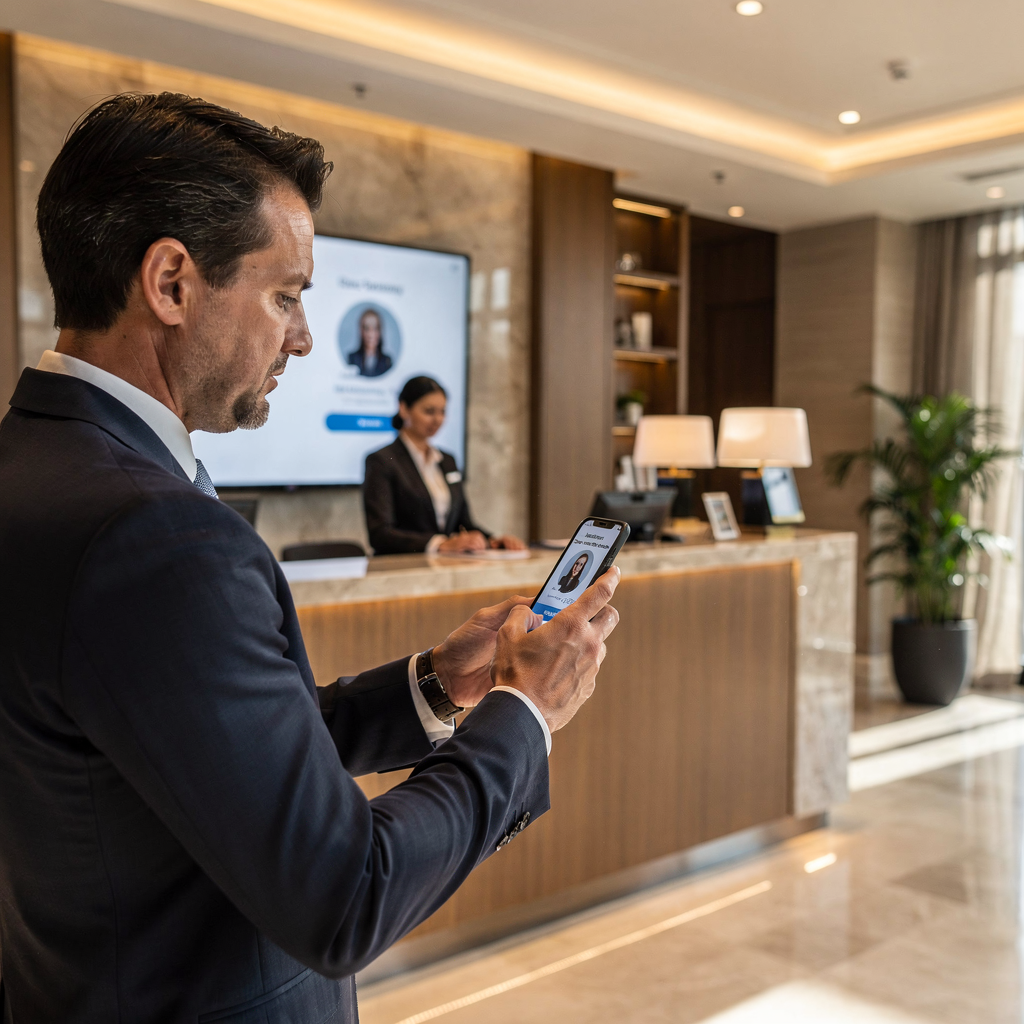
Personalization levers include historical booking data, loyalty tier, local offers and package bundles. When a guest is in a member tier, the agent can recommend an upgrade or include breakfast in a single click. Tracking the right KPIs matters. Teams should measure conversion rate, average order value, bookings via chat and net promoter score. These metrics show whether the conversational approach drives direct bookings and guest satisfaction.
Writers should show example flows. One concise scenario: guest asks about availability → agent verifies dates with the PMS and GDS → agent suggests three rooms and one upgrade → guest accepts → agent processes payment and emails confirmation. For hotels that need email and operational automation tied to reservations, virtualworkforce.ai demonstrates how AI can resolve repetitive messages and create structured data from email threads; learn more about automated logistics correspondence and how the same pattern applies to hotel operations (automated logistics correspondence).
Agents for hospitality must respect guest expectations. They should be fast, accurate and offer a clear path to a human when issues are complex. Well-designed conversational agents turn casual visitors into hotel guests while preserving the option to talk to a human when needed.
Drowning in emails?
Here’s your way out
Save hours every day as AI Agents label and draft emails directly in Outlook or Gmail, giving your team more time to focus on high-value work.
Automate guest service and operations — agents for hospitality handling real-time availability and automating guest workflows
Agents help with routine booking questions, modifications, cancellations, check-in triage and special requests. They also assist basic revenue management actions such as rate checks or suggested upsells, which frees hotel staff to focus on personalized service. With automation, hotels reduce manual calls and emails, lower handling times and improve response availability around the clock.
Real-time availability checks cut abandonment. When the agent connects to the reservation engine and property management systems, it can confirm a room instantly and send an immediate confirmation. This real-time capability decreases friction and increases conversion. For operational teams, that means fewer interrupted workflows and more time to manage complex guest needs.
Operational gains are measurable. Hotels report fewer manual touches per booking and faster response windows. Staff can reallocate time from repetitive tasks to enhancing service quality in the lobby or handling VIP requests. To automate hotel email and booking threads, operations teams can use AI assistants that understand intent, pull data from ERP or PMS and draft accurate replies. See how AI helps scale operations without hiring in logistics; the same principles apply to hotel operations (how to scale operations with AI agents).
Integration points include the reservation engine, CRM, housekeeping system and payment gateway. Agents must create traceable audit logs for each action. That ensures compliance and allows managers to review changes. Common metrics to track are reduced enquiry handling time, booking completion rate and the percentage of tasks fully automated. Agents also improve guest feedback by responding faster and resolving common problems before they escalate.
Design notes: ensure fallback rules, define escalation paths to human teams and set limits for what the agent can change in a live booking. A safe, governed rollout avoids accidental overcharges or double bookings. Overall, automating guest workflows creates consistent service levels and a smoother guest journey from inquiry to check-in.
Agentic AI and agents for hospitality — how agentic ai can handle complex tasks and orchestrate services
Agentic AI describes autonomous agents that plan, act and adapt across connected systems. In hospitality, agentic AI coordinates bookings, payments, cancellations and itinerary changes without continuous human input. These agents can orchestrate multi-step operations, such as rebooking guests after a disruption or assembling a multi-vendor itinerary for a group stay.
Use cases include automatic rebooking when a flight is delayed, cross-brand offers that combine rooms and local experiences, and managing group reservations with dynamic room allocations. Agentic AI can also negotiate with partner services, book transport and update an itinerary based on guest preferences. PwC describes this trend as agentic commerce, where agents collaborate across brands to scale personalised and governed decisions (The future of agentic commerce for travel – PwC).
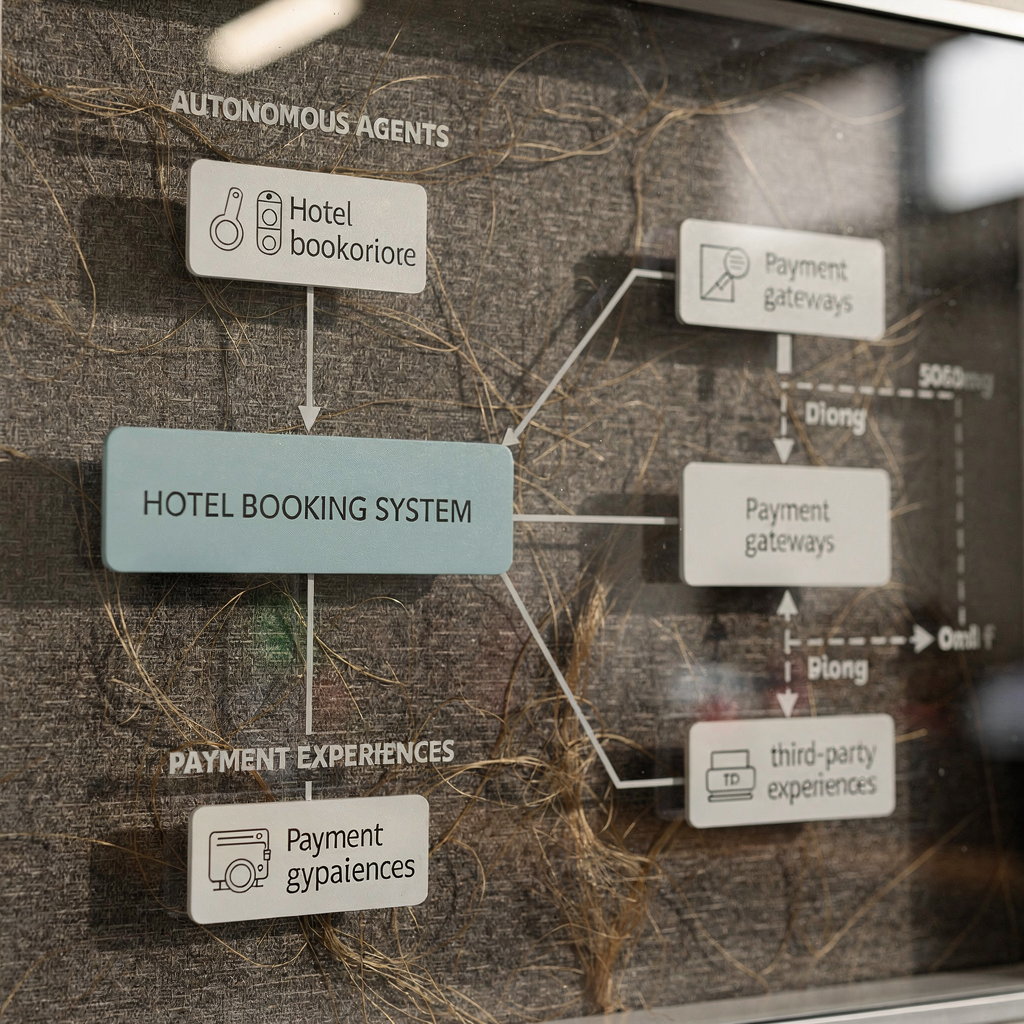
The strategic value is clear. Agentic AI multiplies workforce capacity, allowing hotels to manage complex guest scenarios without proportionate headcount increases. Agents that act autonomously can handle disruptions at scale, which improves guest satisfaction and reduces reactive staffing costs. For governance, hotels must add audit trails, escalation rules and role-based access controls so that every agent action is logged and reviewable.
Agents for hospitality should be trained on guardrails. These include pricing limits, cancellation policies and loyalty rules. When an agent cannot make a decision, it should escalate with context. Firms that deploy agentic AI should document policy decisions and keep transparent logs. This preserves trust and enables compliance with data and consumer protection rules.
Finally, agentic AI can enable new business models. Cross-brand agent collaboration can offer bundled experiences, such as a room, transfer and dining voucher delivered automatically when a guest arrives. As long as governance is strong and guest consent is respected, agentic AI offers scale, speed and personalization that help transform guest journeys.
Drowning in emails?
Here’s your way out
Save hours every day as AI Agents label and draft emails directly in Outlook or Gmail, giving your team more time to focus on high-value work.
Hotels use AI: integration, data privacy, guest expectations and measuring ROI
Successful AI projects start with a clear integration checklist. Connect PMS, CRS/GDS, payment gateways, CRM and analytics. Also plan fallbacks to human agents for exceptions. Integration must be tested end-to-end so that availability queries, price overrides and confirmations remain consistent across systems. Hotel management systems and booking engines form the backbone of any deployment.
Privacy and compliance are non-negotiable. Follow GDPR and local rules, obtain consent for profiling and apply clear data-retention policies. Where practical, anonymize data for analytics. Keep guest data segmented and controlled so that marketing uses do not leak into operational logs. Security must be built into every API and database connection.
Guest expectations are simple. Guests want speed, accuracy and personalized offers, and they want the option to speak with a person for sensitive matters. Maintain the human touch for complex guest requests, loyalty disputes or disputes about charges. A well-configured AI assistant improves guest satisfaction while preserving human oversight.
ROI metrics should track direct bookings uplift, conversion rates, average booking value and cost per handled enquiry. Include occupancy and RevPAR impact when linking AI-driven pricing to revenue management. Use pilot studies to measure changes before full rollout. Common pitfalls include siloed data, weak fallback logic and failing to align messaging tone with the brand. To avoid these, follow a phased roadmap: pilot, integrate, go live, measure and iterate.
For operational email and invoice workflows tied to reservations, the same architecture applies. virtualworkforce.ai shows how end-to-end email automation can reduce handling time and create structured data for systems like ERP and PMS. Read how teams automate logistics emails with Google Workspace and virtualworkforce.ai for comparable patterns that hotels can adopt (automate logistics emails with Google Workspace and virtualworkforce.ai).
faqs — frequently asked questions on AI agents for hotels, and the future of hospitality for every guest
Below are common frequently asked questions about AI agents, practical next steps and the outlook for hospitality.
How is guest data kept secure when AI handles bookings?
Data security requires encrypted connections, role-based access and strict retention rules. Hotels should encrypt data at rest and in transit, and only allow agents to access the minimum information needed to complete a task.
How accurate are AI agents at confirming availability?
Accuracy depends on the quality of the integration with PMS and GDS. When systems are tightly integrated, agents confirm availability in real-time and reduce double bookings; when integrations are flaky, accuracy drops.
Do AI agents support multilingual support for international guests?
Yes, many conversational systems include multilingual models or translation layers. Always test translations for hospitality-specific phrases and local idioms to ensure clarity.
Will hotel staff lose jobs to AI?
AI automates repetitive tasks and reduces manual work, but it usually reallocates staff to higher-value activities such as personalized service and operations. Training shifts rather than full replacement is the common outcome.
How much does it cost to deploy an AI agent for booking?
Costs vary by scale, integrations and customizations. Start with a pilot to measure improvements in conversion and handled enquiries before committing to a full rollout.
Which vendors should hotels consider when selecting an ai assistant?
Choose vendors that offer strong system integrations, clear governance and traceability. Vendors that can ground responses in ERP or PMS data, like those that automate email lifecycles, reduce risk and speed time to value.
Can agents handle complex guest scenarios like group bookings?
Agentic AI and advanced conversational flows can handle complex guest tasks, including group allocations and cross-vendor itineraries. Still, define escalation rules for exceptions so that human teams can intervene.
How do hotels measure the ROI of AI for reservations and bookings?
Measure direct bookings uplift, conversion rate, average booking value, cost per handled enquiry and RevPAR changes. Pair quantitative metrics with guest feedback and NPS to capture experience improvements.
What are the next steps for a hotel wanting to test AI agents?
Run a small pilot, test conversational flows against KPIs, ensure human fallback and document compliance. Start with a narrow use case such as booking confirmation or check-in triage, then scale.
Where can I read more about agentic commerce and industry trends?
Industry reports from PwC on agentic commerce and practical blog posts about AI agents for booking provide useful context. Review PwC’s discussion of agentic commerce for travel to understand strategic implications (The future of agentic commerce for travel – PwC).
Drowning in emails?
Here’s your way out
Save hours every day as AI Agents label and draft emails directly in Outlook or Gmail, giving your team more time to focus on high-value work.