


ai, ai agent and ai agents for hospitality: why hospitality businesses and hotel booking must adopt AI-driven systems
Also, additionally, therefore, next, then, finally, first, second, in addition, consequently, thus, for example, as a result, similarly, likewise, besides, still, yet, otherwise, meanwhile, subsequently, consequently, subsequently, therefore, next, then, also, additionally, finally, thus, therefore, moreover, next, then.
Adopting AI has become a clear commercial decision for hospitality businesses. It drives revenue by enabling continuous pricing and personalized offers at booking, while it speeds decisions and scales processes that used to need many hands. The business case is simple: smarter tools increase yield and reduce manual costs. Proof appears in recent adoption data. A global study found that 78% of hotel chains, representing over 11,000 properties, already report use of AI technologies (Chains struggle with AI strategy, independents see fast ROI). At the same time, investment in hospitality AI surged sharply in 2025, with many companies increasing spend by large multiples and 42% allocating between $1 million and $5 million to AI projects (How humanoid, AI-powered agents are reshaping hotel operations).
Leaders deploy AI for rapid pricing adjustments and to present personalized offers during booking. These systems analyze demand signals and guest history to adjust rates and bundle services. As a result hotels can capture higher ADRs and occupancy at lower incremental cost. For many independent properties, the ROI arrives faster because they avoid legacy constraints and can implement AI more quickly. At scale, chains benefit from efficiency but they must solve integration and data governance problems to match independents’ speed.
Practical implementations connect AI to management systems and property management systems to run real-time pricing, handle demand spikes, and maintain consistent offers. That integration reduces manual intervention and improves responsiveness. For teams overwhelmed by repetitive messages, virtualworkforce.ai shows how AI agents can automate the full email lifecycle, routing and resolving queries while grounding replies in ERP and other operational data. This reduces workload and makes booking-related interactions faster and more reliable, which lifts conversion and saves staffing costs. The result matters: continuous pricing, personalized offers at the point of booking, and faster decision-making deliver measurable yield uplifts and lower manual costs.
ai agent for hotels in guest-facing roles: improving guest experience, guest service and the guest journey
Also, additionally, therefore, next, then, finally, first, second, in addition, consequently, thus, for example, as a result, similarly, likewise, meanwhile, subsequently, therefore, next, then.
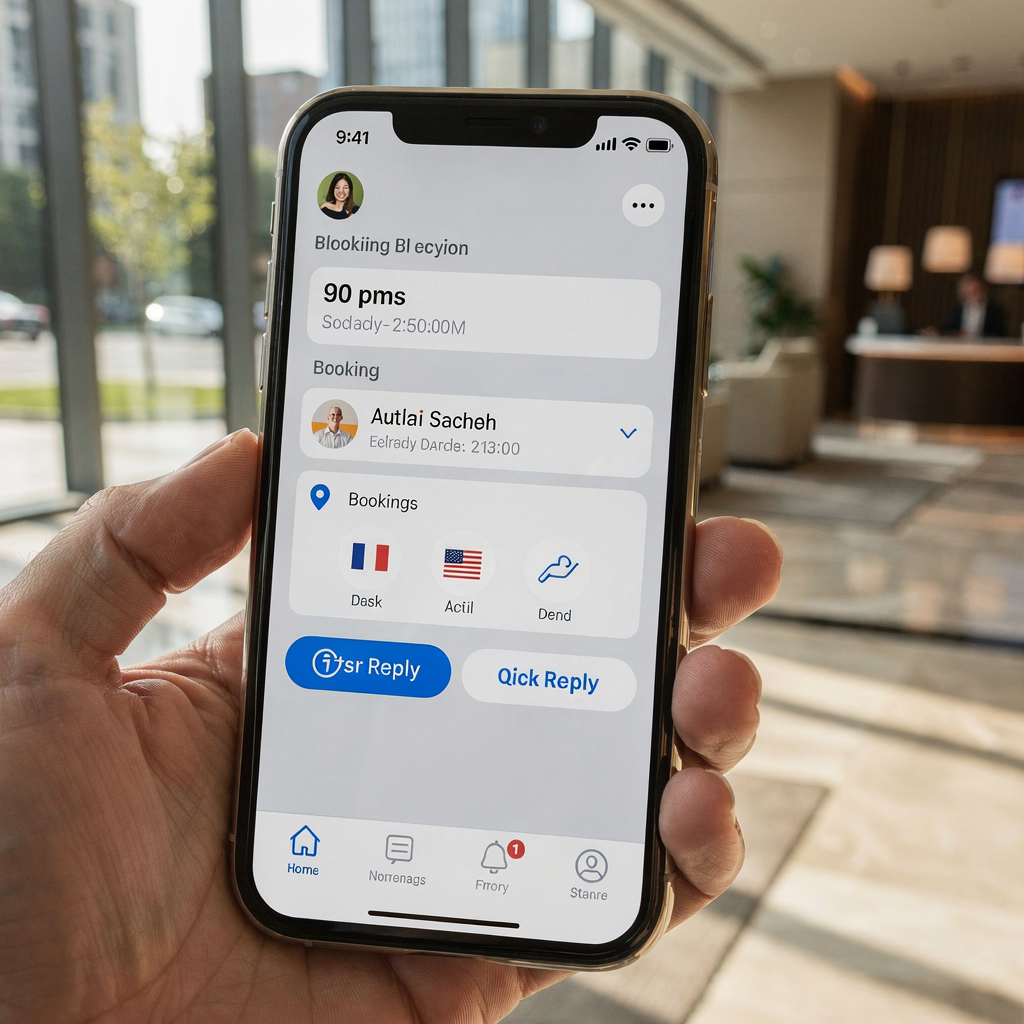
Guest-facing AI improves first impressions and keeps improving over time. Hotels place ai agents at the front of the guest journey to handle booking chat, pre-arrival questions, and in-stay requests. A single ai agent can greet site visitors, answer availability questions, and suggest upgrades during the booking flow. That reduces friction and increases conversion. Chatbots and a separate chatbot option give 24/7 support and help cut front desk queues. Voice agents and voice assistants then step in for contactless interactions in rooms and lobbies, while phone agents can take routine calls and route complex inquiries to staff.
Personalization matters here. Agents deliver personalized recommendations that match guest profiles, past stays, and current offers. They also capture guest inquiries and guest requests and feed them into the hotel systems so staff get full context. This reduces repeat questions and improves guest satisfaction. Early deployments show clear time savings and improved guest feedback. To map value, trace the guest journey from research to check-in, in-stay, and check-out. Identify high-volume touchpoints like booking pages, FAQ sections, and room service ordering. Then automate the tasks that create most of the workload for hotel staff.
Use cases include handling multilingual support, confirming special requests, and enabling upsells during booking. AI assistant features can answer frequently asked questions and manage simple amendments without human handoff. For more complex guest interactions, the agent escalates with the full conversation history attached, preserving service quality. For hotels that want to integrate operational email and guest-facing interactions, see how virtualworkforce.ai automates email workflows and drafts grounded replies for ops teams, helping to streamline the overlap between reservations, housekeeping, and billing (ERP email automation for operations). By automating routine interactions, teams free time for high-value, high-touch moments with hotel guests.
Drowning in emails?
Here’s your way out
Save hours every day as AI Agents label and draft emails directly in Outlook or Gmail, giving your team more time to focus on high-value work.
automate back‑office work: how automation and real‑time systems scale operations and create a seamless hotel operation
Also, additionally, therefore, next, then, finally, first, second, in addition, consequently, thus, for example, as a result, similarly, consequently, next, then, also, therefore, meanwhile.
Automation in the back office unlocks scale. AI tools can automate review processing, schedule staff, and handle revenue tasks that once required manual triage. Wyndham reported dramatic gains after deploying agentic systems: the hotel chain cut brand review processing time by about 94%, which freed teams to focus on other priorities (Wyndham boosts speed and service with AI agents – PwC). Those time savings translate into faster reaction to guest reviews and fewer missed issues. When reviews and guest feedback reach staff quickly, hotels improve service quality and protect reputation.
Connect AI to pms, CRS, and CRM platforms to enable real-time flows. Real-time availability and synchronized guest data reduce double-bookings and speed check-in. Agents analyze guest needs by reading patterns in inquiries and reservations, then route tasks to the right teams. That creates fewer handoffs and faster turnarounds. For properties that face heavy operational email volumes, automated email solutions can reduce handling time from about 4.5 minutes to 1.5 minutes per message. Tools that draft replies directly in Outlook or Gmail and ground answers in ERP or WMS systems lower error rates and speed resolution. For operational teams interested in detailed workflows for scale, the virtualworkforce.ai guidance on how to scale logistics operations without hiring applies well to hotel contexts (How to scale operations without hiring).
To achieve these gains, focus on data hygiene and governance. Avoid silos by connecting property management systems and hotel management systems, feeding structured data back into systems of record. Use rules for escalation and create audit trails for compliance and data protection. With the right integrations, agents streamline repetitive tasks and amplify the ability to scale while preserving consistent service quality.
agentic ai and the future of hospitality: autonomous agents, agent for hotels and the shifting role of staff
Also, additionally, therefore, next, then, finally, first, second, in addition, consequently, thus, for example, as a result, similarly, meanwhile, next, then, consequently, thus, finally.

Agentic AI promises a new operating model. Experts at Mews describe the shift as moving from assistive tools to autonomous decision-making, saying, “Agentic AI will redefine intelligent hospitality by enabling hotels to operate with greater autonomy and responsiveness, ultimately enhancing guest satisfaction and operational sustainability” (Agentic AI for Hotels: Mews outlines the future of intelligent hospitality). In practice, agentic ai can run dynamic pricing, anticipate guest needs, or trigger service responses without human prompts. That will change roles for hotel staff: the routine choices fall to AI, while staff focus on complex guest situations and high-touch interactions.
This future also raises questions about customer loyalty and program design. As agents plan travel for users, hotels must rethink loyalty to accommodate agent behavior and preferences. Analysts warn that chains must handle integration complexity to capture full value. Despite that, many hotels can adopt hybrid models. For example, AI manages routine upsells and housekeeping assignments, while human staff handle complex guest cases and bespoke experiences. This hybrid approach preserves personalized service and reduces workload for front-line teams.
Technologies such as large language models and ai voice systems enable natural dialogue, but hotels must pair them with governance. Data protection and GDPR compliance remain priorities when agents access guest data. To prepare, define which decisions agents may make autonomously and which require staff approval. Plan training so teams trust agent outputs. The goal is clear: agents provide predictable, fast service while hotel staff deliver empathy, creativity, and complex problem solving.
Drowning in emails?
Here’s your way out
Save hours every day as AI Agents label and draft emails directly in Outlook or Gmail, giving your team more time to focus on high-value work.
practical rollout: how hospitality professionals implement ai agents for hotels and manage ai-driven change
Also, additionally, therefore, next, then, finally, first, second, in addition, consequently, thus, for example, as a result, similarly, meanwhile, next, then, also, finally, thus.
Start with a clear data strategy and governance. Step one: catalog data sources and secure consent for guest data use. Step two: pick a high-ROI pilot such as booking automation, FAQ automation, or price optimisation. For pilots that touch operational email, consider tools that automate the full email lifecycle so you remove manual triage and routing. For example, virtualworkforce.ai automates email triage and drafts data-grounded replies, which helps operations teams scale without hiring and reduces errors (How to scale with AI agents).
Implementation checklist: define objectives and KPIs, integrate with pms and hotel systems, train the model with historical guest reviews, and create escalation paths. Measure outcomes with specific metrics like time saved, conversion uplift in booking flows, and changes in guest satisfaction. When you scale, use vendor SLAs for uptime and accuracy, and keep ownership of governance within your team. Independents often see faster ROI, partly because they avoid complex legacy systems (Chains struggle with AI strategy, independents see fast ROI).
Address risks proactively. Data silos and integration complexity can delay projects. Rethink loyalty strategies as agents change booking patterns and referral sources. Plan staff training so hotel staff embrace the change and learn to trust agent outputs. Start small, measure, and iterate. Over time, agents improve over time as models learn from interactions and structured feedback. That continuous improvement builds the ability to scale and to maintain consistent service quality across locations. For best practice examples on automating correspondence and integrating AI into customer service workflows, see resources on automated logistics correspondence and customer service automation for operations teams (Automated logistics correspondence).
frequently asked questions (faqs) on ai agents for hotels and the immediate actions hospitality businesses should take
Also, additionally, therefore, next, then, finally, first, second, in addition, consequently, thus, for example, as a result, similarly.
What security and privacy controls should hotels apply when using AI agents?
Hotels must implement data protection policies, secure storage, role-based access, and audit trails to meet GDPR and other regulations. Also use encryption and limit data scope to what agents need for a task.
How quickly will a pilot return value?
Pilots focused on high-volume tasks like booking automation or guest reviews typically show measurable gains in weeks. Measure conversion, handling time, and guest feedback to calculate ROI.
Will AI replace hotel staff?
AI handles routine tasks and reduces repetitive workload, allowing staff to focus on complex guest situations and personalized service. Staff roles will shift toward supervision, guest experience design, and high-touch engagement.
Which guest touchpoints deliver fastest wins?
Booking pages, FAQs, and pre-arrival messaging produce early wins because they carry high volume and predictable patterns. Automating guest inquiries and confirmations reduces manual load quickly.
How do AI agents affect loyalty programs?
Agents can change booking channels and referral behavior, so hotels must redesign loyalty rules and incentives. Consider agent-friendly reward structures and transparent APIs for partner integrations.
How should hotels measure success?
Track time saved, conversion lift on booking flows, guest satisfaction, and reductions in manual errors. Use specific KPIs tied to revenue management and operational efficiency.
Are multilingual and accessibility features supported?
Yes, many systems include multilingual support and accessibility modes, which increases inclusivity and conversion for international guests. Test language quality and escalation paths for nuance-sensitive queries.
What is the best first pilot to choose?
Start with booking automation or guest review processing, since they show quick ROI and require modest integration. Also consider automating the largest email queues first to reduce workload fast.
How to manage vendor selection and integration?
Require clear SLAs, data access rules, and escalation workflows. Prefer vendors that offer no-code setup and deep grounding in operational data to reduce engineering time.
What immediate steps should hospitality professionals take today?
Audit guest touchpoints, pick a high-volume pilot, secure governance, and measure time saved and guest metrics. For practical automation of operational email and faster scaling, explore platforms that automate the full email lifecycle and draft grounded responses to speed resolution and improve consistency (AI in communication workflows).
Drowning in emails?
Here’s your way out
Save hours every day as AI Agents label and draft emails directly in Outlook or Gmail, giving your team more time to focus on high-value work.