


ai agent and agentic ai: how they enable predictive maintenance for the maintenance team
AI has moved from experimental scripts to reliable tools that help maintenance teams move from reactive to proactive maintenance. An AI agent can monitor streams of operational data and decide when to alert humans or trigger automated responses. Agentic AI describes autonomous, goal-driven agents that act without constant human prompts. In practice, agentic ai will run diagnostics, trigger actions and recommend repairs while learning from outcomes. That shift reduces toil for the maintenance team and improves maintenance planning.
Many organisations already report gains. For example, about 79% of businesses use AI agents in operational roles, and roughly two-thirds can show measurable benefits. Those figures explain why teams invest in predictive technologies now. A well-configured AI agent converts raw sensor streams into prioritized alerts and creates a work order automatically. The system tags the type of fault, suggests parts, and routes the task to a technician. That flow shortens response time and helps schedule maintenance windows efficiently.
AI systems that combine rules and models can also consult a knowledge base and historical maintenance logs to recommend steps. When a vibration anomaly appears, the AI agent compares maintenance records and diagnosis models, then proposes an intervention. This integration supports proactive maintenance and helps maintenance managers justify resource allocation in budget reviews. By using predictive models, teams reduce repeated emergency repairs and focus on optimal maintenance for critical assets.
To adopt this approach, teams need clear data pipelines and governance. At virtualworkforce.ai we see similar patterns across operations: automating recurring, data-heavy tasks frees specialists for complex decisions. The same principle applies to digital maintenance: automate triage, keep humans in the loop, and measure the impact. As AI agents empower technicians, organisations can transform your maintenance program into a data-driven capability that cuts downtime and raises reliability.
ai in maintenance: real‑time monitoring, fault detection and the power of ai for preventive maintenance
AI in maintenance delivers real-time monitoring and faster fault detection. Models ingest sensor data and apply anomaly detection to find patterns that precede equipment failure. With real-time data streaming from vibration, temperature and load sensors, the system flags departures from normal behavior and generates hypotheses about root causes. Those automated alerts enable preventive maintenance teams to act before damage spreads.

In many implementations, AI produces root-cause suggestions and recommended steps. For example, a predictive maintenance model may show that a bearing temperature trend plus a vibration spike indicates imminent bearing failure. The platform then creates a work order, lists needed parts, and assigns a maintenance technician. This approach is at the heart of predictive maintenance ai. It turns noisy sensor inputs into manageable maintenance activities and reduces the likelihood of unplanned downtime.
Case studies show measurable results: aggregated reports indicate predictive approaches can cut unplanned downtime by up to 50% and lower maintenance costs by about 30% on average (source). Even simple deployments that focus on vibration/temperature monitoring deliver fast wins. Digital twins can extend that value by simulating loads and predicting failure modes without interrupting production. Meanwhile, AI-powered troubleshooting chatbots provide guided diagnostics and reduce the need for expert travel to the floor.
These capabilities matter for industrial maintenance because they affect reliability and safety. By combining models with a quality knowledge base and maintenance history, organisations get faster answers. Yet success depends on data quality, integration with maintenance systems and clear escalation paths. As a rule, adopt narrow pilots, validate alert accuracy, then scale to avoid alert fatigue and preserve trust in the system.
Drowning in emails?
Here’s your way out
Save hours every day as AI Agents label and draft emails directly in Outlook or Gmail, giving your team more time to focus on high-value work.
predictive, workflow and maintenance software: integrating models into daily processes
Integrating predictive models into maintenance software converts insights into action. Modern maintenance software, including CMMS and EAM systems, must accept model scores and route them into the normal maintenance workflow. That way, alerts become assignable tasks rather than isolated reports. The integration points include data ingestion, scoring, alert routing, automatic work order creation and technician UX.
Start by setting up data pipelines that unify sensor streams and historical maintenance records. Good pipelines feed real-time and historical signals into the model and write scores back to maintenance records. Next, the model scoring layer should attach confidence and recommended repair steps to each alert. When confidence exceeds thresholds, the system can create a work order, schedule maintenance, and reserve parts. This makes it easier to schedule maintenance and to optimize maintenance schedules across assets.
Practical details matter. For example, link CMMS actions to technician mobile UI so the assigned maintenance technician receives a clear checklist and part list. Track KPI changes such as MTTR and MTBF. Monitor the false-alarm rate and technician response time to keep the model useful. These metrics help maintenance managers decide when to retrain models or tweak routing rules.
To validate ROI, run A/B tests by letting the AI handle a subset of assets while others remain on traditional maintenance. Compare metrics like mean time to repair and maintenance costs per asset. For detailed playbooks on automating operational messages and task routing, see resources about email and task automation that apply to maintenance workflows, such as our guidance on automated logistics correspondence for operations teams. Also review integration patterns with ERP systems for grounding data, similar to how we link inboxes to TMS or WMS in enterprise contexts (ERP email automation for logistics).
optimize maintenance and operational efficiency: measuring impact and building ROI
AI helps optimise maintenance decisions and boosts operational efficiency across the plant. By predicting which assets will fail and when, teams can schedule maintenance to fit production needs. That lowers interference with operations and reduces unplanned downtime. Many firms report typical gains near a 30% reduction in maintenance costs and as much as 50% less unplanned downtime (case studies).
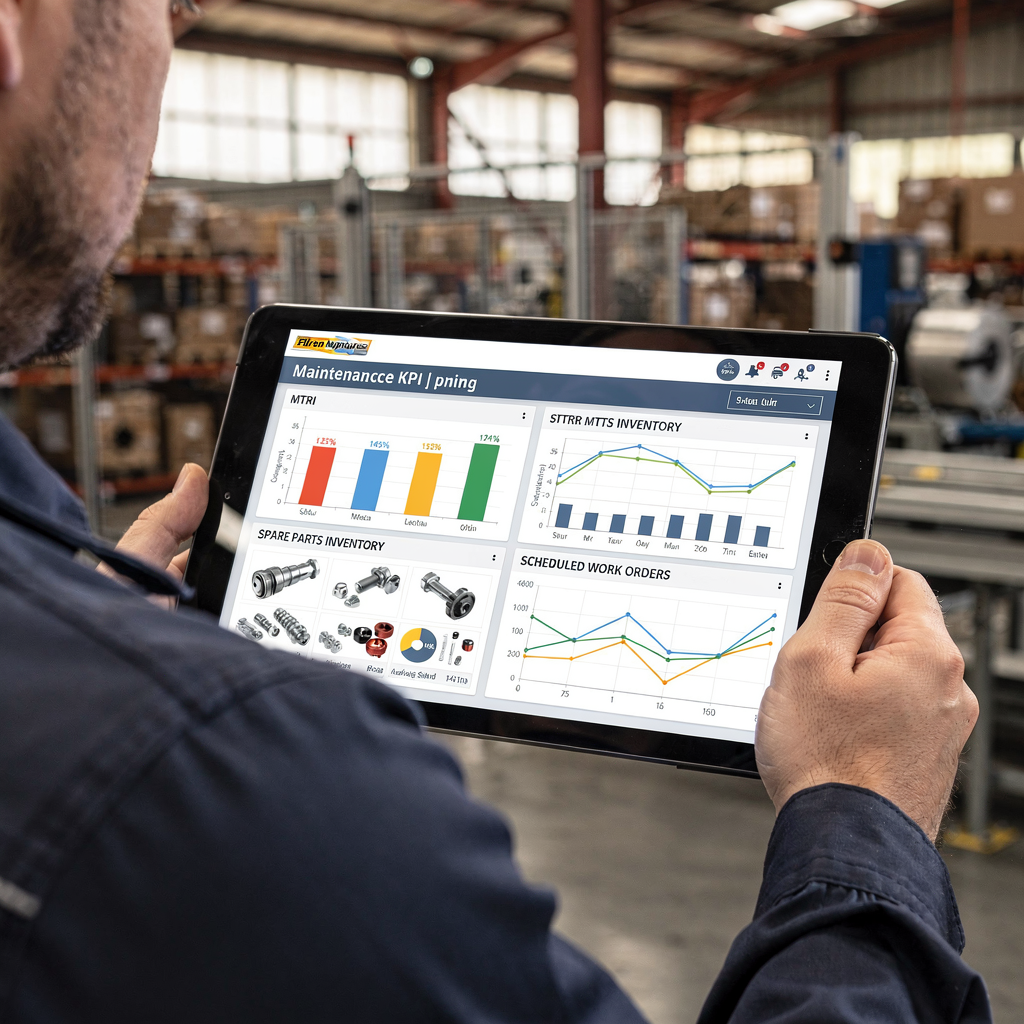
To demonstrate financial value, create a simple dashboard that tracks relevant metrics. Key indicators include MTTR, MTBF, maintenance costs per asset, and spare-parts turnover. Include value-focused metrics such as payback time and total cost of ownership for the AI deployment. Use A/B testing before full rollout: run the AI-enabled process on a sample set of assets and benchmark results for three months. Then compare to control assets that follow traditional maintenance.
AI agents transform scheduling by recommending maintenance windows and balancing crew allocation. They can optimize maintenance schedules so crews work on grouped tasks and spare parts are used efficiently. This reduces travel time and part shortages. For organisations where email drives much of the coordination, integrating AI into communication can shorten cycle time. If you want to learn how to scale operations without hiring, see our guide on how to scale logistics operations without hiring; the same principles apply to maintenance planning.
When measuring ROI, include indirect benefits. Less unscheduled downtime increases throughput. Higher reliability lowers scrap and warranty exposure. The dashboard should surface these impacts. Finally, include a plan for continuous validation. Keep monitoring false positives and technician feedback and adjust models. Doing so helps reduce overall maintenance costs and preserves the credibility of AI recommendations.
Drowning in emails?
Here’s your way out
Save hours every day as AI Agents label and draft emails directly in Outlook or Gmail, giving your team more time to focus on high-value work.
ai agent adoption and maintenance software lifecycle: governance, upgrades and scale
Successful adoption requires governance, versioning and a lifecycle plan for AI agents. Models drift as equipment ages, sensors change and maintenance behavior evolves. Therefore, teams should design a practice for continuous training, model validation, and software upgrades. Many organisations adopt AI agents but still report ongoing work to mature deployments. For instance, a Bain report notes that AI needs “massive data context and cleanliness” and that maintenance data often sits in silos (source).
Create a checklist that covers data lineage, access controls, integration points, technician training and vendor SLAs. Include experiment logs and model version tags in your maintenance records so teams can trace which model produced a recommendation. Define escalation rules and human-in-the-loop checks to ensure safety during uncertain predictions. This approach protects operations while enabling gradual autonomy.
Governance should also address who owns the models, who approves retraining, and how to capture maintenance history. Maintenance managers need clear reporting to validate model actions. The organization should track maintenance workflow changes and document the effects on maintenance cycles. Include the maintenance software vendor in your plan for compatibility and upgrades. Finally, require service-level agreements that specify uptime, model update cadence and support for integration points.
Adopting AI is not a one-off project. It is a lifecycle that blends people, processes and technology. With this plan, organisations can scale intelligent agents while controlling risk. Remember that technicians must trust the system. Provide training for the maintenance technician and ensure the interface surfaces confidence and reasoning. When governance, training and upgrades are in place, AI agents empower teams to sustain improvements over time.
future of maintenance: data quality challenges, risks and the path forward for the future of maintenance
The future of maintenance depends on solving data quality problems and managing operational risk. Primary challenges include siloed maintenance records, sensor drift, label scarcity and integration friction. Without clean historical maintenance logs and consistent telemetry, models will underperform. As one report warns, maintenance data is frequently spread across many systems with little quality control (Bain).
Risk controls are essential. Implement validation suites, human-in-the-loop checks and explainability features so technicians understand why an alert triggered. Maintain fallback workflows to avoid unsafe automation. For example, when model confidence is low, route the case to an experienced engineer and flag it as requiring manual review. This reduces the chance of incorrect automated repairs that could cause equipment damage or safety incidents.
Practical next steps: pilot narrow use cases, secure clean data pipelines, and scale proven agents gradually. Use controlled A/B testing to measure the impact on reliability and maintenance timing. Track changes in maintenance windows, emergency repairs and maintenance records to confirm improvements. For teams dealing with high email volume and coordination gaps, automated email workflows can streamline requests and handovers; learn more about applying automation to operational emails in contexts like container shipping and customs communication (AI in container shipping customer service).
Challenges remain, but the path forward is clear. Start small, measure results, and keep humans central to safety-critical decisions. Over time, as data quality improves and models mature, organizations will see stronger reliability, fewer instances of equipment failure, and the ability to optimize preventive maintenance across the fleet. The future of maintenance belongs to teams that treat AI as a tool that augments skill, not a replacement for judgment.
FAQ
What is an AI agent in maintenance?
An AI agent is a software entity that can perform tasks such as monitoring telemetry, detecting anomalies and recommending actions. In maintenance, AI agents often create work orders and assist technicians with diagnostics while learning from outcomes.
How does agentic AI differ from rule-based systems?
Agentic AI acts autonomously toward goals and adapts to new data, whereas rule-based systems follow fixed instructions. Agentic ai can plan multi-step interventions and update its strategy based on feedback, which improves long-term performance.
Can AI really reduce unplanned downtime?
Yes. Aggregated case studies indicate predictive approaches can cut unplanned downtime by up to 50% and cut maintenance costs by roughly 30% on average (source). Results depend on data quality and implementation fidelity.
What systems does AI need to integrate with?
AI must integrate with CMMS, EAM, ERP and IoT platforms to turn alerts into actionable tasks. Tying scores back to maintenance software ensures the maintenance workflow triggers work orders and schedules correctly.
How do you measure ROI for AI in maintenance?
Measure changes in MTTR, MTBF, maintenance costs and downtime. Use controlled A/B tests and dashboards to compare AI-enabled assets versus controls. Include payback time and TCO in the financial analysis.
What are common data challenges?
Siloed maintenance records, inconsistent labels and sensor drift are common problems. Teams must build clean pipelines and data lineage to ensure models learn from accurate historical maintenance logs.
How should organisations handle model updates?
Implement versioning, continuous training and validation suites. Define clear governance for retraining and require human approvals for major changes so technicians retain trust in the system.
Are technicians replaced by AI agents?
No. AI reduces manual triage and routine tasks, freeing technicians to focus on complex diagnostics and repairs. The goal is to augment skills, not eliminate the role of the maintenance technician.
What safeguards prevent unsafe automation?
Use human-in-the-loop checks, confidence thresholds and fallback workflows. Explainability features help technicians understand model reasoning before acting on recommendations.
How do I start a pilot for AI-powered preventive maintenance?
Begin with a narrow use case, such as vibration-based bearing detection or temperature monitoring, and set clear metrics. Secure clean sensor data, run an A/B test, and scale only after validating improvements in reliability and reduced downtime.
Drowning in emails?
Here’s your way out
Save hours every day as AI Agents label and draft emails directly in Outlook or Gmail, giving your team more time to focus on high-value work.