


How an ai agent monitors and optimises the manufacturing process
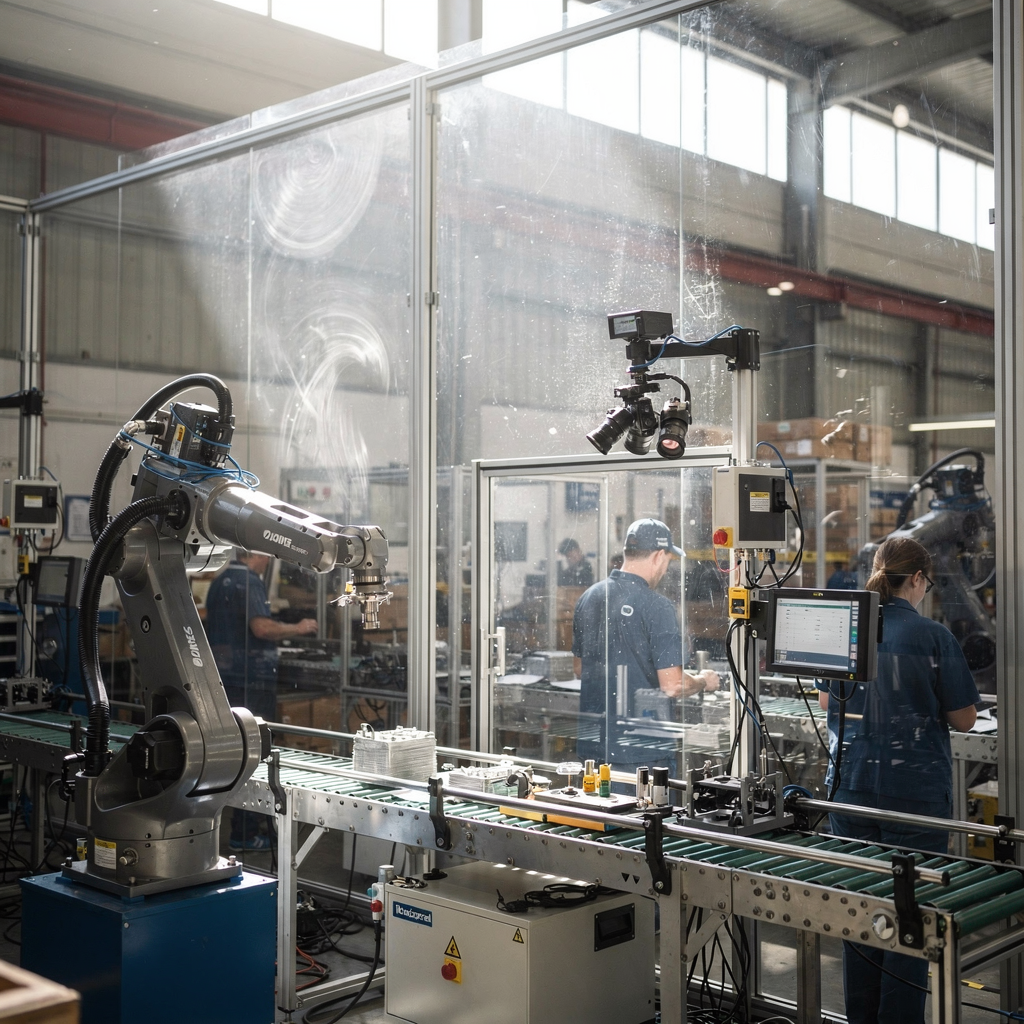
First, an AI agent ingests high-frequency sensor streams, historian records and enterprise data from ERP and MES systems. Then the agent fuses that manufacturing data with production rules, digital twins and quality thresholds so it can flag anomalies quickly. For example, a visual camera feed and vibration sensor feed combine to create a single input that the model evaluates in real-time. As a result, operators see alerts and actionable recommendations, and they can accept suggested set-point changes or allow the agent to apply them automatically. This flow—sensors → models → actions—keeps the manufacturing process stable and reduces scrap.
Next, agents continuously monitor KPIs such as yield, OEE and scrap rate. AI agents analyze trend shifts and alert on deviations before a line produces defects. In many plants, real-time condition monitoring reduces downtime via predictive maintenance; executives reported rapid uptake of such systems in 2024–25 (56% of manufacturing executives). This uptake shows how ai in manufacturing moves from pilot to production. Also, ai agents optimize set-points for cycle-time tuning, visual quality inspection and closed-loop process control.
For instance, a quality control camera detects micro-defects, tags the part and routes images to a root-cause sub-agent that suggests corrective action. Then the control agent adjusts temperature or feedrate to prevent further defects. In the context of manufacturing, agents can analyze vast amounts of telemetry, PLC logs and lab results, and ai agents continuously refine their rules with supervised feedback. Consequently, workflow friction declines and product quality improves.
Manufacturers can integrate agents with ERP to close the loop on corrective actions; see practical guidance on ERP integration and email-based workflows in our resource on ERP email automation for logistics. Finally, by instrumenting lines and measuring before-and-after KPIs, teams report measurable gains in yield and faster fault triage. The combination of sensors, models and closed-loop action helps manufacturers reduce downtime while they optimise manufacturing processes and lift overall operational efficiency.
ai agents in manufacturing: agentic systems for production optimisation and automation
First, distinguish simple scripts from agentic behaviour. Simple automation runs repeatable sequences. By contrast, agentic systems plan, learn and act with limited human input. These intelligent agents build short plans, test outcomes, then adapt. This difference matters for production optimisation because agentic systems handle exceptions and shifting constraints without constant human oversight.
Surveys show agentic adoption is accelerating. In 2025 roughly 56% of manufacturing executives reported active use of AI agents (56% reported deployment). Consequently, agentic workflows are expected to grow from 3% to 25% of enterprise AI workflows by the end of 2025, which signals faster adoption of agentic approaches (IBM study).
Next, ROI drivers are clear. Reduced labour on routine tasks frees engineers for improvement work. Faster decision-making reduces throughput loss. Higher throughput results from dynamic scheduling and rapid cycle-time tuning. In addition, agents capable of learning can reduce sensor-to-action latency and lower mean time to repair. Agentic ai lets systems make decisions and optimise across constraint changes without manual reprogramming.
Also, unlike traditional ai that only scores data, agentic solutions run contextual workflows and coordinate with PLCs, MES and ERP. These ai systems can plan multi-step adjustments across lines. Meanwhile, engineers retain approval controls so human intervention happens only when needed. Finally, organisations should pilot agentic workflows on a single cell before scaling. For practical steps on moving from idea to scale, explore how to scale logistics operations with AI agents for related process guidance (how to scale logistics operations with AI agents).
Drowning in emails?
Here’s your way out
Save hours every day as AI Agents label and draft emails directly in Outlook or Gmail, giving your team more time to focus on high-value work.
agentic ai and generative ai in manufacturing operations and quality control
First, agentic AI orchestrates processes while generative AI creates human-friendly outputs. For example, a generative model can draft an SOP edit or a shift handover note. Then an agentic controller attaches that draft to the correct work order and routes it for sign-off. This pairing speeds documentation, root-cause summaries and routine reporting. Manufacturers are now using generative ai for scheduling suggestions, automated SOP updates and clear anomaly explanations.
For example, a quality control agent flags a batch non-conformance. Generative AI then summarises sensor traces, inspection images and likely root causes. The result: fault triage time drops from hours to minutes. This time saving helps operators focus on containment and corrective action. Also, synthetic data from generative models trains classifiers for rare defect modes when real examples are scarce. In practice, modern manufacturing vendors like siemens provide platforms that integrate vision models and scheduling tools; teams take that output and feed it into local control loops.
However, governance matters. Generated SOP text must be verified and traceable. Therefore teams should store versioned drafts, require human approval for safety-critical changes, and log who accepted them. In addition, audit trails should link generated outputs to the underlying sensor evidence. This approach reduces risk when allowing ai agents to produce operational content.
Using ai to automate administrative tasks also frees subject-matter experts to work on improvements. Also, ai tools can draft corrective action emails, create structured reports and populate maintenance tickets. Finally, agents also play a crucial role in keeping handovers consistent. By combining agentic ai and generative ai manufacturers shorten response loops and raise product quality while keeping documentation accurate.
ai agents for manufacturing: autonomous maintenance, inventory and supply chain optimisation
First, domain coverage splits across maintenance, inventory and supply chain. For maintenance, predictive maintenance models forecast component wear and prescribe actions. For inventory, agents enable automated reorder logic and smarter safety stock. For supply chain, dynamic routing and supplier risk alerts cut transit delays. Manufacturers spent over US$10 billion on ai solutions in 2024, which accelerated investment in these domains (IoT Analytics – $10 billion in 2024).
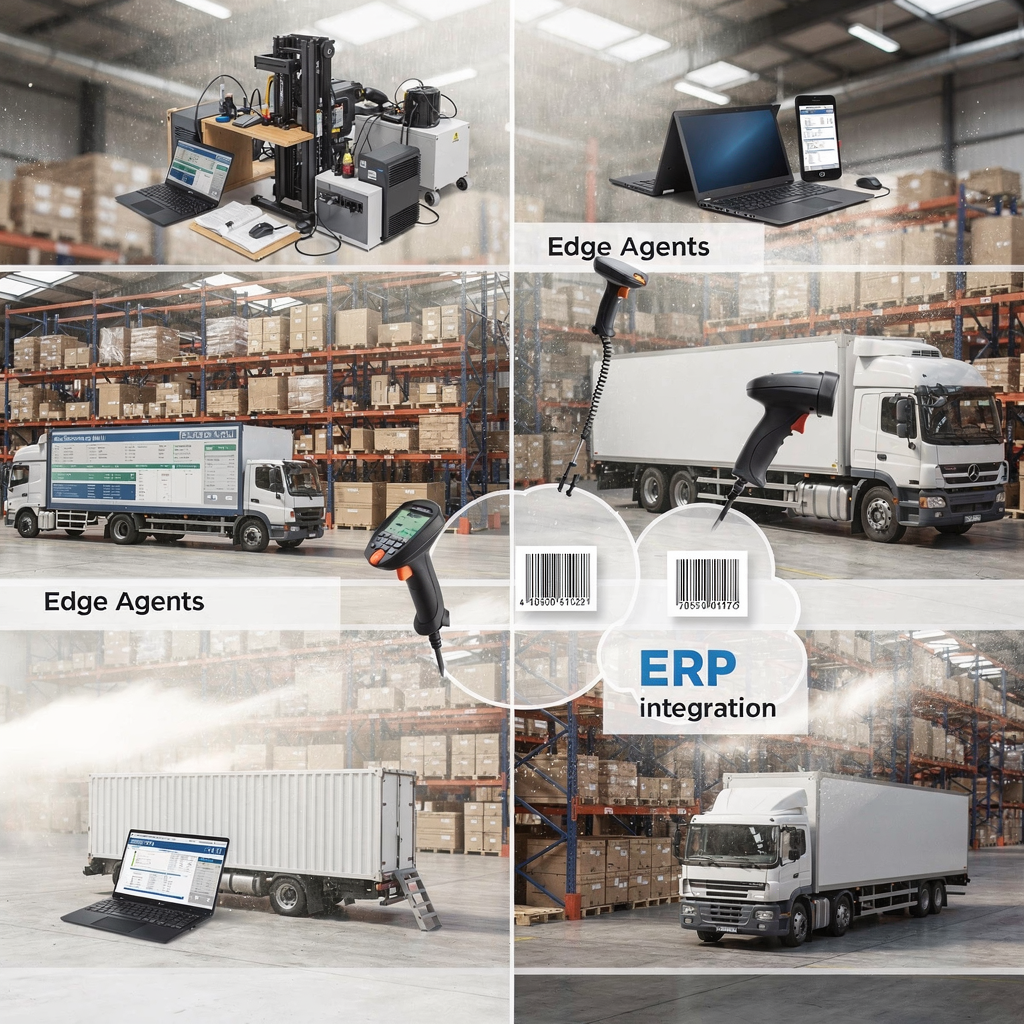
Next, an architecture sketch helps. Edge agents run on gateways or PLC-adjacent hardware to control equipment. Cloud agents handle planning, demand forecasts and cross-site optimisation. Then a middleware layer integrates with MES and ERP for work orders and stock updates. This structure lets local controllers act fast while the cloud agent plans multi-site replenishment. Integrating ai agents with ERP and execution systems ensures actions tie to the correct production schedule and financial records; teams should align with manufacturing execution and ERP data to avoid drift.
Also, standard metrics apply. Measure MTTR, MTBF, inventory turns and days of inventory. Agentic replenishment improves inventory management and reduces stockouts and shortage events. For instance, demand forecasting models reduce buffer stock while improving fill rate. Moreover, integrating ai agents with supplier portals enables dynamic allocation when a vendor delay appears. This capability helps reduce downtime and the risk of late shipments.
Finally, integrating ai agents requires secure data flows and test harnesses. Start with a single asset class for predictive maintenance, then extend to broader classes. Also, integrating ai agents with supply chain management tools and ERP avoids duplicated data and keeps traceability intact. By doing so, organisations enable manufacturers to scale AI across maintenance, inventory and supply chain while protecting operations.
Drowning in emails?
Here’s your way out
Save hours every day as AI Agents label and draft emails directly in Outlook or Gmail, giving your team more time to focus on high-value work.
industrial ai and ai-powered systems: measuring benefits of ai agents and productivity gains in manufacturing work
First, companies measure benefits in three areas: uptime, quality and labour productivity. Reduced downtime and fewer defects translate to higher throughput and lower cost per unit. In surveys, executives say agentic AI is strategically important; many view agents as essential rather than experimental (IBM study). These findings support continued investment in industrial ai.
Next, be cautious about scale. Roughly 90% of organisations still struggle to scale agents because of data quality and integration challenges (Datagrid – 90% struggle). Therefore start small with a clear pilot KPI. Instrument a single cell, track MTTR and yield, and calculate TCO. Also, define success metrics such as time saved per operator shift and reduced mean time between failures.
Also, ai agents help automate repetitive communications and triage. At virtualworkforce.ai we automate the full email lifecycle for ops teams, which cuts handling time by two thirds for recurring operational emails. That example shows how automating email and operational workflows raises productivity across manufacturing teams. For teams focused on logistics correspondence, learn more about automated logistics correspondence and email drafting for freight workflows (automated logistics correspondence).
Finally, create a proof-of-value checklist. First, define a single KPI and baseline measurement. Second, collect high-quality labelled data. Third, run a short pilot that includes human oversight and rollback paths. Fourth, audit model outputs and capture business outcomes. Fifth, plan for lifecycle management of models. These steps help manufacturing organizations move from experiments to durable gains in overall business performance.
Revolutionizing manufacturing: agent for manufacturing across manufacturing environments and overcoming challenges
First, the shift is clear. AI has moved from assisted tools to agents that co-operate with humans across the shopfloor, plant and supply chain. This change is reshaping the landscape of manufacturing and the future of manufacturing looks more data-driven and adaptive. For modern manufacturing, agent orchestration offers improved resilience and faster reactions to disruptions.
Next, key barriers remain. Integration of ai into legacy control systems is hard. Data governance, security and skills shortages slow adoption. Also, industrial automation teams must set clear ownership and modular agent design to reduce risk. Practical solutions include small bounded pilots, rigorous access controls for sensitive manufacturing data and clear escalation paths for human review.
Also, expect more coordination between agents. An agent for manufacturing might request parts, adjust schedules and notify planners. This coordination lets manufacturers optimize manufacturing processes end-to-end. Meanwhile, intelligent agents will assist product development by supplying simulation data and anomaly narratives. To discover how ai agents can be applied across operations, explore how to scale logistics operations without hiring for related operational automation ideas (how to scale logistics operations without hiring).
Finally, governance and explainability are non-negotiable. Design agents with audit logs, explainable decisions and test suites. Ultimately, agentic ai will enable manufacturers to navigate sales trends and supplier volatility while protecting safety and quality. As organisations plan pilots, they should define KPIs, choose a bounded scope and prepare to scale. This approach will support a stable transition to the future of manufacturing where ai technology improves uptime, quality control and operational efficiency.
FAQ
What is an AI agent in manufacturing?
An AI agent is a software component that ingests sensor and enterprise data, acts on that data and often closes the loop with equipment or systems. It can detect anomalies, suggest parameter changes and sometimes take action autonomously under predefined rules.
How do ai agents in manufacturing reduce downtime?
They use predictive maintenance and condition monitoring to identify failing components before a breakdown. Consequently, teams schedule repairs at convenient times, which lowers unplanned downtime and MTTR.
Can generative ai create operational documents safely?
Yes, when paired with governance. Generative models can draft SOPs, shift handovers and root-cause summaries, but human approval and version control are essential for safety-critical content.
What metrics should I track for an AI pilot?
Track uptime, MTTR, MTBF, yield, scrap rate and inventory turns. Also capture time saved per operator and the total cost of ownership for the pilot to quantify ROI.
How do agents integrate with ERP and MES?
Integration uses secure APIs and middleware that map agent outputs to work orders, inventory records and schedules. This alignment ensures traceability of actions and avoids duplicate or conflicting instructions.
Are ai agents secure with sensitive manufacturing data?
They can be when designed with encryption, role-based access and audit logs. Implement data minimisation and strict governance to mitigate exposure of sensitive manufacturing data.
What is the difference between traditional automation and agentic ai?
Traditional automation follows fixed scripts and deterministic rules, while agentic ai plans, learns and adapts to new situations with limited human input. Agentic systems handle exceptions more gracefully.
How quickly can organisations see benefits?
Pilots often show measurable improvements within weeks to months for specific KPIs like faster fault triage or reduced email handling time. Scaling those gains across plants takes longer and requires attention to data quality and integration.
What are common pitfalls when scaling agents?
Poor data quality, integration complexity and lack of lifecycle management are frequent barriers. Also, insufficient governance and unclear ownership can stall scaling efforts.
Where can I learn more about automating operational communications?
virtualworkforce.ai publishes resources and case studies on automating logistics and operational emails, including solutions that connect to ERP, TMS and WMS systems for traceable, grounded replies. See their material on automated logistics correspondence and email automation for logistics to get started.
Drowning in emails?
Here’s your way out
Save hours every day as AI Agents label and draft emails directly in Outlook or Gmail, giving your team more time to focus on high-value work.