


ai + packaging: why AI agents matter for packaging firms
AI agents are software systems that act on data and systems to make or recommend decisions across design, production and supply chains. They connect operational systems and they automate routine tasks, and they help staff focus on higher-value work. The broader AI agents market is forecast to reach approximately USD 236.03 billion by 2034, which signals strong tailwinds for suppliers and adopters Precedence Research. At the same time, studies show that 60–73% of manufacturing data remains unused, and AI can analyze that historical data to identify optimization paths and to reduce waste SAM Solutions. For packaging firms this means faster decisions, lower material use, measurable cost reductions, and better sustainability outcomes.
Start with clear KPIs and then map data sources. Many companies already have ERP systems, WMS feeds, and legacy MES logs. When AI connects to ERP and to WMS and to other data stores it can form a single data-driven picture. This lets teams evaluate supply, predict demand, and make accurate packaging decisions. A data-driven approach helps companies make decisions in minutes rather than days. It also helps firms reduce costs by cutting material usage and by reallocating workforce to high-value tasks.
For example, virtualworkforce.ai automates the full email lifecycle for ops teams, and it links email context to ERP and to WMS and to SharePoint so that human operators spend less time on lookup and triage. This approach shows how domain-specific AI agents can both streamline communications and feed critical operational signals into packaging strategies and into design process updates. In short, discover how ai agents can reshape workflows and packaging options and boost responsiveness across the shop floor and across the office.
Finally, outcomes matter. When you adopt AI agents you can expect improvements in packaging efficiency, in product safety, and in customer engagement. You can also report sustainability metrics like reduced packaging material weight and lower emissions. These are measurable, auditable, and relevant to sustainability goals and to brand positioning.
ai agent and agentic ai: autonomous helpers on the factory floor
An AI agent can act as a task-specific assistant. Agentic AI refers to autonomous agents that plan and execute multi-step actions without constant prompts. In practice, a basic ai agent might monitor a sensor stream and alert a human. Meanwhile, agentic AI could coordinate packaging robots, schedule preventive maintenance, and automatically raise reorders when a threshold is crossed. Both patterns matter because they reduce manual workload and because they shorten response times.
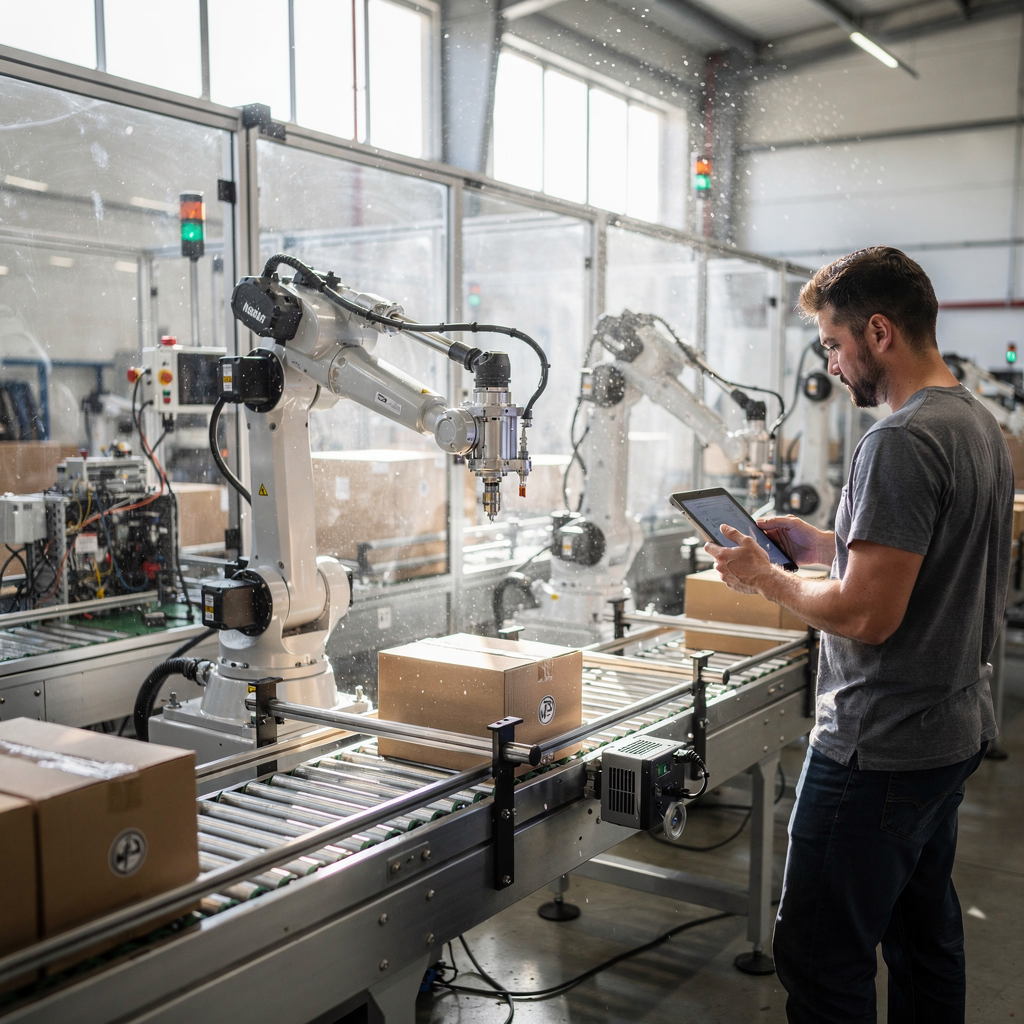
Autonomous agents can orchestrate robot arms and they can sequence conveyors so that each SKU gets the right pack and the right label. They also help with real-time routing of items through a mixed SKU line, and they inform changeovers so line downtime shrinks. The gains are tangible: fewer errors, sustained uptime, and more predictable throughput. Yet systems must include clear guardrails. You need human oversight and explainability so that safety and compliance remain fixed priorities. Set boundaries for actions and require approvals for high-risk steps.
Agentic workflows should link to quality systems and to ERP systems so that every decision records a rationale. When agentic AI proposes a change the system must log the recommendation and the data used. This supports auditability and regulatory traceability. For operations teams that handle customer emails tied to orders, virtualworkforce.ai shows how AI-powered routing and drafting reduce handling time and boost consistency; this is one way to orchestrate data across IT and operations and to reduce the workload on experienced staff virtual assistant for logistics.
Finally, balance autonomy with review. Use phased pilots, require escalation paths, and measure a clear set of metrics. A single line pilot can validate agentic behavior and help teams evaluate whether to scale autonomous agents across more lines and facilities.
Drowning in emails?
Here’s your way out
Save hours every day as AI Agents label and draft emails directly in Outlook or Gmail, giving your team more time to focus on high-value work.
transforming packaging: genai for design and custom ai for material savings
Generative AI, or genai, speeds the design process by producing many variants quickly. Instead of weeks of trial and error, design teams can test hundreds of packaging options virtually and then select the best candidates for prototyping. This approach helps teams optimize fit and strength while considering recyclability and cost. Designers can also apply brand rules and sustainability goals so that outputs are production-ready rather than theoretical. Dataforest and others report shorter time-to-market and less prototype waste when genai tools are used in the design process Dataforest.
Custom AI complements generative outputs. A tailored model can combine genai suggestions with business rules such as brand fonts, allowable packaging material, and supplier constraints. The result is custom packaging that meets both marketing and manufacturing constraints. When models tie into ERP systems and into supplier lead-time data they can choose materials that are cost-effective and that meet sustainability requirements.
Evidence supports this. An electronics manufacturer reported a 15% reduction in packaging material after applying AI-driven optimization tools, and the same project delivered a 20% increase in packing speed through integrated robotics and better pack selection Bluebash. That shows measurable ROI and it shows how AI-driven design work can directly reduce environmental impact and reduce costs.
Design teams should prioritize high-volume SKUs and costly materials when they pilot these techniques. Use historical data to train models and then test outputs in small runs. Also include sustainability efforts as a scoring factor when evaluating designs. This ensures that eco-friendly outcomes are not an afterthought but a core selection criterion. Finally, combine machine learning with human review so that packaging options remain practical and compliant.
automation, automate and workflow: ai-powered production and quality control
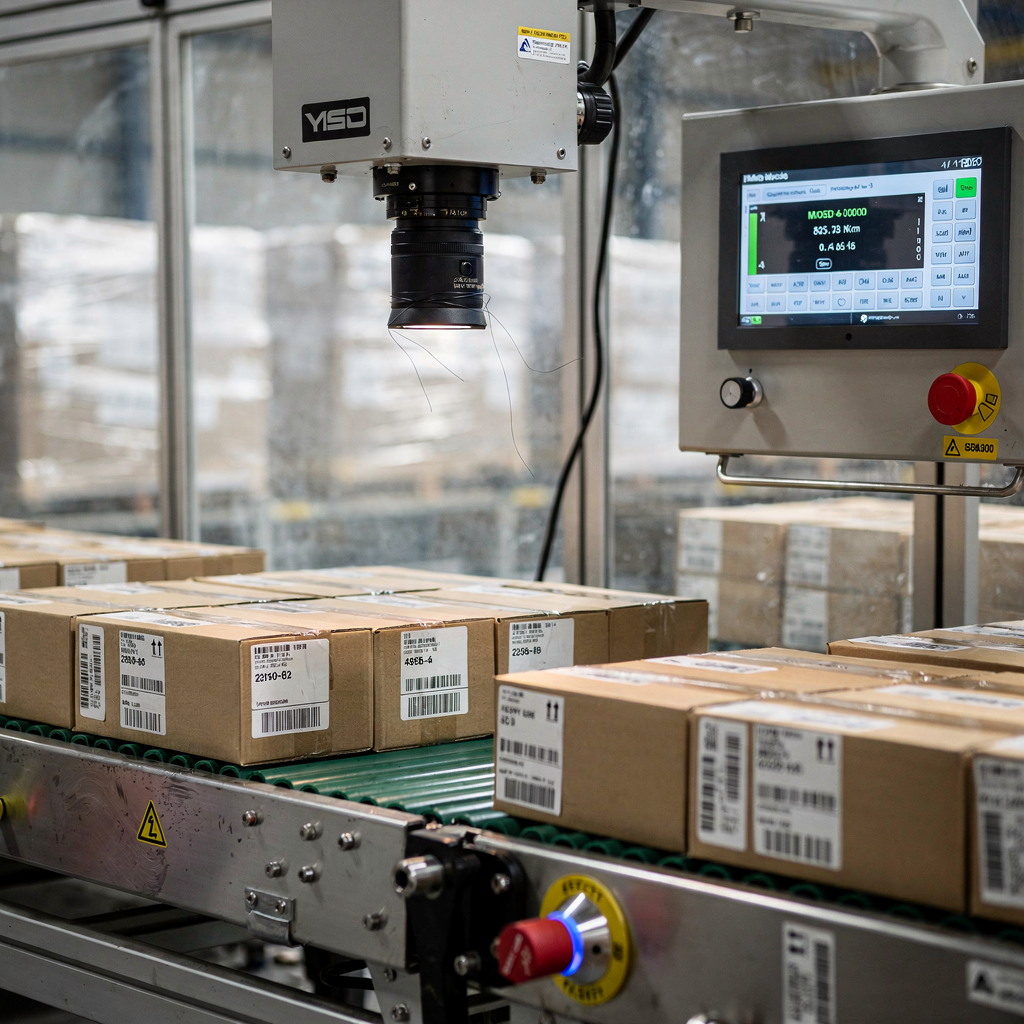
AI-powered vision systems inspect labels, seals, and print quality at line speed. They spot defects that humans miss and they do so consistently. Machine learning models trained on diverse defect images can reduce false positives and they can flag suspicious patterns that suggest fraud. Research shows that AI and ML can change traditional quality inspection and fraud detection by enabling real-time monitoring and predictive maintenance Packaging 4.0.
Automation also touches orchestration. Intelligent systems can automate robot pick-and-place sequencing and then dynamically adjust pack architecture based on SKU size. When sensors, PLCs, and MES data are aligned you can create closed-loop processes that adapt on the fly. For instance, the electronics case that cut material by 15% also increased speed by 20% after integrating AI into the line Bluebash. That combination of smart inspection and dynamic line control drives packaging efficiency and reduces recalls.
Practical deployment requires harmonizing data from PLCs, from MES, and from inspection cameras. You should also integrate with WMS and with ERP systems so that production adjustments update inventory records. For email-driven exceptions and supplier queries, teams can integrate with services like virtualworkforce.ai to reduce manual routing and to ensure responses are grounded in ERP data ERP email automation. This reduces the end-to-end time to resolve issues and helps maintain throughput.
Finally, implement intelligent automation in phases. Start with AI-enabled inspection. Next, automate pick-and-place. Then, tie in predictive maintenance so that uptime improves. This staged approach reduces risk and maximizes early wins.
Drowning in emails?
Here’s your way out
Save hours every day as AI Agents label and draft emails directly in Outlook or Gmail, giving your team more time to focus on high-value work.
use cases, ai-enabled and business with ai: forecasting, inventory and ROI
Forecasting and inventory management are strong use cases for AI. Oliver Packaging used Infor Coleman AI to improve demand forecasts and to ensure the right products were in the right place at the right time, which reduced stockouts and lowered carrying costs Oliver Packaging case. Better forecasts reduce emergency orders and they streamline supplier coordination.
Typical ROI levers include material savings, labour reallocation, fewer recalls, and lower inventory holding. To build a payback case, combine estimated material savings with throughput gains and with labour-cost adjustments. Many suppliers see payback within 12–24 months when they start with high-volume SKUs. Use a simple model that multiplies expected percentage savings by current spend to get an initial ROI estimate. You can refine that with more granular analytics once pilots run.
Other use cases include custom packaging for personalization and for improving customer experience. AI can select the right packaging and then trigger personalization workflows for marketing inserts. It can also power voice agents for customer support and it can generate structured event alerts for operations teams. These features improve responsiveness and customer engagement.
When planning pilots, pick metrics that matter: material usage, cycle time, and defect rates. Also monitor human workload and tracking of manual workload to understand how much capacity frees up for higher-value work. For teams that manage large inbox volumes, virtualworkforce.ai reduces email handling time from about 4.5 minutes to about 1.5 minutes per message, which directly improves throughput for order exceptions and supplier queries scale logistics operations. Use that as a proxy for how ai-enabled tools can free staff for growth initiatives and how they can improve ROI across the board.
business impact: implementing agents, governance and next steps
Start implementation by defining clear KPIs and then by cleaning and mapping your data. A practical pilot targets one line, one SKU family, or one quality gate. Measure before and after. Iterate on the model and then scale. Throughout, reskill operators and set change control processes so models remain current and safe. Assign ownership for continuous tuning and for model governance.
Governance must include audit trails and explainability. Keep sustainability goals visible and measure environmental impact in kg of packaging material saved and in emissions avoided. These metrics help stakeholders and regulators. Also, perform regular evaluations and ask the team to evaluate each update before wider rollout. Auditability supports compliance and it strengthens trust with customers.
Operational integration must link agents to ERP systems and to WMS and to MES so that actions are repeatable and traceable. For companies that run B2B logistics at scale, use end-to-end automation for emails and for notifications. Virtualworkforce.ai can help here by creating structured data from emails and by pushing context back into ERP systems and into wms records, which improves traceability and reduces rework automated logistics correspondence.
Finally, take these next steps: run a short pilot on a high-impact line, capture baseline metrics, and develop a 6–12 month roadmap to scale. Also ensure human oversight, and combine genai with custom ai to deliver production-ready packaging solutions. With the right governance and with a data-driven approach you will reduce costs, improve packaging efficiency, and drive growth while meeting sustainability goals.
FAQ
What is an AI agent in packaging?
An AI agent is a software system that performs data-driven tasks and recommendations across design, production and supply chain steps. It can monitor sensors, suggest packaging options, and automate routine decisions while surfacing recommendations for human review.
How do AI agents improve packaging design?
Generative AI can rapidly produce design variants and then a custom AI model can filter those designs against brand and manufacturing rules. This reduces prototype cycles, shortens time-to-market, and lowers material usage.
Can AI reduce packaging material waste?
Yes. Case studies show material reductions of around 15% in some projects, along with faster packing speeds. These savings come from better fit, optimized cushioning, and smarter pack architecture.
What is agentic AI and how is it different?
Agentic AI refers to autonomous agents that plan and take multi-step actions without repeated prompts. It differs from an ai agent that focuses on a single task; agentic AI can orchestrate sequences across systems while still requiring human oversight for high-risk actions.
How do I start a pilot for AI in my plant?
Define KPIs, clean and map your data, then run a pilot on a single line or SKU. Measure results, iterate on models, and scale when you hit target metrics. Focus on high-volume SKUs for faster ROI.
What systems must AI integrate with?
AI should connect to ERP systems, to WMS, to MES, and to inspection cameras. Integration ensures decisions update inventory, production schedules, and quality records in real-time and with traceability.
How does AI affect workforce and workload?
AI reduces manual workload by automating routine tasks and by drafting responses for operational emails. Staff redeploy to higher-value work such as exception handling and process improvement.
Are there sustainability benefits?
Yes. AI can reduce packaging material and can support sustainable packaging choices. Teams can quantify environmental impact in kg saved and in emissions avoided to meet sustainability goals.
What governance is required for AI agents?
Implement model change control, audit trails, explainability, and human oversight. Ensure each automated action logs rationale and that escalation paths exist for exceptions.
Where can I learn more about operational email automation for logistics?
Explore use cases and best practices for automating logistics emails and for integrating email workflows with ERP and WMS. See resources on virtualworkforce.ai for practical guides and ROI examples AI in freight logistics communication.
Drowning in emails?
Here’s your way out
Save hours every day as AI Agents label and draft emails directly in Outlook or Gmail, giving your team more time to focus on high-value work.