


How ai agents transform and agents transform logistics and supply chain to automate delivery and transportation management.
AI agent technology is changing how parcel operators plan, route, and execute delivery work. An AI agent acts as an autonomous digital worker that makes operational decisions, reduces manual planning, and enforces consistent rules across operations. First, an AI agent ingests schedules, constraints, and service windows. Then it recommends route planning and dispatch decisions that human teams can accept or adjust. The process reduces routine planning time and frees logistics managers to focus on exceptions. For example, by 2025 roughly 54% of logistics companies reported using AI agents for tasks such as scheduling, tracking and routing 54% adoption statistic. This shift lets companies move from batch planning toward continuous, AI-driven route optimization.
Consider how reinforcement learning combined with predictive analytics can cut fuel and delivery times. In practice, the system predicts traffic and service demands, then learns policies that minimize fuel use and missed windows. Studies show dynamic routing lowers last‑mile costs and reduces empty miles, which directly improves the cost per parcel and CO2 per km. Trackable metrics include cost per parcel, on‑time delivery rate, and CO2 per km. These KPIs show rapid returns when pilots focus on measurable objectives.
Also, AI agent capabilities extend beyond routing. Agents can automate scheduling, carrier selection, and prioritization of high‑value shipments. Because the agent learns from outcomes, decision-making improves over time. Parcel teams can integrate agent outputs into a TMS or ERP to close the loop and maintain traceability. If your operations face heavy email or manual triage, tools such as the virtualworkforce.ai platform can automate the full email lifecycle and speed replies by grounding responses in TMS, WMS and ERP data automate ERP-email workflows. In short, AI agent adoption helps logistics firms reduce manual work, drive efficiency, and scale faster without proportionally increasing headcount.
Role of ai agent, ai agent systems and ai agents for logistics in real-time analytics to optimize routing and fleet use.
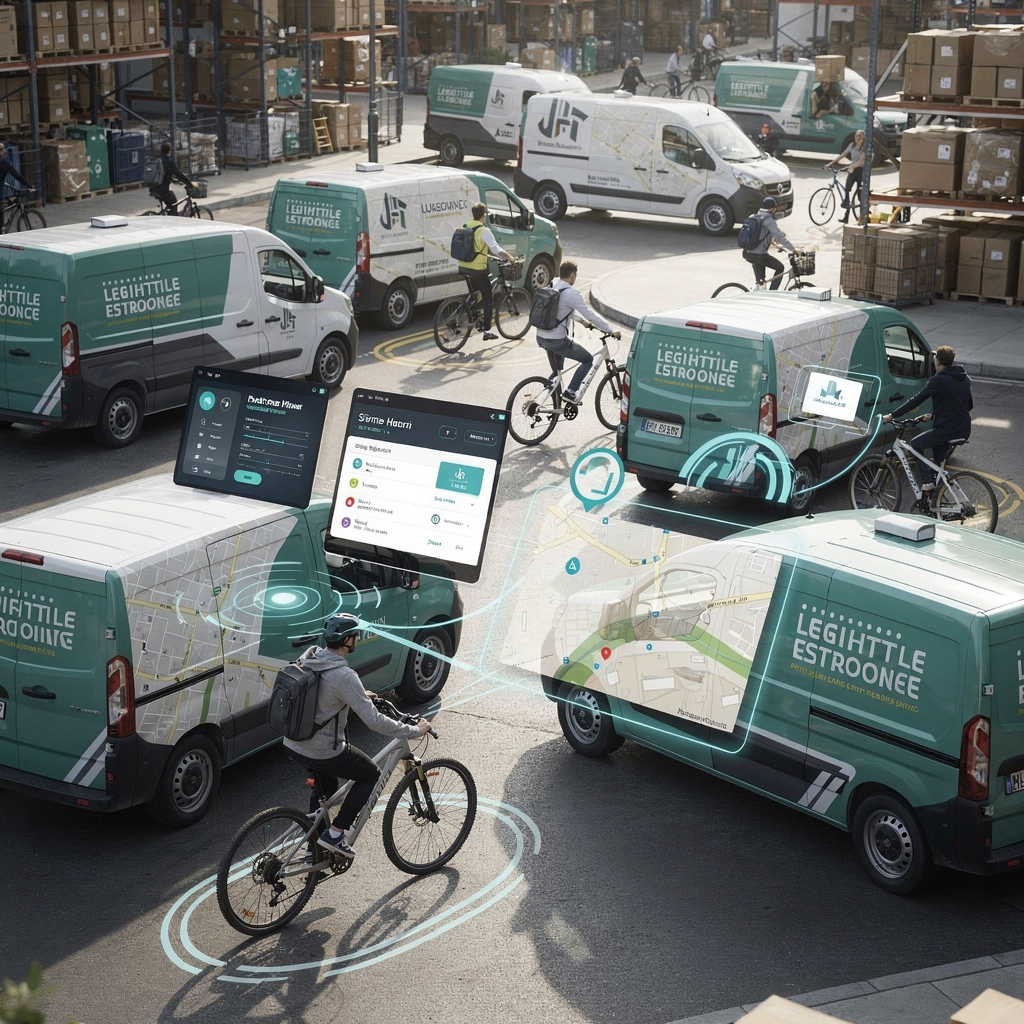
An ai agent systems approach bundles software, models, and data into a real-time decision loop that feeds dispatchers and a transportation management system. The architecture typically includes telematics ingestion, map APIs, traffic feeds, and predictive models. Real-time feeds such as traffic, weather, and vehicle telematics enable agents to re-route live and reduce delays and empty miles. For concrete evidence, real‑time predictive ETA plus reinforcement learning has shown reductions in missed delivery windows and vehicle idle time in industry experiments predictive analytics and RL reference. The system therefore improves fleet utilization and lowers transportation costs.
Agents deliver continuous analytics that update route planning and dispatcher dashboards. A logistics AI agent consumes live sensor data, predicts near‑term congestion, and issues reroute commands to drivers or to autonomous systems. This architecture supports both human dispatchers and multi-agent coordination for network-level optimization. Implementation requires integrating telematics, map APIs, and historical delivery data into the AI platform. A staged rollout keeps risk low: start with advisory modes, then add automated reroutes for low-risk segments. Doing so helps logistics teams accept recommendations and improves trust in agent outputs.
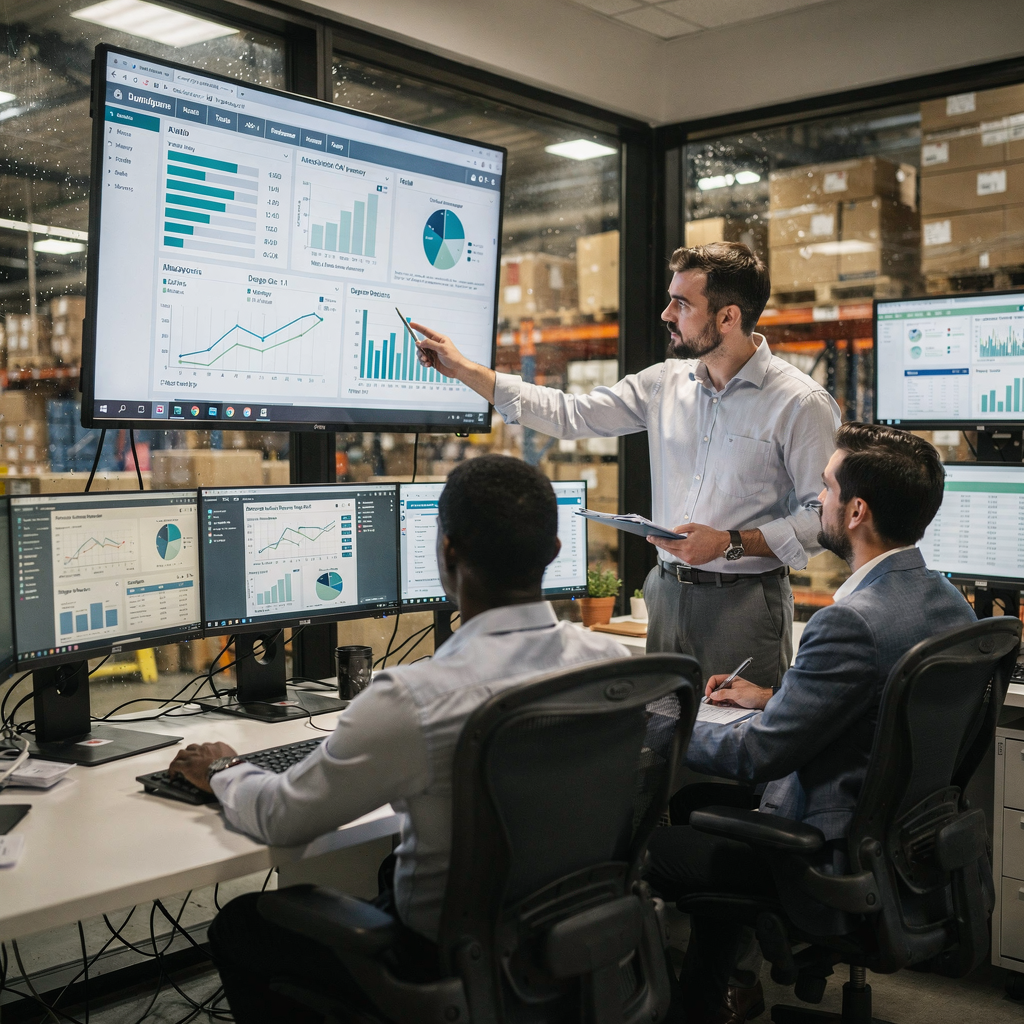
To operationalize, connect agent outputs to TMS and carrier interfaces, and set SLAs for latency and explainability. For teams that need email and correspondence automation tied to operational alerts, consider solutions that automate logistics email drafting and replies so humans read fewer routine messages and act on exceptions automated email drafting for logistics. Finally, design metrics to measure impact: vehicle utilization, empty miles, delivery time variance, and carrier performance. By tracking these, supply chain leaders can quantify the value that AI agents for logistics add in real time and plan next steps for scale.
Drowning in emails?
Here’s your way out
Save hours every day as AI Agents label and draft emails directly in Outlook or Gmail, giving your team more time to focus on high-value work.
Use case: parcel claims, customer service and operations where ai agents in logistics and ai in logistics automate data entry and improve customer experience.
AI agent use cases in parcel operations extend beyond movement to customer touchpoints. Agents handle claims triage, exception handling, returns, and customer messages. For claims, an AI agent can match delivery telemetry, timestamped photos, and recipient notes to validate or reject a claim. This reduces manual checks and accelerates refunds. Many operators report shorter resolution cycles and lower administrative overhead when they use AI to automate claims validation. For instance, automated claims validation that matches photos and GPS coordinates speeds refunds and reduces dispute time. If your operations are email‑heavy, intelligent automation can cut handling time from roughly 4.5 minutes to around 1.5 minutes per message when AI agents draft and route replies using ERP and WMS data automated logistics correspondence.
Generative AI agents manage high volumes of customer enquiries during peaks. They access shipment status, create structured incident tickets, and escalate only when needed. As a result, CSAT improves and human agents focus on complex issues. Key KPIs include average claim resolution time, CSAT, and reduction in manual FTE hours. Agents also create structured data from emails so claims workflows feed directly back into systems of record. This reduces rework and improves auditability.
Operationally, integrate agents with case management and warehouse management systems. Using a combination of templates, grounded retrieval, and business rules yields reliable replies. Human agents remain in the loop for exceptions and final approvals. This hybrid model balances scale with safety. For freight and parcel operations that must coordinate customs or complex return flows, AI in logistics can standardize responses and improve throughput, while reducing backlogs and costly manual triage freight communication automation. These improvements lift both customer experience and operational efficiency.
best practice for logistics companies and supply chain leaders when adopting agentic ai, ai platform and ai agent solutions.
Adopting agentic AI requires careful governance, data hygiene, and phased pilots. First, define a single measurable use case and align ROI metrics. Successful pilots move to scale by focusing on one measurable objective and clear ROI metrics. Next, clean master data in ERP, WMS, and TMS so AI models train on accurate records. Establish fail-safe escalation to human agents and set latency SLAs to ensure timely responses. A checklist helps: clean master data, fail‑safe escalation, latency SLAs, compliance and explainability. Also, appoint an operations champion and align IT, operations and procurement early to avoid organisational friction.
Agent governance must cover permissioning, audit trails, and human-in-the-loop controls. Monitor model performance and watch for model drift. Run A/B tests where possible, and track baseline KPIs before deploying new agents. Keep humans responsible for critical decisions and for continuous model feedback. For email-driven workflows, no-code AI platforms let operations teams configure routing and tone without prompt engineering, reducing brittleness and accelerating deployment. For example, virtualworkforce.ai provides end-to-end email automation built for ops that routes, drafts, and escalates with traceability to ERP and TMS records scale logistics operations with AI agents.
Finally, avoid vendor lock‑in. Prefer modular agent components with open APIs. Set performance baselines and require explainability for models used in carrier selection or safety‑critical routing. By prioritizing governance, phased pilots, and cross‑functional alignment, supply chain leaders can scale agentic AI with controlled risk and clear business outcomes. Remember that agentic AI complements human skills rather than replacing them; human agents handle nuanced exceptions and continuous improvement.
Drowning in emails?
Here’s your way out
Save hours every day as AI Agents label and draft emails directly in Outlook or Gmail, giving your team more time to focus on high-value work.
10 best ai solutions and solutions for logistics that agents across the network can integrate with human agents.
Below are concise AI solutions that agents across a parcel network can integrate with human agents. Pick modular components with open APIs so systems plug into existing TMS and WMS. Use human agents for exceptions, escalations, and continuous model feedback.
1. Route optimisation engine — core for last-mile delivery and route planning. 2. Predictive ETA/ETD service — gives dynamic arrival windows and supports carrier performance tracking. 3. Autonomous vehicle/control stack — for specific autonomous and autonomous AI fleet pilots. 4. Fleet telematics analytics — unifies vehicle data to reduce empty miles and lower transportation costs. 5. Warehouse robotics orchestration — schedules pick/pack tasks to match outbound waves and reduces bottleneck delays in the warehouse. 6. Intelligent claims processor — auto-validates photos, GPS traces, and delivery receipts to speed refunds. 7. Conversational customer agent — handles routine queries and creates structured tickets for human follow-up. 8. Dynamic capacity marketplace — matches demand spikes with contracted carriers and spot freight capacity. 9. Carbon‑optimiser — minimizes CO2 per km by balancing route, load, and vehicle selection. 10. TMS with embedded AI — centralizes optimization and reporting across shipments and carriers.
Integration tip: prefer modular ai platform components with open APIs to plug into existing TMS/WMS. For teams that want email and operational correspondence automated alongside these systems, check tools that specialize in logistics email workflows and template grounding to ERP and WMS data best AI tools for logistics companies. Keep human agents for exceptions, customer escalations, and verification tasks. This mix of AI solutions and human oversight helps logistics managers scale without losing control over sensitive workflows.
How ai agents for logistics and ai agent systems help logistics and supply with automation: measurable impact, risks and recommendations.
AI agent systems help logistics and supply operations produce measurable gains in cost, reliability, and speed. Many companies report reductions in transport and handling costs, improved on‑time performance, and faster claim turnaround after deploying agents. Track before/after baselines for metrics like delivery time variance, cost per parcel, and average claim resolution time to quantify impact. Market research also indicates that the AI agent market is expanding, with wider adoption across supply chain functions expected by 2026 AI agents market growth.
However, risks exist. Model drift can erode accuracy if data distributions change. Data gaps and poor master data create bad predictions that increase disruption. Supplier lock‑in can limit flexibility and raise long-term costs. Regulatory and safety concerns arise for autonomous transport pilots. To manage risk: run A/B tests, monitor models in production, maintain human oversight, and prioritise pilot ROI before full rollouts. Also, build in explainability so dispatchers and regulators can understand agent decisions. Track agent performance and error rates to spot regressions early.
Recommendations for supply chain leaders include starting small, measuring fast, and scaling incrementally. Use telemetry and historical shipment data to train models and keep humans in the loop for escalation. Standardize integration points with ERP and warehouse management systems and require open APIs. Finally, ensure your procurement and operations teams evaluate agent performance and total cost of ownership, not just headline metrics. When done correctly, AI agents handle repetitive tasks, enable logistics teams to focus on higher‑value work, and help logistics companies sustain improvements across complex logistics scenarios while managing risk.
FAQ
What is an AI agent in parcel logistics?
An AI agent is an autonomous software component that makes decisions and executes tasks in logistics, such as routing, scheduling, and customer messaging. It uses models, real-time data, and rules to optimize workflows while escalating exceptions to human agents.
How do AI agents improve last-mile delivery?
AI agents improve last-mile delivery by optimizing routes, predicting ETAs, and reducing empty miles through continuous learning. They re-route vehicles in real‑time when traffic or disruptions occur, which increases on‑time delivery rates.
Can AI agents handle parcel claims and customer service?
Yes. AI agents automate claims triage by matching photos, GPS, and delivery logs to validate requests and speed refunds. They also power chatbots and generative agents that reduce volumes for human teams while preserving context for escalations.
What KPIs should logistics teams track after deploying AI agents?
Important KPIs include cost per parcel, on‑time delivery rate, CO2 per km, average claim resolution time, and CSAT. Track these before and after deployment to measure measurable impact.
Are AI agents safe to use for autonomous transport?
Autonomous pilots require rigorous safety, testing, and regulatory compliance. Use phased trials and human oversight, and document fail-safe behaviors before wider rollout to manage safety concerns.
How do AI agents integrate with existing TMS and WMS?
Agents integrate via open APIs, telematics feeds, and data connectors to ERP, TMS, and WMS systems. Modular ai platform components make it easier to plug into current workflows and exchange structured data.
What are the main risks when adopting agentic AI?
Main risks include model drift, data quality issues, vendor lock‑in, and regulatory constraints. Mitigate these by monitoring models, maintaining clean master data, and requiring explainability and escalation paths.
How much can AI agents reduce logistics costs?
Reductions vary by use case, but industry pilots report measurable savings in transport and handling costs through better routing and reduced idle time. Exact savings depend on baseline inefficiencies and scale of deployment.
Do AI agents replace human logistics managers?
No, AI agents augment human managers by handling repetitive tasks and providing analytics. Human agents remain essential for exceptions, strategic decisions, and continuous model feedback.
Where can I learn more about automating logistics emails and correspondence?
See resources on automating logistics correspondence and email drafting for logistics to understand how AI agents can handle operational messages and reduce manual work. For practical steps, review automated logistics correspondence solutions and case studies on scaling operations with AI agents automated logistics correspondence, how to scale logistics operations, and how to improve logistics customer service with AI.
Drowning in emails?
Here’s your way out
Save hours every day as AI Agents label and draft emails directly in Outlook or Gmail, giving your team more time to focus on high-value work.