


rail + ai agent + real-time: digital twins transforming operations
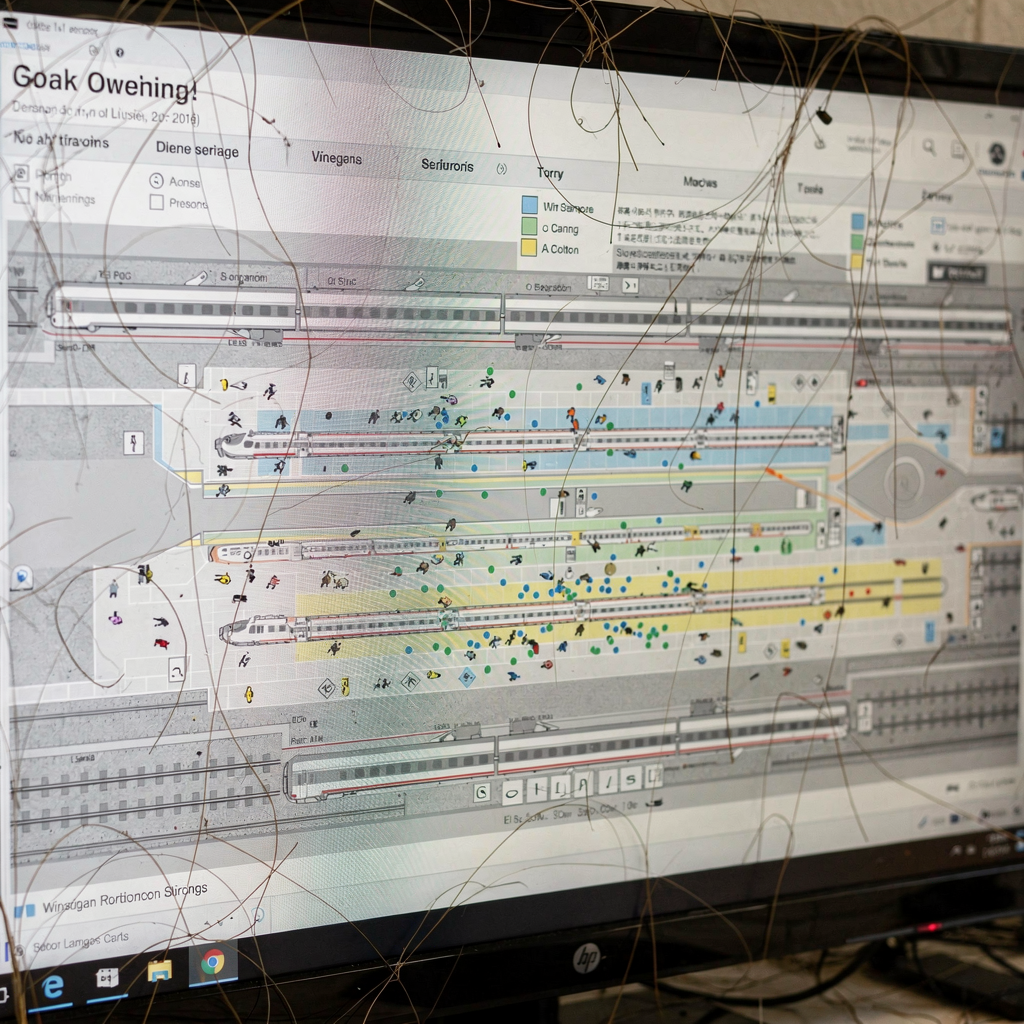
Digital twins let rail teams observe and act on real-time feeds from trackside sensors, CCTV and timetables. First, they create a mirrored model of stations and junctions so an AI agent can simulate load and test routing before actions occur. For example, Akila used AI-powered digital twins to reduce station congestion and improve safety on UK platforms; their work shows practical gains for UK rail networks Akila Optimizes Train Station Efficiency With Digital Twins and AI. Digital twins ingest structured and unstructured data, then they run continuous what-if scenarios. The result: faster incident detection and better passenger flow control.
Key performance indicators include delay minutes saved, passenger flow throughput and incident detection time. Operators measure mean time to detect incidents and minutes of delay avoided per day. For stations with high demand, a modeled change in platform assignment can save dozens of delay minutes each rush hour. At the same time, better visibility improves the passenger experience and passenger satisfaction by smoothing bottlenecks.
Digital twins depend on real-time data and steady data feeds. They combine live train status, timetable updates and CCTV-derived counts to prioritize interventions. Then, an AI agent recommends actions such as temporary routing changes or staff redeployment. These recommendations can arrive as an alert to human operators with contextual visuals that simplify decision-making. Our platform, virtualworkforce.ai, helps teams automate the flow of operational messages that arise from these scenarios by turning email into an auditable workflow so on-the-ground teams act faster and with context automated logistics correspondence.
Moreover, digital twins allow operators to test edge cases without causing service disruptions. They prove new timetables and resource allocation plans before rollout. Consequently, operators can make informed decisions that reduce cognitive load on staff and minimise manual coordination. For rail operators seeking a scalable, data-driven path to transforming operations, digital twins offer a controlled environment to trial new policies and measure benefits in clear KPIs.
railway use cases for ai agents for railway: predictive maintenance and optimisation
Predictive maintenance sits at the top of practical use cases. Sensors on axles, bearings and signalling equipment stream telemetry into models that forecast failures. As a result, operators reduce unplanned downtime by around 30% through targeted interventions CPKC’s AI Strategy: Analysis of Dominance in Rail Transportation AI. The same data helps optimise spare-part inventory so maintenance teams fix the right asset at the right time. Predictive maintenance therefore extends asset life and lowers total cost of ownership.
Traffic flow optimisation also brings measurable returns. Case studies show AI-driven decision support systems can improve throughput and reduce congestion by up to 20% in advanced networks AI-Driven Decision Support Systems for Managing Rail Traffic Flow. These systems ingest train status, timetable constraints and real-time demand to adjust routing and platform assignments. They balance punctuality and throughput, so timetables remain resilient to short disruptions.
In addition, AI helps with crew and rolling-stock allocation. Smart models trade off crew hours, maintenance windows and customer commitments to optimise allocation across shifts. This resource allocation improves service delivery and reduces deadhead time. A practical allocation policy can cut crew overruns and lower cost per kilometre.
More broadly, digital transformation in rail leverages AI-powered tools to simplify routine choices for human operators. For example, when a delay threatens connections, an AI system can propose revised routing, select a replacement unit and issue a platform change alert. The suggestion arrives with supporting data so staff can accept or override the plan. Discover how ai agents facilitate these flows in operational email and ticket workflows by converting unstructured messages into structured tasks virtual assistant for logistics. In short, these solutions help rail networks maintain service continuity while lowering operational costs. The combined benefits represent part of the USD 13–22 billion annual savings estimate for AI-enabled rail operations An AI roadmap for greater reliability and profitability in long-distance rail.
Drowning in emails?
Here’s your way out
Save hours every day as AI Agents label and draft emails directly in Outlook or Gmail, giving your team more time to focus on high-value work.
operator analytics and ai-powered optimisation for rail operators
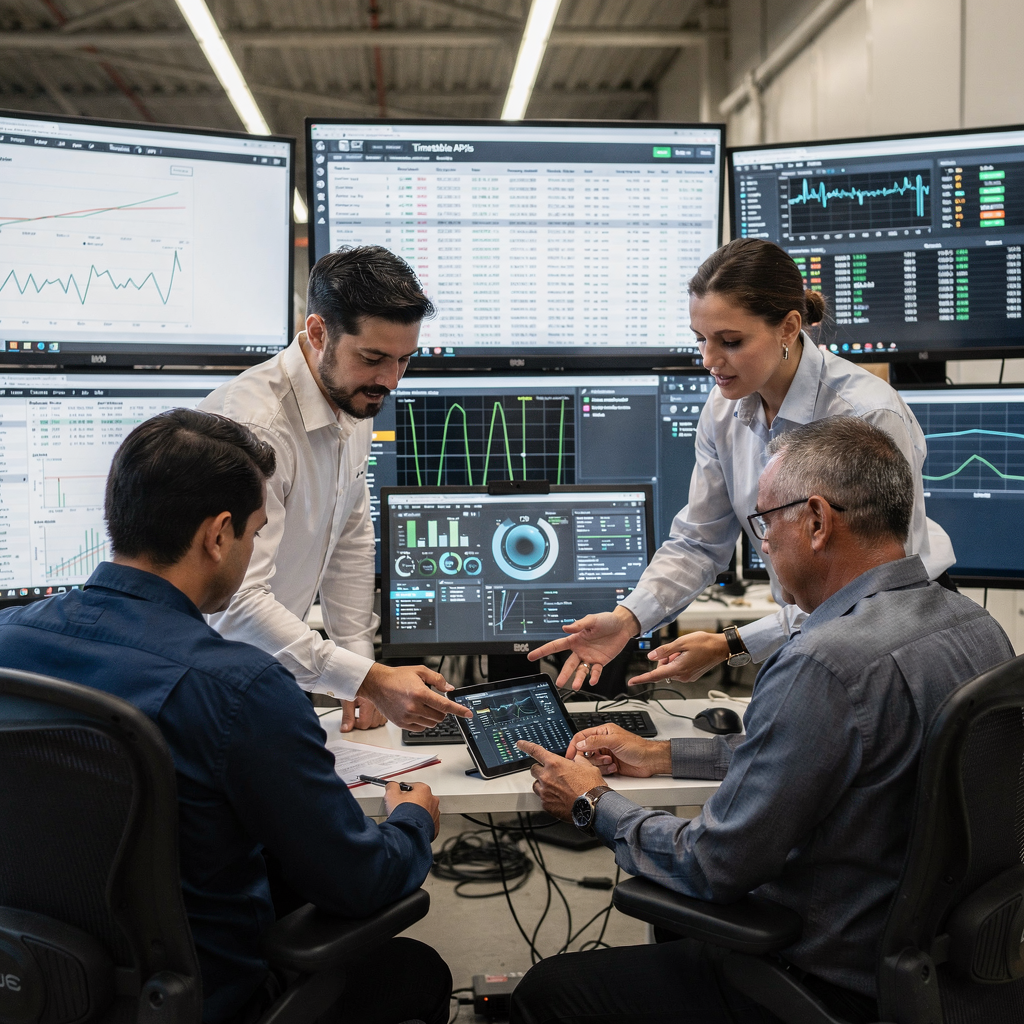
Operator dashboards unite analytics and decision recommendations. They display performance metrics, on-time performance and mean time between failures. Then they surface actionable items that human operators can execute. For example, a dashboard can flag a recurring axle vibration trend and propose a maintenance window. The recommended action includes estimated downtime and spare parts needed so teams can approve work quickly.
These interfaces reduce cognitive load and improve the consistency of responses. An effective interface links to ticket systems and fare engines so staff can handle customer queries without toggling between tools. Our company helps teams automate the large volume of operational email that arises from such exceptions; by converting emails into structured tasks, teams reduce handling time and maintain a single source of truth ERP email automation for logistics. Dashboards also ingest visual data from CCTV and combine it with train status to offer real-time recommendations.
Metrics to track include on-time performance, cost per kilometre, asset uptime and kpis for customer experience. Operators need to understand the decision thresholds that trigger automatic actions versus those requiring manual approval. Action items for operators are practical: set data SLAs, define escalation rules, assign roles for human-in-the-loop checks and deploy an audit trail for every alert. Use analytics to identify trends, then use AI to optimise routing and resource allocation. The end goal is a balanced workflow where AI agents handle routine triage and human operators manage anomalies and strategic choices.
To support adoption, teams should document domain expertise inside the system and test for edge cases. They should also integrate with ticketing platforms and ticket APIs to ensure customer communications remain coherent. A simple chatbot can surface contextual summaries to frontline staff, while more complex LLMS and natural-language tools generate templated responses. These components together enhance their operational resilience and customer experience during disruptions.
deployment and national rail: how to use ai across rail networks
Start deployment with a phased plan: pilot, scale and integrate with signalling and ticket systems. Pilots validate models and iron out potential issues before a wider rollout. Then scale the solution across depots, routes and stations. Finally, integrate with national systems such as timetable APIs and the national rail control to harmonise decisions across regions. For national rail stakeholders, clear governance and data contracts are critical for success.
Required data and systems include telemetry feeds, asset registers, timetable APIs, digital-twin models and strong data integration pipelines. Better data makes models more reliable. Operators should prioritise data quality and ensure structured and unstructured inputs are tagged and accessible. They should also make sure their systems remain interoperable with legacy signalling architecture and third-party apis.
Risks include poor data quality, legacy systems that resist integration, cybersecurity threats and regulatory gaps. Mitigations start with rigorous testing, role-based access controls and staged handover procedures. For example, a UK train operator running pilots should include contingency plans so a manual control can override an AI recommendation if needed. Also, include on-demand rollback capabilities during live trials.
Throughout rollout, maintain transparent communications with staff and passengers. Public transport stakeholders value predictable service delivery and clear travel experience information. Build a scalable architecture that can grow across rail networks while keeping the integration of AI auditable. For further reading on scaling organisational workflows and reducing email triage time during deployment, see our guide on how to scale logistics operations without hiring how to scale logistics operations without hiring.
Drowning in emails?
Here’s your way out
Save hours every day as AI Agents label and draft emails directly in Outlook or Gmail, giving your team more time to focus on high-value work.
public transit safety, first ai and governance: guardrails for autonomous decisions
Safety and governance must lead any AI deployment. The concept of first ai places human oversight and strict limits around autonomous actions. A first ai control ensures automated recommendations remain within tested safety envelopes. In practice, automated alerts notify human operators while true autonomous interventions require extra approvals. This pattern supports railway safety and keeps systems auditable.
Guardrails include escalation rules, explainability logs and incident logging. Create a safety case that distinguishes between automated alerts and autonomous interventions. Define handover points where human operators take control. Also, ensure staff training covers potential issues and edge cases so they can act quickly during service disruptions. A documented escalation path reduces cognitive load for frontline teams and keeps everyone aligned.
Testing should include simulated failures in digital twins, stress tests for traffic peaks and adversarial scenarios for cybersecurity. The governance checklist should capture explainability, incident logging, staff roles and public communications. For passenger-facing changes, link automated decisions to customer experience channels so passengers receive timely updates about tickets and platform changes. Governance must also cover data privacy and compliance with national rail standards and regulators.
Finally, build explainable AI components into the ai system so operators can see why a recommendation was made. Use visual data, apis and audit trails to support investigations. With these measures, AI can help prevent incidents without replacing human judgment. The approach keeps public transportation safe and resilient, and helps teams enhance their operational practices while preserving trust.
transforming operations: rollout plan, metrics and operator playbook for ai agents for railway
Begin with a concise rollout plan: select a pilot use case, build a digital twin, run live trials, iterate and then scale. Choose a pilot that has measurable KPIs and limited scope, such as a busy interchange or a fleet of critical assets. During trials, collect data on passenger satisfaction, delay reduction and maintenance cost savings. Track kpis such as on-time performance and mean time between failures to measure progress.
Create a playbook that maps workflows, specifies escalation rules and designates human operators for approvals. Include steps for data integration, testing for edge cases and procedures for handover between AI and control rooms. Also document domain expertise and store it in the system to guide the agent might make a recommendation; this preserves institutional knowledge and reduces ambiguity in responses. Ensure performance metrics feed back into model retraining so the system improves over time.
Operational success depends on people as much as on technology. Operators need to understand new interfaces and trust the output of ai-powered tools. Provide training, role-based dashboards and a phased handover so staff adopt changes without stress. Use a chatbot for common queries and an auditable workflow to reduce email volume that otherwise slows decision-making. Our virtualworkforce.ai platform shows how automating email workflows can dramatically reduce handling time while keeping traceability intact how to improve logistics customer service with AI.
Finally, ensure continuous monitoring for potential issues and maintain a roadmap for digital transformation. Keep the system interoperable and scalable. With clear metrics, a tested rollout plan and cross-team governance, rail operators can transform operations and deliver better service delivery to the travelling public.
FAQ
What is an AI agent in rail operations?
An AI agent is software that performs autonomous or semi-autonomous tasks for rail teams. It can triage alerts, recommend routing changes and draft operational messages to reduce manual work.
How do digital twins help reduce station congestion?
Digital twins model station layouts and passenger flows to test interventions before live rollout. They run scenarios using real-time data so operators can optimise platform assignments and resource allocation without risking disruption.
Can AI predict equipment failure reliably?
Yes. Predictive maintenance models analyse sensor telemetry to forecast failures and schedule repairs. Industry studies report up to a 30% reduction in unplanned downtime when such models are used source.
How should operators start a deployment across a national rail network?
Start small with a pilot, then scale in phases while integrating with timetable APIs and signalling. Define data SLAs, ensure data quality and create rollback plans to manage risks during wider rollout.
What governance is needed for autonomous actions?
Governance should include escalation rules, incident logging, explainability and staff training. Distinguish automated alerts from autonomous interventions and require human approval for high-risk decisions.
How do AI agents handle passenger communications?
AI agents draft consistent, contextual messages for passengers and staff, and can integrate with ticketing systems to update affected travellers. They help maintain a clear travel experience during service disruptions.
Are these solutions interoperable with legacy railway systems?
Yes, when designed with open apis and careful data integration. A focus on interoperable interfaces allows new AI components to work alongside legacy signalling and asset registers.
What metrics should rail operators track first?
Track on-time performance, mean time between failures, passenger satisfaction and maintenance cost savings. These kpis show both operational and customer-facing impacts.
How do AI systems affect frontline staff?
AI reduces manual triage and lowers cognitive load by handling routine alerts and drafting messages. Human operators retain control for exceptions and strategic decisions through clear handover processes.
Where can I learn more about automating operational messages and emails?
See resources on integrating AI with logistics and operations to reduce email handling time, such as guides on how to scale logistics operations with AI and automated logistics correspondence how to scale logistics operations with AI agents and automated logistics correspondence.
Drowning in emails?
Here’s your way out
Save hours every day as AI Agents label and draft emails directly in Outlook or Gmail, giving your team more time to focus on high-value work.