


AI agent for real estate: agentic AI to automate listing, lead generation and showings
AI offers real estate administrators new ways to automate the end-to-end listing lifecycle. First, agentic AI can create a listing, qualify a lead, and book a property showing with minimal human input. Next, an ai agent for real estate runs workflows that pull data, draft property descriptions, and push a listing live. For example, users can combine generative ai for descriptions with a virtual assistant to format photos and publish a property listing. Also, ai agents can handle lead generation and triage. Lead-calling models and conversational ai qualify prospects, ask key questions, and route serious buyers to an agent. Then, showing schedulers automatically schedule tours and send reminders to prospects and tenants. As a result, real estate professionals save time on routine tasks and focus on negotiations and client care.
Statistically, adoption is rising. The National Association of Realtors found that 68% of real estate agent professionals now use AI tools, which shows rapid uptake across markets NAR 2025 Technology Survey. In addition, research from Morgan Stanley forecasts that AI innovations could create up to $34 billion in efficiency gains for the sector by 2030 Morgan Stanley. Therefore, administrators who automate listing tasks can capture measurable gains. For example, an ai-powered description generator plus a virtual staging ai can reduce time to list by days. Meanwhile, voice and chat lead-qualification systems, similar to Structurely, increase contact rates and reduce follow-up lag. Also, agents and brokers get more qualified appointments per week.
Deployment is straightforward when planned. First, define the outcome: leads → showings. Second, map hand-offs between agentic automation and human review. Third, pilot on a single neighbourhood or portfolio. Also, include a human review loop and sample audits to catch poor descriptions or low-quality leads. For example, set a rule that any listing auto-created by an ai tool gets a 10% sample audit each week. Finally, link lead-generation outcomes to CRM metrics and agent performance. If you want a tested email automation pattern, see how virtualworkforce.ai automates the full email lifecycle for ops teams to reduce handling time and improve consistency how to scale AI agents. In short, autonomous ai agents can automate listing creation, lead generation, and property showings while preserving control with human checkpoints.
AI-powered tools and ai tools for real estate: automate property management and tenant communications
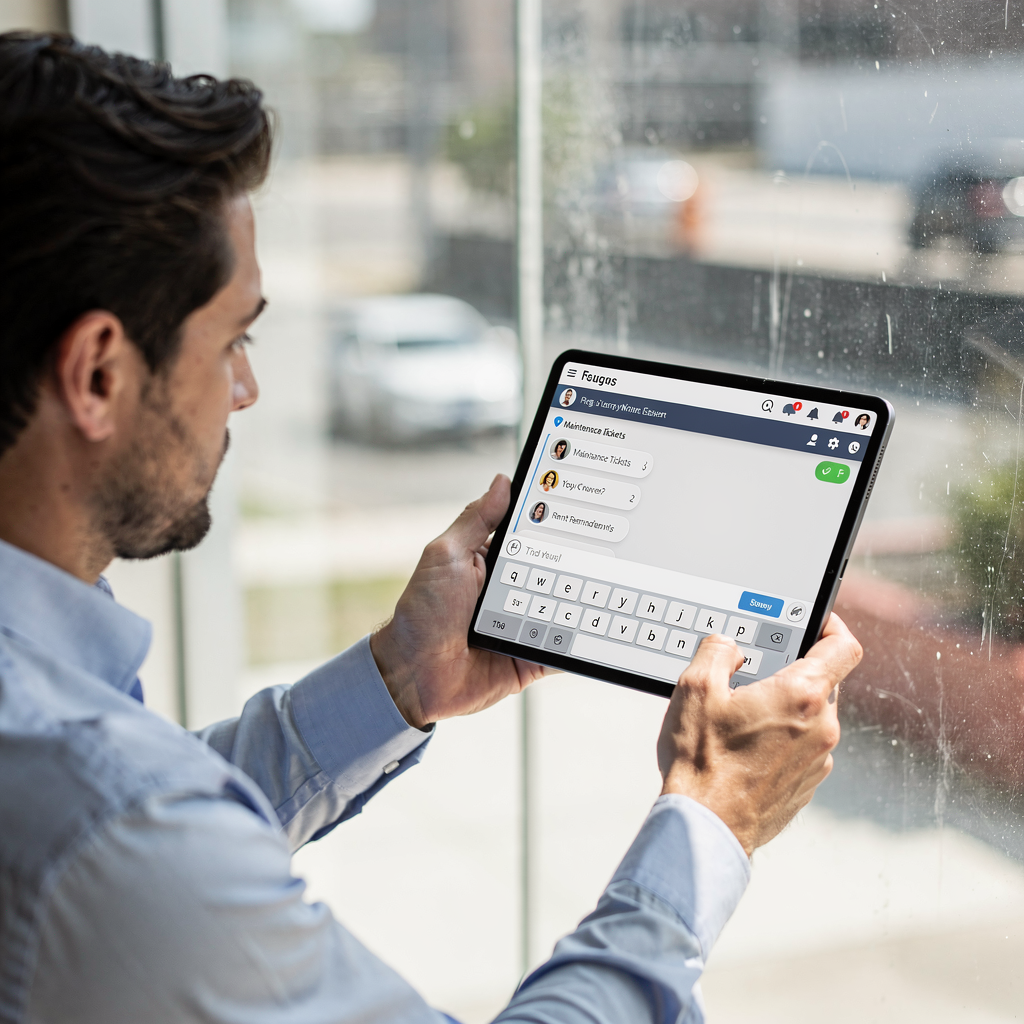
Property management teams can use ai-powered tools to automate repetitive requests and keep tenants informed 24/7. First, a tenant-facing ai chatbot answers common questions, accepts maintenance requests, and logs lease payment reminders. Then, automated rent reminders and digital reminders reduce missed payments. Also, virtual triage systems assess urgency and route a maintenance job to the right contractor. As a result, property managers spend less time on routine messages and more time on strategic property upkeep. This approach helps real estate firms standardise replies and reduce response time.
Predictive maintenance and analytics can cut energy and operating costs by up to roughly 20% in certain settings AI in Real Estate statistics. Therefore, ai for property management yields both tenant satisfaction gains and lower OPEX. For example, combining sensor data with ai-powered predictive models triggers maintenance before failures occur. Next, a property manager can monitor trends via dashboards and adjust budgets accordingly. Also, document workflows similar to Dotloop-style solutions automate lease signing, renewal notices, and compliance documentation. In addition, an ai tool that helps with document routing reduces manual errors and saves time during audits.
To implement quickly, integrate your tenant chatbot with CRM and set clear escalation rules. First, log every interaction for compliance and analytics. Second, map the systems that feed into a single source of truth so analytics are accurate. Third, pilot with one property type or portfolio. If data gaps appear, use middleware or standard data templates to bridge systems. Also, train staff on new workflows and include tenants in user testing. For real-world email and operations automation patterns, explore virtualworkforce.ai’s approach to automated logistics correspondence to see how thread-aware memory and data grounding cut handling time automated logistics correspondence. Finally, note the main risk: if data is fragmented, ai agents may provide incomplete answers. The fix is simple. Use middleware, create canonical data templates, and run regular data reconciliations.
Drowning in emails?
Here’s your way out
Save hours every day as AI Agents label and draft emails directly in Outlook or Gmail, giving your team more time to focus on high-value work.
AI assistant and ai agent for property management: schedule, maintenance and workflow automation
An ai assistant for property management coordinates calendars, schedules contractors, and automates repeat workflows across portfolios. First, a calendar automation module helps schedule inspections, property tours, and contractor visits. Second, it reduces double-bookings and cuts no-shows. Third, ai agents manage routing logic so contractors arrive on time and with the right tools. Also, the assistant updates tenants with property tours and maintenance windows. Consequently, property managers reclaim hours previously spent on manual scheduling and coordination.
Scheduling and automated workflows improve SLA adherence and tenant experience. For example, an ai agent for property management can trigger a predictive maintenance workflow the moment a sensor crosses a threshold. Then, the assistant creates a ticket, schedules the contractor, and sends the tenant a notification. Also, the system can prepare a lease renewal reminder and draft a renewal offer for manager approval. That capability reduces churn and improves occupancy. Furthermore, calendar integrations let the agent sync Outlook or Google calendars and push confirmations automatically. If you want a blueprint for integrating assistants and email automations, look at virtualworkforce.ai’s work with email lifecycle automation for ops teams ERP email automation patterns. These examples shine a light on how thread-aware memory keeps context across long conversations.
Quick deployment steps: centralise calendars, create SLA rules, and pilot with the top 10% of properties. Also, set fallback human contact points for high-complexity requests. Next, measure no-show rates, average repair time, and tenant satisfaction. Also, include an audit trail to meet compliance needs. The main risk is mismatched service expectations. The fix is clear tenant-facing messages, explicit SLAs, and a visible human fallback. Additionally, invest in ai training for staff so they trust and adopt the assistant. This approach helps real estate professionals deliver consistent service while scaling operations.
Analytics, valuation and real estate AI: ai real estate models for market insight and asset valuation
AI analytics reshape how administrators value assets and forecast markets. First, automated valuation models improve pricing accuracy and speed up offer decisions. Second, ai-driven analytics generate CMA reports, rental-yield predictors, and market heat maps for investment teams. For example, advanced ai platforms compare recent sales, local trends, and micro-market signals to generate a valuation. Also, the speed of ai means teams can run scenario analyses in minutes rather than days. As a result, administrators make faster, data-driven decisions that improve returns.
Morgan Stanley projects large efficiency gains from AI in real estate, estimating up to $34 billion by 2030 Morgan Stanley. Secondly, JLL Research notes that “AI has enormous potential to reshape real estate” and cites impacts from operational efficiency to new asset types JLL Research. Therefore, implementing ai real estate models gives administrators a measurable edge. Also, many valuation tools use ensemble models that combine regression, tree-based learners, and geospatial features. Then, administrators validate model outputs by comparing predictions to recent comparable sales.
Deployment checklist: gather standardised property and market data, validate outputs against recent sales, and set confidence thresholds. Also, sample-check valuations and flag low-confidence results for human review. The main risk is model bias and garbage-in problems. The fix is investing in data quality, diverse training data, and periodic revalidation. In addition, ensure explainability from vendors so stakeholders can trust recommendations. For teams exploring ai platforms and analytics, consider pilot projects that produce week-over-week insights. Finally, use A/B tests to measure whether ai-driven pricing improves close rates and reduces time-on-market.
Drowning in emails?
Here’s your way out
Save hours every day as AI Agents label and draft emails directly in Outlook or Gmail, giving your team more time to focus on high-value work.
AI use, ai solutions and management tools: integration, governance and real estate operations
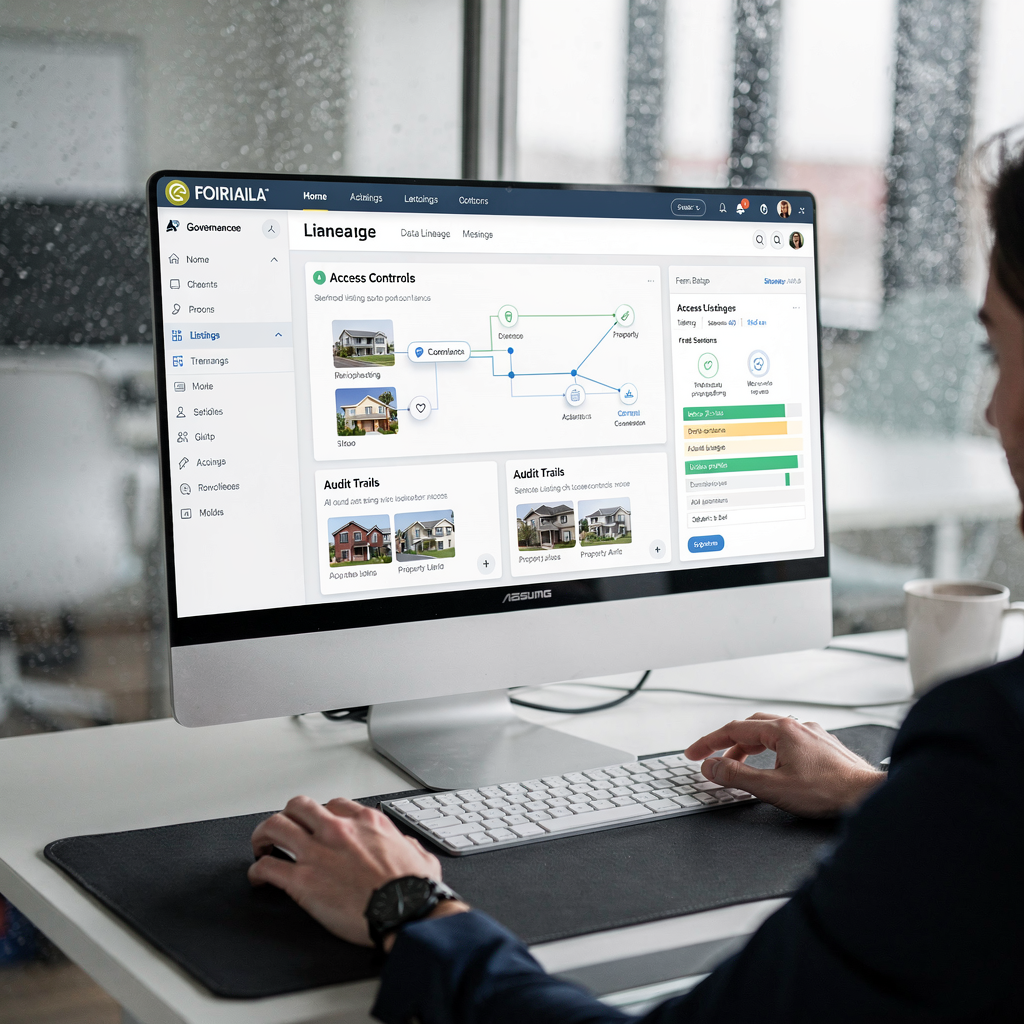
Scaling ai across operations requires integration, governance, and clear processes. First, many real estate firms cite lack of standardised data as a barrier to effective ai adoption Vistra insights. Second, more than half of agents report meaningful time savings once AI is integrated correctly Industry adoption study. Therefore, firms must design an architecture that combines an integration layer, a single source of truth for listings and tenants, and robust access controls. Also, vendors should provide audit trails and explainability so teams trace decisions back to data.
Components to include: APIs for data exchange, an ai platform that supports vendor SLAs, and role-based access to protect privacy. Additionally, create governance policies for consent tracking and privacy-by-design. Also, require vendors to document model training data and drift detection practices. Next, assign a data owner and document workflows that illustrate where ai agents integrate. For example, an agent builder that pushes property listings to a central system should log every change and keep a version history. If operations include heavy email volumes, explore email automation patterns to standardise replies and reduce manual triage. See virtualworkforce.ai for examples of end-to-end email automation that ground replies in ERP and SharePoint data email automation with Google Workspace.
Quick checklist: assign a data owner, document workflows, require vendor explainability, and run privacy audits. The main compliance risk concerns tenant data and consent. The fix is privacy-by-design, consent tracking, and periodic third-party audits. Also, create training for staff on new tools and governance. Finally, track KPIs tied to operations so ai solutions demonstrate real results and build trust across teams.
Use cases, real estate agents use and management tools for the real estate business: ROI, rollout plan and next steps
This chapter gives a concise playbook to help real estate administrators choose and roll out agentic AI across listings, property management, and commercial use. First, measure expected ROI in clear terms: time saved on admin, faster lead-to-showing times, improved occupancy, and lower OPEX. Second, define KPIs such as time per listing, lead-to-close, maintenance response time, and tenant satisfaction. Also, use clear tests like A/B description quality tests, lead response time tracking, and maintenance resolution rate comparisons. Then, assign a senior sponsor to accelerate decision-making and resource allocation.
Roadmap: 30/90/180 days. In the first 30 days pilot small use cases like auto-generated descriptions and an ai chatbot for tenant FAQs. Next, in 90 days scale successful agents and integrate them with your CRM and scheduling systems. Then, by 180 days integrate analytics, governance, and vendor SLAs across portfolios. Also, schedule quarterly reviews and continuous ai training sessions for staff. If you need templates for operational email automation and scaling without hiring, look at virtualworkforce.ai’s resources on how to scale logistics operations without hiring for model patterns and ROI logic how to scale operations.
Final checklist: define KPIs, secure a sponsor, pick one supplier per use case, train staff, and schedule quarterly reviews. The main risk is poor adoption. The fix is to tie AI metrics to agent workflows and reward early adopters. Also, invest in change management and hands-on coaching. For procurement, require explainability, data access, and trial periods. Examples of ai-driven automation include virtual staging, lead-calling ai, and predictive maintenance platforms. Finally, keep governance tight, monitor model drift, and iterate. This approach helps real estate pros adopt ai with measurable outcomes and real results.
FAQ
What is an AI agent and how does it work in real estate administration?
An AI agent is an autonomous software component that runs tasks and workflows on behalf of users. It can gather data, draft communications, and trigger actions like scheduling or ticketing. In real estate, ai agents handle tasks such as lead qualification, listing creation, and basic tenant communications.
How quickly can we automate listings and showings?
Speed depends on data readiness and integration complexity. A small pilot that automates descriptions and showing schedules can launch in 30 to 60 days. Also, more complex integrations with ERP or property systems may take 90 to 180 days to scale.
Will AI replace property managers or property management teams?
No. AI augments teams by automating routine work so staff focus on high-value activities. For example, ai assistants can automate scheduling and reminders while property managers handle exceptions and relationship work.
What are common risks when implementing ai solutions?
Main risks include data fragmentation, model bias, and tenant privacy issues. The fixes are standardised data templates, periodic model revalidation, and privacy-by-design governance with consent tracking.
How can we measure ROI from AI pilots?
Track time saved per task, lead-to-showing times, maintenance resolution rates, and occupancy changes. Also, run A/B tests for description quality and lead response times to isolate impact.
Do AI agents handle tenant communications and rent reminders?
Yes, ai chatbots and automated reminder systems can send rent reminders, receive maintenance requests, and triage urgency. However, critical or complex issues should route to humans via clear escalation rules.
What should we pilot first in a rollout?
Start with small, high-impact use cases such as automated descriptions, lead-qualification, and a tenant FAQ chatbot. These pilots deliver fast wins and build confidence in ai-driven automation.
How do we ensure compliance when using AI?
Implement consent tracking, data minimisation, and audit trails. Also, require vendors to provide explainability and drift detection. Regular third-party audits help maintain compliance over time.
Can AI improve valuation and market analytics?
Yes, AI models can produce faster and often more accurate valuations, CMAs, and market heat maps. Still, model outputs should be validated against recent sales and flagged for human review when confidence is low.
Where can I learn more about integrating AI into operations like email and scheduling?
Explore vendor case studies and operational patterns used by tools that automate email lifecycles and calendar workflows. For a practical example of end-to-end email automation that grounds replies in operational data, see virtualworkforce.ai’s examples of automated email handling and ERP integration.
Drowning in emails?
Here’s your way out
Save hours every day as AI Agents label and draft emails directly in Outlook or Gmail, giving your team more time to focus on high-value work.