


ai in real estate: market growth, PwC adoption and why real estate agents use ai
The AI surge in property markets has real numbers behind it. The AI in real estate market is projected to reach about $1,303.09 billion by 2030, growing at a CAGR near 33.9%. This growth explains why many brokers look hard at automation and new services. Also, businesses broadly are adopting AI: roughly 79% of companies use AI agents, and about two‑thirds of them can quantify benefits like time savings and higher satisfaction. In commercial real estate, adoption momentum appears strong: 92% of occupiers and 88% of investors have started or plan AI pilots.
Why does this matter to a real estate agent? First, AI reduces repetitive tasks so brokers spend more time on high‑value client work. Second, AI raises response speed and therefore conversion. Third, automated valuation and predictive pricing give faster, data‑driven guidance at listing and offer stages. For example, conversational systems increase leads by roughly 62% in field deployments, which directly improves ROI.
To decide whether to adopt, track a short ROI checklist. Measure leads, response time, conversion rate, and time saved per agent. Then, compare cost per lead and time saved against fees for tools. Also, track qualitative metrics like consistency of replies and hand‑off errors. If you need operational automation that handles high email volumes, see our approach to automated email lifecycle management at virtualworkforce.ai/virtual-assistant-logistics/. It shows how AI streamlines repeated communications and reclaims time for selling.
Start small and test. First, run one pilot on lead qualification or scheduling. Second, measure three to six metrics from the checklist. Third, expand if conversion and response time improve. This pragmatic method gives real estate companies an evidence base before wide rollout. Overall, the business case for AI rests on measurable gains: faster valuation insight, higher lead conversion, and meaningful time savings for agents and brokers.
ai tools for real estate: listing descriptions, ai-powered virtual tour and virtual staging to boost lead generation
High-quality listings win attention. Use AI to raise listing quality and to scale content creation. AI writing tools produce consistent listing descriptions, and they speed up floorplan text and feature lists. Listing descriptions written by AI save time and keep style consistent across hundreds of listings. Also, AI can extract highlights from agent notes and turn them into publish-ready copy within minutes. For agents and brokers who need volume and speed, that matters.
Visuals also convert. AI-powered virtual tour capture and virtual staging lift perceived value and time on page. A staged image or a smooth virtual tour increases buyer engagement. For example, AI virtual staging removes furniture, inserts curated décor, and resizes lighting to match buyer profiles. Virtual staging and virtual tour work together to improve inquiry rates. Field evidence shows conversational and engagement tech can raise interest and lead counts by over 62%, and visual AI adds to that uplift.
When selecting tools, evaluate output quality, cost, speed, and photo realism. Consider vendor examples for context: virtual tour platforms, virtual staging vendors, and AI copy generators. Tools for real estate agents include virtual staging services and generative AI for text. Also, compare turnaround time and file formats, and ensure the workflow can connect to your MLS and CRM. If you want to automate open-house follow ups and booking, consider a vendor integration with your calendar and CRM.

Practical checklist: (1) test one listing with AI-written listing descriptions and staged photos; (2) measure click-through, inquiry rate, and time on page; (3) compare cost per lead against manual staging and copywriting. If you need a quick example of end-to-end automation that reduces manual replies and triage in operations, review how our platform automates email workflows at how to scale logistics operations with AI agents. While geared to operations, the same principles apply for transaction and listing communications in real estate.
Drowning in emails?
Here’s your way out
Save hours every day as AI Agents label and draft emails directly in Outlook or Gmail, giving your team more time to focus on high-value work.
ai agent and chatbots: how agents use ai virtual assistants to nurture leads and automate crm workflow
AI agent and chatbot systems free up human time by qualifying leads and scheduling viewings. An ai agent can answer basic questions 24/7, ask qualifying questions, and push structured data back into your CRM. This pattern—lead → bot → score → assign—lets teams automate first contact and only escalate qualified leads to humans. Also, AI can sync with calendars to schedule property viewings and to reduce double bookings. This reduces friction and helps agents focus on closing.
Chatbots handle common queries and preserve history. They create a conversation trail and update the CRM record after each interaction. Use an ai assistant that writes clear notes and creates tasks for follow up. The bot should integrate with your CRM, so you avoid data silos and manual copy‑paste. A well‑designed ai chatbot improves response time and increases qualified leads.
Practical automation examples include buyer intent scoring, automatic scheduling, and personalized follow up emails that nurture prospects over days. The workflow might route high‑intent leads to a senior agent, while low‑intent leads stay in nurture sequences. Track response time, qualified leads, booked viewings, and hand‑off accuracy to measure success. Also, include hand‑off rules to ensure the human agent receives context and the bot closes out its tasks before the transfer.
Tools to consider vary. Some vendors offer lightweight chat widgets that connect to MLS feeds. Others deliver deeper CRM automation and scripted hand‑offs. Real estate professionals can choose based on integration, language support, and analytics. For teams overwhelmed with inbound email and messages, look at automation approaches that reduce average handling time, similar to our results in operations where teams cut handling time from ~4.5 to ~1.5 minutes per email. That method helps real estate teams answer faster and stay consistent.
ai marketing and tools for agents: ad optimisation, personalised campaigns and ai marketing tools that convert
AI marketing adapts ads and creative to audience signals. With dynamic creatives and automated targeting, brokers reduce wasted ad spend and increase lead relevance. AI platforms test headlines, images, and audiences across hundreds of micro‑segments. Then they feed back performance to refine targeting. This process lowers cost per conversion and increases the likelihood of qualified inquiries.
Personalisation matters. AI can personalize email content, dynamic landing pages, and retargeting feeds with MLS data. Feed your CRM and MLS to ad platforms so campaigns use up‑to‑date property information. Run scaled A/B testing with AI to find winning combinations. Start with one campaign, set a clear KPI, and measure CAC and lead quality. Small experiments can show measurable gains quickly.
Examples of effective tactics include automated ad creative generation, dynamic retargeting using recent listings, and personalized drip campaigns that match buyer behavior. AI marketing tools can craft multiple ad variants in minutes, and they can optimize bids across networks. For agencies that want to test an AI marketing playbook, the quick win checklist is: run one targeted campaign, measure conversion, and then iterate.
Vendors range from ad optimization platforms to CRM-integrated email engines. If you want to see automated correspondence patterns in action, review our guide to automated logistics correspondence to understand reliable hand‑offs and data grounding. That approach shows how clean integrations and governance reduce errors and improve outcomes. In practice, agents who apply AI to ads, email and retargeting often see better ROI and higher lead quality.
Drowning in emails?
Here’s your way out
Save hours every day as AI Agents label and draft emails directly in Outlook or Gmail, giving your team more time to focus on high-value work.
ai-powered real estate: applications of ai for valuation, predictive pricing and real estate business insights
AI-powered valuation and predictive pricing help brokers and investors set smarter prices faster. Automated valuation models (AVMs) and predictive models use sales history, property attributes, and market trend data to produce price guidance. These tools speed offer preparation and support negotiation with data. For landlords and investors, predictive models estimate churn and tenant risk, which informs leasing strategy.
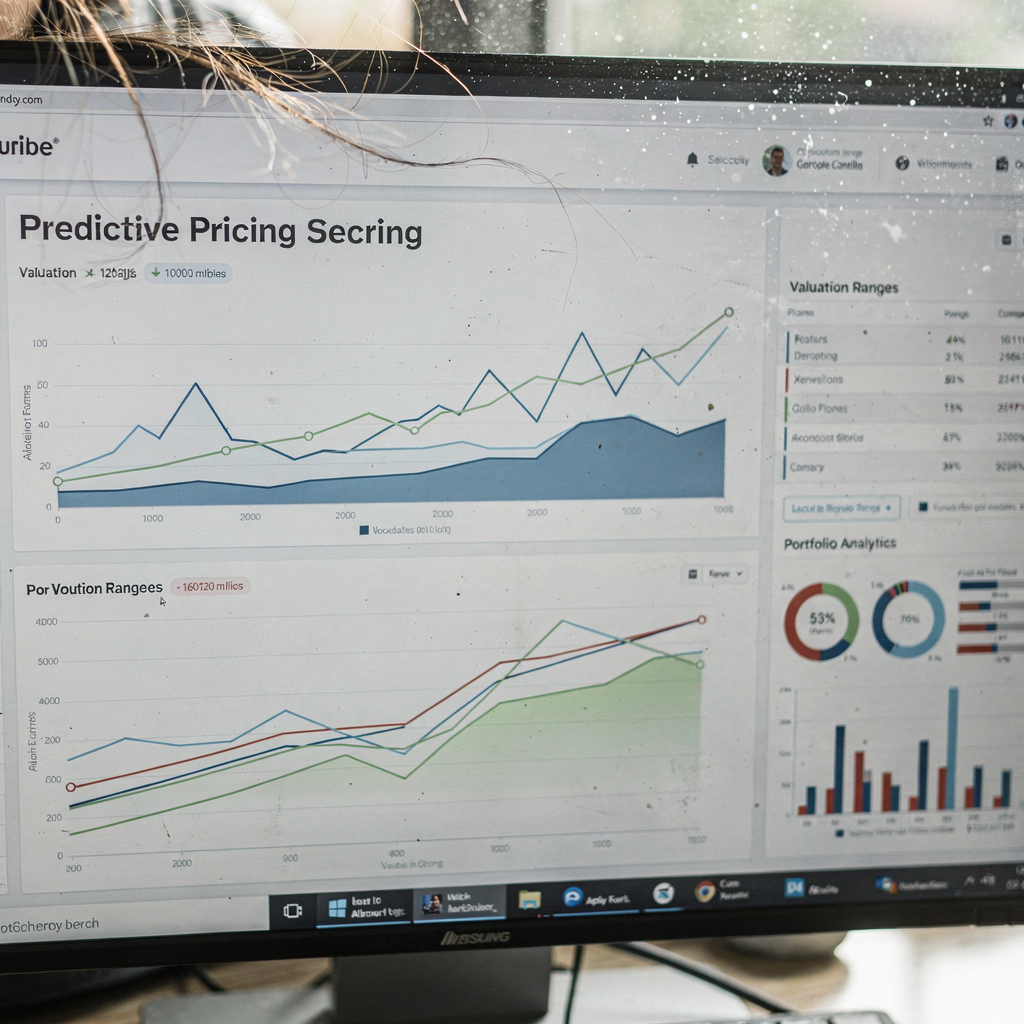
Applications of AI include AVMs, price elasticity models, and portfolio analytics for investors. Real results include faster offer guidance, smarter pricing strategies, and improved screening of opportunities. However, data quality and governance matter. Feed reliable inputs—recent comps, tax records, MLS updates, and local economic indicators—to ensure models perform. Also, monitor model drift and validate predictions against real transactions.
Business value emerges in advisory and back‑office functions. For brokers, faster valuation reduces time to present offers. For investors, portfolio analytics improve screening and reduce due diligence time. If you want to apply AI to your workflow, define the inputs, set performance thresholds, and run pilots with segmented data. That way you prove uplift before scaling to the whole business.
AI tools for real estate can integrate into existing reporting and CRM systems. Select solutions that explain predictions and provide confidence intervals so agents trust outputs. With clear governance and testing, AI creates a reliable decision layer that supports pricing and strategy. Responsible AI use and regular audits keep predictions grounded and useful for daily decision‑making.
agents can use best ai tools: selection, integration with crm, compliance and measuring roi for real estate professionals
Choose the right AI with clear criteria. Evaluate accuracy, integration with CRM, security, vendor support, cost, and ease of use. Test integrations for calendar sync, MLS access, and CRM updates. Define hand‑off triggers so bots assign new leads to humans only when the score meets your rule. Then pilot and iterate.
Integration checklist: connect to CRM and calendar, link MLS feeds, define hand‑off triggers, and test sample workflows. Start with a pilot group of agents and a small set of listings. Run the pilot for a defined period and measure baseline metrics. Typical pilots run 30 to 90 days before a scale decision. If uplift meets targets, expand to more agents and listings.
Compliance and ethics cannot be overlooked. Ensure data protection, consent for messaging, and transparency with clients. Use vendors that offer audit logs and clear data governance. Real estate professionals should insist on traceability when AI drafts messages or updates records. Also, document escalation paths so sensitive cases get human review.
Measure ROI with baseline metrics, pilot duration, and expected uplift ranges. Track leads, response time, conversion rates, booked viewings, and time saved per agent. Decide thresholds for scale or stop. For teams focused on email and operations, compare to examples where automation cut handling time significantly and improved consistency. If you want operational examples and ROI frameworks, review our logistics ROI discussion at virtualworkforce.ai/virtualworkforce-ai-vs-traditional-outsourcing-logistics/ and our ROI guide for scaling operations at virtualworkforce-ai-roi-logistics.
Finally, keep a short vendor comparison table: accuracy, integration score, time to value, and monthly cost. Run a security and privacy check. Then choose the right AI and move from pilot to production with clear controls and regular reviews. This process helps agents stay competitive without adding risk.
FAQ
What is an AI agent in real estate?
An AI agent is software that performs tasks like lead qualification, scheduling, answering common questions, and drafting messages. It automates routine steps so agents spend more time on client relationships and closing deals.
How can AI improve listing descriptions?
AI writing tools generate clear, consistent listing descriptions quickly by extracting property details and features. This saves time and keeps messaging uniform across many listings while allowing human editing for tone.
Do AI chatbots integrate with my CRM?
Yes, many chatbots connect to CRM systems to push structured contact data and update records. Proper integration enables workflows like lead → bot → score → assign so teams can automate qualification and hand‑offs.
Are there measurable benefits from AI in real estate?
Yes. Industry reports show broad adoption and measurable benefits. For instance, conversational AI deployments have increased leads by about 62%. Also, 79% of businesses report using AI agents and quantifying benefits in efficiency and satisfaction (PwC-related data).
What should brokers measure in an AI pilot?
Track leads, response time, conversion rate, booked viewings, and time saved per agent. Also measure quality metrics like hand‑off accuracy and consistency of replies. Compare these to baseline numbers before the pilot.
Can AI help with valuation and pricing?
Yes. Automated valuation models and predictive pricing tools analyze comps and market signals to produce guidance. They speed offer preparation and inform negotiation strategies, provided the input data is high quality.
What privacy issues should I consider?
Ensure consent for messaging, secure data handling, and vendor audit logs. Use responsible AI use practices and maintain clear data governance to keep client information safe and compliant.
Will AI replace real estate agents?
No. AI automates repetitive tasks and improves efficiency, but human judgment remains crucial for negotiation, relationship building, and complex decision-making. AI helps agents focus on higher-value activities.
How fast can a brokerage see results from AI?
Small pilots can show early wins in 30 to 90 days for tasks like lead qualification or ad optimisation. Larger integrations, such as AVMs and portfolio analytics, may take longer due to data work and governance.
Where can I learn more about automating communications with AI?
Start with vendor case studies and implementation guides that cover CRM integration and email lifecycle automation. For operational examples and ROI thinking that transfer to real estate communications, check our guides on scaling operations and automated correspondence at virtualworkforce.ai.
Drowning in emails?
Here’s your way out
Save hours every day as AI Agents label and draft emails directly in Outlook or Gmail, giving your team more time to focus on high-value work.