


renewable — What AI agents do for renewable energy equipment
AI agent software now acts on sensor streams, weather feeds, and grid telemetry to run equipment such as solar inverters, wind turbines, and battery controllers. First, an AI agent gathers time series from SCADA and IoT sensors. Next, it combines that with forecasts and market signals to make short-term control decisions. In practice, AI agents for renewable energy learn patterns of degradation, shading, and turbulence and then tune settings to improve output. For example, machine learning can raise forecast accuracy by about 10% which helps scheduling and market bids (Omdena). Also, live deployments report annual yield recovery of roughly 1–3% when agents adjust curtailment or inverter settings (Omdena).
The core benefits are clear. Operators see fewer unplanned outages, higher uptime, and faster responses to faults. AI agents can detect anomalies in performance curves and then trigger inspection tasks before equipment fails. As a result, teams reduce downtime and extend asset life. This improves ROI, lowers levelized cost of energy, and supports renewable energy integration across grids. Utility and distributed fleets both gain from this automated vigilance.
Key use cases include predictive maintenance, automated fault detection, energy storage control, and dynamic load balancing. Predictive maintenance spots early signs of wear. Automated fault detection isolates failing components. Storage control schedules charging to maximize asset life and market value. Dynamic balancing coordinates supply and demand across distributed energy resources and flexible loads. In addition, AI helps with reporting, dispatch, and stakeholder communication. For example, operations teams can pair these agents with no-code assistants to speed email workflows about outages and parts orders, cutting administrative drag and helping energy companies focus on core operations virtual assistant for logistics. Finally, this approach supports a cleaner, more resilient grid and advances the energy transition.
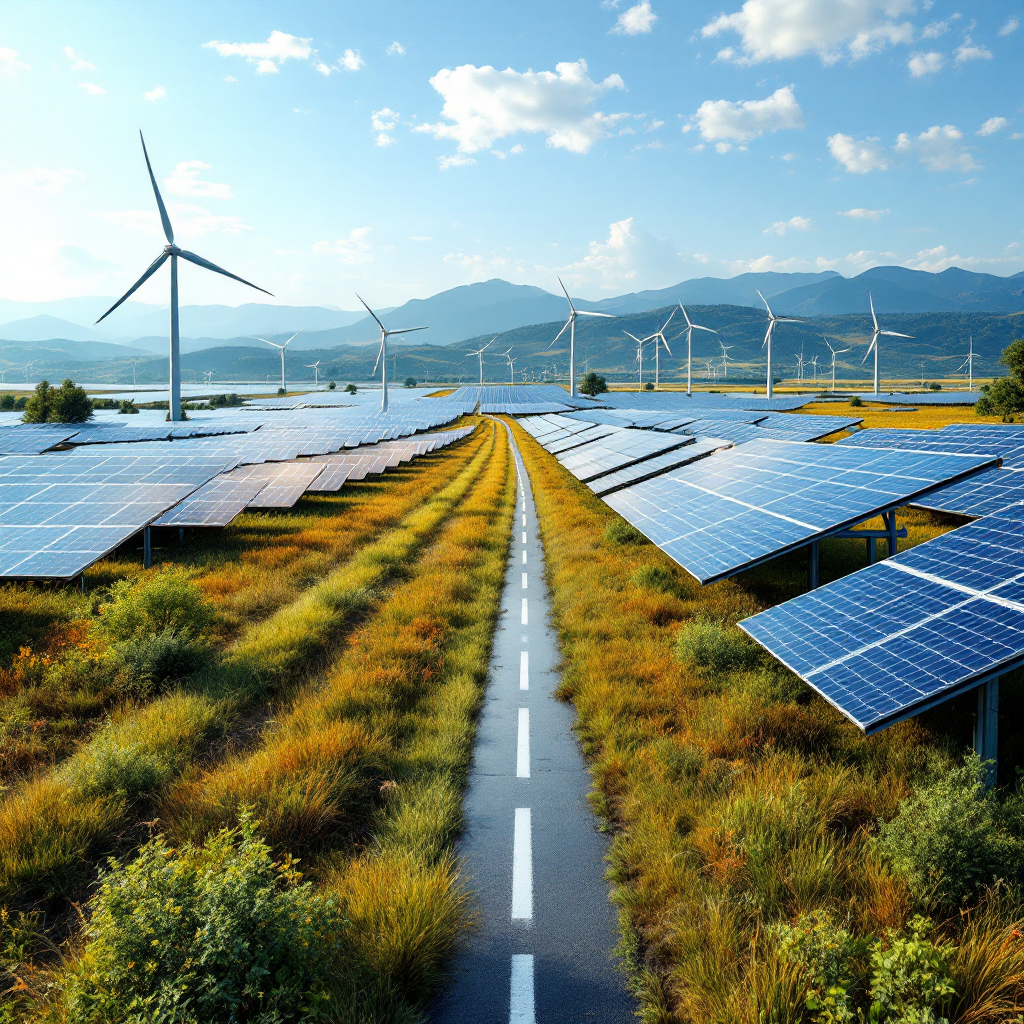
ai agent — Predictive maintenance to prevent equipment failures
Predictive maintenance uses data to predict equipment failures before they happen. First, AI models analyze vibration, temperature, oil and electrical signals. Then the models flag early anomaly patterns and predict remaining useful life. These alerts let crews replace parts at planned times instead of reacting to outages. This yields measurable savings. Pilot programs report dramatic reductions in truck rolls, trimming maintenance travel by as much as 60% and cutting OPEX and carbon from logistics (Omdena). With fewer emergency repairs, teams allocate resources more efficiently and forecast maintenance spend accurately.
How it works in practice is straightforward. Sensors stream device metrics to edge preprocessors. AI models then score each asset for risk and urgency. Scores trigger work orders, spare-part reservations, or human-in-the-loop inspections. This mix of automation and oversight reduces false positives and protects safety. In complex fleets, an ai platform coordinates schedules across sites, priorities, and technician skills. That improves throughput and avoids cascading failures.
The outcome touches three areas. First, less downtime raises energy output across a fleet. Second, longer component life reduces replacement capital. Third, predictable maintenance creates strong ROI through avoided failures and higher uptime. For teams that manage heavy email traffic about outages, pairing predictive alerts with automated correspondence can speed stakeholder updates and part orders. Our company helps by drafting context-aware emails that pull order numbers, ETA, and system status from ERP and TMS sources to accelerate repairs automated logistics correspondence. Lastly, human agents still verify high-risk interventions. This human-in-the-loop approach balances speed and accountability and keeps operations safe and compliant.
Drowning in emails?
Here’s your way out
Save hours every day as AI Agents label and draft emails directly in Outlook or Gmail, giving your team more time to focus on high-value work.
ai agents for renewable energy — Optimise energy storage and energy production
Energy storage control is a prime application of agentic intelligence. AI agents schedule battery charge and discharge to extend life, provide frequency and capacity services, and shave peaks. Smart dispatch prioritizes cycles that maximize revenue while limiting battery stress. In this way, operators can optimize energy storage systems and extract market value from arbitrage, reserve provision, and peak avoidance.
At the same time, production-side tuning recovers lost yield. AI models adjust tilt, curtailment thresholds, and inverter reactive power to smooth output and avoid clipping. These small adjustments typically recover between 1–3% of annual yield, which adds meaningful revenue across large parks (Omdena). Also, agents can throttle turbines or shift storage to match energy demand curves and market prices, increasing participation in energy markets.
Financial benefits extend beyond recovered generation. Better forecasts and smarter storage dispatch reduce imbalance fees and improve bidding confidence. For distributed portfolios, agents coordinate multiple storage systems and rooftop assets, acting as a virtual power plant to secure grid services. This coordination supports renewable energy sources like solar and wind, integrating them more predictably into local grids.
For operators and energy companies, this means more stable cash flows and fewer penalties from forecast errors. To operationalise these gains, teams should start small with a pilot cluster and then scale controls to more sites. Our no-code approach simplifies that path by connecting email and ERP workflows with control platforms, so teams can step up asset coordination without custom coding how to scale logistics operations with AI agents. This reduces friction between operations and commercial teams and helps energy producers capture full market value.
ai agents in renewable energy — Improve forecasting and energy production and distribution
Forecasting is central to grid stability. Machine learning combined with satellite and weather data can lift day-ahead and short-term forecast accuracy by roughly 10%, improving commitment and dispatch decisions (Omdena). Better forecasts lower the reserves a system needs and cut balancing costs.
Beyond forecasting, agents coordinate distributed generation and demand response to stabilize local grids. They shift flexible loads, schedule storage, and issue setpoints to distributed energy resources. This orchestration reduces reliance on fossil backup and increases renewable penetration. For example, community-scale agents can pivot storage to cover sudden cloud cover over solar arrays and then restore charging when output recovers.
System-level benefits are tangible. Fewer spinning reserves are needed. Balancing costs fall. Renewable energy integration becomes simpler. In practice, integrating these agents requires careful testing, secure APIs, and human oversight. The International Energy Agency points out that AI could reshape how grids operate but must be managed to control the energy consumption of AI itself (IEA). That means choosing energy-efficient models and running workloads on renewable-powered data centers where possible.
To connect operations teams with these capabilities, automation must also tackle email load and cross-team handoffs. For instance, operations and commercial teams can use automated drafting tools to generate bid responses and outage notices, drawing data from ERP and WMS sources so communication is fast and accurate AI in freight logistics communication. This reduces delays and ensures the right teams act on forecast changes. Overall, agents that link forecasting, storage, and dispatch improve the stability and economics of renewable energy production and distribution.

Drowning in emails?
Here’s your way out
Save hours every day as AI Agents label and draft emails directly in Outlook or Gmail, giving your team more time to focus on high-value work.
energy companies — How to implement ai agents and the integration of ai agents
Practical implementation starts with high-quality sensor and SCADA data. First, audit telemetry to find gaps and noise. Second, fix sampling, timestamps, and labels. Then run pilots on a single asset class to validate models and processes. A staged rollout reduces operational risk and builds confidence. After a successful pilot, teams can scale ai systems across sites using APIs and a mix of edge and cloud compute.
Organisational change matters. Combine data scientists, operations engineers, and IT in a cross-functional squad. Define KPIs such as uptime, yield recovery, truck rolls, and forecast error. Use those metrics to guide expansion. Also, standardise deployment pipelines so models can be retrained and versioned safely. To integrate ai you must design role-based access, audit trails, and escalation workflows that keep humans in control.
Choose an ai platform that supports both local controls and central oversight. That accelerates time to value and reduces integration friction. When you implement ai agents, aim for modular services: forecasting, anomaly detection, dispatch, and comms. This modularity lets teams swap components without interrupting operations. To scale ai, embed automation into everyday workflows. For example, link predictive alerts to ticketing systems and to automated email drafting tools so supply chain and procurement teams react faster. Our no-code connectors pull context from ERP, TMS, and SharePoint to draft and send operational emails, reducing handling time and ensuring consistent information when parts or technicians are needed ERP email automation for logistics.
Finally, security and compliance are essential. Validate models, run shadow tests, and require human sign-off for high-risk controls. With these safeguards, integration of renewable assets becomes repeatable, measurable, and safe.
energy operations — Challenges, ai adoption and the power of ai for renewable energy systems
Adoption challenges remain significant. Data quality issues, legacy stacks, and integration complexity slow projects. Many teams lack labelled failure data, which limits supervised learning. Additionally, the energy footprint of AI compute raises net sustainability questions. Research shows that data centers consume a material share of electricity, so operators must consider energy usage and efficiency when designing solutions (MIT Technology Review). The IEA likewise warns that managing the environmental cost of AI is critical to ensuring a positive net benefit (IEA).
Despite hurdles, interest is strong. A BCG survey found that nearly 60% of energy company leaders expected tangible results from AI within a year, which underscores urgency and optimism (BCG). To accelerate adoption, focus on quick wins: reduce truck rolls, recover yield, and boost forecasting. Small wins build credibility and funding for broader programmes.
Looking forward, technical and organisational trends will improve outcomes. Energy-efficient models, renewables-powered data centers, and tighter agent–grid integration will reduce costs and increase reliability. Agentic ai systems that act autonomously but with clear guardrails will support real-time control and commercial optimisation (Parloa). In parallel, energy companies must train ops staff to work with AI, and invest in cross-disciplinary teams.
AI agents are revolutionizing how operators run assets, reducing waste and improving forecast-driven scheduling. They help energy companies face growing variability in supply and surge in energy demand while keeping grids resilient. By addressing data, governance, and compute efficiency, the renewable energy sector can capture the potential of ai and build a more sustainable energy future.
FAQ
What is an AI agent in the context of renewable energy?
An AI agent is autonomous software that learns from sensor, weather, and grid data to make operational decisions for equipment like inverters and batteries. It automates monitoring, prediction, and control to improve uptime and energy output.
How do AI agents prevent equipment failures?
AI models detect anomalies in vibration, temperature, and performance logs and predict faults before they occur. Teams then schedule maintenance proactively, which reduces emergency repairs and extends asset life.
Can AI agents improve forecasting for solar and wind?
Yes. Machine learning using satellite and weather inputs can raise short-term and day-ahead forecast accuracy, aiding bidding and scheduling decisions. Improved forecasts reduce balancing costs and reserve needs.
Do AI agents help optimise energy storage systems?
They do. AI schedules charge and discharge cycles to maximise battery life and market value, and can dispatch storage to provide grid services or shave peaks. This improves revenue and reduces degradation.
What are the main barriers to AI adoption in energy operations?
The biggest challenges include data quality, legacy systems, integration complexity, and the energy consumption of AI compute. Addressing governance and model verification is also essential.
How should energy companies start implementing AI agents?
Start with a pilot on a single asset class, ensure high-quality sensor data, and measure KPIs such as uptime and forecast error. Then scale using APIs and a hybrid edge/cloud architecture with human oversight.
Are there measurable benefits from using AI agents?
Yes. Studies report forecast accuracy improvements and yield recovery, and pilots document large reductions in truck rolls and OPEX. These gains translate into stronger financial performance.
How do AI agents interact with human teams?
AI agents usually operate with human-in-the-loop controls for high-risk actions and send prioritized alerts for technicians. They also integrate with communications tools to speed coordination and approvals.
What about the energy footprint of AI in renewable operations?
Running AI models consumes energy, and data centers can be significant power users. To ensure net sustainability gains, deploy energy-efficient models and use renewable-powered compute where possible.
Can operators use no-code tools to manage AI-driven workflows?
Yes. No-code platforms can connect AI outputs to email, ERP, and ticketing systems, helping teams automate notifications and parts orders without custom engineering. That reduces response times and keeps operations aligned.
Drowning in emails?
Here’s your way out
Save hours every day as AI Agents label and draft emails directly in Outlook or Gmail, giving your team more time to focus on high-value work.