


ai in restaurants: why phone answering matters
AI is changing how restaurants work. Also, it changes how guests make reservations. First, define an AI agent. An AI agent is an autonomous system that decides and acts across data sources. It connects POS, booking engines, menus, and online ordering platforms. In contrast, rule-based automation follows simple if-then scripts. AI systems learn patterns and act without step-by-step human instructions. This difference explains why ai agents for restaurants can handle complex flows across channels. For example, Salesforce explains that ai agents “assess data from multiple sources and determine the best course of action” AI Agents for Restaurants: Benefits & Use Cases | Salesforce. And Popmenu reports that 79% of restaurant operators have implemented or are considering AI Popmenu toolkit: The AI in Restaurants Report. Therefore, adoption rates are rising fast.
Also, market forecasts back this trend. Deloitte projects the global AI market will grow from $235 billion in 2024 to over $631 billion by 2028 AI in restaurants | Deloitte Insights. Consequently, restaurants that plan for AI now can capture early gains. Many restaurants miss calls during busy shifts. Studies show restaurants can miss about 20–30% of calls at peak times. Missed calls turn into missed bookings and lost revenue. So phone answering matters for top-line recovery.
Also, phone answering matters because many guests still prefer a call. Guests call for hours and directions, to ask about menu items, or to request special seating. In a fast-paced environment, human staff cannot always answer every call. AI can step in. A phone answering solution that integrates with reservation systems avoids double-booking. In practice, agents for restaurants answer routine questions, confirm availability, and pass complex inquiries to human staff. This model keeps the restaurant’s phone line live. It preserves the restaurant’s voice. It protects service standards. In addition, it helps restaurants optimize staffing when peak shifts hit. Finally, if you want practical examples and system integration patterns, see our guide on scaling operations without hiring at virtualworkforce.ai/how-to-scale-logistics-operations-without-hiring/ which explains similar automation concepts applied to email and operational workflows.
ai agent & restaurant ai agent: how voice ai handles calls
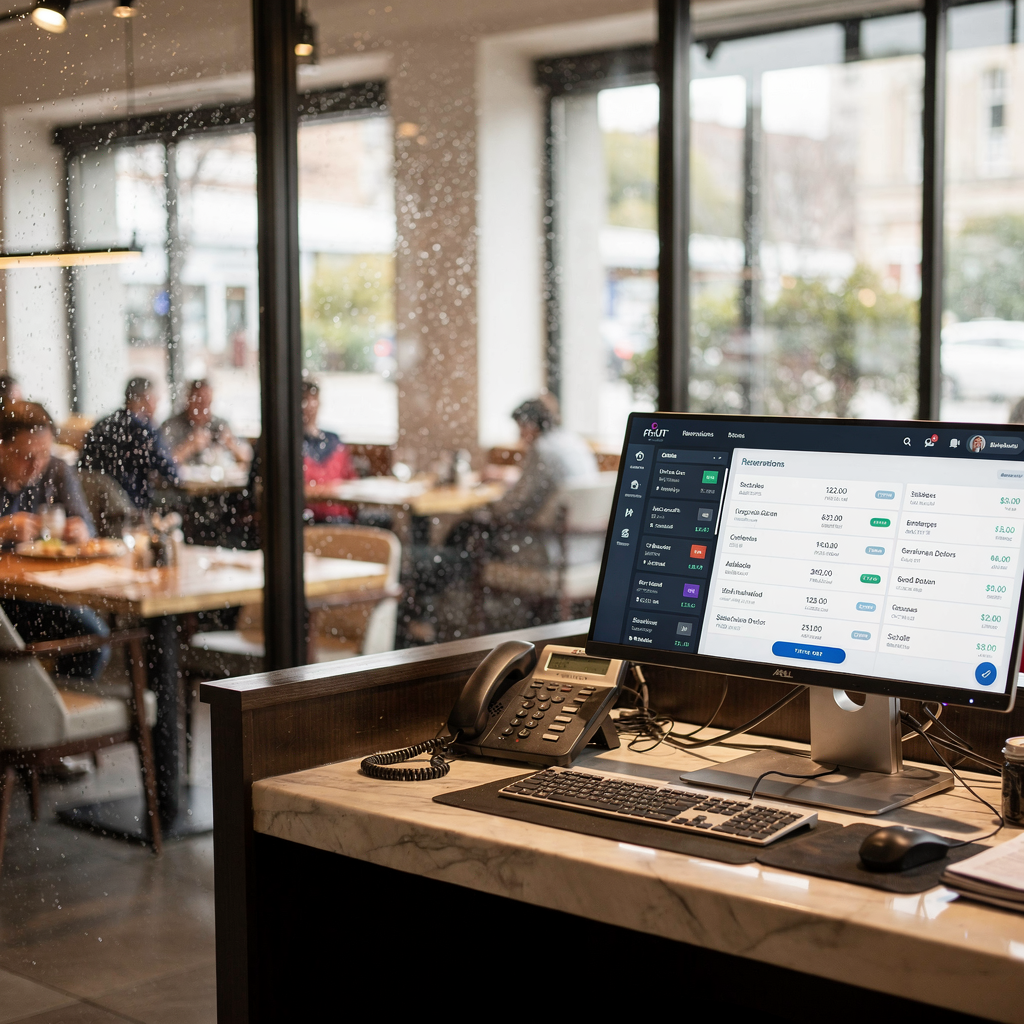
AI answers the phone 24/7. Also, it confirms availability. It takes reservations and logs cancellations. More so, it handles basic FAQs and routes complex questions to staff. A restaurant ai agent connects with the reservation systems and the POS system. This connection updates availability in real-time and prevents double-booking. For example, when a guest asks about menu items, the assistant can pull data from menus and past customer preferences to suggest options. In this way, the ai agent can improve the dining experience and increase average checks by suggesting add-ons or promotions.
Voice AI technologies vary. Some systems use fully conversational speech recognition and natural language understanding. Others use a hybrid script with smart decisions. In deployments, voice ai reduced handling time and increased booking conversions. A number of operators report automating hundreds of bookings each month. Some teams recovered the equivalent of automated bookings valued at around £140k per month in recovered revenue through better phone coverage and fewer missed calls. Also, studies show up to a 30% reduction in production mistakes and wait times when AI optimizes workflows PDF The Role of Artificial Intelligence in Restaurants. These facts demonstrate measurable impact.
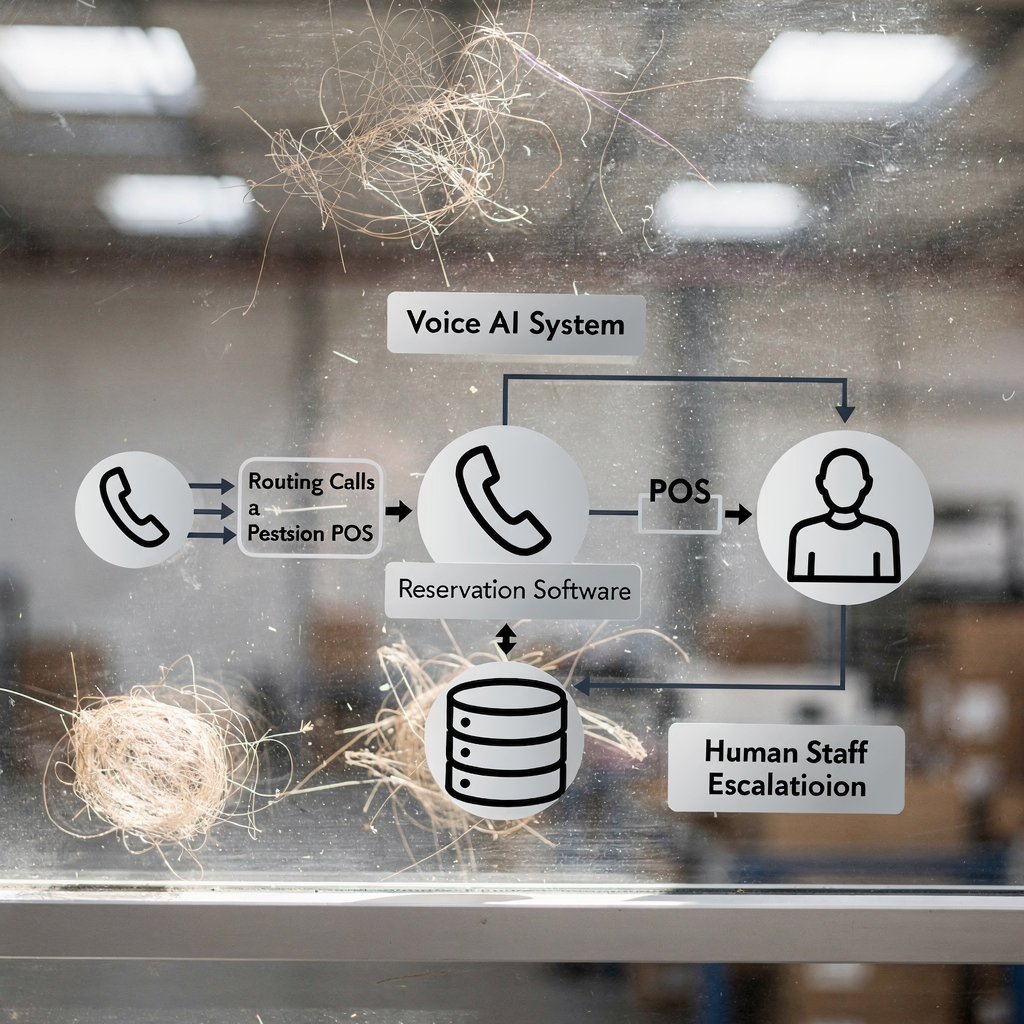
Technically, the restaurant ai agent ties into point-of-sale, table management, and online ordering. When a guest calls to place phone orders, the assistant can create an order in order management and push it into the pos system. It can also update reservation management and the waitlist. In addition, integration ensures the agent respects existing rules for staff scheduling and capacity. For a vendor-neutral take on implementing AI in logistics and operational systems, see virtualworkforce.ai/ai-in-freight-logistics-communication/ which outlines deep system grounding and escalation patterns that apply when integrating AI into restaurant workflows. Finally, the restaurant ai agent frees staff to focus on in-house guests. It lets human staff spend more time serving, not answering repetitive calls.
Drowning in emails?
Here’s your way out
Save hours every day as AI Agents label and draft emails directly in Outlook or Gmail, giving your team more time to focus on high-value work.
phone answering, voice ai & ai phone: never miss another call
Never miss another call when AI covers your lines. AI handles unlimited simultaneous calls during busy friday night shifts and peak call times. Also, it manages waitlists and confirms bookings in seconds. This reduces missed calls significantly. Operators report that always-on AI can recover up to ~30% of previously missed opportunities. A Popmenu survey shows 79% of restaurant operators are already implementing or considering AI tools Popmenu toolkit: The AI in Restaurants Report. So the appetite for phone coverage is real.
Guests accept voice AI for routine tasks. Surveys indicate many guests prefer quick, accurate responses and remain open to automated service for simple inquiries. Also, multilingual support keeps guests comfortable. AI can answer hours and directions, confirm menu availability, and manage cancellations. The assistant that handles routine calls frees staff to focus on delivering exceptional in-person dining experiences. When AI answers, staff can concentrate on guests already seated. This reduces staff workload and improves efficiency and customer satisfaction.
In practice, a phone answering solution should integrate seamlessly with existing restaurant systems. Integration avoids double-booking. It lets the AI update reservation systems and the POS system in real-time. Also, AI-powered prompts can suggest menu items based on past orders, or apply a current promotion to increase average order value. Restaurants handle spikes in call volume without adding phones or extra staff. Finally, operators should set clear handover rules so the AI escalates complex inquiries to human staff. For practical implementation checklists, you can learn how virtualworkforce.ai automates operational inboxes and scales without hiring at virtualworkforce.ai/how-to-scale-logistics-operations-with-ai-agents/ which provides useful parallels for phone and email automation.
agents for restaurants — use cases to automate bookings and cut missed calls
Agents for restaurants support many use cases. First, primary use cases include reservation taking, waitlist management, cancellations, and special requests. Also, they handle phone orders and simple menu queries. Second, secondary use cases include post-visit feedback prompts, targeted offers, and basic loyalty programs. In both roles, agents automate routine tasks while escalating complex issues to human staff. This balances automation and personal service, and it helps restaurants optimize labor during peak hours.
Use cases translate to measurable outcomes. For example, restaurants use AI to reduce labour costs for phone handling. They also reduce production mistakes and wait times by up to 30% according to industry reports The Role of Artificial Intelligence in Restaurants. Additionally, AI upsell prompts during reservation confirmations increase average checks. The outcome appears across metrics: fewer missed calls, higher booking conversion, and more repeat visits. Restaurants that implement ai systems see clearer analytics on call performance. They can track calls answered, conversion rates, and handovers to staff.
Practical examples include waitlist callbacks and order management integration. An AI can confirm a reservation, note a dietary restriction, and add a special request to the reservation. It can also accept delivery instructions or coordinate pickup times for collection orders. For restaurants that juggle online ordering and phone orders, this keeps all orders synchronized. Also, AI can suggest menu items based on past orders, which enhances the dining experience and boosts revenue. If you want to explore automated correspondence and how AI handles data grounding, our guide on automated logistics correspondence at virtualworkforce.ai/automated-logistics-correspondence/ shows how to build reliable escalation and context retention. Finally, the best ai choices will respect privacy and allow easy fallbacks to human staff when needed.
Drowning in emails?
Here’s your way out
Save hours every day as AI Agents label and draft emails directly in Outlook or Gmail, giving your team more time to focus on high-value work.
integrate ai phone with existing restaurant systems: implementing ai for restaurant operators
Implementing AI needs planning. First, map integrations across reservation systems, POS, and CRM. Next, review data and privacy controls to meet GDPR and local rules. Then, define staff handover rules and a clear fallback to live agents. Also, create test scripts for high-traffic periods. These steps reduce risk and protect the restaurant’s brand voice. For teams that already automate email workflows, the same principles apply. See virtualworkforce.ai/virtual-assistant-logistics/ for an example of zero-code setup and deep system grounding that helps with implementing ai across operational systems.
Start small. Pilot the ai phone during peak shifts first. Monitor calls captured versus missed. Track metrics like conversion rate, average handling time, and customer satisfaction. Also, train staff on when to accept handovers and how to handle edge cases. Use weekly reviews to iterate scripts. This approach helps you optimize tone and service prompts while the AI learns real customer language. In addition, consider whether to automate reservation management fully or to keep partial human oversight. Many operators choose a hybrid model at first, then expand automation as confidence grows.
ROI often arrives quickly. When call volumes are high, SaaS pricing can beat hourly labour costs. Many operators see payback within months. Also, AI reduces errors by grounding decisions in data from a pos system and reservation platforms. Finally, ensure transparency. Disclose AI use on your website and voicemail and comply with local consent rules. If you need guidance on integrating AI with existing enterprise systems, our article on ERP email automation at virtualworkforce.ai/erp-email-automation-logistics/ describes governance patterns and access controls relevant to restaurant integrations.
frequently asked questions: turn every call into a booking — how restaurants use ai for hospitality
Will guests accept voice AI? Many guests will. Surveys report high openness for routine tasks, especially when service is fast and accurate. Also, clear disclosure builds trust. Always tell guests when they speak to AI.
Does it replace staff? No. AI handles routine calls and frees staff to focus on guests in-house. Human staff handle complex service and hospitality that matter most to guest satisfaction. As a result, AI supports staff rather than replaces them.
How reliable is booking accuracy? Booking accuracy is high when AI integrates with reservation systems. Still, set fallbacks for edge cases, such as large parties or special event bookings. This preserves reliability.
What about privacy and compliance? Ensure data handling meets GDPR and local rules. Also, disclose AI use on websites and voicemail. This protects the restaurant’s reputation and guest data.
Quick tip for metrics? Monitor calls answered, bookings taken, conversion rate, and handovers weekly. Also, iterate scripts to maintain hospitality standards. Use analytics to guide continuous improvement.
FAQ
How do AI agents answer phone calls at restaurants?
AI agents use speech recognition and natural language understanding to take calls and to confirm availability. They route complex inquiries to human staff and update reservation systems in real-time.
Will guests notice they are speaking to AI?
Some will notice. Many guests accept AI for routine tasks if responses are accurate and polite. Clear disclosure and a seamless handover to human staff improve trust.
Can AI handle multilingual calls?
Yes. Modern AI supports multiple languages and can switch based on caller preference. This reduces language barriers and increases accessibility for diverse guests.
Does voice AI integrate with my existing reservation platform?
Most voice AI solutions integrate with popular reservation systems and their APIs. Proper integration prevents double-booking and keeps availability current across channels.
How quickly can a restaurant see ROI from phone automation?
Many restaurants see payback within months when call volume is high and missed calls are common. ROI depends on pricing, call volume, and the reduction in manual phone handling.
Can AI suggest menu items during a call?
Yes. AI can suggest menu items based on past orders or current promotions. This upsell capability can increase average checks and enhance the dining experience.
Will AI replace my front-of-house staff?
No. AI automates routine tasks and reduces repetitive workload, freeing staff to focus on delivering exceptional in-person dining experiences. Human judgement remains crucial for hospitality.
How does AI improve customer satisfaction?
AI reduces wait times and missed calls, which increases convenience. It also provides consistent, accurate answers, which improves customer satisfaction over time.
What safeguards should I set when implementing AI?
Define escalation rules, run peak period tests, and ensure privacy compliance. Also, train staff on handovers and monitor performance metrics continuously.
Can I use AI for both calls and online orders?
Yes. AI can handle phone orders and integrate with online ordering systems, unifying order management across channels. This reduces errors and speeds fulfillment.
Drowning in emails?
Here’s your way out
Save hours every day as AI Agents label and draft emails directly in Outlook or Gmail, giving your team more time to focus on high-value work.