


ai in restaurants: why phone answering agents are now essential
AI in restaurants has moved from niche to mainstream. In fact, industry reports show that nearly half of restaurants used AI by 2024, with about 47% adoption. This statistic explains why phone answering is now mission-critical for many venues.
A phone answering agent handles routine calls all day and all night. It takes basic booking details, confirms times and stores information in the reservation system. This means restaurants never miss bookings outside business hours. For busy teams, an always-on voice AI reduces missed calls and shortens wait times. It also frees staff to focus on floor service.
Several technologies show how this works in practice. Google Duplex and commercial voice agents can call and complete a reservation with a natural rhythm and clear confirmation. Research into emotional expression in chatbots also suggests that agents which sound positive can raise customer satisfaction and repeat visits (“Bots with feelings”). These findings support using AI for simple, repetitive booking calls.
Phone answering adds direct benefits to restaurant operations. First, it captures bookings outside staffed hours. Second, it standardises reservation management and reduces errors. Third, it provides analytics on the types of inquiry callers make. Operators can then use that data to change menus, adjust staffing and refine opening hours. For example, a restaurant might discover many calls ask about parking and change its website copy.
Overall, a phone answering solution is not about replacing people. It is about freeing human staff to deliver better hospitality during service. It is also about giving customers a faster, clearer route to book a table. Finally, for restaurant operators, AI makes phone handling predictable. That predictability helps plan staff scheduling and improves the dining experience.
ai agent for phone answering: how voice ai never miss another booking
An AI agent for phone answering can transform how restaurants manage inbound calls. The core benefit is simple. A voice AI answers busy lines and confirms or creates reservations in the venue’s system. This reduces missed calls and keeps front-of-house calm during a busy Friday night.
In practice, the agent greets callers, asks for date, time and party size, and then confirms availability. If the caller wants special requests, the agent logs them. When needed, the agent hands over to human staff. Vendors usually include a clear call disclosure and an easy fallback to human staff. This keeps compliance simple and guest experience smooth.
A short example makes this concrete. A caller rings at 18:45 on a busy Friday. The voice agent answers, asks the key questions, checks the reservation systems and confirms a 19:30 table. The agent then emails or texts confirmation and, if the system supports it, pushes the booking into the POS system. That flow reduces queueing on the restaurant’s phone and frees hosts to greet diners.
Voice AI can also handle phone orders and simple FAQs such as hours and directions. When paired with analytics, the system reports conversion rate to bookings and peak call volumes. Industry research forecasts rapid uptake of voice agents as enterprises move from legacy IVR to AI-powered voice agents; one report notes that voice AI is now a major enterprise focus (“Enterprises are eager to move”).
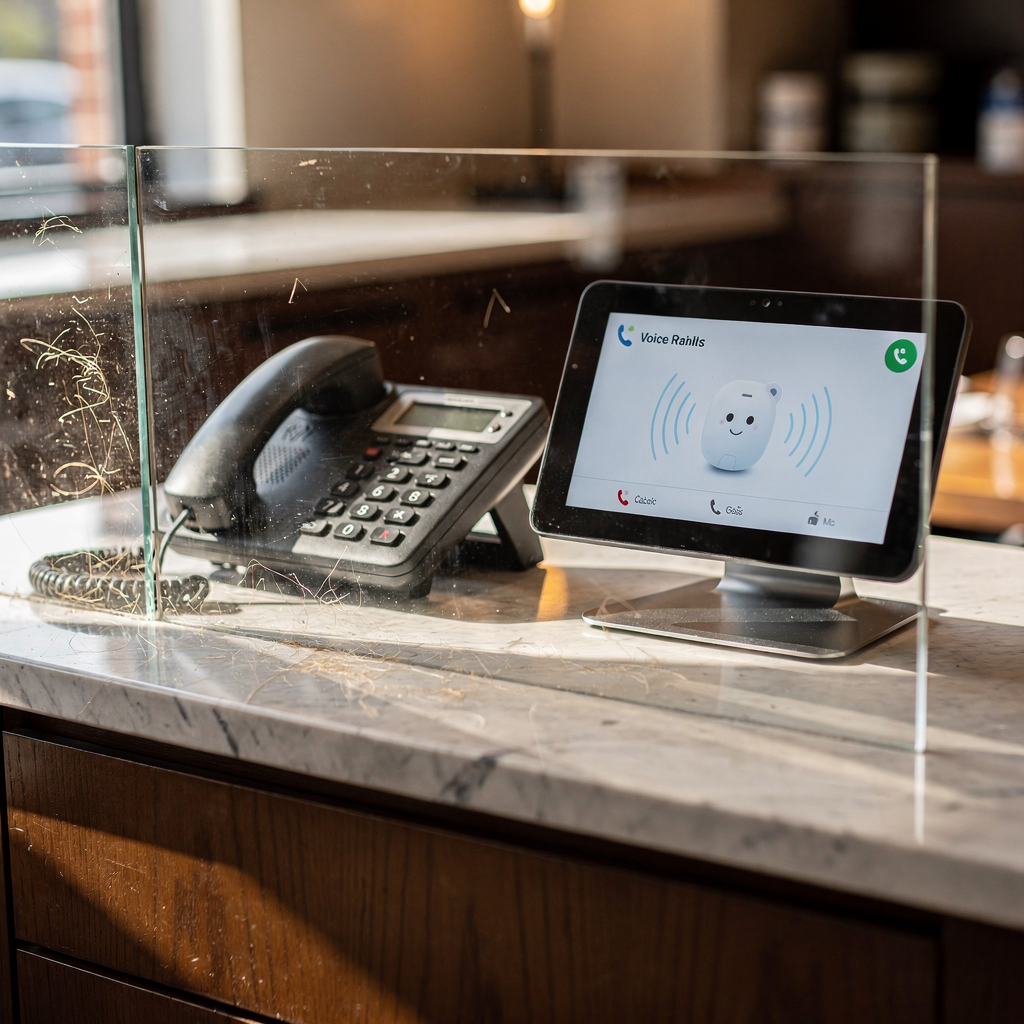
When implementing this ai phone approach, restaurants should test handovers, labels, and confirmation wording. A clear policy keeps human staff in control. For teams considering this, working with vendors who offer pos integration and two-way sync avoids double-bookings and supports seamless service.
Drowning in emails?
Here’s your way out
Save hours every day as AI Agents label and draft emails directly in Outlook or Gmail, giving your team more time to focus on high-value work.
restaurant ai agent integrations: turn every call into a reservation and integrate with POS and booking platforms
To turn every call into a reservation, integration matters. A restaurant ai agent must talk to reservation systems and the pos system. Common booking links include OpenTable and SevenRooms. These connections prevent double-bookings and keep the floor plan accurate.
When the agent integrates with the restaurant’s booking tool, it can check availability in real time. It then creates or updates the reservation and notifies staff. For venues that accept pre-orders, the agent can also tag bookings with menu preferences. This shortens table turnover and improves the dining experience.
Connect the agent to the POS and you can record covers, tag high-value customers and even process deposit requests. Integration with Toast, Square or Lightspeed provides extra context to hosts and managers. When the system syncs in real-time, the front-of-house sees current covers and expected arrival times.
Basic integration steps are straightforward. Follow these three steps to get started: – Authorise API access between your reservation systems and the AI agent. – Configure two-way confirmation so bookings update both systems. – Test edge cases such as large parties, special requests and last-minute cancellations.
Testing is critical. Try multiple simultaneous calls and odd requests. Ensure the assistant that handles calls can flag complex queries for human follow-up. Vendors also provide dashboards where restaurant operators can view call counts, conversion rate and no-show reduction. Those metrics make ROI clear and measurable.
For restaurants exploring wider automation, see how virtual teams scale with AI agents in other functions. Our resources on scaling operations with AI agents offer practical examples on API sync and rule configuration how to scale logistics operations with AI agents. For operators interested in cost and ROI modelling, our case study on virtual workforce ROI covers typical savings and timelines virtualworkforce.ai ROI for logistics. Finally, for an example of virtual assistant tech in operations, read about our virtual assistant logistics use cases virtual assistant logistics.
use cases and costs with ai: reduce labor costs, dashboard metrics and ROI for restaurant operators
AI use cases for restaurants are practical and measurable. Common use includes reservations, call FAQs, cancellations and automated reminders. These features together reduce no-shows and cut routine workload. When AI handles standard calls, human staff can focus on floor service and special guest requests.
Costs with AI usually follow a subscription plus setup model. Vendors quote monthly fees and an initial integration cost. Compare this with hourly labour savings. Many restaurants find that replacing repetitive call handling with AI reduces payroll for routine tasks. A conservative estimate for midsize sites often shows three to six months payback, depending on call volume and labour rates.
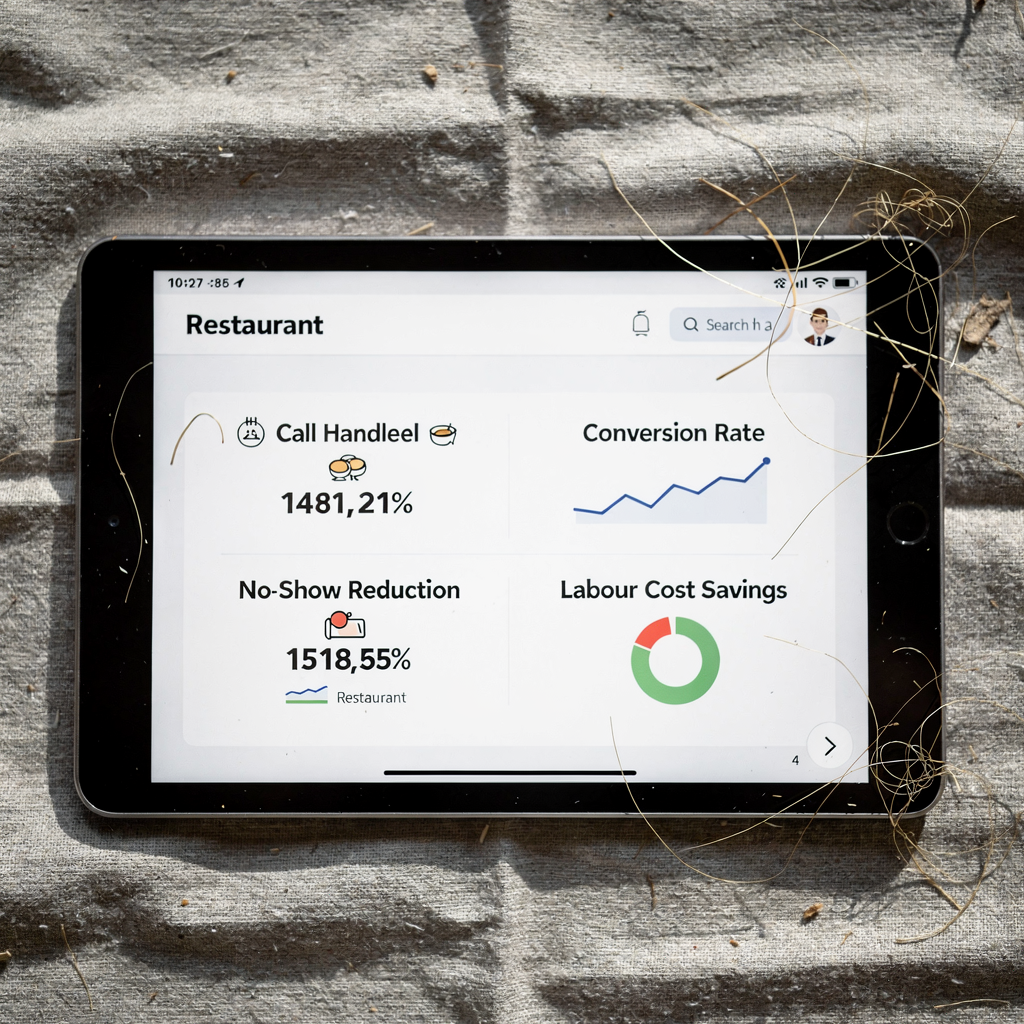
Dashboards are essential. Key metrics to track include calls handled, conversion rate to bookings, no-show rate, average handling time and savings on labor costs. Track conversion and no-show changes month by month. That gives a clear financial picture and supports decisions about expanding automation.
Concrete metrics help. For example, if an AI agent handles 600 calls a month and converts 15% into confirmed bookings, that adds 90 covers. If the average spend per cover is £25, that equals £2,250 additional monthly revenue. At the same time, if this frees two hours per night of host labour, payroll savings grow quickly. Those numbers turn into an ROI model that restaurant operators can present to owners.
Beyond direct savings, AI-powered systems produce analytics that improve operations. For instance, analysis of call topics can show high demand for specific menu items. The marketing team can then run targeted promotion. These insights make the system more than just a phone answering solution; they make it a tool for smarter operations and better customer experience.
Drowning in emails?
Here’s your way out
Save hours every day as AI Agents label and draft emails directly in Outlook or Gmail, giving your team more time to focus on high-value work.
implementing ai for existing restaurant teams: automate workflows, protect guest experience and upskill staff
Implementing AI with an existing restaurant requires careful rollout. Start small, measure impact, then scale. A phased approach reduces risk and keeps guest experience steady. Keep human handover for complex requests.
Here is a four-step rollout checklist for teams implementing ai: 1. Pilot during off-peak hours to test call flows and handovers. 2. Train staff on new workflows and escalation rules. 3. Verify data protection, call disclosure and consent compliance. 4. Expand to peak hours and add features like pre-ordering if stable.
Staff impact is positive when handled well. Automating routine tasks reduces staff workload and lets hosts focus on personalised hospitality. This frees staff to greet guests, manage seating and solve tricky service issues. Training sessions should explain how the AI works and when to take over.
Risk and compliance need attention. Check data protection and local consent rules before launching. Many vendors include call disclosure and logging to aid compliance. Also verify records are stored securely and that the reservation systems remain under your control. That reduces legal and operational risk.
Use pilot data to influence staff scheduling and menu choices. Analytics can show peak call times and common inquiries such as dietary requests or hours and directions. Use those insights to update website copy and to inform staff scheduling. This small cycle of feedback helps the entire team deliver a better dining experience.
Finally, remember the goal is to support hospitality. AI systems must improve guest experience and help teams provide exceptional in-person dining experiences. With the right setup, AI augments human skills rather than replacing them, and aids in long-term improvements to restaurant operations.
frequently asked questions: ai agents for restaurants — how leading restaurants and agents for restaurants actually use them
Will AI sound human?
Yes, modern voice agent technology can sound natural and clear. For complex or emotional calls, keep human staff available to take over.
How do we integrate with our booking system?
Most vendors use API sync to integrate with reservation systems. Test two-way confirmations with your reservation systems to avoid double-bookings.
What about cancellations?
AI agents can record cancellations and trigger automated reminders. This reduces no-shows and updates the dashboard in real time.
Do restaurants use AI for upsell?
Some agents suggest menu items based on past orders and current promotions. Keep upsell scripts simple and optional to protect guest experience.
How long does integration take?
Timelines vary, but many restaurants see basic integration in a few weeks with testing. Complex POS integration can take longer.
Will AI replace human staff?
No. Leading restaurants use AI to handle routine calls so human staff focus on hospitality and personalised service. AI handles repetitive tasks and reduces staff workload.
Can AI handle large parties and special requests?
Yes, with clear escalation rules. Flag large parties for human staff to confirm seating and deposits.
How do we measure success?
Track conversion rates, calls handled, no-show reduction and labour costs saved on your dashboard. These metrics show ROI and help decide next steps.
What about data protection?
Check vendor compliance and call disclosure. Secure storage and clear consent prevent issues and protect customers.
When should we keep the phone for humans?
Keep humans on lines for complaints, large events and sensitive requests. Use AI for routine bookings and FAQs to get fast, reliable handling.
Next steps for operators: trial an AI phone agent, map key integrations, and train your team on handover rules.
Drowning in emails?
Here’s your way out
Save hours every day as AI Agents label and draft emails directly in Outlook or Gmail, giving your team more time to focus on high-value work.