


AI automation for self storage operators — use AI voice agent to improve tenant support around the clock
Also, an AI voice agent can answer routine calls and free staff for on‑site work. AI handles basic questions, checks unit availability and books rentals without delay. The self storage front desk loses fewer leads when callers get instant responses. Many operators report that automation reduces customer service workload by up to ~40% and that AI agents can resolve roughly 70–85% of routine enquiries; see research on contact automation showing large automation gains.
Next, the system routes complex issues to human agents so tricky situations still get human expertise. Also, AI transcripts capture context for handover. This reduces repeat explanations and raises satisfaction. For example, a 24/7 voice booking flow confirms availability, sizes and prices, then reserves a unit and processes payment. The result: fewer missed leads, faster rentals and clearer records.
Therefore, facility managers can track simple outcome metrics to measure impact. Track answered calls, calls solved without escalation, call abandonment rate and conversion-to-rental. Also, monitor average handle time and how often human intervention is needed. Our team at virtualworkforce.ai helps map those metrics into operational dashboards so teams see ROI quickly. The approach uses AI systems that tie into facility management software and property systems, which lets staff focus on high-value work.
Also, choose vendors that support secure payment capture and role‑based release of gate codes to avoid exposure. Operators should require logging and two-step verification before any sensitive data is spoken or shared. Finally, good onboarding means testing scripts and training AI with real call samples. This reduces errors, improves tone and creates consistent tenant support across multiple facilities.
AI-powered voice agent on your self storage website — boost customer experience, real-time bookings and tenant enquiries
Also, integrating an ai-powered voice component into a self storage website turns passive traffic into bookings. The agent answers and verifies unit availability in seconds and starts a booking flow that captures payment and tenant details. Operators see higher web-to-rental conversion when instant help is available, and many report more online rentals outside office hours. For demand forecasting and online capture, AI links to live availability and pricing so answers are accurate and real-time.
Next, integration points include live availability, online pricing, the booking flow and payment capture. Also, the voice bot can hand the session to an ai-powered chatbot or a phone-based human agent when needed. Secure handling of gate codes and card data is mandatory; systems should obey PCI rules and log every release of gate codes. To read more about automating logistics and communications that mirror these flows, see our guide on how to scale operations without hiring how to scale logistics operations without hiring.
Therefore, measure web-to-rental conversion, average time-to-book and revenue per lead. Also, track website traffic sources that feed voice calls to fine-tune marketing. For example, an integrated voice and chat solution can reduce the time from first click to rental by cutting friction during booking. In practice, a combined voice plus chat approach gives tenants instant responses and reduces abandoned bookings.
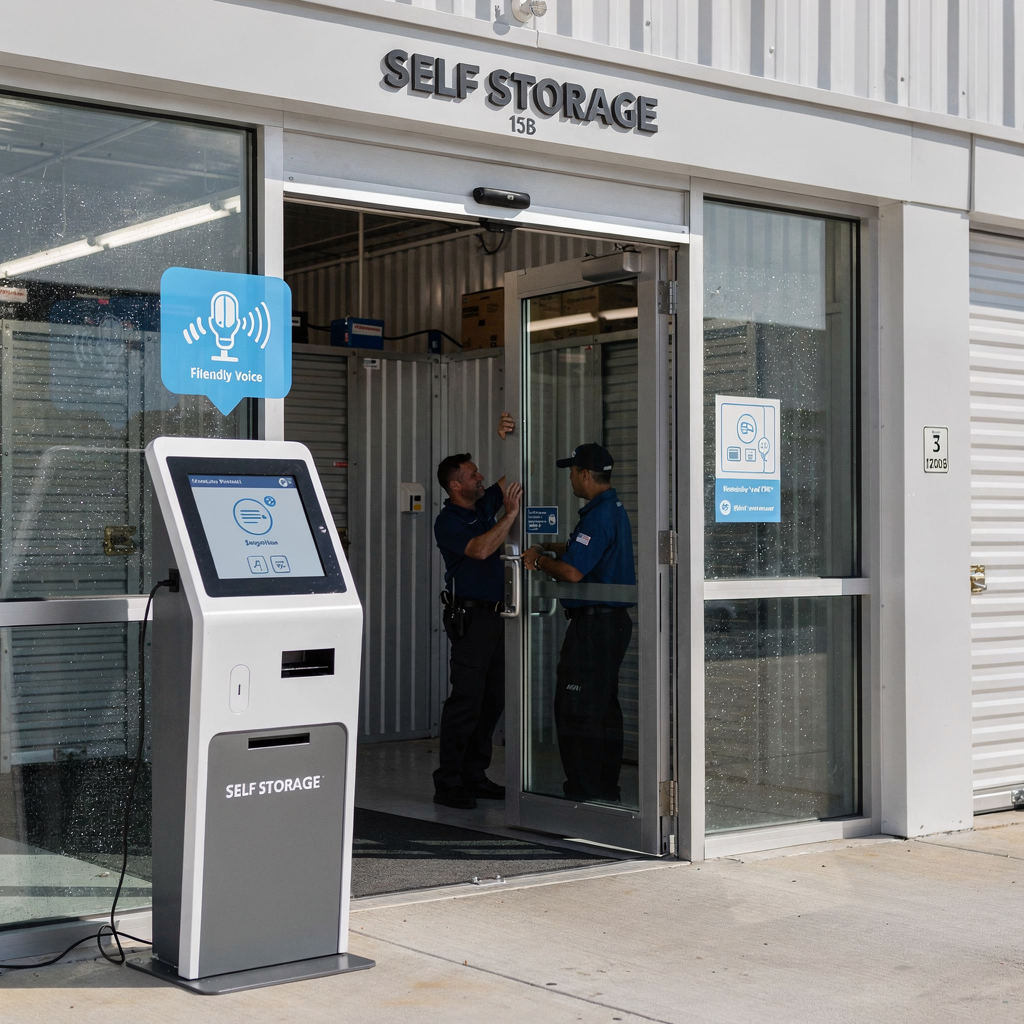
Also, a well‑trained AI agent improves tenant support and keeps the human touch when escalation is required. Use a hybrid flow so the AI handles routine tasks and human agents focus on complex moves, peak moving seasons and sensitive issues. Finally, make sure the self storage website clearly shows the option to speak with the voice assistant so callers know help is available around the clock.
Drowning in emails?
Here’s your way out
Save hours every day as AI Agents label and draft emails directly in Outlook or Gmail, giving your team more time to focus on high-value work.
Call center and chatbots: integrate AI agents with call center and customer support to capture leads and reduce costs
Also, a hybrid model pairs voice bots with human teams in the call center so routine contact volumes fall while complex issues get attention. Contact centre leaders plan heavy AI investment and many centres use AI to triage calls. For statistics on AI agent adoption and impact on contact volumes see industry summaries that report strong productivity gains showing productivity improvements.
Next, best practice is hybrid routing: AI for first contact and easy escalation to human agents. Also, record context and include full transcripts so human agents pick up with full history. This improves handovers and reduces repeat verification. The model lowers cost per call and cuts call volume handled by humans. It also shortens average handle time and improves CSAT by letting humans focus on issues where human expertise matters.
Therefore, you should track cost per call, calls handled by AI, AHT and CSAT. Also, measure lead generation from unattended hours to quantify late-night conversion. Integrate the voice bot with your CRM and facility management software so every captured lead becomes a structured record. For guidance on building automation flows that draft replies and route messages, our resources on automated logistics correspondence show similar principles applied to email automated logistics correspondence.
Also, include an option to transfer to human agents immediately. That preserves the human touch and builds trust. Finally, train both AI and human agents with shared scripts so tone and fact accuracy stay consistent across channels.
Predictive analytics and space optimisation: how predictive AI improves self-storage operations and revenue
Also, predictive analytics lets operators forecast demand and set dynamic pricing to reduce vacancy days. AI models analyze reservation trends, local moves and peak windows to suggest pricing and promotions. Studies show ai-driven optimisation can yield 20–30% better space use in warehouses and storage contexts with measurable capacity gains. Also, productivity gains of roughly 25–35% have been reported for inventory and space management when AI is used according to industry analysis.
Next, use cases include demand forecasting, dynamic price suggestions, vacancy risk alerts and targeted promotions to reduce churn. Also, push alerts about at-risk accounts so staff can intervene before a vacancy occurs. Predictive models feed into marketing and targeted marketing plans to convert likely movers into renters. Operators should use analytics dashboards to compare forecast accuracy and track occupancy and revenue per square metre.
Therefore, track occupancy, revenue per square metre, vacancy days and the accuracy of demand forecasts. Also, tie predictive insights to promotions and service offers. Good systems allow automated price changes with guardrails and human approval. This lets operations capture short-term demand spikes while protecting brand reputation.
Also, when adopting predictive analytics, ensure data quality and consistent labels. AI benefits depend on clean data, integrated PMS and facility records. For teams that want to automate correspondence and keep audit trails, our platform approach to email automation shows how to ground AI in operational data ERP-integrated automation.

Drowning in emails?
Here’s your way out
Save hours every day as AI Agents label and draft emails directly in Outlook or Gmail, giving your team more time to focus on high-value work.
Implementation, integration and alert workflows for storage facility operators
Also, implementation starts with vendor selection and a clear scope. Choose partners who combine voice recognition with strong NLU and who demonstrate secure connectors to facility management software. Steps include pick a vendor, connect to PMS, define call scripts and escalation rules, test, train and monitor. Use an automation platform that ties AI to operational systems so the agent can read unit availability and update reservations.
Next, define security and compliance rules for gate codes and card data. Gate codes must only be released after multi-factor checks; every release should be logged. Also, protect PCI data and limit access by roles. Build alerts for payment failures, suspicious activity and high-priority tenant issues so facility operators see problems fast. Integrate alerts into dashboards and into email workflows to guarantee follow-up.
Therefore, test end-to-end flows before launch and run pilot phases in a few locations. Also, collect metrics and tune models weekly during early months. Train team members on escalation, and set criteria for when human intervention is required. For teams handling high volumes of email and operational messages, virtualworkforce.ai demonstrates how automated workflows can draft, route and escalate messages with full context so staff to focus on exceptions rather than routine tasks.
Also, plan for versioning and updates so scripts evolve as the business does. Finally, document system ownership, backup plans and recovery scenarios so the storage business stays resilient when new software or changes are rolled out.
Benefits of AI, frequently asked questions and the future of AI in the self-storage business
Also, the benefits of AI are clear: 24/7 availability, higher lead capture, lower staffing cost per call and scalable service delivery. AI brings consistent service and improved operational efficiency. Many operators see improved ROI within months when they automate routine tasks and tie AI into PMS and payment systems.
Next, common questions include cost, coverage and security. Operators ask, “How much does a voice agent cost?” and “What percentage of calls will it handle?” A good vendor will provide pricing scenarios and expected automation rates based on call mix. For security, explain how gate codes are released and how card data is protected.
Also, the future of ai will bring tighter PMS integration, smarter predictive analytics and more personalised tenant journeys. AI innovations will reduce latency and cost, so adoption grows across multiple facilities. As one expert put it, “AI agents are becoming strategic partners that analyze complex data patterns and make intelligent decisions in real time” source. Also, reports note that balancing cost with quality and latency remains the main deployment challenge LangChain State of AI Agents Report.
Therefore, when operators plan pilots, include metrics for lead generation, call handling, conversion-to-rental and tenant satisfaction. Also, remember that human agents remain critical for complex moves and the human touch. For more on improving customer service with AI and blended teams, see our guide about improving logistics customer service with AI how to improve logistics customer service with AI.
Also, expect ai is going to evolve fast, and the self-storage companies that combine AI with human expertise will lead. Finally, plan incremental rollouts, measure ROI and adapt scripts so the investment keeps paying off.
FAQ
How much does an AI voice agent cost for a storage facility?
Costs vary by features, call volume and integration needs. Prices often depend on per-minute usage, setup fees and optional connectors to facility management software, and vendors can provide scenarios after a needs assessment.
What percentage of calls will an AI agent handle?
Many deployments automate a large share of routine inquiries, often resolving 70–85% of simple calls. Complex calls still route to human agents, so expected coverage depends on your call mix and the quality of training data.
How are gate codes secured when using voice automation?
Gate codes must be protected by role-based access, multi-factor checks and logging before release. Systems should never voice card data and should record every release for audit and compliance.
Do tenants prefer voice or chat interactions?
Preferences vary by demographic and by urgency. Some tenants want instant voice help for quick bookings, while others prefer chat or email for documentation; offering both gives tenants options and increases conversions.
How do I integrate voice agents with my PMS?
Integration usually uses secure APIs or middleware to read unit availability and write reservations. Work with vendors that support your facility management software and that offer test environments for safe onboarding.
Can AI handle payments and refunds?
Yes, with PCI-compliant payment gateways and tokenization the AI can initiate payments and trigger refunds. Always require human review for large refunds or disputed charges to reduce risk.
What metrics should I track after deploying an AI voice agent?
Track answered calls, calls solved without escalation, call abandonment rate, web-to-rental conversion and revenue per lead. Also measure AHT and CSAT so you capture both efficiency and experience.
Will AI replace on-site staff?
AI reduces routine work but does not replace the human touch needed for complex moves and customer care. Many operators redeploy staff to higher-value onsite tasks and supervision roles.
How fast can I expect ROI?
Some operators see ROI within a few months if the system reduces call handling costs and boosts conversions. ROI depends on call volume, current conversion rates and the percentage of inquiries the AI can automate.
Where is AI in self-storage heading next?
Expect deeper PMS integration, better predictive analytics and more personalised tenant journeys. Also, as latency and cost fall, adoption will grow and AI-generated insights will drive smarter pricing, promotions and targeted marketing.
Drowning in emails?
Here’s your way out
Save hours every day as AI Agents label and draft emails directly in Outlook or Gmail, giving your team more time to focus on high-value work.