


ai agent for transportation: what it is and why shipping lines need it
An AI agent for transportation is an autonomous or semi‑autonomous software assistant that analyzes data, proposes actions, and can execute workflows. In plain terms, an AI agent watches signals, scores options, and then acts or suggests actions to operators. For shipping lines this role helps speed decisions, cut fuel and idle time, and reduce manual quoting time. Also, this approach helps streamline communications and reduce human error when teams reply to complex shipment queries.
Value comes from faster choices and lower cost. For example, industry research shows AI can reduce logistics costs by about 15% while improving service levels dramatically; this figure is supported by market analysis and practical pilots (AI in freight forwarding and logistics). Therefore, shipping lines that adopt AI agent workflows see measurable gains in on‑time performance and cost per TEU. KPI suggestions include on‑time arrivals, average routing time, quoting turnaround, and cost per TEU. These indicators help teams prove ROI quickly.
Shipping lines face complex challenges across the maritime network. They must balance vessel schedules, port slots, cargo readiness, and customs. However, AI agents can analyze vessel AIS feeds, weather, and port data to propose optimal moves. Integrating with a TMS and ERPs reduces copy‑paste work and speeds replies. For teams handling 100+ inbound emails a day, an AI assistant that drafts context‑aware replies can cut handling time from ~4.5 minutes to ~1.5 minutes per email, while keeping data grounded in the ERP/TMS environment (virtualworkforce.ai — No-code AI email agents for ops teams).
Practical adoption needs governance. Start with clear SLAs and human intervention rules for critical moves. Next, pilot agent automation on a small route or booking class. Finally, scale once KPIs show reduced delay, fewer exceptions, and faster invoice cycles. By using AI agent capabilities carefully, shipping and logistics organizations can transform dispatch and commercial functions without large upfront software rewrites.
ai agents for logistics: automated routing, dynamic scheduling and real‑time optimisation
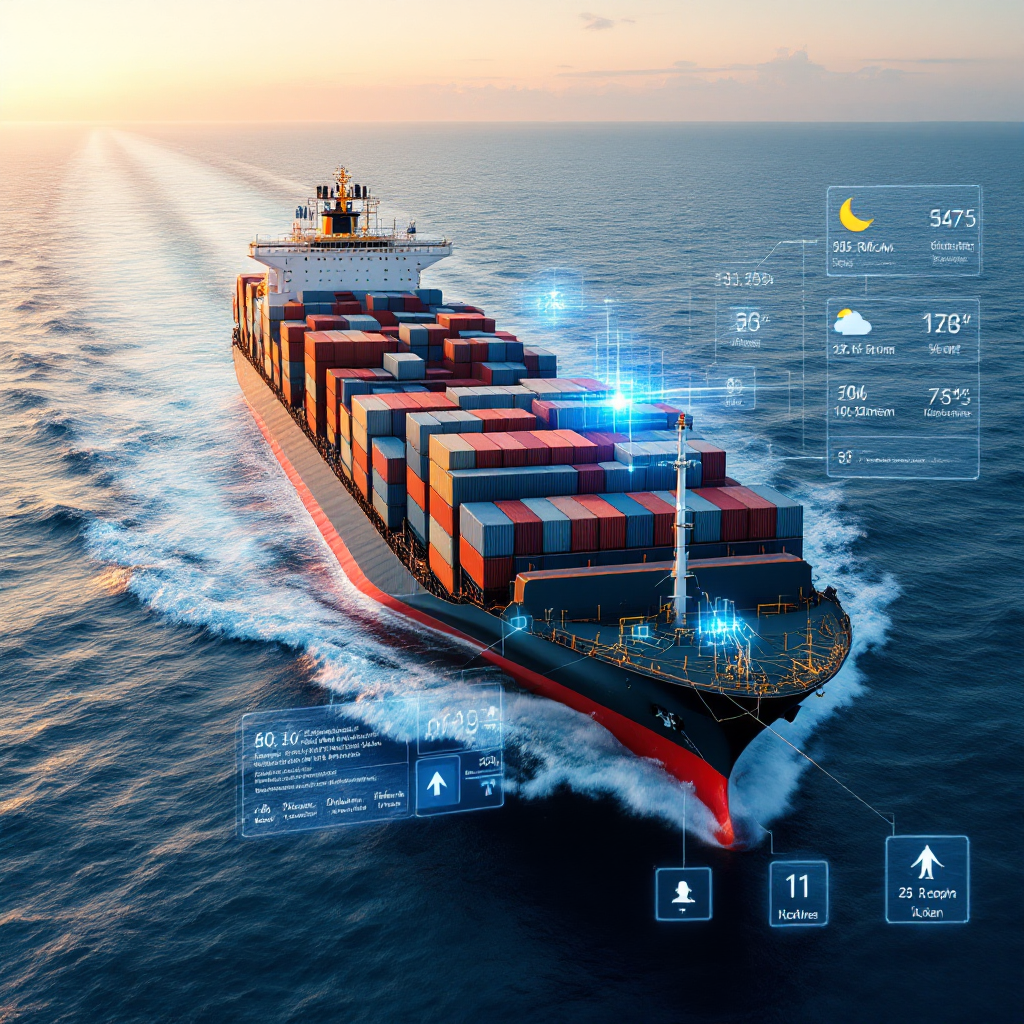
AI agents for logistics power automated routing, dynamic scheduling, and real‑time optimization across fleets and terminals. These intelligent agents use AIS, weather feeds, and terminal slot data to optimize vessel speed, berth assignments, and feeder connections. As a result, operators can reduce fuel burn, lower idle time, and increase vessel utilisation. In practice, agents analyze live signals and then act or recommend moves to reduce delay and avoid congestion.
Core capabilities include multi‑modal routing, ETA re‑planning, and berth scheduling that adapts as conditions change. For example, an agent can reroute around a storm or recommend a slow‑steaming profile to save fuel. These agents operate by ingesting real-time data streams and applying optimization models, often integrated through an API layer to a transportation management system or TMS. Also, they can trigger alerts when a bottleneck forms at a port or when a shipment risks missing a connection.
Technically, deployments require real-time data, optimisation engines, and event streaming. Teams must integrate AIS and weather sources with ERPs and TMS systems. virtualworkforce.ai shows how deep data fusion across ERPs, TMS/TOS/WMS and email history cuts handling time and preserves context across shared mailboxes (ERP email automation for logistics). Furthermore, agents can automate routine tasks such as assigning a tug or confirming a berth, which helps streamline logistics at scale.
Measured gains include lower fuel burn, fewer delays, and higher on‑time percentages. Shipping lines that adopt such automation see meaningful service improvements. For more advanced scenarios, integrating predictive models can forecast port congestion and then proactively reassign berths to avoid queuing. This route optimization and vessel scheduling approach helps transform throughput and reduces detention and demurrage risks.
Drowning in emails?
Here’s your way out
Save hours every day as AI Agents label and draft emails directly in Outlook or Gmail, giving your team more time to focus on high-value work.
logistics with agentic ai: generative AI for freight quotes and customer workflows
Generative AI and agentic architectures are changing how shipping teams produce quotes and handle customer workflows. In this context, an AI agent drafts consistent freight quotations, builds bills of lading, and generates manifests. These capabilities speed sales cycles, reduce manual errors, and keep terms consistent across contracts. For example, generative AI synthesises route options, cost factors, and service windows to produce fast, accurate quotes for customers.
Use cases include automated freight quotations, document generation, and natural language chat for booking and tracking. A generative AI model can pull rates from systems, estimate transit time, and include regulatory clauses. Then it can prepare an email draft or an invoice ready for review. This pattern helps logistics teams automate repetitive correspondence and scale customer service without hiring large numbers of staff. Auxiliobits documents how generative models can power quote generation for freight services (Generating Quotes for Freight Services with Generative AI).
Implementation guidance stresses guardrails and human review for exceptions. For regulated corridors, always route pricing exceptions to a human with the right authority. Also, ensure integration with ERPs and TMS so quotes align with bookings and inventory. virtualworkforce.ai’s no‑code agents show how grounding outputs in ERP, TMS, and email memory yields accurate replies and maintains audit logs (Logistics email drafting AI).
Benefits are clear: faster response times, fewer errors, and a scalable workflow for customer touchpoints. In addition, this approach supports 3PLs and carriers that need consistent pricing, speed, and traceability. Looking forward, agentic AI will increasingly automate end‑to‑end commerce flows while preserving human control for sensitive decisions.
ai agents in logistics: safety, autonomous vessels and improving carrier performance
AI agents in logistics play a strong role in safety and in trials of autonomous vessels. Agents monitor sensor feeds, detect anomalies, and support collision avoidance systems that assist watchkeepers. Research shows that AI integration in autonomous maritime systems improves supervision and reduces human error. For authoritative context, see the systematic review of human‑AI interaction in autonomous ships (Enhancing Safety in Autonomous Maritime Transportation Systems).
Operationally, agents analyze engine health, hull stresses, and environmental inputs to alert crews or to trigger safe maneuvers. These AI systems provide alerts and propose actions, and they can autonomously execute limited tasks under human oversight. In pilot programs, autonomous and remotely assisted vessels use AI to handle routine watchkeeping while humans remain in the loop for critical decisions. This mix reduces fatigue and helps reduce human error.
Carrier performance also improves when agents track KPIs like punctuality, dwell time, and container velocity. When a KPI veers off target, agents can create a task, escalate to a planner, or suggest a commercial remedy. This data‑driven approach helps carriers streamline operations and respond faster to disruption. Furthermore, advanced AI can correlate berth times with customs delays and then recommend alternative berths or feeder swaps to keep flows moving.
Risk controls must include cybersecurity and human intervention rules. Operators should avoid fully trusting autonomous decision loops until they have proven safety, auditability, and fail‑safe fallback modes. Also, close integration with existing systems and ERPs ensures that actions by agents align with contracts and carrier rules.
Drowning in emails?
Here’s your way out
Save hours every day as AI Agents label and draft emails directly in Outlook or Gmail, giving your team more time to focus on high-value work.
supply chain: using ai to optimise workflow, port congestion and freight management
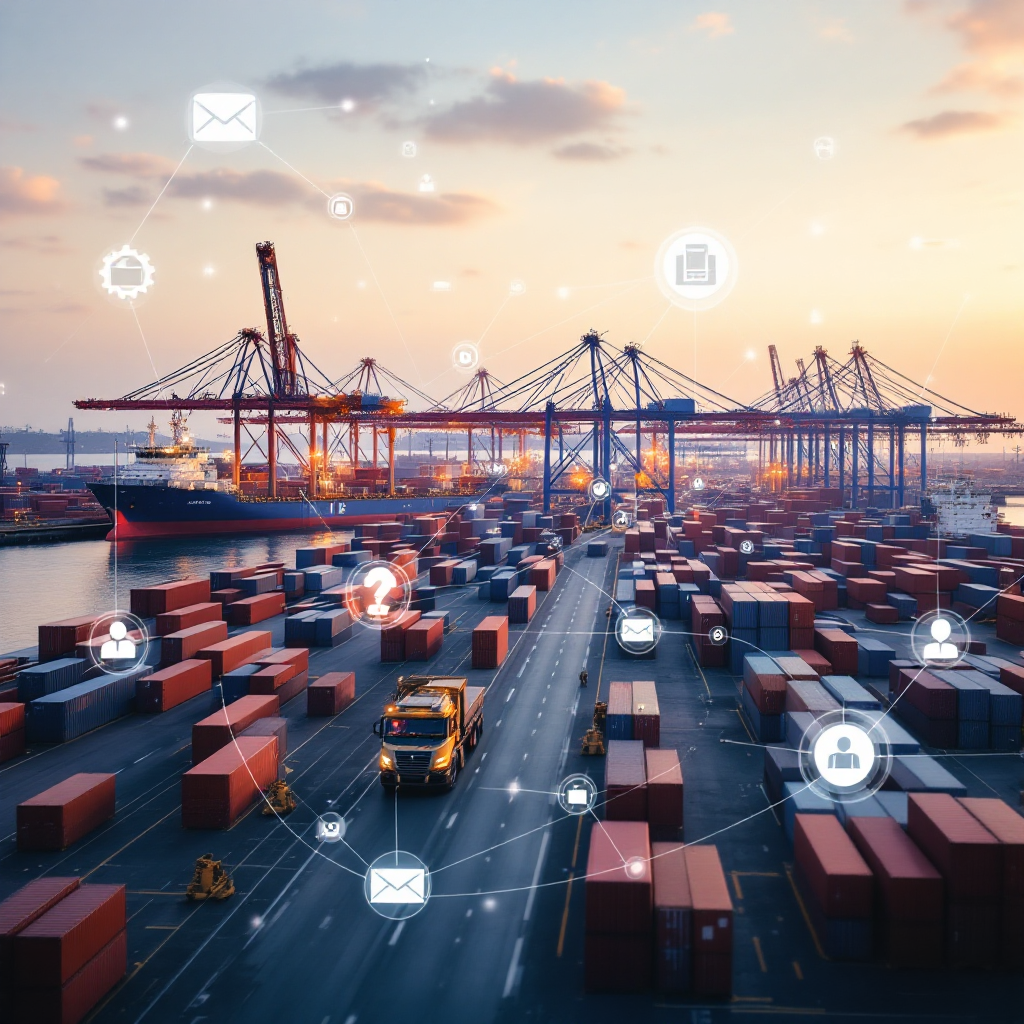
At the supply chain level, AI helps optimise workflow, reduce port congestion, and improve freight management. Predictive port models can forecast queuing and suggest arrival windows that reduce stack time. As a result, lanes operate smoother and containers move faster. For example, some companies use predictive analytics to cut dwell and detention costs. Studies link AI adoption to material improvements in service levels and cost reduction (AI Agents Statistics 2025).
Practical steps include balancing demand and capacity, forecasting cargo flows, and automating berth reassignment. In addition, agents to automate repetitive tasks can reassign crews, issue booking confirmations, and push customs documents. This reduces handoffs and clears bottlenecks. The same agents analyze terminal throughput and then propose swaps or feeder changes to avoid a backlog.
Workflow automation spans booking to customs clearance. For example, an AI agent drafts customs email responses, populates manifests, and updates booking records in ERPs. virtualworkforce.ai documents how no‑code email agents ground replies in ERPs and TMS, which helps streamline logistics correspondence and reduce errors (Automated logistics correspondence).
Measured outcomes are shorter dwell times, lower detention/demurrage, and better container velocity. Moreover, integrating real-time data and big data analytics helps planners see trends and adapt. This increases resilience in global supply chains and helps teams proactively avoid disruption. Start with pilot forecasts for a single port, then scale models to cross‑dock and transhipment networks.
future of logistics: ai agent, autonomous transportation management and ai agents for smarter shipping and logistics
The future of logistics will see AI agent roles expand from decision support to decision execution. Agents will orchestrate across transportation management systems and ERPS to run routine tasks autonomously while escalating complex cases. As a result, shipping lines can shift capacity to strategic tasks and improve response times. Agents analyze massive datasets and then take predefined actions to keep cargo moving and costs down.
Emerging trends include deeper integrating AI agents with generative AI and explainable ML to meet regulators and auditors. Also, agent orchestration layers will coordinate multiple intelligent agents to handle bookings, routing, and customer communications. This approach helps transform operations into a more data-driven, adaptive ecosystem. Microsoft describes how generative and agentic AI are shaping logistics efficiency (The future of logistics).
Adoption risks remain. Data quality, vendor lock‑in, and change management can slow progress. Therefore, pilots should focus on clear KPIs such as routing optimisation, automated quotes, and port slot prediction. Also, include governance for audit logs, SLAs for automation, and human approval gates for pricing or safety actions. For email and operations teams, no‑code AI assistants like those from virtualworkforce.ai help scale without heavy IT projects by connecting to ERPs and TMS systems (How to scale logistics operations with AI agents).
To get started, map low‑risk workflows that save time and reduce manual copy‑paste between systems. Then, measure improvements in response times and on‑time performance. Over time, agents will handle more tasks autonomously and help shipping and logistics firms adapt to increased supply chain complexity while keeping humans in control.
FAQ
What is an AI agent and how does it differ from simple automation?
An AI agent is a software system that senses data, reasons, and acts, often with some degree of autonomy. Unlike rule‑based automation, an AI agent can learn from data and adapt to new patterns without explicit reprogramming.
How can shipping lines benefit from AI agents?
Shipping lines can reduce fuel use, lower idle time, and speed quoting and customer replies. They also improve on‑time performance and reduce manual errors across booking and billing.
Are autonomous vessels safe with AI agents onboard?
AI agents improve monitoring and anomaly detection, which enhances safety when used with human oversight. Research supports that human‑AI interaction frameworks are key to safe autonomous operations (source).
What data do AI agents need to operate effectively?
Agents need AIS, real‑time data feeds such as weather and terminal slots, plus ERP and TMS records. High‑quality data and integration with existing systems are essential for accurate decisions.
Can generative AI create freight quotes automatically?
Yes, generative AI can synthesize route options and cost factors to produce fast, consistent freight quotes. Guardrails and human review for pricing exceptions remain important to avoid errors (example).
How do AI agents help reduce port congestion?
Agents forecast queueing, suggest arrival windows, and recommend berth reassignments. These actions can shorten dwell times and reduce detention and demurrage costs.
What governance is needed when agents take actions?
Set SLAs, audit logs, and human intervention rules for critical decisions. Also, enforce role‑based access and cybersecurity controls to protect vessel and commercial systems.
How do I start a pilot for AI agents in shipping and logistics?
Begin with a narrow use case that has clear metrics, such as routing optimisation or automated quotes. Measure cost per TEU, on‑time improvements, and quoting time before scaling.
Will AI agents replace logistics jobs?
Agents will automate repetitive tasks, allowing teams to focus on higher‑value work. Many roles will shift toward oversight, exception handling, and strategic planning rather than routine processing.
Where can I learn more about practical tools for email and operations teams?
Explore solutions that integrate with ERPs and TMS and offer no‑code controls so business users can configure behavior. virtualworkforce.ai provides examples of how no‑code AI email agents speed replies and reduce errors (virtualworkforce.ai ROI for logistics).
Drowning in emails?
Here’s your way out
Save hours every day as AI Agents label and draft emails directly in Outlook or Gmail, giving your team more time to focus on high-value work.