


How ai and ai agent are transforming solar companies: agents are transforming solar and ai in solar for renewable energy
AI is changing how solar companies work, sell, and plan. First, AI models process weather, panel telemetry, and customer data. Then, an AI agent uses that input to act at scale. For example, an AI agent can spot patterns in irradiance and flag low output early. Avigna explains that “AI agents can find useful patterns and make real-time decisions that improve the efficiency and reliability of renewable energy systems” (Avigna). This fact is powerful for both operations and sales teams.
Market signals show rising investment in AI across utilities. Indeed, 73% of solar companies are actively exploring AI solutions according to a recent government survey (DOE). As a result, solar energy firms that use AI can improve forecasting, reduce downtime, and speed up customer response. For example, AI-driven forecasting can improve prediction accuracy by up to 20% (Salesforce), which helps grid planning and reduces reserve requirements.
Key benefits include faster contact with leads, better lead qualification, and fewer missed opportunities. Specifically, teams that automate outreach answer more inquiries and set more appointments. Trackable KPIs include lead contact rate, answer rate, and time-to-first-contact. These are meaningful, actionable metrics for sales leaders and operations managers.
Operationally, agents are transforming solar day-to-day work. They collect site data, enrich lead information, and even schedule site visits. In parallel, AI helps optimize energy output and suggests predictive maintenance. This reduces manual processes and improves data entry quality. While agents don’t replace human agents, they relieve routine tasks so human agents can focus on high-value sales and technical work.
Finally, companies such as virtualworkforce.ai already show how AI agents can automate repetitive, data-dependent messages and workflows. For teams that handle many emails and calls, AI reduces time per inquiry and raises consistency. If you want to learn how to scale operations without hiring, see how automation platforms apply to complex workflows (scale operations guide).
ai voice agent and voice agent for solar sales: automate inquiry handling and lead generation
An AI voice agent answers calls, qualifies leads, and books appointments. Inbound callers get instant attention, and outbound outreach runs around the clock. A voice agent can handle basic questions about solar savings, financing, and installation timelines. It talks to customers naturally and transfers hot prospects to a human rep when needed. For lead generation, an AI voice agent increases answered-call rates and scales contact volume far beyond what human SDRs can do.
Expect dramatic increases in contact volume. Industry reports show AI-driven outreach can produce 3–5x the contact rate versus traditional human SDR outreach, and answered-call rates rise significantly. For contractor and installer contexts, case studies report 40–60% lower cost per qualified lead and up to ~60% lift in conversions. These figures translate into measurable cost savings and faster sales cycles.
A typical qualification flow is compact and effective. First, the voice agent asks intent and preferred appointment windows. Second, it captures ownership, roof orientation, and sun exposure. Third, it records budget or finance interest and basic contact details. The script can also calculate potential savings and export the result to a CRM field. That structured lead information lets sales reps focus on closing, not data collection.

Automation lowers scheduling friction and speeds appointments. For example, streamlining appointment booking can reduce time-to-site-visit by days. A voice agent integrates with calendar tools and triggers reminders so installers spend less time chasing no-shows. Moreover, the approach supports multilingual scripts and FAQ handling about incentives and warranties.
When you add an AI voice assistant to your sales stack, the sales process becomes more predictable. Many solar businesses find they can close more leads with fewer touchpoints. If you want to see related operational automation patterns, read how virtual assistants scale logistics correspondence and scheduling (automated correspondence). That article outlines the same mapping and CRM integration techniques used to streamline solar sales.
Drowning in emails?
Here’s your way out
Save hours every day as AI Agents label and draft emails directly in Outlook or Gmail, giving your team more time to focus on high-value work.
ai-powered assistant for solar companies: crm, ai assistant and ai voice assistant to streamline customer engagement
An AI-powered assistant combines voice, chat, and CRM connections to streamline customer engagement. It maps lead fields, syncs notes, and updates status in real time. Linkages include contact status, lead score, appointment notes, and NPS. Integrating an assistant for solar companies with a CRM reduces manual data entry and keeps records current. This saves time and cuts errors in lead qualification and follow-up.
To build a reliable setup, connect the AI assistant to your CRM and calendar. Map fields like status, score, notes, and next steps into the CRM. Also, connect quoting tools so the assistant can generate ballpark estimates during a call. Many teams choose HubSpot or custom CRMs; either way, the assistant must write back clean lead information and maintain an audit trail for compliance.
Customer engagement improves with personalized scripts and multilingual responses. The assistant can answer common questions about solar panel performance, warranties, and financing. It also guides potential customers through incentive eligibility and performs a basic site suitability checklist. As a result, the sales team sees better lead qualification and faster appointment scheduling. This reduces the workload from manual processes and frees reps to handle the most promising prospects.
Technical integration requires good APIs and secure data flows. Make sure the assistant connects to ERPs or scheduling tools through documented APIs. For an example of end-to-end automation in a different vertical, see how AI automates logistics email lifecycles and CRM writes in detail (virtual assistant logistics). That page describes thread-aware memory and data grounding, features that apply equally to solar energy operations.
Operational rules should include hand-off logic for hot leads, and stored context helps reduce repeated questions. Track metrics like first-call resolution and appointment-to-sale conversion to measure impact. Agents can log site visits and flag panels that need predictive maintenance or further inspection. Ultimately, AI systems make customer interaction repeatable and reliable, increasing customer trust while helping solar teams close more deals.
Automation and ROI: cost savings, real results and roi from ai agents used in solar business and solar industry by 2025
Automation drives rapid ROI in high-volume lead channels. Typical ROI levers include fewer missed calls, lower cost per lead, and reduced headcount for routine outreach. Many solar operators report pilot payback within months when they deploy assistants on large inbound streams. A clear measurement plan looks at baseline CPL and conversion, then measures deltas on answered calls, appointments set, and closed deals.
Evidence supports meaningful cost savings. Case studies in related markets show 40–60% reductions in cost per qualified lead and up to 70% savings in scheduling and demo costs. For grid and demand response, AI can cut peak load while helping system planning (ScienceDirect). These efficiencies compound when you automate routine outreach and appointment setting at scale.
To measure ROI, run a pilot for 8–12 weeks. Then compare conversion and answer rates against the control group. If you automate the right touchpoints, teams often see cost per qualified lead fall and conversion lift rise. By 2025, adoption trends suggest AI agents used across energy companies and installers will be common. For more context on AI energy planning and grid integration, explore the DOE’s findings on clean energy integration and AI adoption (DOE).
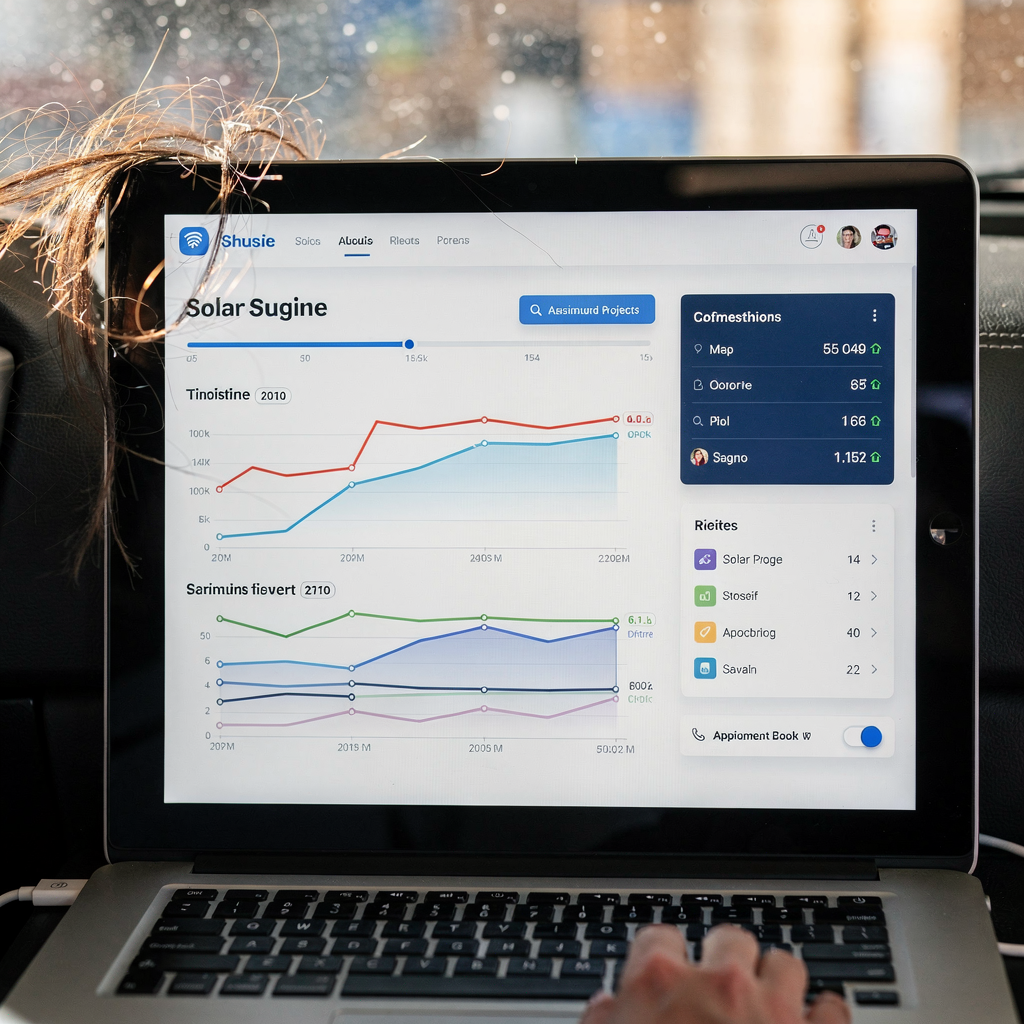
Practical steps include defining pilot goals, mapping workflows, and tracking ROI. Use a control group to calculate actionable lift in conversion and potential savings. Also, train staff on hand-offs so the sales team can close more deals. Vendors with proven case results reduce risk and speed time to scale. If you want specific tactics for scaling operations without expanding headcount, review guidance on scaling with AI agents (scale with AI agents).
Drowning in emails?
Here’s your way out
Save hours every day as AI Agents label and draft emails directly in Outlook or Gmail, giving your team more time to focus on high-value work.
agentic ai, ai systems and ai tool deployment for solar developers: adopt, automate and streamline lead generation
Agentic AI changes how solar developers capture and qualify leads. Start by defining a clear qualification script and scoring rules. Then pilot the script with a subset of leads and refine the logic. For technical considerations, evaluate voice model quality, accent handling, compliance, and secure API links to CRM and scheduling. Good integrations let the ai tool write back clean lead information and create a reliable audit trail.
Deployment steps are straightforward. First, define the qualification flow and scoring thresholds. Second, map fields into the CRM and scheduling system. Third, run a pilot and collect metrics for both answered calls and conversion. Fourth, scale the agent to full volumes once performance stabilizes. Solar developers who follow this plan often reduce manual processes while improving lead qualification.
Change management matters. Train the sales team on new hand-off policies and how to treat qualified leads. Also, maintain monitoring dashboards so teams can spot regressions. Vendors should support callbacks, escalation rules, and human override. If you need examples of automating email workflows and reducing data entry in operations, look at how email lifecycle automation works in logistics to see similar benefits (automate with Google Workspace).
Technical choices include model latency, voice quality, and security controls. Also consider connectors for hub CRM systems. Ensure you can map site suitability fields such as roof age and irradiance, and push results to scheduling. While agents are transforming solar planning, they also raise questions about compliance and customer trust. Address those by building transparent scripts and easy escalations to human agents. Finally, plan for continuous improvement so the system learns from closed deals and improves lead qualification over time.
faqs, customer experience and adopting solar: addressing enquiries about solar panel systems and ensuring real results
Build an FAQ bank for the agent to answer common questions about savings, payback period, warranties, and installation timeline. The agent should also explain finance options and government incentives. A good script calculates potential savings and guides potential customers through next steps. Include questions on predictive maintenance, expected energy output, and what a typical solar installation involves. Keep answers concise, and route complex queries to a human rep.
Customer experience metrics to track include CSAT, NPS, first-call resolution, and appointment-to-sale conversion. These KPIs show whether the agent improves customer interaction and helps solar teams close more deals. Also monitor customer trust indicators like repeat contact and escalation rates. To avoid mistrust of automation, offer clear opt-outs and easy routes to a human rep.
Objections are predictable. Typical rebuttals cover cost concerns, roof suitability, and skepticism about automation. The script should handle these with empathy and facts, then offer a human hand-off. Also keep a compliance log for all calls and emails. The final adoption checklist includes pilot goals, success metrics, CRM mapping, privacy review, and a plan for continuous improvement.
Solar installers and energy companies can use these recommendations to boost sales and streamline operations. If you want to see examples of how AI can automate heavy operational email flows, virtualworkforce.ai demonstrates end-to-end automation that reduces handling time and improves traceability. Use those patterns to reduce manual data entry and speed responses so teams spend less time on routine work and more time closing deals.
FAQ
What is an AI voice agent and how does it help solar sales?
An AI voice agent answers and places calls to qualify leads and book appointments. It handles routine questions about solar savings, installation timelines, and financing so human reps can focus on closing.
Can AI agents accurately assess roof suitability over the phone?
Yes, an AI script can gather owner-reported details about roof orientation, shading, and age. The agent then flags likely candidates for a site visit and records the data for more detailed evaluation.
How quickly can I expect ROI from an AI pilot?
Pilot payback often appears within months for high-volume lead streams. Measure baseline CPL and conversion, then track answered calls and appointments to calculate ROI.
Will AI replace human agents in solar sales?
No, agents don’t replace human agents; they augment them. AI handles routine outreach and qualification while humans handle complex technical conversations and closings.
How does integration with CRM work?
The AI assistant maps lead fields like status, score, notes, and next steps into your CRM. Good integrations write back structured lead information and preserve audit trails for compliance.
Are there cost savings from using AI for lead generation?
Yes, many deployments report cost savings per qualified lead and lower scheduling costs. Case studies show meaningful reductions in CPL and faster sales cycles.
Can the system support multiple languages?
Yes, AI voice assistants can run multilingual scripts to serve broader customer bases. Multilingual support improves reach and overall customer experience.
What security and compliance should I check?
Review data retention policies, access controls, and API security. Keep an audit trail of calls and escalation paths so you can meet regulatory and customer privacy requirements.
How do AI agents improve customer experience?
They answer calls quickly, provide consistent information, and schedule appointments reliably. These actions increase first-call resolution and overall customer satisfaction.
Where can I learn more about implementing AI agents?
Start with a small pilot that maps scripts, scoring, and CRM integration. For operational automation examples and email lifecycle automation, see resources on scaling with AI agents and virtual assistant logistics.
Drowning in emails?
Here’s your way out
Save hours every day as AI Agents label and draft emails directly in Outlook or Gmail, giving your team more time to focus on high-value work.