


ai agent for supply chain and supply chain management: what they do
An AI agent for supply chain appears as an autonomous or semi-autonomous system that digests data, recommends actions and executes routine tasks. In plain terms, it watches sales and supplier feeds, reads transport updates and flags exceptions. It then proposes or takes action to keep operations on track. These agents sit alongside enterprise resource planning systems, warehouse systems and transport management tools to link decisions to execution.
Supply chain teams see clear benefits when they integrate an AI agent into planning loops. For example, the market for AI in supply chain is growing fast: analysts project a market reaching US$58.55 billion by 2031 (source). In practice, machine learning models reduce demand forecasting error by roughly 10–20% in many deployments (source). That improves inventory turns and service rates. It also reduces emergency procurement and rush freight.
AI agents use multiple inputs. These include sales orders, supplier lead times, weather alerts and macro indicators. They combine predictive models with business rules. They then surface recommendations for procurement cadence, production slots and safety stock. One simple example: when supplier lead times slip, an AI agent shifts reorder points and flags planned purchase orders. That prevents stockouts and keeps production lines fed.
Teams should start small. Map a repetitive planning task and run a pilot. For instance, automate email triage for shipment confirmations, and route actions into an ERP inbox. If you want to see how AI agents help logistics correspondence, explore our operational examples like automated logistics correspondence and ERP email automation (automated logistics correspondence) and (ERP email automation). Finally, remember that supply chain data quality matters. Clean, consistent inputs let AI agents learn faster and improve supply chain performance.
agentic ai systems and ai systems: how ai in supply chain adapts in real time
Traditional rule-based automation follows if‑then rules. By contrast, agentic AI systems reason, plan and learn from new signals. They combine LLM-style context understanding with optimisation engines. As a result, they enable continuous replanning and root-cause reasoning. This matters in modern supply chain environments where conditions change quickly.
Agentic AI adapts to real time events and to changing demand patterns. It consumes streaming telemetry and real-time data feeds, and it then simulates scenarios. For example, an agentic AI detects a sudden demand spike, recommends factory overtime and suggests expedited freight. It also notifies planners and offers trade-offs between cost and service. This creates faster corrective actions and shorter reaction windows during supply chain disruptions.
Agentic capabilities let agents manage exceptions and adjust constraints automatically. They do this while keeping human reviewers in the loop. Design safety checks and human-in-loop gates before you give full autonomy. That reduces risk and preserves accountability. The potential for agentic AI includes prescriptive steps that connect planners to execution, and it complements existing ai systems and optimisation tools.
When you plan a pilot, include measures such as time-to-recover after a disruption, forecast error and lead-time variability. Using agentic solutions also means updating governance and escalation paths. In addition, think about integrating generative AI for context extraction from emails and documents. If your team handles high email volumes in logistics, consider our page on scaling logistics operations with AI agents (scale logistics operations). This helps match agentic AI to operational realities and improves decision-making without disrupting core processes.

Drowning in emails?
Here’s your way out
Save hours every day as AI Agents label and draft emails directly in Outlook or Gmail, giving your team more time to focus on high-value work.
optimize production planning and decision-making: methods and metrics
This chapter focuses on production planning and clear metrics that guide improvement. Start by defining the KPIs you will track. Typical KPIs include forecast error, days of inventory, service level and time-to-recover from a disruption. Use these to compare traditional plans with AI-driven plans. Run A/B tests for 8–12 weeks to measure impact.
AI optimizes demand signals and feeds constraint-based schedules. A practical pattern is demand-driven MRP that uses ML forecasts to set replenishment triggers. Then use mixed-integer optimisation to respect capacity and labour constraints. Decision-support dashboards show trade-offs, and planners decide when to accept higher cost for faster recovery.
Improving demand forecasting by 10–20% can materially reduce inventory and lost sales (source). In addition, AI offers predictive models for machine availability and predictive maintenance. For instance, shorter downtime reduces lead-time variability and raises overall supply chain performance. Use short experiments to test optimisation algorithms and to verify that inventory levels and service levels move in the desired direction.
As you implement, include enterprise resource planning integration and clear data pipelines. Link forecasts back to production order releases and to supplier commitments. Our team often recommends combining statistical forecasts with human judgment rules. This hybrid approach leverages AI while preserving planner expertise. It helps supply chain managers to make faster, better-informed choices while protecting against extreme risks. Also, include one quote or insight from industry reports to remind stakeholders that AI has measurable impact and that adoption of AI needs governance and clear ROI targets (industry report).
use cases in logistics for supply chain ai and ai in supply: where value appears first
Logistics is where many supply chain teams first see tangible value. Use cases include dynamic replenishment, route optimisation and predictive ETAs. They also include predictive maintenance, carrier selection and slotting. These use cases tend to show rapid ROI because they link directly to transport and warehouse costs.
Predictive ETAs improve dock planning and reduce truck dwell times. In one pilot, better ETAs cut dwell by a measurable percent and improved throughput. Dynamic replenishment uses short-term forecasts to trigger smaller, more frequent orders. That lowers safety stock and improves inventory management across networks. Predictive analytics for vehicle health reduces unplanned downtime and keeps transit lanes reliable.
Start by prioritising use cases by ROI, execution complexity and data availability. For example, automating shipment confirmation emails and routing actions into TMS and ERP reduces manual triage. If your operations suffer from high email volumes, automated logistics correspondence and AI for freight forwarder communication are practical starting points (automated logistics correspondence) and (AI for freight forwarder communication). These solutions show how AI agents help reduce handling time per email while preserving traceability.
Chain logistics, warehouse management and carrier operations all benefit. In addition, focus on data hygiene and on linking AI outputs back to decision owners. The advantages of AI agents include faster responses during supply chain disruptions and clearer ownership of exceptions. Finally, remember that aligning pilots with procurement and operations teams speeds adoption and helps transform supply.
Drowning in emails?
Here’s your way out
Save hours every day as AI Agents label and draft emails directly in Outlook or Gmail, giving your team more time to focus on high-value work.
ai agents could transform supply and transforming supply chains to revolutionize supply chain management
At a strategic level, ai agents could reshape how companies run ecosystems. They bring persistent monitoring, scenario libraries and risk modelling into daily planning. Supply chain organizations that embrace these tools gain more resilient supply and faster recovery after incidents. For example, an agent can surface supplier risk trends and suggest dual-sourcing paths before a disruption materialises.
Transformation requires data maturity and governance. Start with a 12‑month roadmap that links pilots to business metrics. Include supplier collaboration, change management and clear escalation rules. Risks include over-automation, data bias and cybersecurity. Mitigations include phased rollouts, audits and robust access controls. These steps protect the business while you scale AI solutions.
Agentic AI systems and agentic solutions add another layer. They reason across constraints and can propose end-to-end fixes. The potential for agentic AI includes automated exception handling and improved cross-functional coordination. However, you must balance speed with control. Design review gates so humans retain final authority on high-impact trade-offs.
For teams focused on sustainable supply chain goals, AI technology helps quantify emissions and optimise transport for lower carbon impact. It also supports scenario planning for complex supply chains and for shifting demand patterns. If your organisation wants to harness the power of AI for operations, begin with a constrained pilot and clear KPIs. This approach reduces risk and demonstrates tangible benefits before wider rollout.
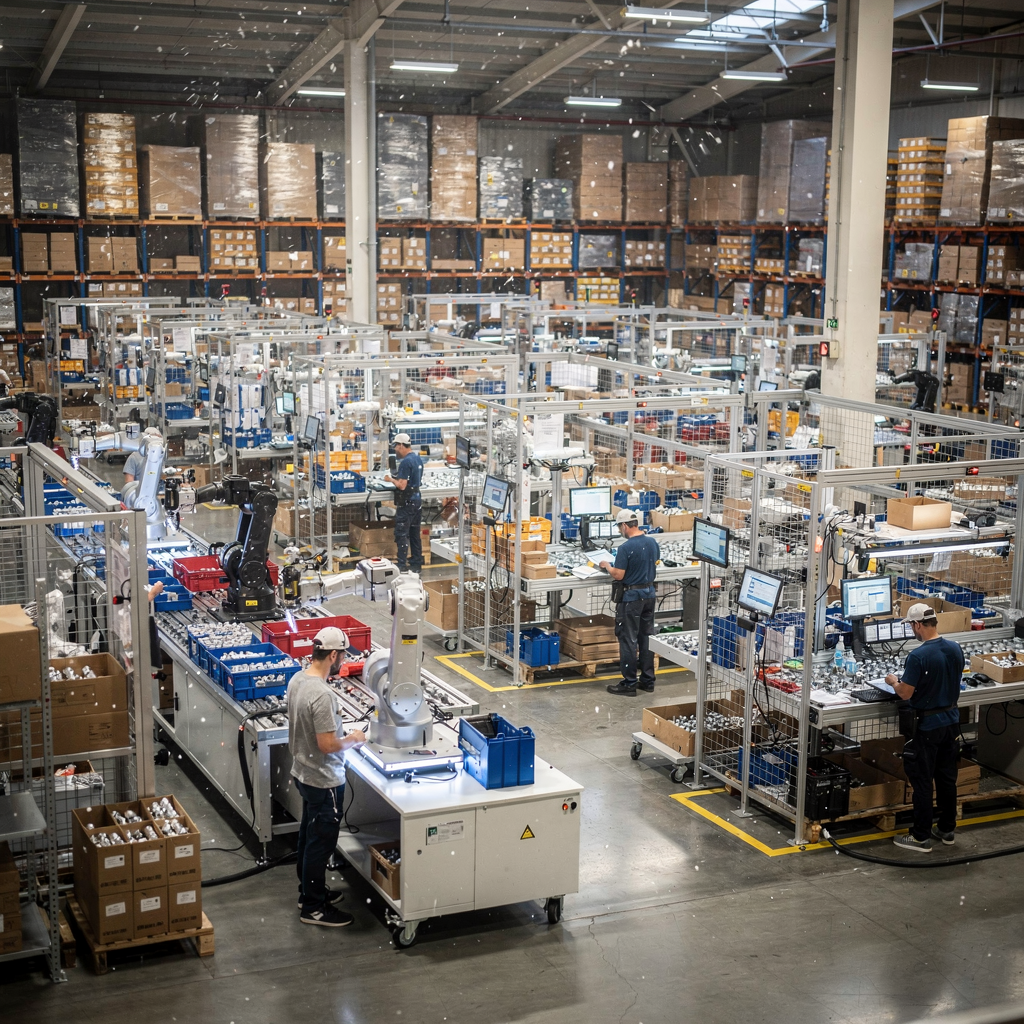
For the supply chain manager: advantages of ai agents, agentic ai and the future of supply and future of supply chain management
This chapter is a practical playbook for the supply chain manager. The advantages of AI agents include better forecasting, lower inventory and faster decisions. They free planners from repetitive tasks and let teams focus on exceptions. For today’s supply chain, that increases speed and reduces manual error.
Begin by defining 1–2 pilot projects. Choose initiatives with good data and strong ROI potential. For example, automate high-volume email workflows tied to logistics and customs, and measure handle time and accuracy. Our platform shows how automating operational email lifecycle reduces handling time from about 4.5 minutes to roughly 1.5 minutes per email (virtualworkforce.ai example). Set KPIs for forecast error, inventory days and service level.
Decide whether to buy or build. Vendors provide pre-built integrations and faster time-to-value, while internal builds may fit unique processes. Also, ensure you have clear governance for data access and for audit trails. Ask IT to connect data sources, and ask procurement to align contracts around performance outcomes. Include supply chain teams in design workshops and in acceptance tests to increase buy-in.
Looking ahead, AI agents can operate across the supply chain, working with planners and carriers to automate routine decisions. Using AI agents safely means keeping human oversight on critical trade-offs. The role in supply chain management will shift toward exception oversight and strategy. If you want concrete tools to improve logistics communication, review resources such as best tools for logistics communication and AI in freight logistics communication (best tools) and (AI in freight logistics). Finally, build a 90‑day pilot with clear KPIs, and link results to a 12‑month roadmap for wider supply chain transformation.
FAQ
What is an AI agent in the supply chain?
An AI agent is an autonomous or semi-autonomous software that monitors data and recommends or executes actions. It helps with planning, routing, inventory and exception handling to improve supply chain performance.
How quickly do AI pilots show value?
Pilots can show measurable benefits in 8–12 weeks for forecasting and in 3 months for high-volume email or logistics tasks. Results depend on data quality and on the clarity of KPIs.
Can AI agents handle emails and operational correspondence?
Yes. AI agents can triage, route and draft responses for operational emails while grounding replies in ERP, TMS and WMS data. This reduces manual triage time and improves consistency.
What are common logistics use cases for AI?
Common use cases include dynamic replenishment, route optimisation, predictive ETAs and predictive maintenance. These often deliver quick ROI by reducing delays and lowering costs.
Do AI agents replace planners?
No. AI agents automate repetitive tasks and surface recommendations, while planners retain control over strategic and high-impact decisions. Human-in-loop gates are critical.
How do you measure pilot success?
Use KPIs like forecast error, inventory days of supply and service level. Also track time-to-recover from disruptions and handling time for operational tasks.
What are the risks with agentic AI?
Risks include over-automation, biased models and cybersecurity exposure. Mitigate them with phased rollouts, audits and clear escalation paths.
How does AI help with supplier delays?
AI agents monitor lead-time signals and propose procurement cadence changes or alternative sourcing. They speed decision-making during disruptions and help prevent stockouts.
Do I need new systems to adopt AI agents?
You do not always need new core systems, but you need clean data and integrations to ERP and WMS. Many solutions layer on existing platforms to provide quick value.
What should a supply chain manager do first?
Define one pilot, secure data sources and set clear KPIs for forecast error and inventory days. Ensure governance and include stakeholders across procurement, operations and IT.
Drowning in emails?
Here’s your way out
Save hours every day as AI Agents label and draft emails directly in Outlook or Gmail, giving your team more time to focus on high-value work.