


How ai agent systems improve trade execution and accuracy
AI agents are autonomous systems that analyze data and act. They use ML models, event triggers, and execution APIs to make autonomous trade decisions. First, models score signals. Next, the agent routes orders to an execution venue. Finally, the agent watches fills and adjusts size. This loop shortens time from idea to trade. As a result, traders and desk leads see faster trade execution and clearer metrics.
Surveys show rapid adoption. For example, a 2025 study found that 79% of businesses currently use artificial intelligence agents, and two-thirds can quantify benefits like improved efficiency and accuracy. In practice, the metrics traders care about include latency, hit rate, slippage, and throughput (TPS). Throughput targets matter in high-frequency contexts. Some architectures scale to 5,000 transactions per second and support 10,000 concurrent users, which demonstrates the robustness needed for modern systems for decentralized trading architectures.
A simple example makes this concrete. A small ML signal that predicts short-term direction can reduce latency by optimizing order size and route. Suppose a signal lifts prediction accuracy by 3%. Then hit rate increases and slippage drops. The agent can then split orders, throttle size, and submit with smarter time-in-force. That example shows how a technical analysis agent can deliver measurable gains for a professional trader.
Practically, decide when an AI agent helps and when humans should keep control. Use agents for repetitive, low-latency tasks and to monitor microstructure. Keep humans in the loop for discretionary calls and large, complex trades. Also, plan risk controls like pre-trade checks and kill switches. For ops teams that still face email bottlenecks, products such as our no-code AI email connectors show how automation reduces manual work and preserves audit trails ERP email automation for logistics. Ultimately, an active approach combines AI signals, automated trade execution, and human oversight to improve decision-making and reduce errors.
Real-time stock analysis: ai trading and ai stock signals for practical use
Real-time stock analysis uses streaming pipelines rather than batch runs. Streaming analytics let agents act on new ticks and news the moment they appear. Systems that process real-time data ingest market feeds, price updates, and news. Then they run models and publish signals to execution engines. The difference between batch and streaming is speed and freshness. Batch uses historical data and periodic retraining. Streaming reacts as market conditions change.
High-volume production systems need to scale. Research shows architectures can be built to support roughly 5,000 TPS and 10,000 concurrent users, which suits many institutional needs (architecture reference). Real-time stock signals include momentum models, news sentiment from NLP, and microstructure features like order book imbalance and trade velocity. For example, sentiment analysis on financial news can add a short-term edge, while momentum models capture persistent trends.
Dashboards should show top metrics: signal age, latency to generate, expected accuracy, and recent P&L impact. Typical accuracy ranges vary by approach and horizon. Short horizons trade off accuracy for speed. Longer horizons favor richer features and historical testing. Latency targets depend on strategy. For high-frequency, aim for sub-millisecond execution. For intraday strategies, 10–100 ms may suffice. Trade-offs include model complexity versus latency and robustness versus sensitivity to volatility.
For teams prototyping, no-code ai solutions speed setup. They allow analysts to wire data sources and launch pilots without heavy engineering. Yet, data hygiene matters. Ensure clean feeds and proper timestamp alignment. Also, capture a test dataset for backtesting and keep replayable logs. If you want practical templates for operations and email-driven workflows, see our guide to scaling logistics operations with AI agents for ideas on governance and rollout how to scale logistics operations with AI agents. In short, combine solid engineering with clear latency goals to turn AI stock signals into actionable trade ideas.

Drowning in emails?
Here’s your way out
Save hours every day as AI Agents label and draft emails directly in Outlook or Gmail, giving your team more time to focus on high-value work.
Building an automated trading workflow with trading bots and no-code ai tools
Map a clear trading workflow before you automate. A standard flow is: data ingestion → signal generation → risk checks → order routing → execution. Each step must have monitoring and fallbacks. Trading bots automate this path. They can submit test orders, monitor fills, and report metrics. No-code AI tools speed early prototyping and lower operational burden. With a no-code approach, quant researchers can assemble connectors and logic blocks without full-stack engineering.
To build safely, follow a practical checklist. First, confirm data quality and align timestamps. Second, use a robust backtest framework with walk‑forward testing. Third, run paper trading that reflects real market friction. Fourth, integrate execution venues and test adapters. Fifth, set hard kill switches and position limits. This checklist reduces risk when you deploy any automated trading or algorithmic trading strategies.
Example: a team used no-code ai to build a stock trading bot that combined momentum and news sentiment. They built a dataset from exchange and news feeds. Next, they backtested for several months, fixed leakage, and launched paper trading within weeks. Paper trading revealed slippage and venue quirks. The team then applied pre-trade checks and moved to a small live size. That rapid iteration shows how no-code ai can cut time from idea to paper trading.
Operationally, choose a trading platform and trading systems that support replayable logs and order-level audit trails. Adopt a test strategies routine that includes scenario tests and stress runs. Also, ensure your trading workflow includes human override and clear escalation routes. If your ops teams handle repetitive emails tied to orders, consider tools that automate correspondence while grounding replies in core systems; our virtual assistant for logistics provides a model for how automation can be safe, auditable, and fast virtual assistant for logistics. Overall, pair no-code AI with solid controls to accelerate pilots and protect capital.
Multi-agent trading agent architectures for scalable ai trading agents
Multi-agent architectures split responsibilities across specialized agents. For example, one agent generates research signals. Another handles execution. A third manages risk and monitoring. This separation improves fault isolation and clarity. Multi-agent systems scale better than monolithic bots. They also let teams deploy updates to one component without stopping the whole system.
Deloitte forecasts that by 2025 a notable share of firms will run agentic pilots, and by 2027 that share may grow further as generative AI and orchestration advance. Plan now for multi-agent orchestration with a message bus, a reliable state store, and clear consensus rules for order submission. Include failure isolation so a research agent can fail without blocking execution agents. Also, keep replayable logs and immutable audit trails for post-trade review.
Architectural notes include coordination patterns, priority rules, and monitoring. Implement a message bus for low-latency events and a state store for durable positions. Use leader election for order decisioning and consensus on netting if multiple agents propose actions. Monitoring must include health checks, lag detection, and alerting. For compliance, ensure every proposed order has an audit context and a human-readable justification when required.
Operationally, enforce governance and a testing pipeline. Use red-team scenarios and regular model validations. Also, assign specialized agents for research, execution, risk control, and customer-facing reporting. This division mirrors how modern trading firms structure teams and how specialized agents reduce single points of failure. If your organization is exploring multi-agent pilots, consider how no-code ai can let non-engineers assemble agents for research or alerts while engineers handle the execution adapters. This approach balances speed and safety and positions you to scale agentic workflows across complex trading environments.
Drowning in emails?
Here’s your way out
Save hours every day as AI Agents label and draft emails directly in Outlook or Gmail, giving your team more time to focus on high-value work.
From research to desk: integrate ai agent for stock trading into the trading desk and execute safely
Move methodically from research to live execution. The recommended path is research → robust backtest → paper trading → live with small sizes → scale. At each step, validate assumptions and log every decision. Backtests must use realistic fills and transaction cost models. Paper trading should simulate venue behavior and order book conditions.
Before you execute live, enforce controls. Pre-trade risk checks prevent oversize orders. Kill switches stop runaway logic. Audit trails record which agent made which decision. Governance reviews document model limitations and update cadences. For desk culture, emphasize explainability. Traders need clear signals and an easy override. Train your team on how agents generate signals and on when to intervene. This training helps adoption and reduces errors.
Track a compact KPI set post-deployment. Include profit factor, maximum drawdown, execution quality, and alert rates. Also monitor latency, fill rate, and slippage per venue. Regular post-trade analysis should compare expected and realized performance. If the model diverges, pause and investigate. For broader perspective, Citi notes that emerging AI use cases like predictive analytics and automated trading assistants reshape investment management by offering speed and accuracy (Citi analysis).
On integration, keep humans in supervisory roles and use an ai assistant for reporting and routine correspondence to free up the desk. For example, virtualworkforce.ai helps ops teams draft and ground replies across systems so desk staff spend less time on repetitive emails and more time on trading decisions how to improve logistics customer service with AI. Finally, document every model change and maintain a rollback plan. This disciplined process lets teams deploy with confidence and scale safely.
Trading tools, risk controls and compliance for no-code automated trading
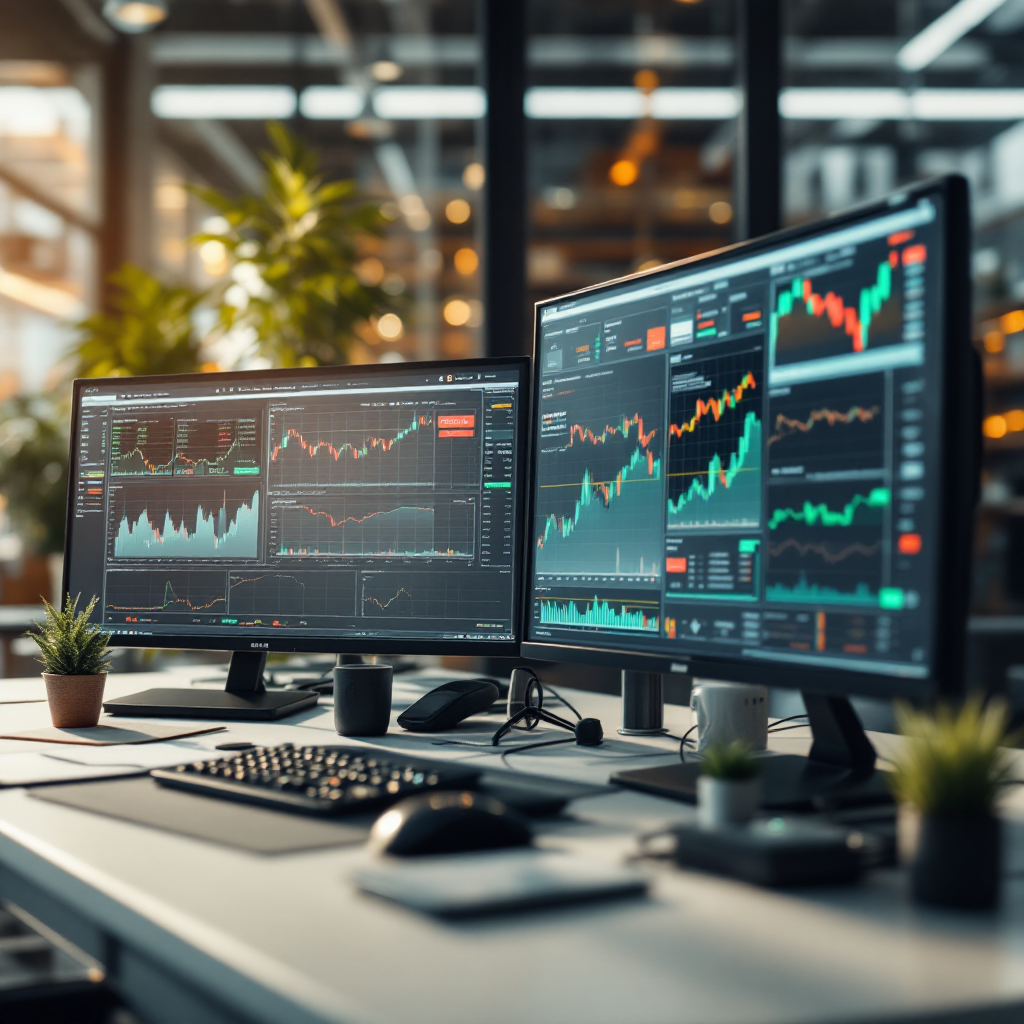
Essential trading tools form the backbone of safe automation. Include an orchestration layer, execution adapters, data pipelines, and monitoring dashboards. The orchestration layer routes signals, applies risk checks, and logs actions. Execution adapters translate generic orders into venue-specific APIs. Data pipelines bring in market and reference feeds and persist them for replay. Monitoring dashboards surface latency spikes and order anomalies.
Risk and compliance must be central. Build model risk management, data lineage, regulatory reporting, and regular stress tests into your delivery cycle. Keep exportable logic and version control, especially with no-code ai. No-code tools speed pilots, but they must support governance. Ensure the no-code layer can export the model workflow and the decision logic so auditors and engineers can review it.
Operational checklists help operationalize safety. Do vendor due diligence. Confirm SLAs for throughput and latency. Run red-team tests and scenario drills. Test disaster recovery and verify that kill switches work. Also apply model monitoring to detect drift, staleness, or data issues. For retail traders and institutional desks alike, monitoring keeps confidence high and reduces surprises in volatile markets.
Finally, remember that automation should complement human skills. Use automation to handle repetitive work and to surface trading opportunities. Keep humans in charge of complex judgment calls. If your team manages many email-driven tasks tied to trades or logistics, consider an ops-focused assistant that reduces handling time and preserves context across systems automated logistics correspondence. With the right tools and controls, you can deploy automated trading while meeting compliance and keeping capital safe.
FAQ
What is an AI agent in the context of trading?
An AI agent is software that analyzes data, makes decisions, and can submit orders with minimal human help. It often combines ML models, event triggers, and execution APIs to automate parts of the trading process.
How fast can AI systems process trades?
Performance varies by design, but some architectures scale to thousands of transactions per second and support many concurrent users. For example, research architectures have been built for roughly 5,000 TPS and large user counts (architecture reference).
When should traders keep humans in the loop?
Keep humans in the loop for large or complex trades, when models face regime shifts, or when discretionary judgment is needed. Humans should also review sudden model performance drops and decide whether to pause or adjust strategies.
Can no-code tools really build a stock trading bot?
Yes. No-code platforms accelerate prototyping, let researchers wire data sources, and can reach paper trading quickly. However, you must still run robust backtests and stress tests and verify execution adapters.
How do multi-agent systems help scale AI trading agents?
Multi-agent systems split roles across specialized agents for research, execution, and risk. This separation isolates failures and enables faster iteration on individual components while the rest of the system stays live.
What risk controls are essential before going live?
Essential controls include pre-trade risk checks, position limits, kill switches, audit trails, and governance reviews. Regular red-team tests and stress scenarios help validate resilience under unusual market conditions.
How do I measure execution quality?
Track metrics like slippage, fill rate, latency, and profit factor. Compare expected fills from backtests to realized fills and investigate differences to improve routing and sizing decisions.
Are AI trading systems suitable for retail traders?
Some AI tools are accessible to retail traders, especially for signal generation and portfolio construction. However, retail traders should be mindful of execution costs, latency, and proper backtesting before allocating capital.
What role do large language models play in trading?
Large language models can power research assistants, parse financial news, and summarize earnings calls. They augment analysts by extracting sentiment and highlighting relevant passages in financial news and filings.
How should teams start a pilot with AI agents?
Start small: develop a clear hypothesis, backtest on a realistic dataset, move to paper trading, and then scale with small live sizes. Keep thorough logs and an easy rollback plan to manage risk during the pilot.
Drowning in emails?
Here’s your way out
Save hours every day as AI Agents label and draft emails directly in Outlook or Gmail, giving your team more time to focus on high-value work.