


ai agent in the enterprise: agent works as an assistant for corporate training
An AI agent acts as an autonomous personal assistant inside the learning and development stack. It reads inputs, makes decisions, schedules micro‑learning, and executes routine task flows without constant human direction. IBM defines an AI agent as “a software program capable of acting autonomously to understand, plan and execute tasks” https://www.ibm.com/think/insights/ai-agents-2025-expectations-vs-reality, and McKinsey highlights the shift of repetitive work away from people so trainers can focus on coaching and content design https://www.mckinsey.com/mgi/our-research/agents-robots-and-us-skill-partnerships-in-the-age-of-ai.
In an enterprise context the AI agent integrates with HR systems, LMS, and messaging channels. It can automate onboarding checklists, assign modules, and track completion across teams. For example, an agent can probe a new hires profile, assign the right modules, schedule a mentor session, and remind the manager about a progress review. These simple actions reduce admin hours, shorten new‑hire ramp time, and raise user satisfaction scores. Practical KPIs include reduced admin hours per new hires, lowered time to competence, and higher learner NPS.
Training teams use the AI agent to identify knowledge gaps quickly, then tailor follow‑ups. Agents gather insight from assessments and performance so L&D can allocate budget and resources where impact is highest. Because the agent works continuously it supports scalable, consistent experiences across regions and shifts. Companies that operate customer‑facing or logistics teams also link AI agents to operational systems to resolve queries and reduce email volume; see a logistics personal assistant example in our virtual assistant logistics resource https://virtualworkforce.ai/virtual-assistant-logistics/. The agent reduces repetitive task time and lets small teams focus on upskilling, coaching, and creating impactful learning experiences.
Finally, AI agents aren’t magic. They need governance, clean training data, and an L&D plan. Still, when you deploy them with clear KPIs, they enable smarter allocation of trainer time and faster, measurable onboarding outcomes. Use the agent to automate low‑value work while you advance strategic learning initiatives.
automation and ai-powered tools for training programs to transform compliance workflows
Automation and ai-powered systems change how compliance updates reach the workforce. Training teams no longer manually push policy PDFs and chase proof of reading. Instead, an AI agent can automate assignment, generate refresher quiz modules, and log evidence into a central dashboard. Oracle’s industry analysis shows enterprise deployments of AI agents are rising as platforms unify actions and results, which helps training teams scale rule‑based monitoring https://research.isg-one.com/buyers-guide/business-technologies/digital-business-and-workplace/ai-agents-software-provider-report/2025/oracle.
Use cases include automated policy pushes when a regulation changes, dynamic assignment of refresher modules based on role, and auto‑generated quiz content to reinforce key concepts. For regulated industries, agents can run scheduled compliance checks, capture signed acknowledgements, and surface gaps to managers. These automations lower time to compliance update and boost completion rates. KPIs track completion percentage, average days to compliance, and frequency of compliance incidents.
Deloitte reports that iterative fine‑tuning of LLMs improves agent accuracy, which supports automated certification and monitoring at scale https://www.deloitte.com/us/en/insights/industry/technology/technology-media-and-telecom-predictions/2025/autonomous-generative-ai-agents-still-under-development.html. When you automate routine audits, the team spends less time searching records and more time resolving issues. A simple example: an agent assigns a refresher module and then sends a short quiz to confirm understanding. The agent logs the quiz completion and flags any low scores for coaching.

To operationalize this model, align workflows with policy owners, set escalation rules, and map evidence paths into the audit dashboard. Tools that connect operational systems such as ERP and document stores let the agent pull the correct policy versions. If you need logistics‑specific examples of email and policy automation, review how email drafting integrates with logistics operations https://virtualworkforce.ai/logistics-email-drafting-ai/. Together, automation and human oversight reduce risk and speed compliance across the organization.
Drowning in emails?
Here’s your way out
Save hours every day as AI Agents label and draft emails directly in Outlook or Gmail, giving your team more time to focus on high-value work.
using ai to personalise corporate training and boost roi
Personalisation raises engagement and ROI by delivering targeted learning journeys. Using AI, training teams create adaptive paths that respond to performance, role, and deadlines. Research shows many organizations apply generative AI across service and product areas; a recent industry study found about 63% already deploy generative AI in related domains, which supports tailored learning and on‑demand coaching https://masterofcode.com/blog/generative-ai-statistics. Meanwhile, 77% of workers say they will likely trust autonomous agents, provided humans remain involved in oversight https://www.salesforce.com/news/stories/ai-training-trust/.
Start by mapping learner profiles into modules and by curating content that matches skill needs. The AI agent can generate micro‑learning modules, tailor recommendations, and assign performance‑based refreshers. These actions deliver personalized coaching at scale and reinforce key concepts over time. Track learning retention and performance improvements as primary ROI metrics. Measure cost per trained employee and calculate payback by comparing reduced travel, shorter instructor hours, and faster new hires ramp‑up.
Practical examples include dynamic on‑the‑job coaching that appears when a worker misses a metric, or a targeted micro‑module for high‑risk processes. Trainers can generate scenarios from an LLM, then refine them with domain experts. That approach uses the LLM as a draft generator, and trainers edit for accuracy. Companies should include the llm in the testing pipeline to validate outputs before deployment.
For operations teams, AI also enables cross‑system recommendations. For example, virtualworkforce.ai shows how agents automate email lifecycles and ground responses in ERP and WMS data, which reduces friction and frees trainers to focus on high‑impact activities https://virtualworkforce.ai/how-to-scale-logistics-operations-with-ai-agents/. Measure ROI by linking training improvements to operational metrics such as throughput, error rates, and customer satisfaction. When you generate targeted modules and tailor assessments, you enable meaningful, measurable upskilling that pays back in weeks or months.
ai voice and interactive agents: assistant scenarios for compliance assessment
AI voice and conversational agents simulate real interactions for compliance assessment. Voice simulations help evaluate how employees handle live situations. For sales compliance, a voice agent can run role‑play calls, capture verbatim responses, and score adherence to scripts. In healthcare, interactive voice walkthroughs test safety protocols and observe decision paths. Vendors report productivity gains and stronger safeguards when simulations are recorded and reviewed.
These voice agents operate in real‑time. They can ask follow‑up questions, assess tone, and check for regulated phrases. The agent then assigns remediation or advanced coaching as needed. That flow reduces the need for human role‑play and speeds assessment cycles. Use KPIs such as assessment pass rates, call handling accuracy, and time saved versus human role‑play to measure value.
In practice, agents can suggest corrective content after a failed simulation. For example, the agent might assign a short module, then schedule a live coach review. This hybrid model keeps humans in the loop where nuance matters. Note that agents aren’t replacements for expert judgment in high‑risk decisions; they act as scalable practice partners and recorders.
Interactive voice agents also help with dynamic compliance checks. They can prompt for license numbers, verify responses against a knowledge base, and create an auditable trail. Logistics and freight teams often use conversation logs to surface training gaps and then assign targeted modules; see how freight communications use AI in practice https://virtualworkforce.ai/ai-for-freight-forwarder-communication/. When you combine simulation with on‑demand coaching, you improve engagement levels and knowledge retention while reducing live trainer load.
Drowning in emails?
Here’s your way out
Save hours every day as AI Agents label and draft emails directly in Outlook or Gmail, giving your team more time to focus on high-value work.
how automation and ai-powered workflows revolutionize training programs and reduce audit costs
Automation and AI‑powered workflows can revolutionize record keeping and audit readiness. Automated evidence collection streamlines audits by ensuring transcripts, completion logs, and policy versions are stored with context. Deloitte and Oracle both point to early ROI from agent deployments where manual workload falls and reporting standardizes https://www.deloitte.com/us/en/insights/industry/technology/technology-media-and-telecom-predictions/2025/autonomous-generative-ai-agents-still-under-development.html https://research.isg-one.com/buyers-guide/business-technologies/digital-business-and-workplace/ai-agents-software-provider-report/2025/oracle.
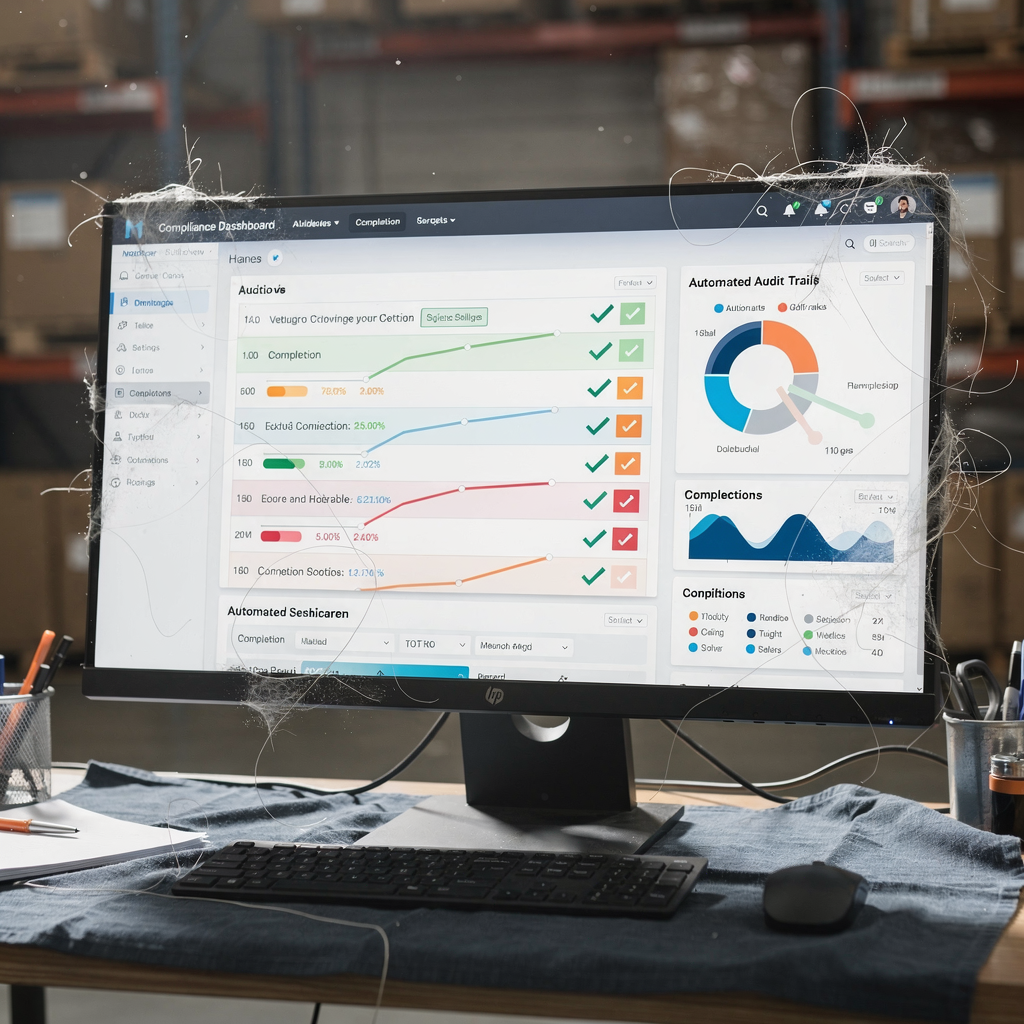
Automated workflows create standardized reporting, and they reduce audit preparation hours. An AI agent gathers proof of completion, timestamps evidence, and collects manager approvals automatically. This process lowers the number of audit findings and reduces cost avoided from fines and rework. Key metrics include audit preparation hours, number of findings, and avoided penalties. A simple dashboard surfaces risk heatmaps and assigns follow‑up actions to the right owner.
Operational teams benefit when agents link training completion to operational events. For example, when a license expires the agent assigns a renewal module and then prevents assignment until compliance checks pass. That link between training and operational controls tightens corporate compliance and streamlines enforcement. Automated workflows also enable continuous monitoring so compliance becomes a living process rather than a periodic scramble.
To deploy at scale, define escalation pathways, legal sign‑offs, and retention policies. Use a dashboard to show real‑time status and to drive manager accountability. When you adopt this model you cut audit costs and move the organization from reactive to proactive. The result is higher productivity and a stronger, auditable control environment.
deploying the ai agent: governance, measurement and proving roi so the enterprise can transform
Deployment begins with governance, a pilot, and clear success metrics. Start by setting data access rules, privacy guardrails, and role‑based controls. Stanford research stresses that preserving human agency is essential for responsible adoption, and training programs must retain human oversight https://cs191.stanford.edu/projects/Spring2025/Humishka___Zope_.pdf. Salesforce also notes that trust depends on human involvement during rollout https://www.salesforce.com/news/stories/ai-training-trust/.
Practical deliverables include a pilot scope, success metrics, a training data plan, and escalation rules. Measure engagement, accuracy, and operational impact. Metrics might include completion rates, task time saved, and a single ROI metric that compares cost avoided to deployment expense. Include an ai team or developer for integrations, and assign a business owner to maintain alignment.
Iterative model tuning matters. Deloitte recommends continuous fine‑tuning to boost llm performance and relevance https://www.deloitte.com/us/en/insights/industry/technology/technology-media-and-telecom-predictions/2025/autonomous-generative-ai-agents-still-under-development.html. You should run a short pilot with a measurable metric set, then scale. Include legal and privacy sign‑offs early. Also, create a plan to continuously curate content and to update modules when policies change.
Finally, prove ROI by linking training impact to operational metrics. For logistics teams, tying improved email handling to throughput and error reduction shows clear ROI; our ROI case study for logistics explains this linkage https://virtualworkforce.ai/virtualworkforce-ai-roi-logistics/. When you deploy with clear governance, you enable the enterprise to transform learning, lower audit risk, and empower trainers to focus on strategic learning initiatives.
FAQ
What is an AI agent in the context of corporate training?
An AI agent is an autonomous software assistant that plans and executes training tasks. It assigns modules, tracks completion, and surfaces insight so trainers can focus on coaching.
How do AI agents help with compliance?
AI agents automate assignment of policy updates, record proof of completion, and run compliance checks. They create auditable trails that reduce audit preparation hours and compliance incidents.
Are AI voice agents suitable for regulated industries?
Yes, AI voice agents can simulate scenarios and run spoken assessments in regulated sectors. They provide standardized assessments while preserving human review for high‑risk decisions.
How do we measure ROI for AI in training?
Link training outcomes to operational metrics like error rates, throughput, and time to competence. Then compare cost avoided and productivity gains to deployment and operating costs.
What governance is required before deploying an AI agent?
Set data access controls, privacy rules, and human escalation paths. Include legal sign‑offs and a plan to fine‑tune models and curate content continuously.
Can AI agents personalize learning at scale?
Yes, agents can tailor micro‑modules and adaptive paths based on assessments and role. This personalization improves knowledge retention and reduces new hires ramp time.
Will AI replace trainers?
No. AI handles repetitive task work and scaling, while trainers remain essential for coaching and complex judgement. Human oversight builds trust and improves impact.
How do AI agents integrate with existing systems?
Agents connect to LMS, HR, and operational systems like ERP to pull context and evidence. Integration lets agents assign the right module and log completion into your audit dashboard.
What are common KPIs for pilot deployments?
Track completion rates, average time saved per task, assessment pass rates, and audit readiness metrics. Use these to build a scaled ROI model for enterprise roll‑out.
How do we start a pilot for training automation?
Define a narrow scope, pick a high‑impact module, and set clear success metrics. Then deploy an AI agent with human‑in‑the‑loop checks and iterate based on measurable outcomes.
Drowning in emails?
Here’s your way out
Save hours every day as AI Agents label and draft emails directly in Outlook or Gmail, giving your team more time to focus on high-value work.