


utility industry, ai and ai agents for utilities: why this change matters now
The utility industry stands at a turning point. AI agents are being adopted to monitor, decide and act across complex utility systems. First, AI agents for utilities provide autonomous assistance that senses grid conditions, suggests operator actions and even initiates safe responses. Second, utilities can automate repetitive tasks so human teams focus on higher‑value decisions. Third, this change matters now because grid complexity and renewable penetration require faster, data‑driven responses.
For context, an industry projection states that 40% of utility control rooms will deploy AI-driven operators by 2027. Also, IBM reports that “AI is reshaping utility operations, boosting grid performance, improving customer satisfaction, and powering new energy business models” which frames the opportunity for operational transformation (IBM). Therefore, leaders must plan to adopt AI to keep pace with evolving demands in the energy sector.
This chapter sets the scope. When we say AI in utilities we mean software agents that operate in billing, customer experience, field support and grid ops. Use cases include billing automation, outage detection, demand forecasting and field dispatch. Also, readers who will gain most are utility managers, technology leads and operations teams who need to improve MTTR and reduce OPEX.
Companies now evaluate both task‑specific AI agent tools and broader agentic AI platforms. In practice, AI agents offer real‑time monitoring and automated responses. They can also route billing inquiries to the right team and personalize notifications for customers. For teams handling hundreds of emails per day, virtualworkforce.ai provides AI agents that automate the full email lifecycle and free staff for mission‑critical work. Learn more about how these systems handle operational email at our page on automated logistics correspondence automated logistics correspondence.
Finally, utilities must weigh benefits and risks. On the upside, faster outage response, fewer inspection injuries and better grid reliability are immediate gains. On the flip side, integration and security require planning. Still, with careful governance, AI enables measurable progress in the utility sector and helps utilities integrate renewable energy sources while maintaining reliability.
ai in utilities and operational: core use cases that drive operational efficiency
Operational teams focus on KPIs such as MTTR, SAIDI and OPEX. AI in utilities addresses these targets through practical use cases. First, predictive maintenance uses sensor data and machine learning to spot failing transformers or motors before they break. For example, sensor analytics have reduced unplanned downtime in some plants by predicting faults in advance. Second, real‑time grid balancing uses AI models to optimize load and integrate renewable energy.
Also, automated plant inspections deploy computer vision and AI agents to review camera feeds and flag issues. This reduces human exposure to high‑risk locations and lowers labor costs. Additionally, demand forecasting combines historical patterns and weather data to predict energy demand and optimize dispatch. Together these capabilities optimize asset life and reduce operational costs.
Quantitatively, utilities leveraging AI report major improvements. Customer satisfaction has moved above 80% in several deployments, indicating that backend operational gains translate to better customer outcomes (Shakudo). Furthermore, AI-driven automation in inspections and monitoring reduces manual labor and increases safety, as documented in sector research (AiMultiple).

Short examples clarify impact. For example, an AI agent can analyze vibration and temperature streams from a transformer, then schedule service before failure. Next, an orchestrating AI system can shift load to batteries or flexible demand to balance intermittent renewable energy and avoid costly outages. Consequently, SAIDI and SAIFI metrics can improve and OPEX can fall.
Finally, these use cases require integration with existing systems. SCADA, asset management and field service platforms must expose data. For teams interested in applying AI to email and operational correspondence, virtualworkforce.ai shows how to route and resolve process‑driven emails so field teams get the context they need ERP email automation for logistics. In sum, use cases that map to operations deliver clear, trackable ROI.
Drowning in emails?
Here’s your way out
Save hours every day as AI Agents label and draft emails directly in Outlook or Gmail, giving your team more time to focus on high-value work.
ai agent and agentic ai deploy in control rooms and the field
AI agent and agentic AI describe related but distinct capabilities. An AI agent typically performs a specific task, such as triaging outage reports or routing billing inquiries. By contrast, agentic AI can manage multi‑step decisioning across systems, acting autonomously through several stages to resolve an incident. Both have roles in control rooms and field operations.
In control rooms, autonomous AI operators can triage incoming alarms, correlate events and recommend operator actions. A cited industry forecast expects many control rooms to deploy AI-driven operators by 2027 (WNS). Also, AI agents deliver rapid context so operators make faster, safer choices. In the field, mobile agents give technicians diagnostics, step‑by‑step repair instructions and safety checks, reducing travel and idle time.
Integration matters. Practical deployments connect AI components to SCADA, OMS and field service management systems. This allows agents to access real‑time telemetry, work orders and crew locations. Therefore, dispatch becomes dynamic and crews get exactly the right data at the right time. The result includes faster restoration and lower travel costs.
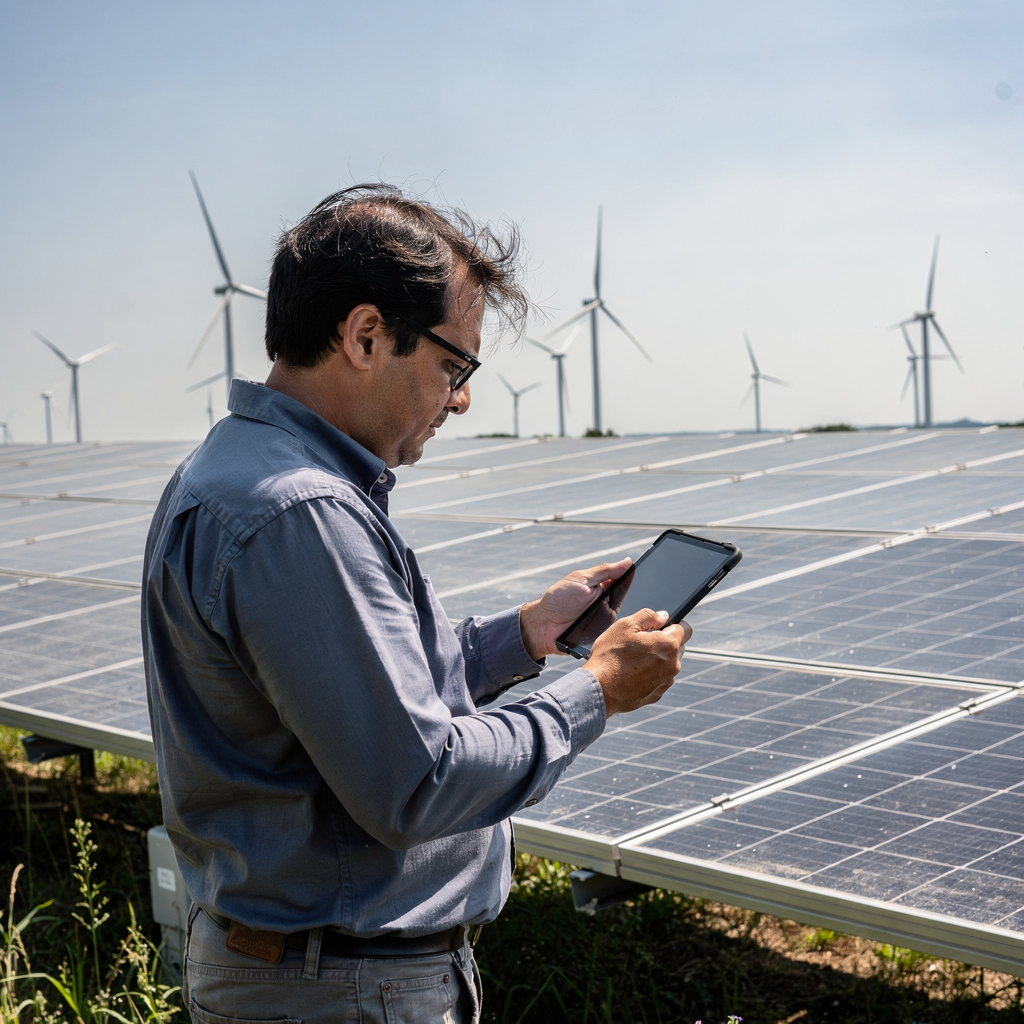
Agents are transforming the energy operations model. For example, an AI agent can automatically assemble an incident packet with sensor logs, outage reports and recommended isolation steps. Then, a field technician receives a tailored workflow on a tablet. Human agents to focus on high‑risk tasks while AI handles routine diagnostics and verification. Also, virtual agents and voice AI can be used to log findings hands‑free and speed documentation.
Operationally, utilities can reduce operational costs and MTTR. To scale these benefits, adopt a clear integration plan, define escalation rules and implement agent governance. For teams exploring how to scale operations without hiring, see our guidance on scaling logistics operations with AI agents how to scale logistics operations with AI agents. Implementing agentic AI requires careful piloting, but the payoff is sustained improvements across utility operations.
ai agents in utilities, utility companies and utility systems: customer service and billing to enhance customer outcomes
AI systems deliver value beyond the grid. They also improve customer experience and billing workflows for utility companies. First, conversational AI and virtual agents handle high‑volume inquiries such as outage status, billing queries and payment processing. Second, they free human teams to manage complex cases. Third, customers receive faster and more consistent responses, which raises customer satisfaction.
Reported deployments show customer satisfaction above 80% where AI agents enhance customer interactions and automate common tasks (Shakudo). Also, voice AI and virtual agents reduce average handle time in call centres by containing simple requests and escalating only when needed. For example, a voice AI can triage an outage report, provide localized restoration estimates and log a ticket automatically.
An end‑to‑end flow often starts with IVR triage, proceeds to automated payment or billing inquiries handling, and then escalates to a human with full context when necessary. This context includes past emails, meter readings and recent outage history. AI agents built to integrate with CRM and billing systems can draft replies, update accounts, and reconcile disputes. In many utilities, this reduces call volumes and improves billing accuracy.
Also, utilities and energy teams can personalize outage notifications based on customer preferences and critical service profiles. Personalized messages help critical customers such as hospitals and industrial users plan better. Last, for operational email overload, virtualworkforce.ai automates the full email lifecycle so teams reduce handling time from ~4.5 minutes to ~1.5 minutes per email. Learn more about how AI handles freight and customs correspondence in logistics examples that apply to utility customer workflows AI for customs documentation emails.
The bottom line is clear: AI agents help utility providers respond faster and more accurately. They reduce errors in billing, lower call centre costs and keep customers informed during outages. As utilities integrate these tools, they will see measurable improvements in both operational metrics and customer outcomes.
Drowning in emails?
Here’s your way out
Save hours every day as AI Agents label and draft emails directly in Outlook or Gmail, giving your team more time to focus on high-value work.
ai for utilities, utilities and energy: data, security and regulatory considerations
Data is the foundation of any AI deployment. Utilities face a mix of structured sensor streams and unstructured sources such as spreadsheets, PDFs and field notes. Therefore, strong data ingestion and MLOps capabilities are required. Also, utilities must design pipelines that turn raw telemetry and text into actionable features for AI models.
Security and privacy demand equal attention. Operational technology and information technology converge, which raises attack surfaces. Utilities must segment networks, enforce access controls and run adversarial testing to identify weaknesses. In addition, model governance must include audit trails so decisions can be explained during regulatory review. For example, regulators may require logs for automated dispatch decisions and outage responses.
Compliance topics include data residency, retention policies and reporting for consumer inquiries about personal data. Also, incident response plans must cover AI systems that interact with OT. Utilities must simulate failure modes and ensure safe fallback behaviours when an AI agent loses connectivity. These steps reduce the chance that automation causes wider service disruption.
Risk mitigation starts with data lineage, access controls and explainability tools. Practical actions include versioning models, logging model inputs and outputs and running continuous monitoring for drift. In addition, utilities must consider third‑party vendor management and contractual protections for AI tools. When exploring AI solutions, utility leaders should confirm that vendors provide strong security practices and traceability.
Finally, plan for governance: assign roles for model ownership, create incident playbooks and set performance SLAs. Utilities must balance agility with caution so they can adopt AI while preserving safety and compliance. For teams evaluating automation across email and operations, consider vendor options that support full control and no‑code governance, such as virtualworkforce.ai’s approach to operational email automation automate logistics emails with Google Workspace.
implementing agentic ai, utility companies use and deploy: practical roadmap to scale
Implementing agentic AI requires a clear roadmap. First, pilot a single use case that delivers measurable ROI. For many utilities, a good pilot is outage triage or email automation for operational workflows. Second, integrate with key systems such as SCADA, OMS, CRM and asset registries. Third, scale across domains while maintaining governance. Following this phased plan reduces risk and accelerates benefits.
Step one: pilot. Choose a high‑impact, contained problem and define KPIs such as reduction in restoration time, AHT and maintenance costs. Step two: integrate. Connect telemetry, work order systems and email streams so agents can make informed decisions. Step three: scale. Expand agents to handle billing inquiries, field support and grid balancing. Step four: govern. Put in place policies for model updates, access and incident management.
Organizational change is required. Utilities must create roles for MLOps and SRE, and train field crews to work with AI-agent outputs. Also, decide whether to build or buy: vendor solutions speed time to value while internal builds provide customization. For email and triage automation, virtualworkforce.ai demonstrates a zero‑code setup with business rules and full governance so operations teams keep control and accuracy.
Success criteria include lower MTTR, reduced operational costs, higher customer satisfaction and stable model performance. Also, continuous monitoring and feedback loops keep models accurate. Finally, rollout should include change management, operator training and a communications plan so human agents to focus on complex incidents while AI handles routine tasks.
In short, deploying agentic AI is achievable with a phased approach, clear KPIs and strong integration. As utilities adopt these tools, they will optimize energy usage, balance energy demand and better integrate renewable energy sources. This drives resilient, cost‑effective service delivery across the utility systems landscape.
FAQ
What are AI agents and how do they differ from agentic AI?
AI agents are software components that perform specific tasks such as triage, routing or diagnostics. Agentic AI refers to more autonomous systems that can carry out multi‑step decisioning across systems and act with minimal human intervention.
How quickly can a utility deploy AI for outage triage?
Time to deploy varies by scope, but a focused pilot for outage triage can launch in a few months. Also, integration with SCADA and OMS will determine the timeline and complexity.
Can AI improve customer experience for billing and inquiries?
Yes. Conversational AI and virtual agents can handle billing inquiries, reduce average handle time and automate routine reconciliations. As a result, customers receive faster, more consistent responses.
What security measures should utilities implement before deploying AI?
Utilities should enforce network segmentation, access controls and model governance. In addition, they must maintain audit trails and incident response plans for systems that interact with OT.
Are there measurable ROI examples for AI in utilities?
Yes. Some deployments report customer satisfaction north of 80% and reduced handling times in support centers. Also, predictive maintenance and automated inspections yield lower downtime and maintenance costs.
How do AI agents help field technicians?
AI agents deliver diagnostics, step‑by‑step workflows and safety checks on mobile devices. This reduces travel time and idle time and speeds repairs.
What role does data quality play in AI success?
Data quality is critical. Accurate telemetry and clean unstructured text conversion lead to reliable AI outputs. Therefore, invest in data ingestion and MLOps to ensure consistent performance.
Can AI systems integrate with existing utility software?
Yes. Most AI deployments integrate with SCADA, OMS, CRM and asset management platforms. Also, APIs and connectors are common ways to exchange data safely.
How should utility leaders start with AI adoption?
Start with a high‑value pilot and clear KPIs, such as reduced restoration time or lower email handling time. Next, secure buy‑in, integrate systems and plan for scale with governance in place.
What are best practices for governing AI in utilities?
Best practices include versioned models, logging of inputs and outputs, adversarial testing and a cross‑functional governance team. Also, define escalation paths and maintain regulatory compliance for data and decisions.
Drowning in emails?
Here’s your way out
Save hours every day as AI Agents label and draft emails directly in Outlook or Gmail, giving your team more time to focus on high-value work.