


Introduction: How AI is changing crop monitoring (ai, ai agriculture, artificial intelligence)
First, a short scene-setter. An AI assistant for agriculture combines computer vision, sensors, dashboards and machine learning to monitor fields and make recommendations in near real time. For example, sensors measure soil, drones capture imagery, and models flag stress. Then a dashboard shows an alert and a short, actionable recommendation that helps growers decide what to do next.
Second, the scale of change is large and measurable. Industry reports show that over 60% of large farms are projected to use AI agents by 2025, while trials report yield uplifts of roughly 25% and ROIs up to 150%. These figures demonstrate clear financial upside for adopters.
Definitions help. An “AI assistant” is a software agent that ingests sensor and imagery data, analyses it with machine learning, and issues recommendations. Crop monitoring means continuous observation of crop health, stress and growth. Precision agriculture refers to targeted actions that save inputs and raise productivity.
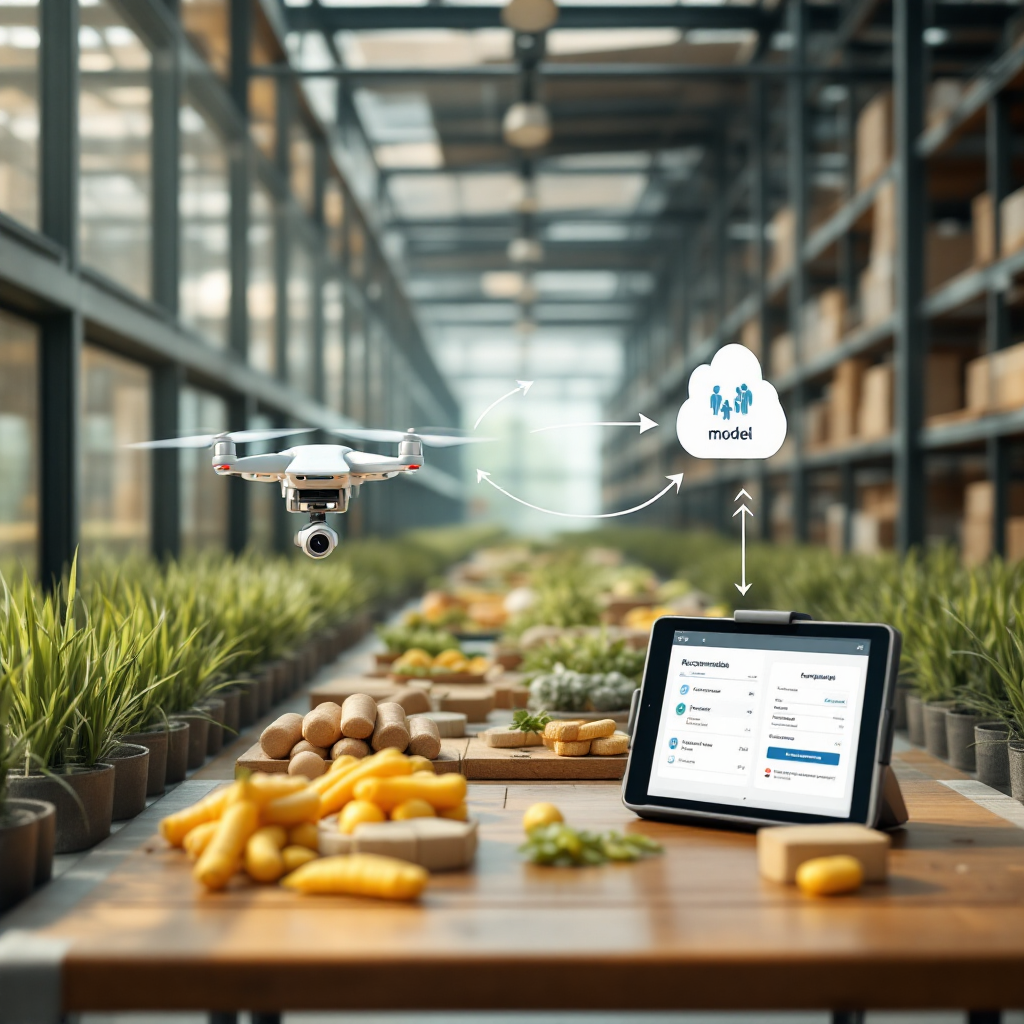
Practically, the system runs like this: sensors → edge preprocessing → cloud model → recommendation → field action. The flow keeps decision loops short so farmers make informed decisions quickly. Also, this approach supports traceability of actions and inputs in compliance and quality chains.
Finally, for teams that already automate repetitive tasks, an AI assistant for agriculture can integrate with existing farm management tools and operational email workflows. For example, operations teams that use virtual assistants to handle logistics and documentation can adapt the same pattern to farm alerts; see a relevant example on how a virtual assistant for ops teams helps tie systems together at scale virtual assistant for ops teams.
Real‑time crop monitoring and pest/weed detection (agriculture, ai for agriculture, ai)
Computer vision models now detect stress, disease and weeds from drones, fixed cameras and satellite imagery. For instance, convolutional neural networks reach very high precision in controlled studies, often above 95% for specific tasks. As a result, teams can trigger targeted sprays rather than blanket applications. This targeted approach reduces chemical use and lowers input costs.
Data requirements matter. You need high-resolution imagery for early pest and weed spotting, labelled examples for supervised training and seasonal retraining to keep models current. Also, image resolution, angle and lighting all affect model accuracy. Therefore plan regular data collection windows and annotation cycles.
Practical deployment needs a checklist. First, confirm camera resolution and mounting height. Second, set a labelling protocol and a retraining schedule. Third, define alert thresholds and escalation paths for field teams. Below is a short checklist for vision systems:
– Pick sensors that meet resolution needs and fit the crop.
– Establish labelling rules and store samples centrally.
– Schedule seasonal retraining and validation.
– Define action rules for alerts, including who gets the alert and what to do next.
Here is a farmer case study in brief. A mixed arable grower used drone surveys and a custom model to spot foliar disease early. The team applied precise treatments, and they cut fungicide use while keeping yields stable. The case showed how real‑time detection can reduce costs and protect yield.
To operate well, small teams should consider managed services or partnerships. For guidance on adopting AI systems in operations and communications, teams can learn from logistics automation patterns that integrate alerts into workflows; see a practical guide on scaling operations with AI agents how to scale operations with AI agents.
Drowning in emails?
Here’s your way out
Save hours every day as AI Agents label and draft emails directly in Outlook or Gmail, giving your team more time to focus on high-value work.
Smart irrigation and optimise water use (optimize, farm, benefits of ai)
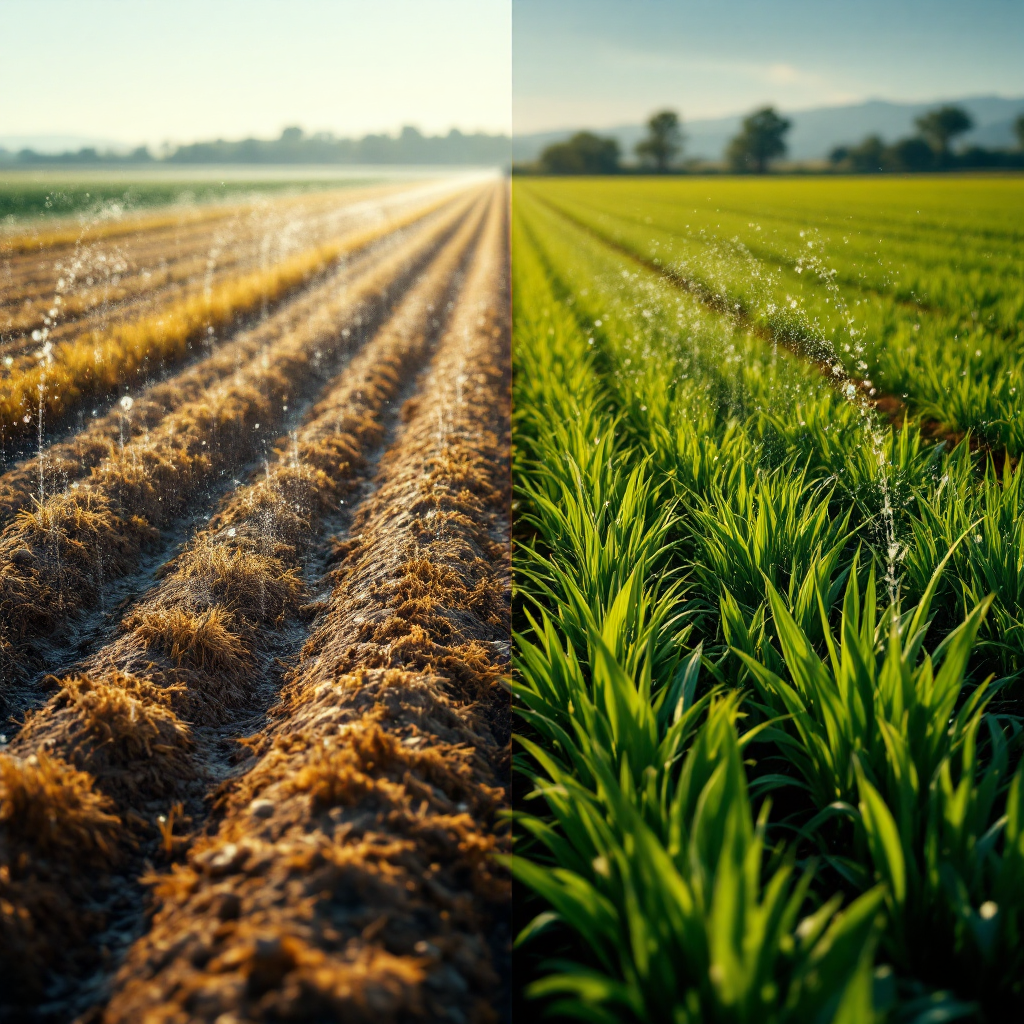
Smart irrigation links soil moisture, weather and crop stage to make irrigation decisions. The decision logic runs like this: sense soil moisture, forecast rainfall, then schedule irrigation to meet crop needs. Closed-loop control can operate pumps and valves automatically, saving water and labour.
Trials report typical water savings around 40% in implemented systems, while some trials show yield increases of 20–30% where irrigation timing matched plant growth stages. Therefore farms that adopt smart irrigation often see both resource and yield benefits.
Sensor placement guides performance. Place moisture sensors in representative zones and at root depth. Also use multiple sensors per management zone to average variation. Integrate with existing irrigation hardware via controllers or simple relay interfaces. For reliability, design fallback rules: if a sensor fails, revert to scheduled irrigation; if communications drop, keep a conservative safe schedule.
ROI example. Suppose a 200-hectare operation saves 40% of irrigation water and cuts pumping energy proportionally. If annual pumping and water costs are £50,000, savings approach £20,000. Against a system cost of £30,000 and two years of maintenance, payback occurs in under two seasons. In addition, higher yields can improve profitability substantially.
Before rollout, run a short pilot on a representative block, measure baseline water usage, then measure after automation. Use simple KPIs such as water per hectare and crop yield per megalitre. For practical guidance on documenting ROI and operational gains, read case studies on ROI and efficiency that translate well to irrigation pilots ROI and efficiency case studies.
Data analytics, yield prediction and profitability (profitability, ai agriculture, benefits of ai)
Integrated analytics combine satellite imagery, sensor streams, input records and weather to forecast yields and costs. These models use predictive analytics to produce short and seasonal forecasts. Consequently managers can plan market sales and input purchases with more confidence.
For example, combining satellite NDVI with local sensor reads improves crop yield estimates. Forecasts let teams time sales to capture better prices. This approach increases profitability by reducing guesswork and lowering storage or late-sale penalties.
Which KPIs should a farm track? Track yield per hectare, water per kilogram, input cost per tonne, and profit margin per field. These metrics make it easy to spot underperforming blocks and to test agronomic changes. Also track traceability markers so buyers can verify quality claims.
Consider a simple business case. A farm that improves forecast accuracy by 10% may reduce unsold volume and shrink storage costs. As a result, margins improve and the farm gains negotiating power with buyers. Therefore forecasting has direct financial benefit and lowers overall risk exposure.
Data quality is a major constraint. Clean input logs and regular sensor calibration pay dividends. Also, label historical events such as disease outbreaks and late frosts. These labels train models for future seasons.
Finally, the agriculture market rewards better planning. Larger growers and agri-service providers already use analytics to optimise sales and storage. Smaller operations can access similar tools via service providers that package analytics as a subscription. For help linking alerts from analytics into daily operations and communications, teams can reuse patterns from automated logistics correspondence to ensure timely field actions automated correspondence patterns.
Drowning in emails?
Here’s your way out
Save hours every day as AI Agents label and draft emails directly in Outlook or Gmail, giving your team more time to focus on high-value work.
Integration, farm workflows and the role of ai in operations (role of ai, agriculture market, bot)
System architecture matters. A practical stack has IoT sensors and cameras feeding edge preprocessors, then a central model and a farm management dashboard. The AI assistant acts as the bot that synthesises alerts, creates tasks and updates records in the farm management system. This flow turns data into field work and closes the loop.
Buyers vary across the agriculture market. Large farms and agri-service providers buy integrated platforms. Smaller growers often buy modular services or use cooperatives. Procurement barriers include connectivity, up-front cost and perceived complexity. Therefore pilots should aim to prove value with low technical risk.
Adoption challenges include data quality, limited connectivity and skills gaps. Also, energy consumption of large models creates an environmental footprint that needs management. Governance and data sharing agreements help. A pilot should include roles and escalation, training for field teams and clear KPIs for three months.
To use ai well, standardise data formats and APIs. This approach reduces vendor lock-in and lets teams switch components without redoing integrations. Also allow manual override so field teams remain in control while automations recommend actions. That balance helps teams adopt new systems faster.
Practical checklist for pilots: define objective, pick a limited area, instrument sensors or imagery, run the model, integrate alerts into workflows and measure ROI. If you need help applying no-code assistant patterns to operational emails and tasking, virtualworkforce.ai offers techniques that translate from logistics to field tasking; see guidance on how to scale operations with AI agents how to scale operations with AI agents.
Future of AI on the farm and next steps for adoption (future of ai, artificial intelligence, bot)
The future looks like more processing at the edge, federated learning across farms and more capable on‑field robots. Edge AI reduces data transfer and latency, while federated learning helps preserve privacy and lets many farms train shared models. Autonomous weeding robots and in-field drones will take on routine tasks, freeing teams to focus on strategy.
Trends to watch include AI-powered agent suites that link sensing, agronomic rules and logistics. These systems will make the future of farming more predictable and efficient. They will support sustainable farming practices and enable farmers to make informed decisions faster.
Suggested roadmap for adoption: first, assess your data and connectivity. Second, pilot one use case such as monitoring or irrigation for a season. Third, measure ROI and decide whether to scale. This pragmatic approach reduces risk and shows clear benefits before broader rollout.
Risks exist. Model bias can misinterpret data from underrepresented regions. Energy use can rise if systems run inefficiently. Vendor lock-in can limit future choices. Mitigations include open formats, audits, and staged procurement with escape clauses.
Call to action. Assess your baseline data. Choose a single pilot with clear KPIs. Commit to measuring results for one season. These steps help individual farmers and larger operators move from curiosity to actionable change while minimising disruption. As Rabia put it, “AI is not just a tool but a partner in farming”—and used well, it empowers farmers to make better decisions while supporting sustainable agriculture Rabia, NDSU.
FAQ
What is an AI assistant for agriculture?
An AI assistant for agriculture is a software agent that analyses farm data and issues recommendations or tasks. It combines sensors, imagery and models to help with monitoring, irrigation, pest control and scheduling.
How does crop monitoring work with AI?
Crop monitoring uses cameras, drones and sensors to collect field data. Then models detect stress, disease and weeds so teams can act earlier and more precisely.
Can AI reduce water usage?
Yes. Smart irrigation systems that use soil moisture, weather and crop stage can reduce water use by around 40% in implemented systems. They also often boost yields when timed to plant growth.
Do small-scale farmers benefit from these systems?
They can. Modular services and cooperative models make tools more affordable. Pilots on small plots help prove value before scaling so small operators can adopt at low risk.
How accurate is pest and disease detection?
Detection accuracy depends on data quality, sensor resolution and labelled samples. In many studies, task-specific models exceed 95% precision, though real-world performance varies with conditions.
What data should farmers track to measure success?
Track yield per hectare, water per kilogram, input cost per tonne and profit margin per field. Also record actions and their timestamps for traceability and model training.
What are the main barriers to adoption?
Common barriers include connectivity limits, data quality gaps, upfront cost and skills shortages. Address these with phased pilots, training and clear governance for data sharing.
How do I start a pilot?
Choose a single use case such as monitor crop health or optimise irrigation. Define KPIs, instrument the field, run the solution for one season and then assess ROI and operability.
Are there environmental concerns with AI systems?
Yes. Large models and constant cloud processing increase energy use. Use edge processing, efficient models and federated approaches to reduce the footprint and support sustainable agriculture.
Where can I learn more about integrating AI into farm workflows?
Look for resources that explain how to link alerts into existing operations and communications. Practical guides on scaling AI agents and on ROI for operational automation provide useful templates to adapt to farming.
Drowning in emails?
Here’s your way out
Save hours every day as AI Agents label and draft emails directly in Outlook or Gmail, giving your team more time to focus on high-value work.