


ai in cruise: how ai-powered assistants set sail for operational gains
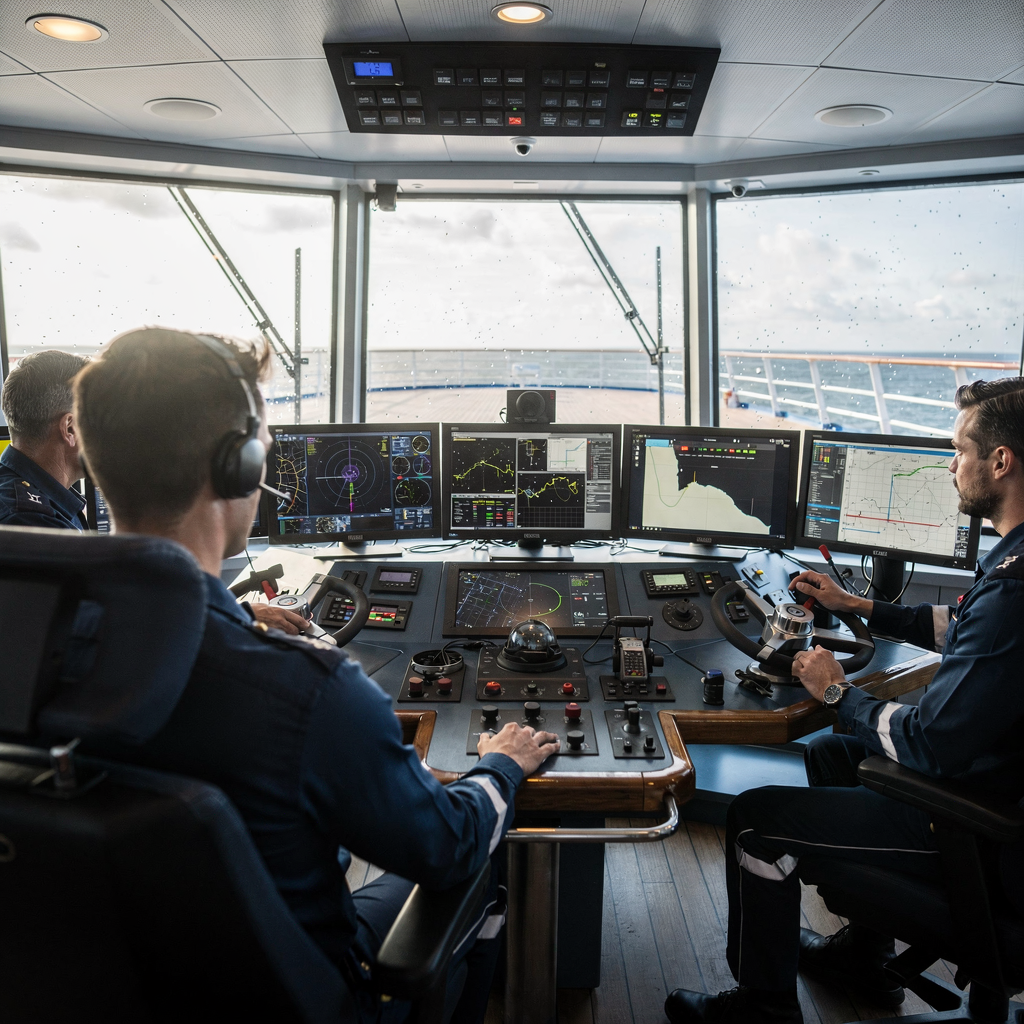
AI is changing how a cruise operates and how guests enjoy a voyage. For operators, AI delivers improved reliability, higher safety and lower costs. For guests, the same technology reduces friction and speeds service. Royal Caribbean provides a clear example: the company uses predictive maintenance driven by sensor analytics to forecast failures and avoid unplanned downtime, which improves safety and reliability on board Royal Caribbean’s predictive maintenance program. In practice, a sensor reading triggers an alert. The alert routes to engineers. The crew coordinates a port repair before the issue causes disruption. That short case study — sensor → alert → port repair — shows a measurable before and after.
Before AI, teams reacted to faults. After AI, teams plan repairs and reduce disruption. Predictive maintenance programs can cut unplanned downtime and repair costs by large margins in heavy equipment fleets, and cruise operators report similar gains. Contactless services and device rollouts also improve guest flow. One major operator installed over 420 Apple devices across staterooms and public areas to enable faster, contactless ordering and to streamline service delivery, which shortens wait times and increases throughput case study on devices onboard. Those devices help staff and guests alike.
Operational metrics improve in three areas. First, uptime rises because of predictive alerts. Second, operational costs fall with targeted repairs rather than broad overhauls. Third, guest service improves with faster responses to requests. Our team at virtualworkforce.ai has seen similar patterns in operations email: automated intent routing and grounded responses reduce manual work and error, and they free staff to focus on higher-value tasks. For cruise line leaders planning an AI rollout, measure mean time between failures, time to repair, and guest wait times before and after deployment. These measures show ROI quickly and tie technology to service quality in a concrete way.
ai agent onboard: streamline dining, booking and multilingual support
An AI agent onboard can transform daily guest flows, and it can free staff to deliver human moments. Imagine a system that automates dining reservations, manages venue capacity, handles waitlists, and records special-diet needs. Guests interact by chat or voice, and the agent updates availability and confirmations in real time. A guest asks for a late dinner at a specialty restaurant. The ai agent checks the reservation ledger, spots a cancellation, and confirms the seat within seconds. That reduces manual lookups and avoids double-booking.
Sample dialogue shows the speed and clarity. Guest: “Can I book dinner at the steak venue for two at 8pm?” AI agent: “I see two seats at 8pm. Shall I reserve them and note a gluten-free request?” Guest: “Yes, please.” AI agent: “Confirmed. You will receive a message with the table number.” This exchange saves time and reduces errors. The system updates the booking engine and notifies staff. KPI tracking should include average time to confirm a reservation, reduction in no-shows, and guest satisfaction scores.
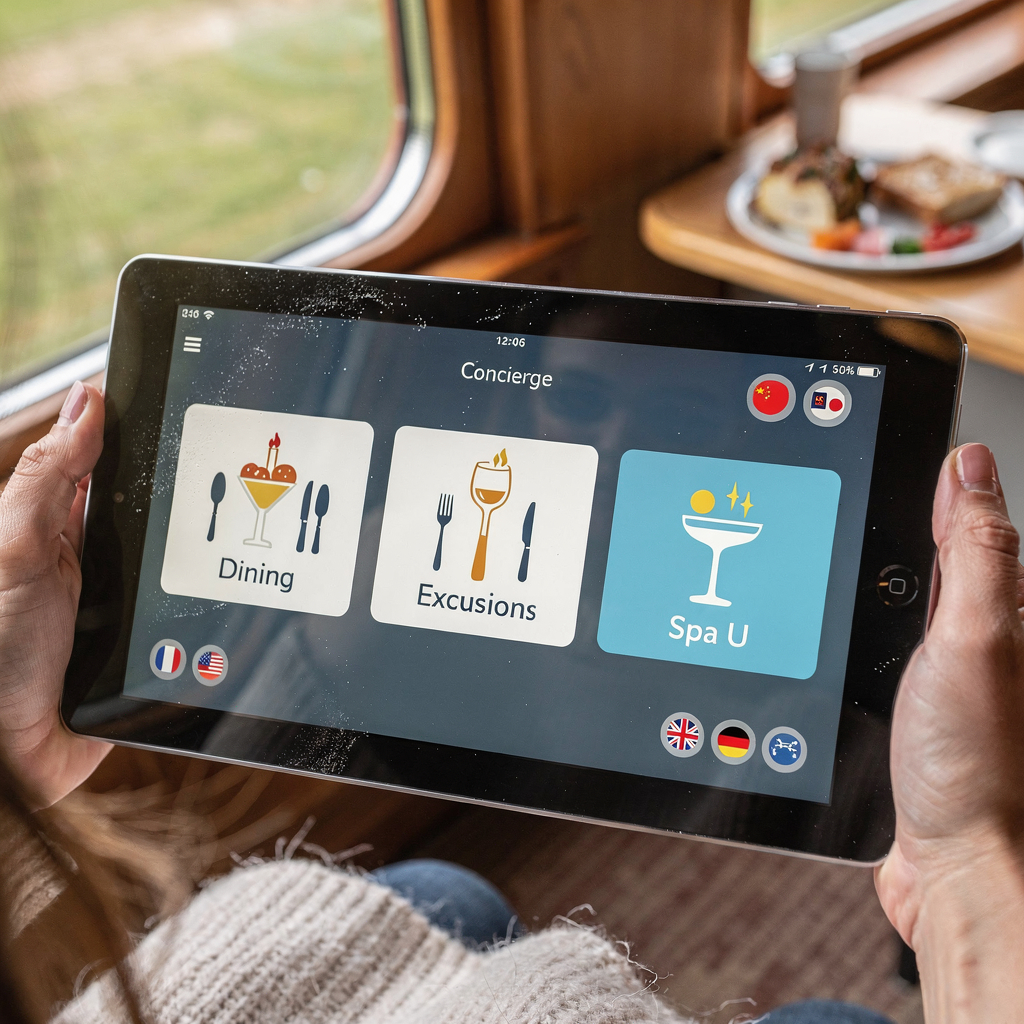
Multilingual capabilities matter at sea. An onboard AI can answer guest queries in native languages, and it can translate menus and signage. This reduces staff load and speeds responses. For example, a multilingual agent can handle shore excursions questions and special requests around the clock, which lets teams focus on complex guest needs. Measure response times, language coverage, and reduction in referrals to human staff. Operators that use these agents see faster task resolution and higher guest satisfaction.
This approach also links directly to digital workflows. Virtualworkforce.ai automates data-heavy email tasks for operations teams, and similar intent-routing and grounding across ERP or reservation systems helps the onboard agent confirm special-diet handling and spa bookings instantly. Track KPIs like booking completion time, no-show rate for dining reservations, and the percent of guest messages resolved without human handoff. Those metrics prove value and guide the next phase of scale.
Drowning in emails?
Here’s your way out
Save hours every day as AI Agents label and draft emails directly in Outlook or Gmail, giving your team more time to focus on high-value work.
cruise line operations: predictive maintenance, automation and deploying ai
AI touches many parts of cruise operations. Predictive maintenance is the headline use, but AI also optimizes crew scheduling, inventory, and port logistics. Data sources include shipboard sensors, the property management system, booking records, and third-party logistics feeds. When you combine sensor telemetry with historical repair logs, machine learning models spot patterns and predict failures days in advance. That reduces emergency repairs and allows planners to route parts and technicians efficiently.
Deployment works best in phases. Start with a pilot on a few systems, then expand to full-ship coverage. Use edge processing for low-latency alarms, and sync aggregated data to the cloud for model training and fleet-level analytics. Edge vs cloud is a practical split: alarms need to be instant, while fleet models benefit from aggregated histories. Integration with existing PMS and ERP requires mapping data fields and ensuring secure APIs. Teams should document data ownership and access controls early.
Challenges often include intermittent connectivity at sea, crew training, and governance. Plan for offline fallbacks and clear escalation paths. Crew must see value quickly, so automation should reduce repetitive tasks rather than displace critical roles. An ROI model helps here: estimate cost saved per avoided breakdown, saved crew-hours from automation, and additional revenue from improved guest satisfaction. Our experience at virtualworkforce.ai shows that automating repetitive, data-dependent email reduces handling time from ~4.5 minutes to ~1.5 minutes per message. Apply the same principle to operational messages and you free valuable crew time.
Checklist for technical readiness: sensor inventory and health, data schema mapping, edge-compute plan, integration points with booking and inventory systems, and a training program for crew. Also include compliance and maritime safety reviews. With the right plan, a cruise line can improve uptime, lower costs, and elevate service across the ship.
ai assistant and chatbots: genai customer experience, nora, ncl and royal caribbean examples
Not all assistants are the same. You can choose rule-based chatbots that answer scripted FAQs, or opt for generative AI that composes responses and personalizes offers. Hybrid models work well at scale: they use rules for sensitive actions and generative layers for conversational flair. For instance, NCL introduced nora to answer many guest questions, and MSC Cruises offers Zoe as a digital concierge; both show how assistants reduce staff load and increase speed. Meanwhile, Royal Caribbean has taken a broader digital approach with device rollouts to support passenger services Royal Caribbean case study.
Compare types by metrics. Response time, resolution rate, guest satisfaction, and upsell conversion are the common ones. Rule-based chatbots excel at fast, predictable responses. Generative assistants handle nuance and complex requests better. When an assistant cannot resolve a concern, the system must escalate to a human with full context. A short decision tree helps: if the request touches safety or billing, escalate; if it is a simple FAQ, reply automatically; if it mentions special dietary or medical needs, route to trained staff.
Generative systems require guardrails to ensure accuracy and compliance. Use grounded data connections and monitoring. Insert a human-in-the-loop for sensitive answers. The director of digital teams should define tone and escalation rules to preserve service quality. Quoting an expert, Dr. Jane Smith notes: “AI assistants are revolutionizing cruise operations by enabling real-time decision-making and personalized passenger services, which were previously impossible at scale” research source. That perspective underscores why hybrid models work best: they amplify human skill and prevent risky autonomous decisions.
Finally, prove ROI with A/B tests that compare conversion and satisfaction between chatbot types. Document “proof that ai agents scale” by tracking resolution rates and cost per interaction. This evidence supports broader rollout and helps operators balance automation with human hospitality.
Drowning in emails?
Here’s your way out
Save hours every day as AI Agents label and draft emails directly in Outlook or Gmail, giving your team more time to focus on high-value work.
booking and marketing: generative ai, ai agents on gemini enterprise and improve customer conversion
Generative AI reshapes booking and marketing for cruise companies. It personalizes messages, writes targeted copy, and drives conversational booking flows that raise conversion. Nearly 80% of travelers already use some form of generative AI to plan trips, which shows strong consumer readiness for these tools traveler readiness statistic. Use generative content to highlight new itineraries and to create tailored recommendations for guests based on past trips, preferences, and booking behavior. An ai-powered marketing assistant can generate outreach quickly and reduce the hours of manual work involved in campaign creation.
Enterprise deployments often run on safe, audited models. For example, ai agents on gemini enterprise let marketers run compliant, performance-driven campaigns while keeping data secure. A/B testing helps optimize messaging. Plan a test that splits a segment into two groups: one receives human-crafted copy, the other receives generative variations. Track conversion lift, reduced time spent on campaign creation, and engagement metrics. Also measure whether the approach reaches more travelers without dropping service quality.
Privacy and compliance are non-negotiable. Use anonymized data for model training, implement consent flows, and keep marketing feeds separate from operational systems that handle personal and medical requests. Enterprise models also allow better compliance with region-specific rules. For cruise line marketing, the payoff can be large: higher conversion on shore excursions and special packages, and improved guest satisfaction when offers feel timely and relevant. One operator reported that targeted campaigns helped spotlight new itineraries and already helped deliver record-breaking sales in certain markets. When you combine generative personalization with analytics, you get offers that resonate and convert.
Keep human oversight in the loop to ensure messaging aligns with brand values and to prevent factual errors. Use a clear escalation path and sign-off process for sensitive or regulated content. That approach keeps campaigns fast, safe, and effective while letting marketers focus on strategy instead of repetitive drafting.
deploy roadmap: seamless deployment, hospitality trade-offs, new horizons and set sail safely
Successful deployment follows a clear roadmap: pilot, scale, and monitor. Start with a focused pilot that targets measurable pain points, such as predictive maintenance on a single system or automating dining reservations for one restaurant. Define success criteria upfront. Then scale in waves, adding functions like crew scheduling and guest messaging. Monitor technical metrics like latency and model drift, and guest KPIs such as response time and customer satisfaction.
Pilots should include governance from day one. Address data privacy, bias, voice biometrics, and offline fallbacks. Train crew broadly and include a small group of power users who can act as internal champions. Use a one-page executive summary to align stakeholders, and follow a 90-day pilot checklist that covers data access, integration points, training, and rollback plans. For teams that handle heavy email loads, virtualworkforce.ai shows how automated workflows reduce errors and restore consistency. That kind of end-to-end automation proves useful when the cruise line needs to automate repetitive, data-driven communications.
Risk mitigation must be practical. For connectivity gaps, add edge processing and queuing. For governance, require human sign-off for high-risk actions. For guest-facing features, keep human handoffs simple and visible. Maintain the high-touch hospitality that defines the experience while using AI to handle repetitive tasks. Use metrics to balance automation and human attention: track escalation rates, service quality, and engagement and satisfaction scores.
Finally, look to new horizons. AI will enhance personalized onboard experiences, optimize itineraries, and connect travel partners more tightly. As operators refine their ai strategy, they will find ways to amplify human insight and improve customer outcomes. With careful planning and strong governance, cruise companies can set sail safely into the next era of guest service and ship operations.
FAQ
What is an AI agent on a cruise ship?
An AI agent is a software assistant that automates tasks and answers guest queries. It can manage bookings, answer FAQs, and route complex issues to crew with full context.
How does predictive maintenance reduce downtime?
Predictive maintenance analyzes sensor data to forecast failures before they occur. This allows teams to plan repairs during port calls and avoid emergency fixes at sea.
Can AI handle multilingual guest requests?
Yes. Modern systems offer multilingual support and instantaneous translation to reduce staff workload. This improves guest communication and speeds resolution.
Are generative tools safe for marketing campaigns?
They can be safe when you use enterprise models and guardrails. Keep human review for sensitive messages and follow privacy rules to protect guest data.
What is the best way to pilot AI on a ship?
Start with a focused pilot that has clear KPIs and limited scope. Use edge compute for urgent tasks and cloud models for fleet analytics. Train a small group of users first.
How do chatbots differ from generative assistants?
Rule-based chatbots follow scripts while generative assistants compose responses dynamically. A hybrid approach works well: use rules for critical tasks and generative layers for nuance.
How should cruise lines measure success?
Track technical metrics like latency and model drift, and business KPIs such as response time, conversion, and customer satisfaction. Compare before and after to prove ROI.
Will AI replace crew members?
No. AI automates repetitive tasks to free crew for higher-value work. It helps amplify human touches rather than replace them.
How do you protect guest privacy?
Use anonymized data for training, clear consent flows, and strict access controls. Keep marketing and operational data separated to limit exposure.
Where can I learn more about automating operations email?
Our platform automates the full email lifecycle for ops teams and reduces handling time by integrating ERP and TMS data. See how we automate logistics emails and scale operations with AI agents at our resources pages: how to scale logistics operations with AI agents, virtual assistant logistics, and automate logistics emails with Google Workspace.
Drowning in emails?
Here’s your way out
Save hours every day as AI Agents label and draft emails directly in Outlook or Gmail, giving your team more time to focus on high-value work.