


fleet and telematics combine to detect fuel fraud and cut costs
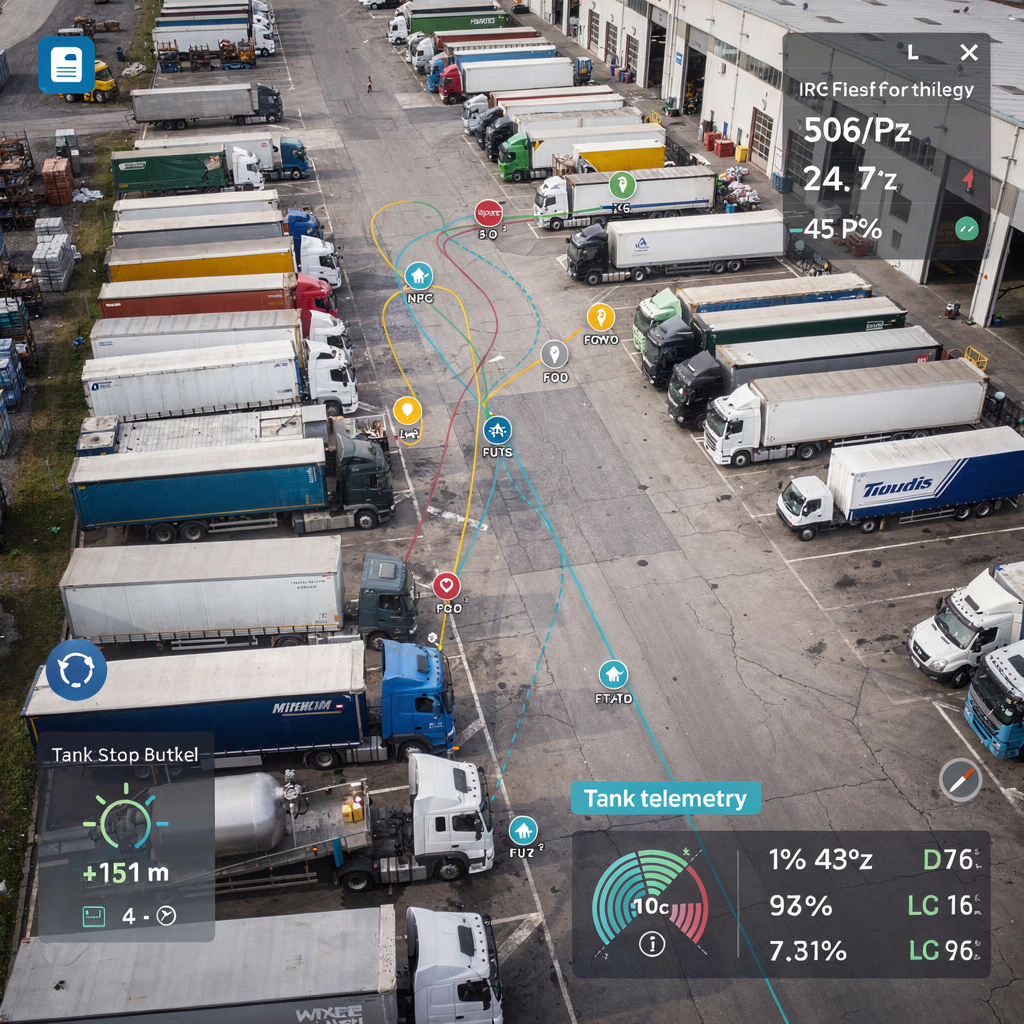
Fleet operators lose money when fuel is siphoned, misreported, or mismatched. For example, industry analysis shows fleets without tight controls can lose roughly 19% of fuel spend to fraud, theft and errors, and this can be avoided with connected systems and checks AI Emerging As Must-Have Fleet Technology – Operations. Telematics ties GPS, tank sensors and fuel‑card records together so anomalies stand out. When GPS positions do not match fuel‑card locations, that is an immediate red flag. When tank telemetry shows a sudden drop while the GPS position indicates a parked vehicle, that is another clear sign. When long-term consumption trends change suddenly for specific vehicles, the anomaly warrants investigation.
Practically, the solution links tank telemetry, on‑board CAN data, fuel‑card feeds and routing logs into a single dashboard. Then, rules and automated audits run continuously. For example, integrate real‑time tank sensors with fuel‑card reconciliation to generate an immediate alert when a fill is recorded outside expected geo‑fences. Next, compare purchase volume to recent average consumption for that vehicle and trigger an audit if the variance exceeds thresholds. These steps let operations teams detect fuel fraud quickly and reduce losses.
Tools and data to implement include tank telemetry, fuel‑card integration, GPS traces from telematics and vendor receipt feeds. Combine these with automated audit reports and real‑time notifications to escalation teams. Fleet managers receive concise incident packs with GPS maps, receipt images and suspect vehicle histories for rapid action. In addition, audit trails enable recovery and deterrence, and support conversations with insurers or fuel vendors.
Expected outcomes are faster fraud detection, fewer suspect transactions and measurable cost savings. Use metrics such as number of flagged transactions, recovered spend and reduction in anomalous fills per month. Also track time from detection to resolution, and the decline in fuel‑related exceptions. With these controls, fleets can protect margins, tighten vendor oversight, and improve compliance. For more on automating operational messages tied to fuel events, operations teams can explore automated logistics correspondence tools for error‑free communication automated logistics correspondence.
ai and generative ai matter for fleet operations and deliver actionable insights
AI and generative AI serve different but complementary roles in fleet operations. AI uses MACHINE LEARNING for prediction and optimisation. Generative AI creates human‑readable summaries, drafts reports and supports a NATURAL LANGUAGE chatbot for drivers and managers. For instance, AI models can predict maintenance needs. Meanwhile, generative AI helps write incident summaries and create daily shift reports in plain English. As a result, teams save time and make better decisions.
Industry investment underlines this shift. The fleet software market has seen a surge in AI spending, and many vendors now embed generative features to speed reporting and automate summaries Fleet Management Software Market Size, Share | Growth [2032]. In practice, generative AI can produce route options on demand, summarise incidents for insurance, and create executive dashboards. Fleet professionals can query a conversation‑style assistant to get status updates, next steps and recommended actions without running manual reports.
New capabilities also include a searchable knowledge base where managers and drivers ask plain questions and get grounded answers. Think of a scenario where a driver asks about permitted load rules and receives a citation, next steps and a suggested message for dispatch. That is the practical value of a new ai assistant linked to operational systems. Virtualworkforce.ai, for example, automates email workflows so that status updates, vendor questions and repair bookings are drafted and routed automatically, saving triage time and increasing accuracy logistics email drafting AI.
AI helps in other ways. ChatGPT‑style assistants accelerate drafting, and they can be integrated into a fleet management platform to reduce repetitive admin. Fleet managers can then focus on exceptions, strategy and safety programs. Because AI is now central to fleet software, features that used to be add‑ons are standard. For a clear primer on AI uses inside transport, see how AI is influencing route planning and operations AI in Transportation: Use Cases, Trends, and Challenges – Itransition.
Drowning in emails?
Here’s your way out
Save hours every day as AI Agents label and draft emails directly in Outlook or Gmail, giving your team more time to focus on high-value work.
predictive maintenance for a proactive fleet: reduce downtime and extend asset life
Predictive maintenance uses sensors, telematics and MACHINE LEARNING to forecast failures before they occur. First, telematics streams engine data, oil pressure, temperature and fault codes. Second, advanced analytics find patterns that precede breakdowns. Third, automated workflows convert predictions into scheduled repairs. The result is less unplanned service and longer asset life.
Key KPIs to track include mean time between failures, unplanned downtime hours, parts replacement accuracy and the reduction in emergency roadside events. When teams measure these metrics before and after deployment, they can quantify gains. Industry pilots show fewer unscheduled breakdowns and lower total repair costs when models predict issues early. Vendors now claim systems can reduce common system failures up to four times by catching leading indicators early. In addition, an ai-powered optimum vrx predictive engine can combine historical repairs, telematics and environmental data to produce high‑confidence failure forecasts.
Implementation starts with a data collection baseline. Capture CAN bus feeds, telematics position, fluid sensor readings and maintenance logs. Next, validate models on historical failures and refine thresholds. Then, integrate the prediction outputs with ERP or maintenance management systems so that predicted faults create a workshop booking or a preventive maintenance order automatically. This reduces manual steps and shortens lead time to repair.
Operationally, start with a pilot on high‑value vehicles, then expand. Use parts replacement accuracy and avoided downtime to calculate ROI. To analyze fleet data effectively, tie predictive outputs to vendor performance dashboards and to the parts supply chain. Fleet managers will be able to schedule preventive maintenance, reduce emergency tow costs and improve vehicle availability. For teams focused on maintenance email workflows and approvals, an AI agent that drafts and routes accurate repair requests can digitize the approval loop and save admin time virtual assistant for logistics.
Dash cams, fleet safety and nauto: monitor behaviour, coach drivers and create a safer fleet
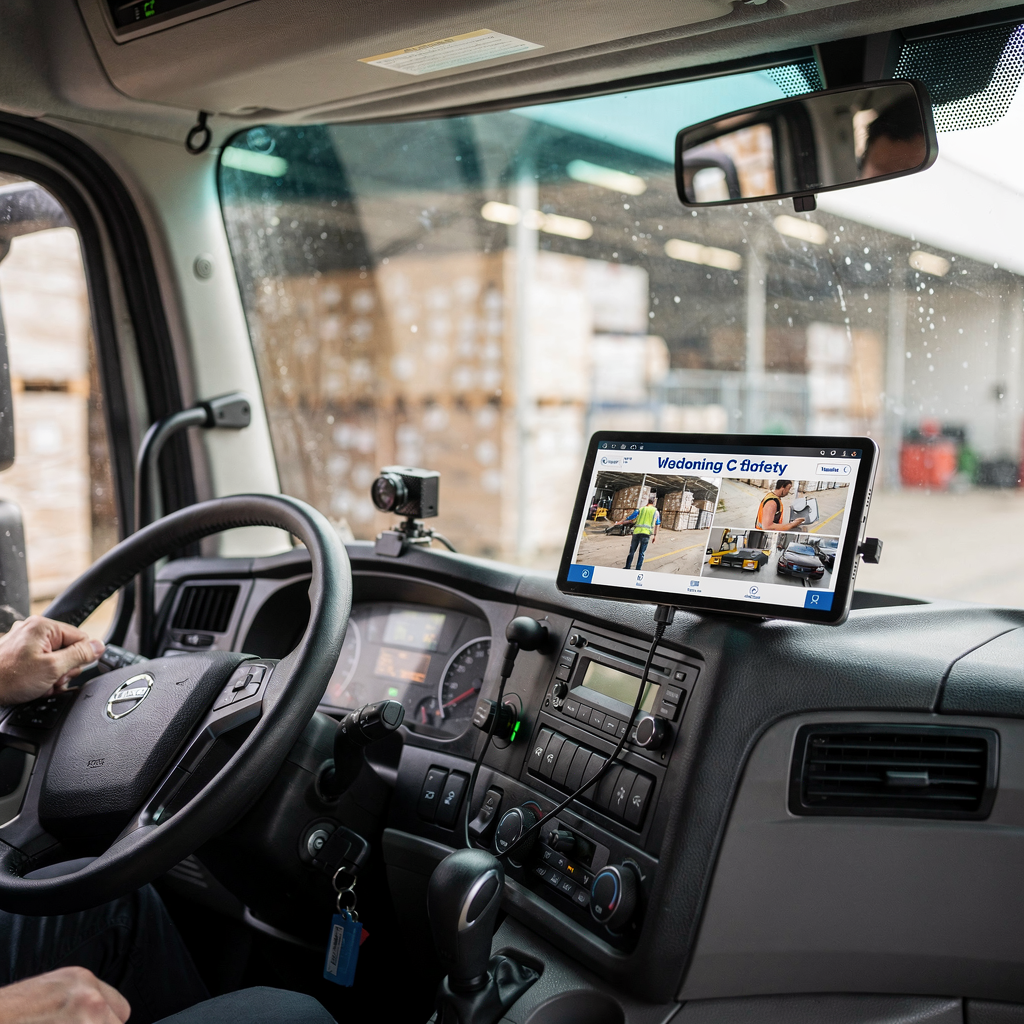
AI dash cams combine forward‑facing and in‑cab cameras with computer vision to detect driving risks. Vendors such as Nauto use dual‑facing systems and event scoring to flag risky events like harsh braking, following distance breaches and distracted driving. These systems create short clips that become the basis for driver coaching and performance metrics. As a result, fleets get better visibility into driving behavior and faster evidence for claims handling.
Fleets that combine AI video with coaching report sharp drops in high‑risk events and collisions. For example, integrated video plus feedback loops reduce repeat risky behavior by showing the driver short self‑coaching clips and by scheduling targeted safety training. Many programs also measure reductions in collision frequency and severity, which lowers insurance costs. A safety platform that is powered by AI can triage clips, assign them to coaches, and track improvement over time.
Deployment requires attention to privacy and engagement. Start with a clear privacy policy and driver buy‑in. Define what is recorded, who sees clips and how coaching will be delivered. Then, enable automatic coaching clips for obvious rule breaches, and route more ambiguous events for human review. Driver and fleet safety improves when coaching is timely, fair and educational. Use measurable targets such as percentage reduction in distracted driving, fewer cell phone use incidents, and lower harsh braking counts.
Practical features to enable include in‑cab warnings for imminent risks, automatic incident packages for claims, and driver training modules tied to specific clips. Because these systems capture driver data and vehicle telemetry together, they help both coaching and root‑cause analysis. For fleets that want a clear safety ROI, measure claims decline, coach completion rates and improvements in vehicle safety metrics. In short, dash cams and AI video build a safer fleet and a culture of continuous improvement; they also help to detect risks early and to document incidents accurately.
Drowning in emails?
Here’s your way out
Save hours every day as AI Agents label and draft emails directly in Outlook or Gmail, giving your team more time to focus on high-value work.
ai tools fleet manager and fleet managers can use to automate alerts and everyday workflows
Fleet managers need practical AI tools that automate alerts and reduce repetitive work. Use virtual assistants for command/query tasks, automated alert triage, predictive alerts for brakes or tyres, and vendor performance dashboards to consolidate supplier SLAs. These tools let teams focus on exceptions instead of routine messages. For example, automate an urgent fault into a workshop booking and a driver message with ETA in one workflow. The result is fewer manual steps and faster resolution.
Many teams benefit from a fleet management platform that combines AI‑driven alerts with automated actions. A single alert can create a work order, message the driver, update the dashboard and notify the parts supplier. This cuts admin and shortens response time. Quick win metrics include alert response time, number of manual interventions avoided and admin hours saved per week.
Specific ai tools include a chatbot for quick queries, an automated triage system that prioritises alerts, and a prediction layer that warns of impending part failure. Also, dashboards that blend driver data, fault codes and route impact help managers prioritise. Fleet professionals can use these tools to reduce downtime and to improve service levels. Because email is a major chokepoint for operations, automating the full email lifecycle with agents that draft, ground and route replies can cut handling time from ~4.5 minutes to ~1.5 minutes per email, and that frees capacity for higher‑value work how to scale logistics operations without hiring.
In practice, place automation rules so critical alerts create a single actionable pack for technicians. Then, measure the percentage of alerts that were resolved without manual escalation, and the cycle time from detection to repair. These are tangible benefits that demonstrate safety and efficiency. As a final note, fleet managers will be able to monitor vendor adherence, to track repairs and to ensure consistent follow‑up without increasing headcount.
fleet management to improve fleet performance: optimise routes, fuel and show measurable ROI
Linking AI, telematics and operational workflows drives measurable improvements in fleet performance. Route optimisation reduces fuel use, predictive maintenance lowers downtime and safety systems reduce accident costs. When these elements work together, fleets see a clear return on investment. The market context supports this: generative AI and analytics are now major investments in fleet software and vendors are building integrated stacks to deliver safety and efficiency 45+ fleet management statistics & trends for 2025 – Fynd.
To show ROI, start with a pilot on selected routes or vehicle groups. Track baseline metrics for fuel per mile, idle time, accident frequency and unplanned downtime. After deploying AI features, measure change and attribute savings. Typical ROI markers are reduced fuel per mile, fewer claims, lower repair costs and higher vehicle availability. For modelling, combine pilot results for a conservative payback estimate and present quarterly gains to stakeholders.
Rollout steps include governance, model review cadences and clear escalation pathways. Also ensure data pipelines are robust so systems can analyze fleet data reliably. Use a phased plan to scale: pilot, validate KPIs, standardise, and then expand. Periodic model reviews keep predictions calibrated and reduce disruption. In this way, the transformation is controlled and measurable, and it minimises operational disruption.
Finally, technology alone is not enough. Train teams, define success metrics and create a feedback loop so models learn from real outcomes. Fleet technology should integrate with existing systems and not require rip‑and‑replace. For teams focused on operational emails and approvals, AI that integrates with ERP and TMS can further reduce admin and accelerate decisions; see how automated email drafting and workflow automation can accelerate logistics communication automate logistics emails with Google Workspace and virtualworkforce.ai. When combined, these capabilities help create an optimum fleet with measurable gains in safety, cost and service.
FAQ
What is an AI assistant for fleet management?
An AI assistant is a software agent that helps fleet teams by answering questions, drafting messages and surfacing insights from vehicle telemetry. It can also automate routine tasks such as escalating an urgent repair or summarising incident reports.
How does telematics help detect fuel fraud?
Telematics provides GPS traces and sensor data that can be cross‑checked with fuel‑card records to find mismatches. When location, tank telemetry and purchase receipts do not align, automated checks flag suspicious transactions for audit.
Can generative AI write reports for fleet teams?
Yes. Generative AI can draft shift reports, incident summaries and executive briefs in plain English from raw logs and fault codes. These drafts speed review and reduce manual report production time.
What is predictive maintenance and how does it help?
Predictive maintenance uses sensor data and machine learning to forecast failures ahead of time. That allows teams to schedule repairs during planned windows, which reduces downtime and extends asset life.
Are AI dash cams effective at improving safety?
AI dash cams, including dual‑facing and in‑cab systems, detect high‑risk events and produce coaching clips. Fleets using these systems report reductions in collisions and improved safety outcomes over time.
How do AI alerts reduce admin work?
AI alerts can be triaged automatically and converted into work orders, driver messages and vendor notifications. This eliminates repetitive triage and reduces the number of manual interventions required.
Is my fleet data secure when using AI tools?
Vendors should offer data governance controls, role‑based access and encrypted storage. Always review privacy policies and contractual terms before sharing telemetry or video streams.
What quick wins should fleet managers pursue first?
Start with alert automation for critical faults, fuel‑card reconciliation and a pilot for predictive maintenance. These areas often show fast ROI and reduce operational stress.
How do I measure success after deploying AI in my fleet?
Track baseline and post‑deployment KPIs such as fuel per mile, unplanned downtime hours, alert response time and accident frequency. Use these metrics to refine models and scale successful pilots.
Can AI integrate with existing systems like ERP and TMS?
Yes. Many AI solutions connect to ERP, TMS and maintenance systems to ground recommendations in operational data. This allows automated emails, bookings and status updates that keep workflows moving smoothly.
Drowning in emails?
Here’s your way out
Save hours every day as AI Agents label and draft emails directly in Outlook or Gmail, giving your team more time to focus on high-value work.