


AI in food and beverage industry: strategic value for food and beverage business
First, AI changes how the food and beverage industry runs every day. AI brings machine learning, natural language processing and computer vision into kitchens, warehouses and stores. Next, these technologies automate routine chores, reduce the risk of human error and improve compliance. For example, 52% of companies increased their use of AI after the pandemic, which makes the case for faster adoption (source). Also, hospitality projections show adoption rising sharply through 2033, which stresses the role of AI in food service (source).
AI helps teams lower waste, speed decisions and boost productivity. Surveys find that about 64% of businesses expect productivity gains from AI, and that figure matters for food companies aiming to reduce costs and improve margins (source). Furthermore, AI in food can monitor temperature, flag quality issues and enforce food safety via sensors and computer vision. Dr. Anjali Phate explains that “the integration of AI with sophisticated sensors enhances real-time monitoring and decision-making in food safety and packaging,” which supports tighter quality control (source).
Vendors such as IBM, Microsoft Dynamics 365 and Blue Yonder now embed platform-level capabilities that combine ERP data, analytics and workflow automation. For instance, Microsoft Business Central ties order and inventory records to forecasts and alerts. As a result, teams can automate replenishment and maintain inventory levels in real-time. Also, AI-driven forecasting and computer vision allow teams to detect spoilage earlier, which reduces waste.
Finally, this shift does more than streamline operations. It improves customer experiences and supports new product rollouts. AI in food and beverage ai development shortens development cycles and surfaces valuable insights from large amounts of data. Consequently, businesses gain both speed and clarity. If your operations still rely on manual spreadsheets, consider how an AI strategy can accelerate growth and safeguard margins.
AI-powered ERP and voice agents to streamline supply chain in real-time
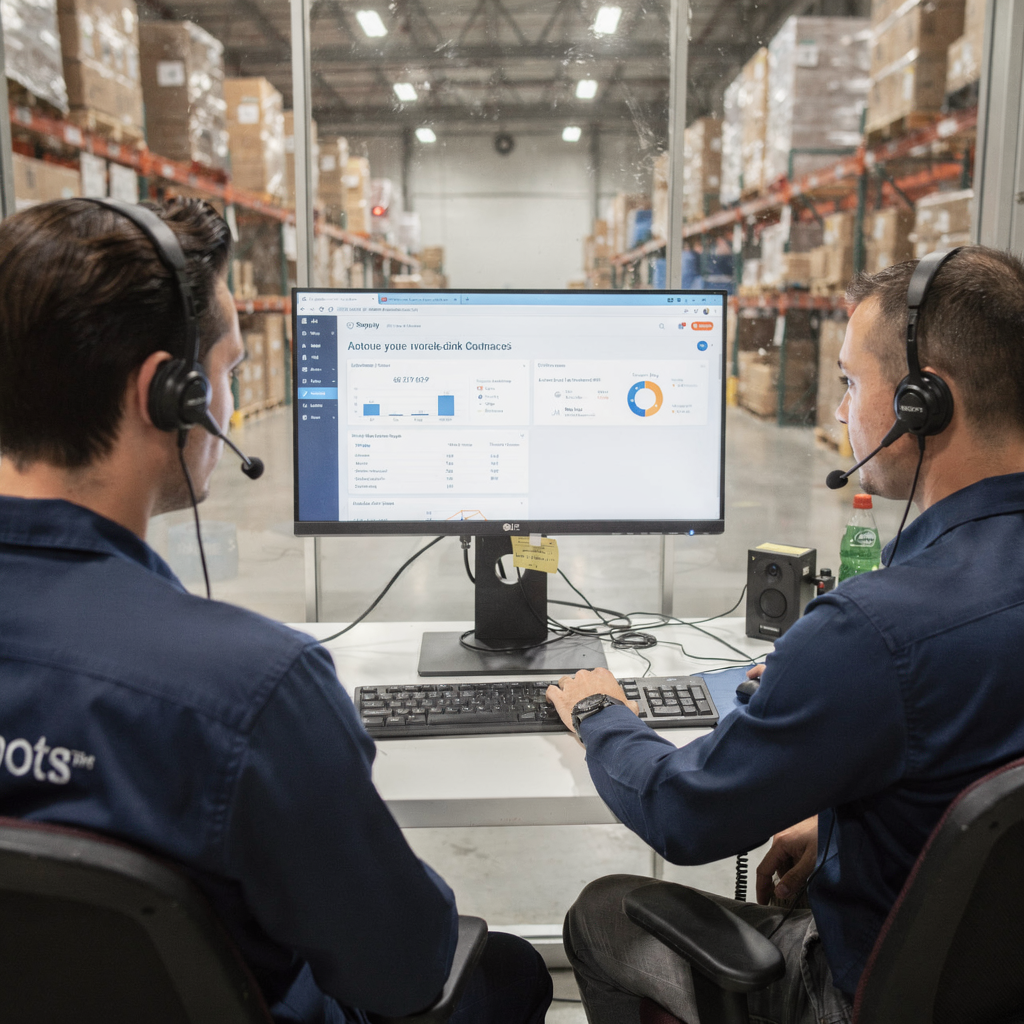
First, combine an AI-powered ERP with voice agents to give staff hands-free access to order and supplier status. Next, integrate ERP records, IoT sensors and NLP so workers can ask questions in plain language and get instant answers. For example, voice agents let warehouse leads ask about stock levels, expiry dates and recent order placements while they work. This approach reduces manual lookups and lets teams handle higher volumes of order inquiries.
How it works is simple. An API-enabled ERP feeds inventory, purchase orders and shipment data into a secured AI layer. Then, voice agents parse intent, translate phrases and return structured replies. Also, sensors stream temperature and humidity alerts into the ERP so the system can trigger quality checks or auto-adjust orders. The result: fewer stockouts and less spoilage because teams act on real-time alerts.
Concrete uses include automated order adjustments when a supplier delays, supplier queries answered on the shop floor and temperature-related quality alerts sent to operations. These flows rely on intent definitions and a secure voice/NLP layer. For voice and email handling in logistics, see how virtualworkforce.ai automates the full lifecycle of operational correspondence for ERP-driven teams with accurate, grounded replies ERP email automation for logistics. Also, teams can plug in an AI assistant that routes messages, which reduces admin time and clarifies ownership.
Measured outcomes are clear. Response times fall, manual updates drop and inventory levels in real-time remain visible. Also, businesses cut admin hours and increase on-time fulfilment. Implementation needs an API-first ERP, secure authentication and a well-defined intent library. Finally, pilot a single ordering workflow, then scale. For ideas on scaling voice and conversational agents, explore strategies for logistic teams that want to grow without hiring more staff how to scale logistics operations with AI agents.
Drowning in emails?
Here’s your way out
Save hours every day as AI Agents label and draft emails directly in Outlook or Gmail, giving your team more time to focus on high-value work.
Workflow automation and demand forecasting to enhance food production and forecast waste
First, map the order-to-production workflow and then apply demand forecasting to cut overproduction. Demand forecasting uses machine learning models that combine sales history, promotions, seasonality and external signals. These machine learning algorithms improve forecast accuracy and let planners align production schedules with actual demand. Next, translate forecasts into production runs and raw-material orders automatically through the ERP.
Good forecasting reduces working capital tied up in inventory. It also lowers spoilage and improves yield. For example, demand forecasting can adjust daily runs for perishable SKU families so teams produce what sells. Also, automated workflows convert forecasts into pick lists, quality checks and packing instructions. That saves time and reduces manual errors.
Key KPIs include forecast accuracy (MAPE), on-time fill rate, production yield and kilograms of waste reduced. Better forecasts and automation let operations measure and hit tighter targets. AI helps by spotting patterns in amounts of data that humans miss and by producing actionable signals for planners. For demand forecasting and tighter inventory management, integrate external weather or promotion feeds so the model adapts to spikes.
Also, use LLM-based planners to summarize schedule conflicts and create exceptions for urgent orders. For ERP-led manufacturers, business central modules can execute changes and push updates to shop-floor terminals. Implementation tips: start with one SKU family, then expand. Make sure to test model drift and retrain regularly. Finally, this approach helps manufacturers shorten development cycles and supports continuous improvement in food production.
Personalize customer engagement for beverage businesses and broader food and beverage business through personalization
First, personalization boosts conversion and loyalty for beverage brands and restaurants. AI can personalize menus, offers and loyalty messages at scale. For example, recommender systems use POS and e-commerce data to tailor suggestions based on dietary preferences and purchase history. Also, dynamic pricing and targeted promotions increase average order value and repeat rate.
Techniques include segmentation models, recommender AI and campaign automation. Companies can use an AI assistant on chat or voice channels to support order placements, manage subscriptions and answer order inquiries. The assistant can also capture individual preferences and feed them into the CRM. As a result, teams see uplift in conversion, and customers enjoy a smoother ordering path.
Privacy and consent matter. Personalize only after consent and keep secure customer profiles. Also, track the overall customer experience and overall satisfaction with A/B tests and cohort analysis. AI tools such as collaborative filters and causal models let marketers test offers quickly. The result: higher profitability from repeat buyers and reduced churn.
Furthermore, personalization helps new food launches by identifying top segments that will trial a product. AI models can analyze customer behavior and surface valuable insights for creative teams. Use small pilots to measure lift in AOV and repeat purchases. Finally, integrate personalization with your loyalty program and omnichannel stack so messages stay consistent across email, app and in‑store touchpoints.
Drowning in emails?
Here’s your way out
Save hours every day as AI Agents label and draft emails directly in Outlook or Gmail, giving your team more time to focus on high-value work.
Success stories: how AI in food has accelerated operations and customer engagement
First, many success stories show measurable gains. A distributor used AI forecasting to reduce stockouts and lower inventory days. A manufacturer adopted voice agents to cut admin time spent on purchase orders and internal emails. A retailer integrated real-time sensor alerts into ERP and improved freshness on shelves. These wins highlight how AI-driven systems can improve operational efficiency when combined with clear data ownership.
Quantitative outcomes vary, but case notes from major vendors report double-digit improvements. For example, some deployments cut handling time per email from about 4.5 minutes to under 1.5 minutes by automating routing and replies with grounded data; that pattern appears in logistics email automation case studies virtual assistant for logistics. Also, many teams see inventory reductions, lower waste percentages and faster order cycles when they connect sensors, ERP and automation.
What worked? Clear ownership of data, phased pilots and KPIs that link to financial outcomes. For instance, pilots that tracked forecast accuracy and waste per SKU created momentum for broader rollouts. What failed? Siloed pilots, poor data quality and missing integration to ERP or workflows. Without an ERP backbone, advanced AI becomes an isolated analytics project rather than a business capability.
Also, industry voices note the shift from experiments to production. Analysts find that AI assistants now influence how food companies build software, manage staff and interact with consumers (source). For teams that need to automate tasks in their operational inbox, virtualworkforce.ai offers a zero-code setup that connects ERP, TMS and WMS to route and resolve messages automatically automated logistics correspondence. Finally, success depends on cross-functional sponsors and measurable targets.
Roadmap to deploy AI-powered ERP and voice agents: risks, KPIs and accelerate adoption
First, assess data readiness and ERP capabilities. Next, pick a pilot: forecasting for a SKU family or a voice agent for purchase orders. Then, build a phased deployment plan: pilot, validate, scale. Essential KPIs include forecast accuracy, inventory turnover, order cycle time and admin hours saved. Also, track customer satisfaction and conversion for customer-facing pilots.
Risks include data integration challenges, privacy exposure and model drift. Mitigations: use middleware and secure APIs, enforce consent and encryption, and set automated retraining. Also, include security protocols in the design and define governance up front. For ERP email automation and rapid deployment in logistics, see practical guidance on connecting inboxes to operational data ERP email automation for logistics.
Cost/benefit analysis should consider reduce costs from lower waste, labour savings and higher sales. Include change management for staff and suppliers. Quick wins accelerate adoption: connect inventory levels in real-time for a single warehouse, add a voice agent for PO confirmations, and expose a real-time dashboard to operations. Also, quantify ROI by measuring reduced inventory days and improvements in on-time fill rate.
Finally, measure ongoing impact and scale what works. Use phased governance, track profitability and watch for model drift. An organized deployment and clear KPIs let teams streamline operations and maintain momentum. If you want to automate your operational email lifecycle to cut workload and increase accuracy, explore how AI for freight and logistics communication can reduce manual triage and speed replies AI in freight logistics communication.
FAQ
What is an AI-powered ERP and why does it matter?
An AI-powered ERP embeds machine intelligence into core enterprise processes like inventory, purchasing and production. It matters because it helps automate decisions, surface actionable signals and reduce the risk of human error in high-volume operations.
How do voice agents work with ERP systems?
Voice agents connect to an ERP via APIs, interpret spoken queries using NLP and return structured answers from the back-end. They let staff access order status, check stock levels and place simple order placements hands-free while they work.
Can demand forecasting really reduce food waste?
Yes, demand forecasting uses machine learning to predict sales and align production schedules, which reduces overproduction and spoilage. Better forecasts lower inventory days and free up working capital.
Is personalization feasible for beverage businesses?
Yes, personalization can tailor menus and offers using POS and e-commerce data to reflect dietary preferences and individual preferences. That improves conversion and overall satisfaction when done with consent and secure profiles.
What KPIs should I track during deployment?
Track forecast accuracy, inventory turnover, order cycle time, admin hours saved and customer satisfaction. These metrics show both operational and commercial impact quickly.
What are common pitfalls when deploying AI in food operations?
Pitfalls include siloed pilots, poor data quality and missing ERP integration. Avoid these by defining ownership, starting small and ensuring robust data pipelines and governance.
How do I secure customer data and comply with privacy rules?
Use encryption, consent workflows and role-based access controls. Also, document data flows and include privacy checks during deployment to limit exposure and meet regulatory standards.
Can small food companies benefit from AI?
Yes, small teams can automate tasks, streamline operations and access analytics without large engineering teams. Focus on one high-impact workflow and use phased pilots to build confidence.
How often should models be retrained?
Retrain models when input patterns change significantly or at regular intervals set by monitoring. Continuous monitoring helps detect model drift and keeps predictions accurate.
Where can I learn more about automating operational email and ERP workflows?
Explore resources on automating logistics correspondence and ERP email automation to see practical examples of reducing workload and improving response quality. For applied logistics email automation and AI agents that tie to ERP and WMS, visit virtualworkforce.ai resources.
Drowning in emails?
Here’s your way out
Save hours every day as AI Agents label and draft emails directly in Outlook or Gmail, giving your team more time to focus on high-value work.