


AI assistant to streamline procurement and cut procurement time through automation
AI assistants now streamline procurement and cut procurement time in practical ways. Healthcare operations staff spend hours on routine ordering, approvals, and vendor follow-up. An AI assistant can process orders, flag shortages, and draft supplier emails so teams avoid repetitive work and focus on patient care. For example, early adopters report a 50% reduction in administrative workload and about 65% faster scheduling and procurement cycles when conversational bots and rule engines handle routine tasks 50% reduction and 65% faster scheduling. This leads to measurable time savings and fewer emergency purchases.
An AI assistant can automate PO creation, route approvals, and maintain an audit trail for compliance. It will also send an alert when reorder points approach. Systems that integrate email, ERP, and document stores can reduce manual triage and drastically accelerate response times. Our platform, virtualworkforce.ai, pioneered AI agents that automate the full email lifecycle for ops teams, and that same pattern applies to procurement workflows. Teams typically reduce handling time per message from about 4.5 minutes to 1.5 minutes. For procurement, that translates to less handoff, better clarity, and lower courier costs because automated reorder triggers prevent last-minute rush orders.
Beyond simple automation, AI can provide decision support by recommending preferred suppliers and optimal order quantities. It can also transcribe and summarize supplier replies and invoices so buyers see the essentials quickly. That reduces manual reconciliation and keeps the procurement ledger accurate. When procurement teams combine AI with standardization of catalog data, they cut errors and improve supplier on-time performance. For more on how email automation supports logistics and procurement, review our work on virtual assistants for logistics virtual assistant for logistics.
To protect patient safety and stay compliant, AI-driven solutions must be configured with clear approval gates and an audit record. Teams should test bots on high-volume, low-risk SKUs first and measure a small set of metrics. Those metrics include procurement time, order accuracy, and supplier lead time. With this approach, organizations can confidently scale automation while protecting clinical priorities and supporting caregivers in the operating room and elsewhere.

AI-powered demand forecasting and inventory optimisation for better outcomes
AI models can forecast demand and optimise inventory so hospitals keep the right supplies on hand. These models use historical usage, seasonality, procedure schedules, and external viral or flu trends. They also consume near real-time signals from admissions and lab volumes. Hospitals that adopt AI report 20–30% lower supply costs through improved forecasting and less overstock 20–30% lower supply costs. In practice, better forecasts reduce waste and expired items, which directly supports better outcomes for patients and operational resiliency.
Forecasting systems set dynamic reorder points and highlight when preference cards or procedure kits need adjustment. They can also group items by risk and usage velocity so procurement focuses on the most impactful SKUs. A data-driven approach links consumption patterns to the operating room schedule, prescriptions, and device usage. That alignment reduces stockouts and prevents clinicians from improvising substitutes during care. When forecasting is tightly coupled to EHR signals, teams see measurable drops in urgent orders.
Case notes from leading healthcare systems show meaningful improvements in service levels and reduced waste. For example, hospital pilots that integrated inventory heatmaps with predictive models cut expiries and avoided shortages during seasonal surges. Those pilots relied on good data quality and close governance to keep models accurate. For organisations exploring implementation, start with high-volume consumables and then scale to specialized items.
To support this work, teams need analytics dashboards and a lightweight governance rhythm for model feedback. That includes routine checks on model performance and a simple audit for forecast exceptions. Tools that surface variance and provide explainability help procurement and clinical leaders trust recommendations. If you want practical examples of automating logistics correspondence and data grounding, see our guide on automated logistics correspondence automated logistics correspondence.
Drowning in emails?
Here’s your way out
Save hours every day as AI Agents label and draft emails directly in Outlook or Gmail, giving your team more time to focus on high-value work.
Generative AI and chatgpt to automate supplier communication, contracts and value analysis
Generative AI and tools like chatgpt speed document creation, draft RFQs, and summarise supplier bids. These systems can prepare contract drafts, extract commercial terms, and perform a rapid value analysis to support sourcing decisions. Generative AI reduces the time buyers spend writing and comparing documents, and it can transcribe supplier calls to capture commitments. However, outputs must be validated because models sometimes hallucinate details. For sourcing, require human review and signed approvals before sending contractual language to suppliers.
Generative models accelerate the RFP cycle by composing consistent questionnaires and by summarizing bids to a standard metric set. They support value analysis teams by creating side-by-side summaries that show total cost of ownership and service levels. Those summaries help clinical value analysis committees compare options on clinical merit and price. At the same time, organizations must guard against errors and keep a clear audit trail. Maintain version control, store evidence, and use secure data handling so sensitive pricing and contract clauses remain confidential and compliant.
When crafting supplier communications, add a human review gate for all contract-ready outputs. Also, embed a checklist that enforces regulatory requirements, HIPAA constraints, and any payer-specific clauses. For automated drafting tied to operational data, virtualworkforce.ai demonstrates how AI agents can ground replies in ERP, TMS, WMS, and document history so messages match the facts before they go out ERP email automation for logistics. That approach reduces risk and avoidable back-and-forth with suppliers, and it helps teams transcribe and summarize complex responses quickly.
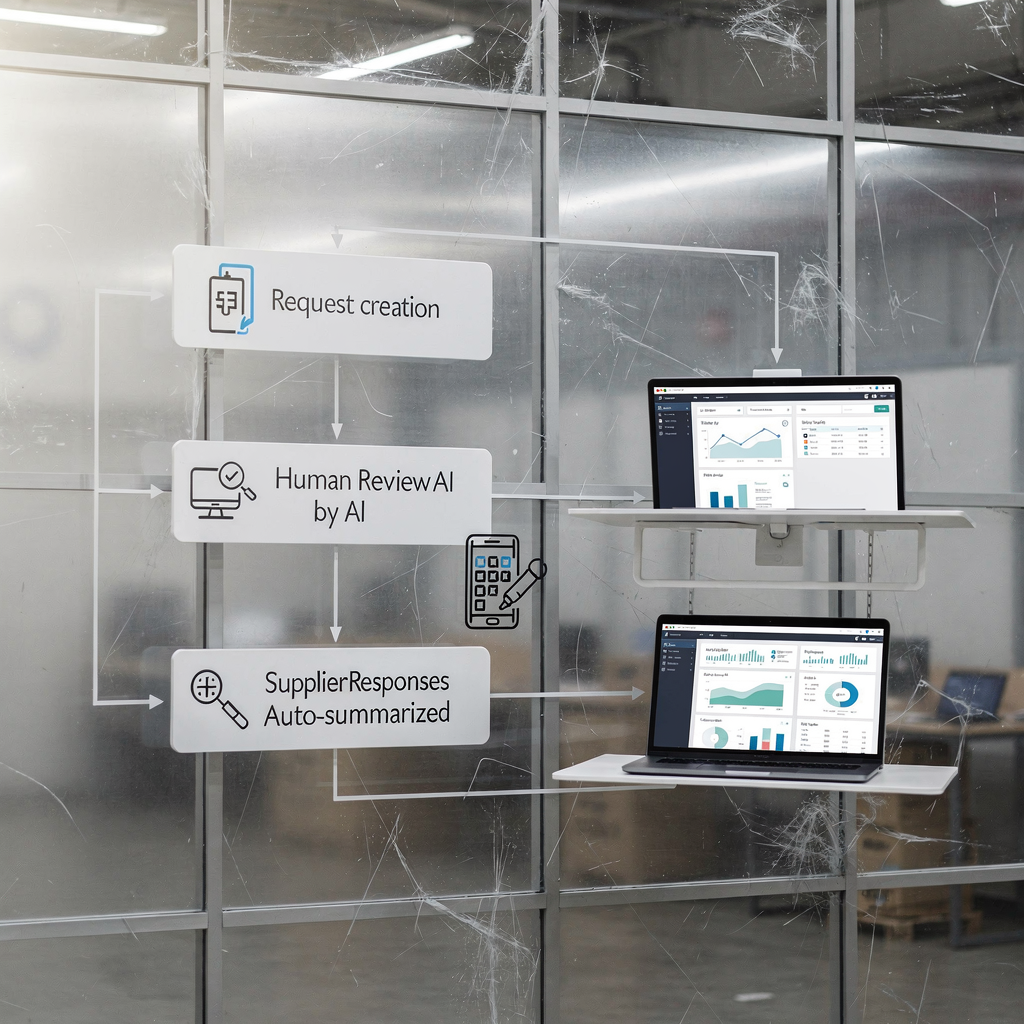
EHR integration to link clinical demand with ai in healthcare supply for time savings
Integrating EHR data with inventory systems connects clinical demand to supply decisions. When clinical schedules, orders, and prescriptions flow into forecasting models, procurement aligns stock with actual need. That connection cuts wasted inventory and reduces last-minute rushes that can harm patient care. EHR-driven replenishment ties procedure preference cards to consumable lists and warns teams when a procedure will need extra supplies. This integration supports clinicians and improves outcomes.
Linking EHR to supply systems requires careful attention to patient data protection and to regulatory requirements. Ensure data transfers are HIPAA compliant and that role-based access prevents unnecessary exposure. Data quality matters. If clinical data is incomplete, forecasts will be wrong. Thus, invest in cleansing and in routines to reconcile medical history fields used for planning. A robust design uses near real-time updates so supply teams see changes as schedules shift.
Practical pilots show strong time savings when clinical and supply systems talk to each other. For example, a system that reads case schedules can proactively reorder implants and kits before morning rounds. That reduces interruptions for caregivers and speeds operating room turnover. To scale successfully, use standard interfaces and map core data elements consistently. To learn more about scaling logistics operations without hiring, explore our guide on how to scale logistics operations with AI agents scale logistics operations with AI agents.
Finally, consider governance and training and development so clinicians trust the signals moving from EHR to procurement. Clinical champions can validate preference cards and approve rule sets. With that shared ownership, AI can help the team proactively secure the right supplies and protect patient safety during surges and routine care.
Drowning in emails?
Here’s your way out
Save hours every day as AI Agents label and draft emails directly in Outlook or Gmail, giving your team more time to focus on high-value work.
Automation of workflows: ai-powered systems that automate ordering, approvals and supplier coordination
AI-powered solutions combine RPA, machine learning, and supplier portals to automate end-to-end workflows. These systems can process orders, match invoices, and route exceptions to humans. They automate matching POs to invoices and escalate only when mismatches occur. That reduces manual tasks and improves supplier SLAs. Automation of routine steps also lowers processing cost per invoice and improves accuracy.
Start with high-volume, low-risk items when deploying workflow automation. Measure key metrics like cycle time, invoice match rates, and stock turn. Early pilots should capture baseline data so teams see ROI clearly. Traditional automation solved rule-based chores. AI adds dynamic decisioning and natural language understanding, so bots can interpret supplier emails and provide context-aware routing. That allows operations teams to reduce administrative burden while keeping a clear audit trail and staying compliant.
For many organisations, automating the email lifecycle yielded striking efficiency gains. virtualworkforce.ai focuses on email as an operational channel. Our agents understand intent, gather facts from ERP and WMS, and draft grounded replies. This reduces time spent on triage and routing, and it lowers errors. Use a phased rollout: pilot, validate, scale, and then introduce more complex workflows once the basics run smoothly.
Automation gives procurement teams flexibility to handle surges without expanding headcount. It also helps suppliers get faster responses and improves collaboration between providers and suppliers. When teams combine AI with performance dashboards, they can proactively manage lead times and maintain supplier scorecards. Finally, ensure all automation has an audit log and that legal teams verify contract clauses so the organisation can stay compliant.
Leading healthcare adoption: value analysis, metrics, governance and pathways to better outcomes
Leading healthcare organisations pair AI pilots with governance and clinical value analysis to get measurable benefits. Set clear objectives and a small set of metrics. Track ROI, stock turn, stockout rates, cost per case, and clinician time reallocated. Early adopters report faster procurement cycles and meaningful cost savings when AI aligns with clinical priorities. Use a roadmap that starts with a pilot, then validates with both procurement and clinical teams, and finally scales under governance oversight.
Value analysis committees must review AI recommendations and provide clinical context. That step ensures the system supports care standards and does not inadvertently force suboptimal choices. For governance, include auditors, IT, and privacy leads to maintain continuous oversight. Also, require documentation that shows how models make decisions so reviewers can audit outcomes and stay compliant. This fosters trust and helps teams scale with confidence.
To operationalise AI at scale, define clear roles and a cadence for monitoring model performance and data health. That includes periodic checks for bias, data drift, and alignment with regulatory requirements. Make standardization part of the rollout so preference cards, catalogs, and unit measures match across systems. Then build a continuous improvement loop where clinicians can annotate unusual events and the models adapt. This approach reduces manual interventions and helps improve outcomes for patients.
Finally, treat AI adoption as part of a broader digital transformation that supports business growth and resiliency. Use pilots to capture time savings and to show how AI can assist procurement teams and caregivers. With the right governance, training, and metrics, AI can also provide recommendations that improve clinical operations and lead to better outcomes for patients.
FAQ
What is an AI assistant for healthcare supply chain co-pilot?
An AI assistant for healthcare supply chain co-pilot is a digital agent that helps procurement, inventory, and logistics teams. It automates routine tasks, provides recommendations, and supports decision support so staff spend more time on clinical work.
How does AI reduce procurement time?
AI reduces procurement time by automating order creation, routing approvals, and supplier communication. It can also accelerate supplier responses and reduce manual triage so teams complete procurement cycles faster.
Are there proven cost savings from using AI in supply chain?
Yes. Hospitals report 20–30% lower supply costs from better forecasting, and studies show up to 50% reduction in administrative workload cost savings and administrative reduction. These figures come from early adopters and pilot projects.
Can generative AI like chatgpt help with contracts?
Generative AI and chatgpt can draft RFQs, summarise bids, and create contract templates. Human review remains essential to verify accuracy and to ensure compliance with procurement rules and legal requirements.
How important is EHR integration for inventory planning?
EHR integration is critical. When inventories sync with clinical schedules and orders, teams avoid shortages and excess stock. Near real-time signals from the EHR improve forecasting and provide time savings for clinical staff.
What governance is needed when deploying AI in healthcare supply?
Governance should include clinical value analysis, privacy reviews, auditing, and a change control process. This ensures systems remain compliant, that models are explainable, and that they support clinical care.
How do AI agents handle supplier emails and invoices?
AI agents can read supplier messages, extract key facts, and draft grounded replies. They can also match invoices to POs and flag exceptions. Implementations should keep an audit trail for every decision.
Will AI replace supply chain staff?
AI will not replace staff but will change roles. Teams will shift from manual processing to oversight and exception handling. That frees staff to focus on strategy and on improving patient care.
What are the privacy risks with AI in supply chain?
Privacy risks appear when clinical or patient data crosses into procurement workflows. Organisations must use HIPAA compliant processes and limit access to patient data. Strong data quality and governance mitigate these risks.
How can I start a pilot project?
Begin with a narrow pilot on high-volume, low-risk items and measure procurement time, stockouts, and invoice match rates. Validate results with clinical and procurement teams before scaling. For practical guidance on email automation and logistics, review our resources on automating logistics emails automate logistics emails.
Drowning in emails?
Here’s your way out
Save hours every day as AI Agents label and draft emails directly in Outlook or Gmail, giving your team more time to focus on high-value work.