


ai assistant in hospitality: how a voice assistant can streamline reservation and booking
A VOICE CONCIERGE is a voice assistant that answers questions, controls room features and handles requests by voice. In practice, an AI assistant listens to a spoken request, parses intent, and then acts. For example, guests ask for extra towels, request a late check-out, or change a reservation. The device then connects to hotel systems to complete the task. First, a guest says a command. Next, the AI parses it. Then the AI routes the action to the right system or staff. This model helps hotels streamline reservation flows and reduces friction at check-in.
Core tasks include instant FAQ responses, making and modifying booking details, placing room service orders, scheduling wake-up calls and controlling in-room features. Voice-enabled devices can also integrate with a booking engine and property management systems so changes appear instantly in reservation records. Because AI handles routine requests, staff to focus on high-value guest interactions. As a result, hotels can improve guest satisfaction while they lower operational costs.
Industry reports show voice and chat AI handle up to roughly 80% of routine queries, which drives a 15–25% reduction in staff workload for repetitive tasks. For proof, hotels that deploy voice solutions often cite measurable improvements in response speed and ticket deflection. In some cases, hotel deployments using voice tech linked devices to PMS and applied privacy best practices such as removing recordings after checkout; that approach mirrors public examples from major hotel pilots like Alexa for Hospitality and similar programs.
When you implement voice AI you should balance automation with the human touch. Guests expect empathy for complex issues. Therefore, design clear escalation paths to the front desk and human agents. Additionally, add voice authentication or app pairing to protect sensitive booking changes and payments. Finally, train the AI on property scripts and menu items. This training helps the system reduce errors, answer inquiries accurately and streamline guest-facing workflows.
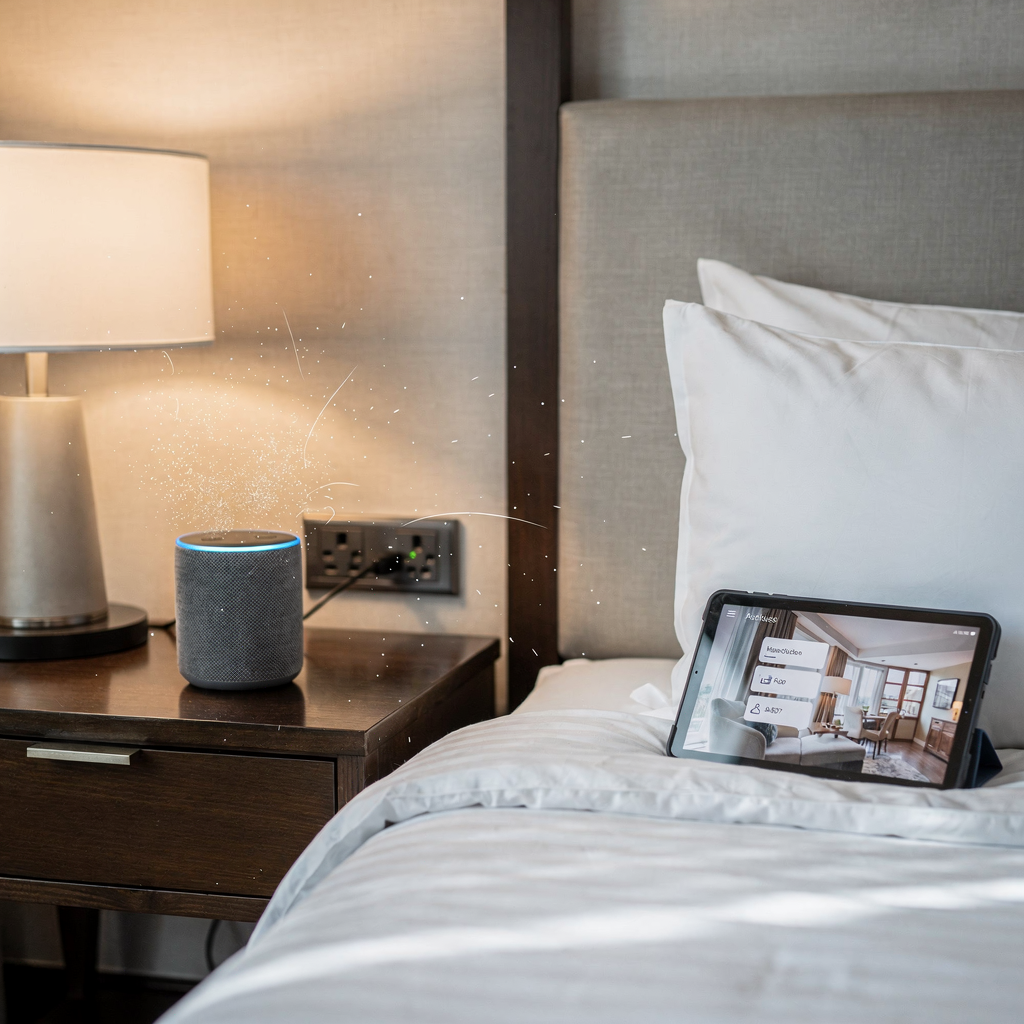
ai in hospitality and ai solution: measurable benefits for hotel brands and hotel ai deployments
Hotels deploying AI solutions report measurable gains across revenue and operations. For example, some hotel brands see a 20–30% uplift in direct bookings when AI engages guests proactively through tailored messages and reservation nudges (source). Likewise, AI can drive double-digit increases in nightly spend by presenting timely upsell prompts. Therefore, hotel revenue often rises while dependence on third-party channels falls.
Guest sentiment also supports adoption. Surveys show that between 58% and 65% of guests welcome AI personalization and contactless services, so hotels can adopt AI with guest approval. At the same time, AI-powered chatbots and voice systems cut front-desk call volumes and provide 24/7 multilingual AI support. That frees human teams to handle complex requests and boosts customer satisfaction.
Operationally, AI delivers faster response times and consistent handling of routine inquiries. For instance, AI chatbots can handle up to 80% of routine inquiries, which reduces wait times and operational costs (source). Across hotel chains, AI adoption also improves operational efficiency by automating tasks like booking confirmations, housekeeping updates and simple billing disputes. In short, an AI-powered digital concierge can both streamline operations and lift guest experience.
To choose the right AI solution, hotels and resorts should evaluate integration with existing management systems and booking engines. Also, consider vendors that offer secure data handling and fast time-to-value. If you run hotel operations, look for solutions that support multilingual ai and that can personalize suggestions using guest profiles. Finally, remember that scalable AI is not only for major hotel groups; independent hotels can access SaaS models that show quick ROI.
For service teams that still rely heavily on email and operational correspondence, automation platforms built for ops can demonstrate value fast. See how our team automates email lifecycles to speed operational workflows and reduce manual triage (example integration).
Drowning in emails?
Here’s your way out
Save hours every day as AI Agents label and draft emails directly in Outlook or Gmail, giving your team more time to focus on high-value work.
implement ai: practical steps to implement ai for hotels and train ai for your hotel
Start by defining scope. Decide whether you want the AI to manage reservations, offer concierge services, control smart rooms, or act as a full conversational agent. Next, pick a voice AI platform such as Alexa, Google, or a third-party voice provider. Then build an integration layer that connects the voice assistant to your property management systems and CRM. This integration ensures bookings and preferences update in real-time.
Step three is to integrate with your PMS, CRS and booking engine. Link the AI to the booking engine so new reservations and modifications reflect across systems. At this stage, ensure logging and traceability for reservation changes. For payments and sensitive updates, use authentication methods like guest PINs or app pairing as a fallback to human agents. These steps protect hotel reservations and preserve trust.
Train the AI using anonymized property data, scripts for hotel policies, menus and local knowledge. Run human-in-the-loop testing to refine responses and reduce errors. During training, include common inquiries and edge cases so the system learns to escalate appropriately. Also, test multilingual ai capabilities to serve diverse guests. Over time, feed performance metrics back into training to improve accuracy.
Pilot the system on a limited set of rooms or a single hotel. Measure KPIs such as direct bookings, response time and ticket deflection. Use those results to justify scaling. For operational teams, automated email and task routing can further accelerate adoption. Our platform shows how AI agents automate large volumes of operational emails, which reduces handling time and clarifies ownership; that experience often helps hotels connect guest-facing AI with backend ops reliably (learn more).
Finally, communicate changes clearly to staff and guests. Provide training for front desk agents and housekeeping so they know how the AI routes requests. With iterative pilots and continuous training, hotels can implement AI safely and measure steady gains in both operational efficiency and guest satisfaction.
ai reservation and hotel tech: integration, security and how hotels can implement booking workflows
Strong integration is the backbone of safe AI reservation workflows. Begin with an integration checklist that includes APIs to PMS, payment gateways, CRM and housekeeping systems. Make sure reservation changes are logged and auditable. That traceability helps when guests dispute charges or ask about past requests. In practice, link the AI to property management systems and the booking engine so confirmations and cancellations synchronize instantly.
Security and privacy matter. Comply with GDPR and other regional rules. Ask for explicit consent before recording or storing voice data. Use retention limits and automatic deletion as a best practice; some deployments remove recordings at checkout to reduce risk. For booking security, offer voice authentication options such as PINs or app pairing. Always provide fallbacks to human agents for payments or sensitive updates.
Design escalation flows so the AI routes complex issues to the front desk or a live agent. This keeps the human touch when it matters and preserves customer experience. For high-value reservations or corporate bookings, require an extra confirmation step through the hotel’s CRM or a human review. These measures reduce errors and improve trust.
Also, align operational systems so housekeeping and maintenance receive automated updates from the AI. For example, if a guest requests extra pillows, the request should produce a housekeeping ticket with guest details and room number. That way, AI handles the inquiry while staff execute the task. To deepen automation across the hospitality ecosystem, consider connecting your hotel tech stack to operations automation tools that handle email and back-office tasks; this approach helps hotels implement booking workflows that are end-to-end reliable (related ops automation).
Lastly, test payment flows in a sandbox before going live. Use industry-standard encryption and tokenized payments. Ensure your vendor SLAs cover uptime and data incidents. With secure integrations and clear escalation paths, hotels can offer AI reservation services that streamline hotel operations and protect guest data.

Drowning in emails?
Here’s your way out
Save hours every day as AI Agents label and draft emails directly in Outlook or Gmail, giving your team more time to focus on high-value work.
ai for hospitality and independent hotels: use ai to personalise stays and harness the power of ai on a budget
Independent hotels can harness AI without large capital expense. Start small. Deploy a voice-enabled FAQ and a booking link on the hotel website to capture direct bookings. Later, add PMS integration as ROI appears. SaaS voice platforms often provide the best ai for hotels entry point because they reduce upfront costs and accelerate deployment. As you scale, add personalization rules so the AI sets room temperature, suggests relevant upsells, or personalizes dining recommendations.
Personalization drives repeat business. Use guest profiles to set preferences such as room type, floor preference and pillow choice. Then deliver tailored offers during pre-arrival messages. When AI pulls past stay preferences into real-time suggestions, the guest enjoys a more personalized experience. This approach can increase average revenue per guest while improving guest satisfaction.
Vendor models matter. Choose SaaS offerings with clear SLAs, customization options and transparent data ownership. Make sure the contract allows you to export guest preference data. Also, consider local compliance and consent for data use. Ask vendors how they handle multilingual ai and whether they support local attractions and concierge services in their knowledge base.
Measure success quickly. Track conversion rate to direct booking, average spend per guest and reduction in manual tickets. For operational teams, automating email workflows and operational correspondence can trim response time and reduce errors. Our platform automates the full email lifecycle for ops teams, which is useful if your hotel handles large volumes of vendor or group booking email (operations automation primer).
Finally, balance tech with hospitality. Train staff on new workflows and keep clear human escalation routes. With a phased approach and the right vendor, independent hotels can harness the power of AI to personalize stays and boost revenue without heavy upfront spend.
agentic ai and transforming hospitality: future trends, risks and a short checklist for hotels can implement artificial intelligence safely
Agentic AI promises proactive agents that can rebook flights after cancellations, push dynamic upsells and automate cross-department tasks. These autonomous capabilities will change how hotels and resorts handle disruptions. For example, an agentic AI could detect a flight delay and then proactively rebook a guest, adjust transportation, and update the reservation. That level of automation reduces friction for guests and staff alike.
However, risks exist. Over-automation can erode empathy and reduce customer satisfaction if the system lacks context. Bias in recommendation engines can also skew offers and reduce fairness. Data breaches remain a real threat when systems centralize guest profiles. For these reasons governance must guide deployment. Define data policies, apply human oversight and conduct regular audits. Retrain staff to work with AI and to manage escalations effectively.
Here is a short checklist hotels can use to implement AI safely. First, define clear objectives for the pilot. Second, choose pilot sites that represent different guest segments. Third, secure integrations with property management systems and payment gateways. Fourth, set KPIs such as ticket deflection, direct booking uplift and guest satisfaction. Fifth, protect guest data with retention limits and consent. Sixth, plan staff change management so teams adapt smoothly. Finally, conduct frequent reviews and update AI capabilities based on feedback.
To prepare for the market for AI, invest in scalable AI tools and choose vendors that offer traceability and ops grounding. For operational complexity, consider platforms that automate email and back-office tasks to align guest-facing automation with internal operations. That alignment helps ensure AI makes operations faster while staff retain control and accountability. With careful governance and clear pilot goals, hotels can adopt intelligent AI while preserving the human touch.
FAQ
What is a voice concierge and how does it differ from a traditional concierge?
A voice concierge is an AI voice assistant that answers spoken requests, controls room features and fulfills simple concierge services. It differs from a traditional concierge by operating 24/7 and by automating routine tasks so staff can handle more complex guest services.
Can AI really increase direct bookings for hotels?
Yes. Studies show proactive AI engagement can increase direct bookings by 20–30% (source). When AI surfaces timely offers and simplifies reservation flows, guests often prefer to book directly.
How do hotels protect guest privacy with voice systems?
Hotels should obtain consent, limit retention and apply automatic deletion of voice recordings after checkout. Additionally, use tokenized payments and PIN-based verification for sensitive updates to safeguard guest data.
Do independent hotels need a large budget to start with AI?
No. Independent hotels can start with low-cost options such as voice-enabled FAQs and booking links, and then add PMS integration as ROI appears. SaaS solutions reduce upfront costs and offer quick pilots.
What integrations are required for AI reservation workflows?
Integrations typically include property management systems, booking engine, payment gateway and CRM. These links ensure reservation changes are synchronized and auditable across systems.
How can AI improve guest satisfaction?
AI improves speed, personalization and availability, which enhances the guest experience. By handling routine inquiries quickly and offering tailored suggestions, AI contributes to higher guest satisfaction.
Are there risks with agentic AI in hotels?
Yes. Risks include over-automation that reduces empathy, biased recommendations and potential data breaches. Governance, human oversight and regular audits help mitigate these risks.
What metrics should hotels track when deploying AI?
Track direct booking uplift, ticket deflection, average revenue per guest and response time. These KPIs show both revenue impact and operational efficiency improvements.
How does AI handle multilingual requests?
Multilingual AI models can process and respond in multiple languages, which is critical in a global hospitality market. Testing and training on property-specific phrases improves accuracy across languages.
Where can I learn about automating operational email workflows that support guest-facing AI?
Operational email automation helps align guest-facing AI with backend processes. For an example of end-to-end email automation for ops teams, see a guide on scaling operations with AI agents (resource). This approach reduces manual triage and improves traceability.
Drowning in emails?
Here’s your way out
Save hours every day as AI Agents label and draft emails directly in Outlook or Gmail, giving your team more time to focus on high-value work.